
What will the 2026 high school graduation exam be like?
According to a representative from the Ministry of Education and Training, the 2026 high school graduation exam will continue to be designed to assess students' abilities and qualities, including questions that require them to apply their knowledge to solve real-world problems.
According to the Head of the Quality Management Department (Ministry of Education and Training), the 2026 high school graduation exam will maintain stability in terms of examination methods and question design, with only minor adjustments to align with the two-tiered local government management model and the reorganization of provincial-level administrative units.
According to the plan, the 2026 high school graduation exam is expected to be held earlier than in previous years, so candidates need to proactively adjust their study plans and prepare themselves mentally for the exam.
The 2026 high school graduation exam will take place over three sessions (one session for Mathematics, one for Literature, and one for an elective subject).
Candidates who are 12th-grade students taking the 2026 high school graduation exam will have to take two compulsory subjects: Mathematics and Literature, along with one exam consisting of two subjects chosen from the remaining subjects: Physics, Chemistry, Biology, Industrial Technology, Agricultural Technology, Informatics, Foreign Language, History, Geography, Economics and Law Education. Candidates may choose to take a foreign language exam different from the foreign language they studied in high school.
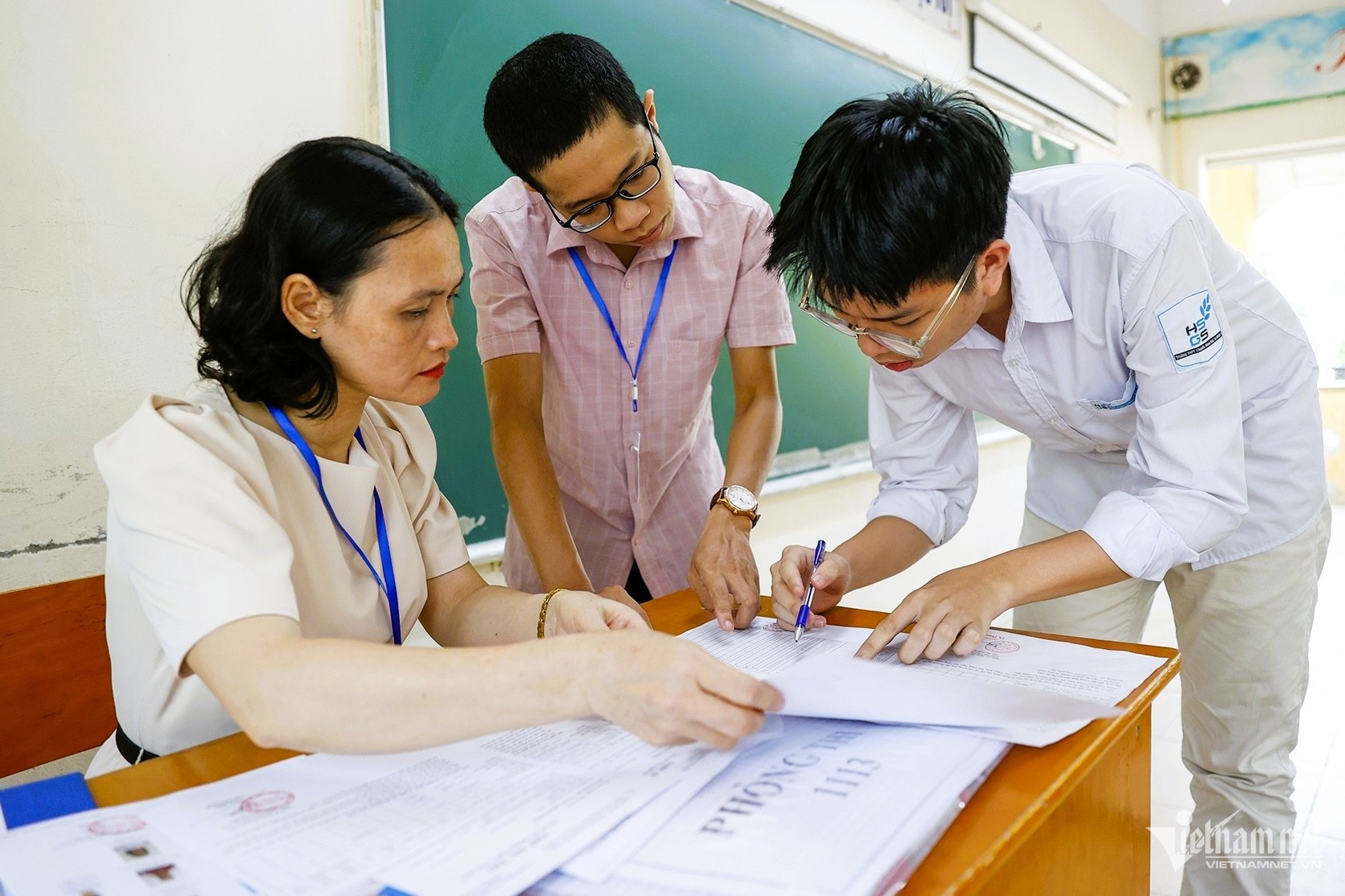
The exam content is based on the high school curriculum, primarily focusing on grade 12 material, with some questions covering knowledge from grades 10 and 11. The exam is structured according to the Ministry of Education and Training's matrix, encompassing levels of thinking skills: knowing, understanding, and applying.
According to this source, the 2026 high school graduation exam will continue to be designed to assess students' abilities and qualities, with a similar proportion of differentiating questions as in 2025, including questions that require the application of knowledge to solve real-life problems.
Multiple-choice exams will follow the same format as the sample exam released by the Ministry of Education and Training last year, including multiple-choice questions, true/false questions, and short-answer questions. Points in multiple-choice exams will not be evenly distributed across all questions, but will be awarded at different levels.
Literature is the only subject currently tested in essay format, and the exam questions will continue to use materials outside of textbooks. According to the head of the Quality Management Department (Ministry of Education and Training), starting from the 2025 exam, this adjustment has had a positive impact, encouraging teachers and students to innovate teaching methods, aiming to develop competencies and skills and reduce the practice of "copying model essays".


