
Proposing a special mechanism for investment in the expansion of the North-South Expressway.
The Ministry of Construction has recently sent a document to 11 provinces and cities to solicit feedback on the pre-feasibility study report for the investment project to expand sections of the North-South Expressway in the East.
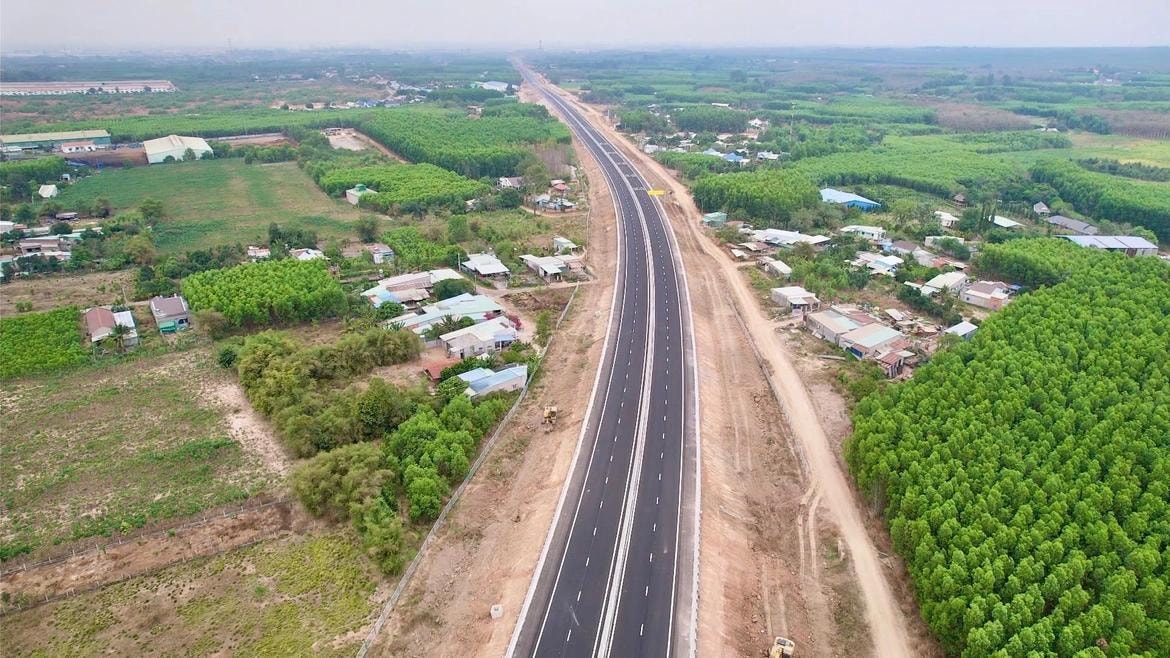
The document from the Ministry of Construction was sent to the following provinces and cities: Dong Nai, Ninh Binh, Thanh Hoa, Nghe An, Ha Tinh, Quang Tri, Quang Ngai, Gia Lai, Dak Lak, Khanh Hoa, and Lam Dong.
The Ministry of Construction announced that, in implementing the medium-term public investment plan for the period 2026-2030, it has prepared a pre-feasibility study report for the project to expand sections of the North-South Expressway in the East. This study proposes expanding sections currently with 4 limited lanes and a width of 17 meters to a full 6-lane expressway. The documentation is now largely complete.
Assessing the urgency of highway expansion
In order to finalize the report and submit it to competent authorities for consideration and decision, the Ministry of Construction requests the People's Committees of provinces and cities to study and provide feedback on four main contents, including:
Firstly, assess the necessity and urgency of investing in expanding the expressway sections passing through the area, based on the current operational status, transportation needs, and local development orientation.
Secondly, assess the socio-economic effectiveness of the project for the locality, especially its contribution to socio-economic development goals and its ability to support the achievement of double-digit economic growth targets in the coming period.
Thirdly, there are opinions on investment methods: public-private partnership (PPP) investment and public investment.
Fourth, propose specific mechanisms and policies within the jurisdiction of local authorities to overcome difficulties and accelerate project implementation, especially in the areas of exploitation and supply of common construction materials and land clearance.
Earlier, presiding over a meeting on the progress of investment preparation for expanding sections of the North-South East Expressway, Minister of Construction Tran Hong Minh agreed on a plan to study the investment in expanding the North-South East Expressway from a limited 4-lane scale to a 6-lane scale according to the plan, ensuring synchronization and long-term sustainability, avoiding the need for further expansions that waste time and resources, and affecting the operation of the entire route.
Regarding the completion of the documentation, the leaders of the Ministry of Construction requested the units to review and comprehensively assess the current status of the entire North-South East Expressway from Cao Bang to Ca Mau.
The evaluation content is divided into 3 segments (Cao Bang - Hanoi, Hanoi - Ho Chi Minh City, Ho Chi Minh City - Ca Mau Cape). Each segment/component project must describe and assess its current status (in terms of traffic volume, scale, technical standards, etc.) to serve as the basis for proposing the investment scope.
Prioritize expanding highways with high transport demand.
The Ministry of Construction also agreed to prioritize the expansion of the routes based on transportation demand and the ability to balance resources.
Specifically, priority will be given to expanding the sections with high transport demand within the North-South Expressway Eastern section project, phase 2017-2020 (aiming to start construction in 2027), then expanding the remaining sections (aiming to start construction in 2028), and striving to complete the expansion of the entire route by 2030.
For the three existing component projects invested under the PPP method (Dien Chau - Bai Vot, Nha Trang - Cam Lam, Cam Lam - Vinh Hao), the Vietnam Road Administration is tasked with working with the existing BOT project investors to agree on an expansion investment plan.
Previously funded by public investment, component projects need to continue assessing the feasibility of investment from the state budget, comparing it with the PPP method, in order to report to the competent authority when proposing expansion through public investment with toll collection after completion.
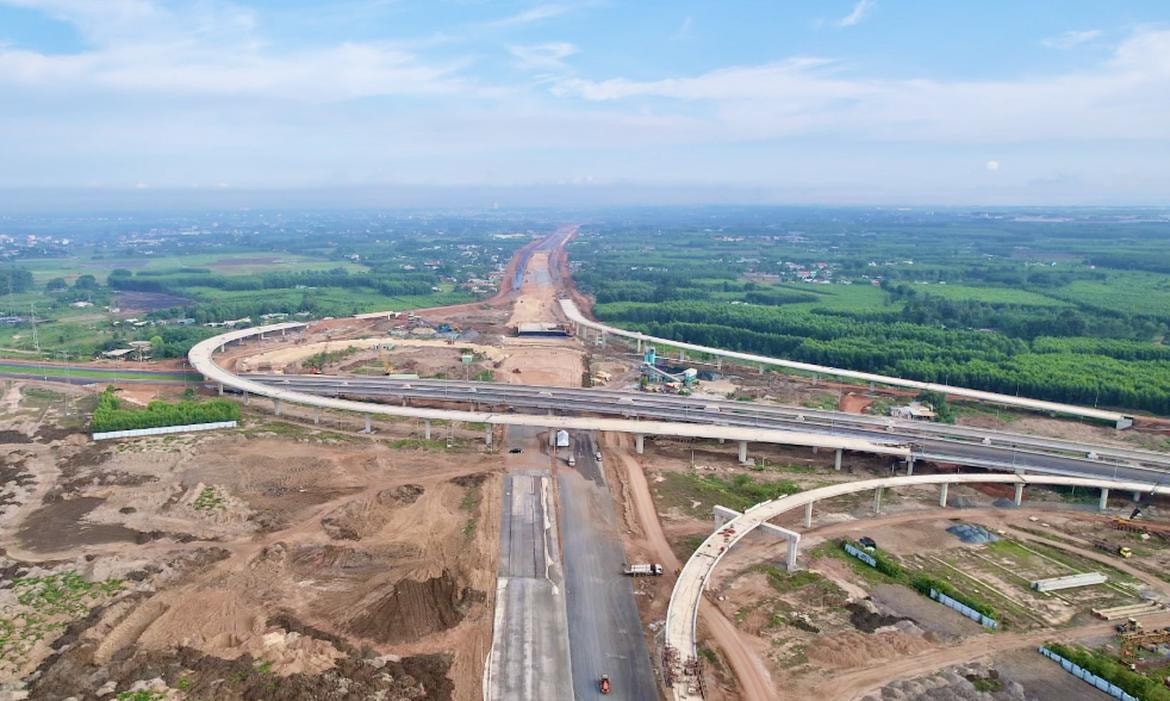
Expanding through public investment with 15 projects.
Based on a review and assessment of the current status of the entire route from Lang Son to Ca Mau, to suit transportation needs, the approved road network plan, and the technical standards and regulations for expressways, two options have been proposed by the Thang Long Project Management Board in a submission to the Ministry of Construction for appraisal of the pre-feasibility study report for the investment project to expand the sections of the North-South Expressway in the East.
Option 1Expanding sections with high transport demand and ensuring continuity and effective connectivity is necessary, including the sections from Mai Son to Bai Vot and Nha Trang to Dau Giay, with a total length of approximately 534km. The remaining sections will be studied for investment and expansion after 2030.
According to this plan, the preliminary total investment is approximately 63,411 billion VND. Of this, the expansion for the 5 component projects invested under the public investment model (Mai Son - National Highway 45; National Highway 45 - Nghi Son; Nghi Son - Dien Chau; Vinh Hao - Phan Thiet; Phan Thiet - Dau Giay) is approximately 38,158 billion VND.
The expansion for the 3 component projects invested under the PPP method amounts to approximately VND 25,253 billion (total investment including interest).
Option 2This study aims to expand the entire route from Mai Son to Cam Lo and from Quang Ngai to Dau Giay, with a total research length of approximately 1,144km, to ensure seamless connectivity from Hanoi to Ho Chi Minh City, meeting expressway standards and maximizing the importance of the route within the North-South economic corridor.
According to the plan, the preliminary total investment is approximately VND 154,246 billion, including: the expansion of 15 component projects invested under the public investment model, amounting to approximately VND 128,994 billion; and the expansion of 3 component projects invested under the PPP model, amounting to approximately VND 25,253 billion (total investment includes interest). The sections within the study area will be expanded to a full 6-lane expressway according to the plan, with a design speed of 100-120 km/h.
Regarding investment methods, based on an analysis of advantages and disadvantages, the project management unit proposed public investment for 15 component projects that have already been implemented under the public investment model. The group of component projects already implemented under the PPP model is proposed to continue expanding their implementation under the PPP model with support from the state budget.
Propose two main policy groups.
To facilitate project implementation after approval by competent authorities, the research unit has proposed two main policy groups.
Group 1 includes policies approved by the National Assembly for road and railway projects, such as: policies on the authority to decide on investment policies (during periods when the National Assembly is not in session, the Government submits to the Standing Committee of the National Assembly for consideration and decision on adjustments to investment policies, except in cases of increasing the total investment amount).
Policy on assessing the feasibility of capital allocation for projects (projects not required to assess funding sources or capital allocation capacity as stipulated in the Law on Public Investment).
Group 2 consists of proposed supplementary policies, including: policies on environmental impact assessment (EIA) for projects (allowing project owners to avoid conducting EIA during the investment planning, appraisal, and approval process. During the construction phase, the contractor is responsible for implementing environmental protection measures according to the approved EIA report at the phased stage of each component project).
In addition, there is a policy on converting the investment form of component projects (the Ministry of Construction is allowed to approve adjustments to the policy on converting the investment form for 3 component projects invested under the PPP method to public investment if, during implementation, no investor is selected in accordance with the law).


