
Proposal to adjust import taxes on various types of automobiles.
This morning (October 27), Minister of Finance Dinh Tien Dung, authorized by the Government, presented a proposal to amend the draft Law on Special Consumption Tax, which includes adjustments to the tax rates on many imported automobiles.
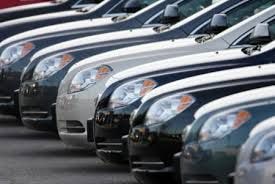 |
Import taxes on many types of automobiles will be adjusted in the near future.
According to Minister Dinh Tien Dung, in the context of reducing import taxes to 0% on automobiles, as well as many other goods subject to excise tax under the ASEAN Trade in Goods Agreement and several bilateral agreements, it is necessary to revise the excise tax rate on automobiles to a level equivalent to that of Southeast Asian countries for environmentally friendly vehicles with small engine capacities, in order to create favorable conditions for the development of Vietnam's automobile industry.
In particular, regarding the special consumption tax rate on automobiles – a product of great public interest – the government's goal in revising these tax rates is to encourage the development of environmentally friendly automobiles, promote the development of supporting industries, create conditions for domestic businesses to develop the market, and increase investment to enhance competitiveness during integration (in 2018, import tax on automobiles with 9 seats or less was reduced to 0%).
The proposed adjustments to excise tax rates on automobiles are directed towards reducing the excise tax rate for priority vehicle lines; applying high and exceptionally high excise tax rates to vehicles with up to 9 seats, engine capacities exceeding 3.0 liters, high fuel consumption, large dimensions unsuitable for existing traffic infrastructure and people's income levels, high environmental emissions, and vehicles with up to 9 seats that have a high absolute value.
"To encourage energy conservation, countries generally apply lower excise tax rates to vehicles with smaller engine capacities. In particular, some countries even apply low excise taxes to energy-efficient vehicles and vehicles using clean energy," Minister Dinh Tien Dung stated.
Accordingly, to give businesses time to prepare for investment (approximately 1 to 2 years) and to align with the import tax reduction roadmap, the Government is submitting to the National Assembly a roadmap for implementing the special consumption tax rate along with dividing certain vehicle models into smaller groups based on cylinder capacity as follows:
For passenger cars with 9 seats or fewer: A tax of 40% will be applied to cars with engine capacity of 1,000 cm3 or less (a 5% reduction compared to the current rate) from July 1, 2016, and 25% from January 1, 2019; 40% for cars with engine capacity over 1,000 cm3 (a 5% reduction compared to the current rate) from July 1, 2016, and 25% from January 1, 2019; and 40% for cars with engine capacity between 1,000 cm3 and 1,500 cm3 from July 1, 2016 (a 5% reduction compared to the current rate) and 25% from January 1, 2019. The tax rate will be 40% for cars with engine capacities between 1,500 cm³ and 2,000 cm³ from January 1, 2018 (a 5% reduction compared to the current rate) and 30% from January 1, 2019. However, the tax rate of 50% will remain unchanged for cars with engine capacities exceeding 2,000 cm³.
Besides reducing some import taxes on the aforementioned types of cars with engine capacities, the draft law adjusts the tax rates upwards for several types of cars as follows: A tax of 55% will be applied to cars with engine capacities between 2,500 cm³ and 3,000 cm³ (a 5% increase compared to the current rate) from January 1, 2018, and 60% from January 1, 2019; 90% for cars with engine capacities between 3,000 cm³ and 4,000 cm³ from July 1, 2016 (a 30% increase compared to the current rate); 110% for cars with engine capacities between 4,000 cm³ and 5,000 cm³ from July 1, 2016 (a 50% increase compared to the current rate); and 130% for cars with engine capacities between 5,000 cm³ and 6,000 cm³ from July 1, 2016 (a 70% increase compared to the current rate). 150% for tanks over 6,000cm3 from July 1, 2016 (a 90% increase compared to the current rate).
Specifically for motorhomes, which are large vehicles with large engine capacities and high value, it is proposed that a tax rate of 70% be applied from July 1, 2016, and 75% from January 1, 2018.
For passenger cars with 10 to under 16 seats: We propose reducing the tax rate from the current 30% to 15%.
For passenger cars with 16 to under 24 seats: Although many countries levy taxes on this type of vehicle, it is rarely used for household consumption. Therefore, we propose reducing the tax to 10% (a 5% reduction compared to the current rate).
For vehicles that carry both passengers and goods: Currently, this type of vehicle is subject to a special consumption tax rate of 15% regardless of engine displacement. To encourage the use of fuel-efficient vehicles, it is proposed to amend the tax rate regulations to increase it for this type of vehicle based on engine displacement as follows: Maintain a 15% tax rate for vehicles with engine displacement of 2,500cm3 or less. For vehicles with engine displacement between 2,500cm3 and 3,000cm3, apply a 20% tax rate from July 1, 2016 (a 5% increase compared to the current rate). For vehicles with engine displacement above 3,000cm3, apply a 25% tax rate from July 1, 2016 (a 10% increase compared to the current rate).
Finally, for electric vehicles, a tax of 15% will be applied to passenger cars with 9 seats or fewer (a 10% reduction compared to the current rate); 10% for those with 10 to under 16 seats (a 5% reduction compared to the current rate), and 5% for those with 16 to under 24 seats (a 5% reduction compared to the current rate).
According to Labor
| RELATED NEWS |
|---|


