
Going to temples at the beginning of the year - belief and its distortions.
Visiting temples at the beginning of the year has long been a cultural and religious tradition for many Buddhists and tourists from near and far. Besides the beautiful aspects of this New Year's ritual, there are still some unsightly distortions that detract from the inherent beauty of this custom.
Inscribed in sacred temples
Ong Hoang Muoi TempleLocated in Thinh My commune, Hung Nguyen district, on the morning of the 7th day of the Lunar New Year, hundreds of visitors, carrying offerings and written prayers, waited to enter and make their offerings. Observations showed that almost everyone entering the temple brought offerings including gold coins, gold bars, and mandarin hats stacked high, forming a mound taller than a person's head. Some families also prepared sticky rice with chicken, five kinds of fruit, sweets, and roasted pork.
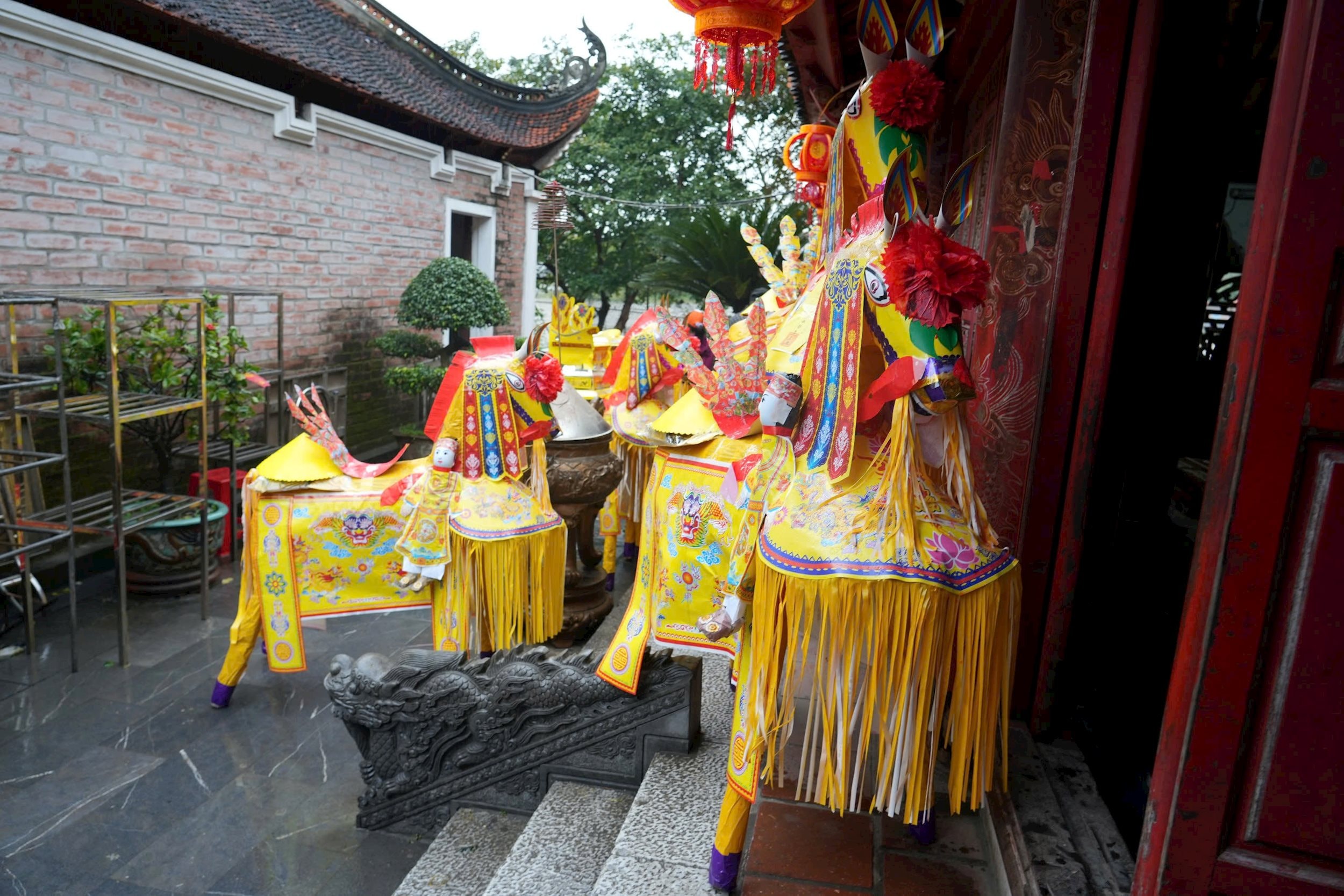
Notably, many visitors to the temple also bring giant paper horses to offer as sacrifices. Tourists explain that Quan Hoang Muoi was a military official, so he needed a horse, official robes and a hat; to be truly respectful, they needed to prepare everything properly.
A paper horse, painted red and gilded, almost the same height as a real horse, costs about 1 million dong. Those wishing to purchase a paper horse for the ceremony must place orders with suppliers around the temple a month in advance.
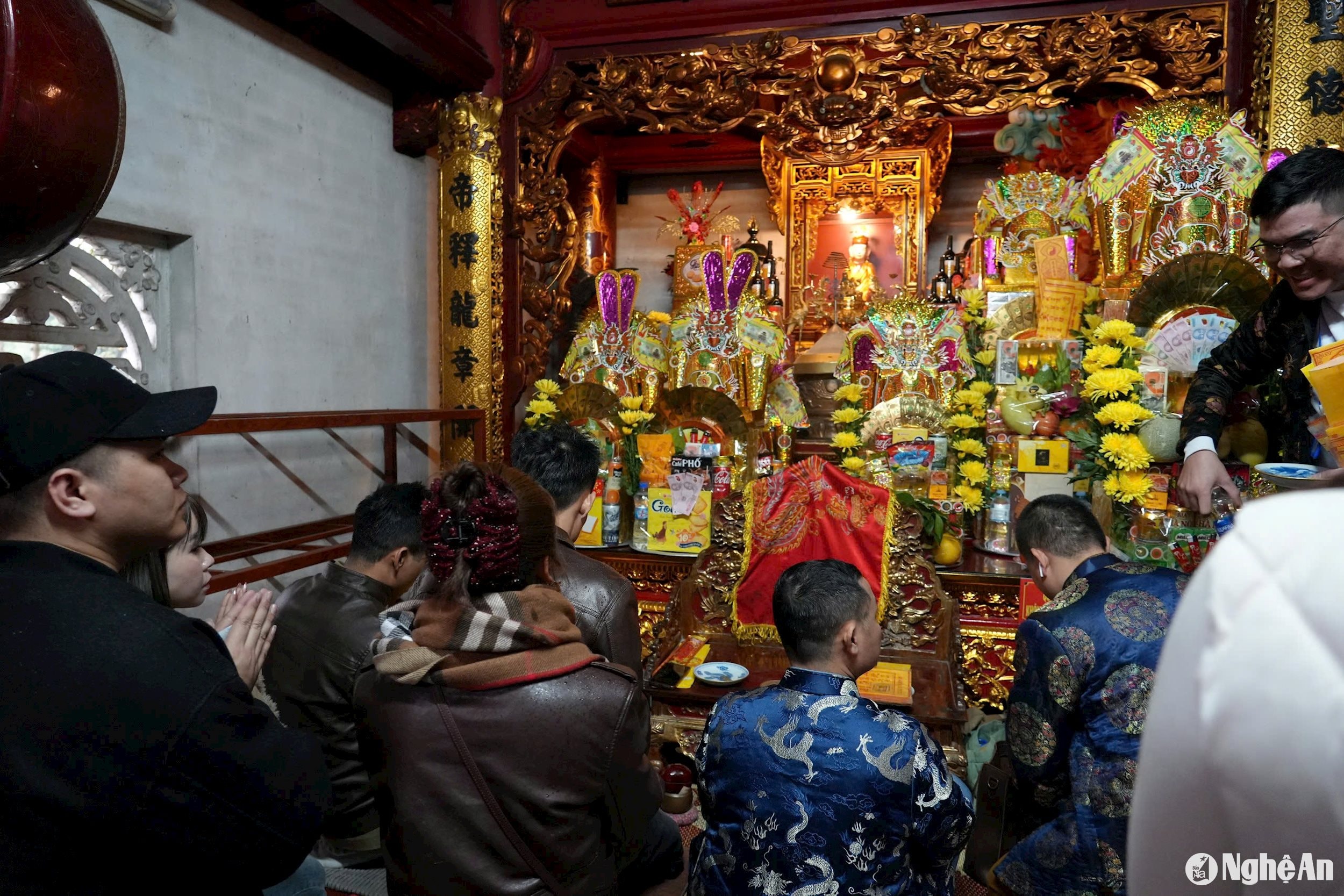
According to Mr. Nguyen Kim Khoa, Deputy Head of the Management Board of Ong Hoang Muoi Temple, the preparation and arrangement of offerings are up to the family, and the temple only advises on fire safety and prohibits people from bringing the "horse statue" into the shrine to avoid fire hazards.
Mr. Khoa also said that from the first day of Tet until now, the temple has welcomed about 100,000 visitors, many of whom came to the temple to pray for peace and ward off bad luck at the beginning of the year. Each family brought a very large and bulky offering, sometimes the temple did not have enough space to display the offerings, and the family had to carry them in their hands while waiting for hours.
A common phenomenon at many temples and pagodas today is the proliferation of services offering rituals to ward off bad luck, pray for peace, and provide spiritual divination. For each prayer session, the family has to prepare offerings costing at least 1-2 million VND, and sometimes even tens of millions of VND.
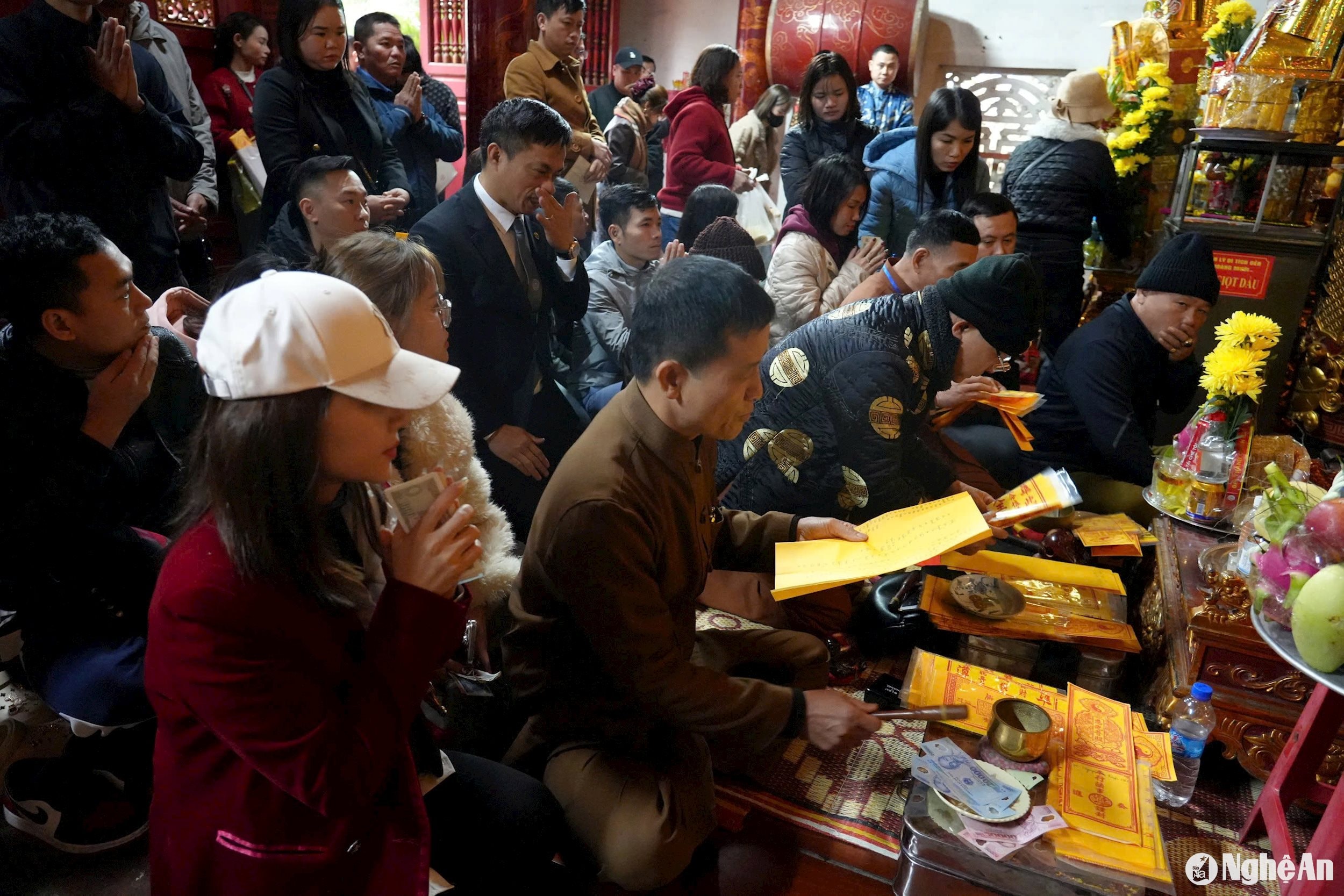
According to the Ong Hoang Muoi Temple Management Board, there are currently 30 people at the temple who are called "spiritual assistants," performing prayers and invocations on behalf of the families, and are managed by the temple. However, the agreements between the families and these individuals regarding the performance of prayers for peace and good fortune are not regulated. "Many visitors also bring their own spiritual teachers to the temple, and the temple cannot manage these teachers," said Mr. Nguyen Kim Khoa, Deputy Head of the Ong Hoang Muoi Temple Management Board.
Don't let the "selling of sacred things" take center stage.
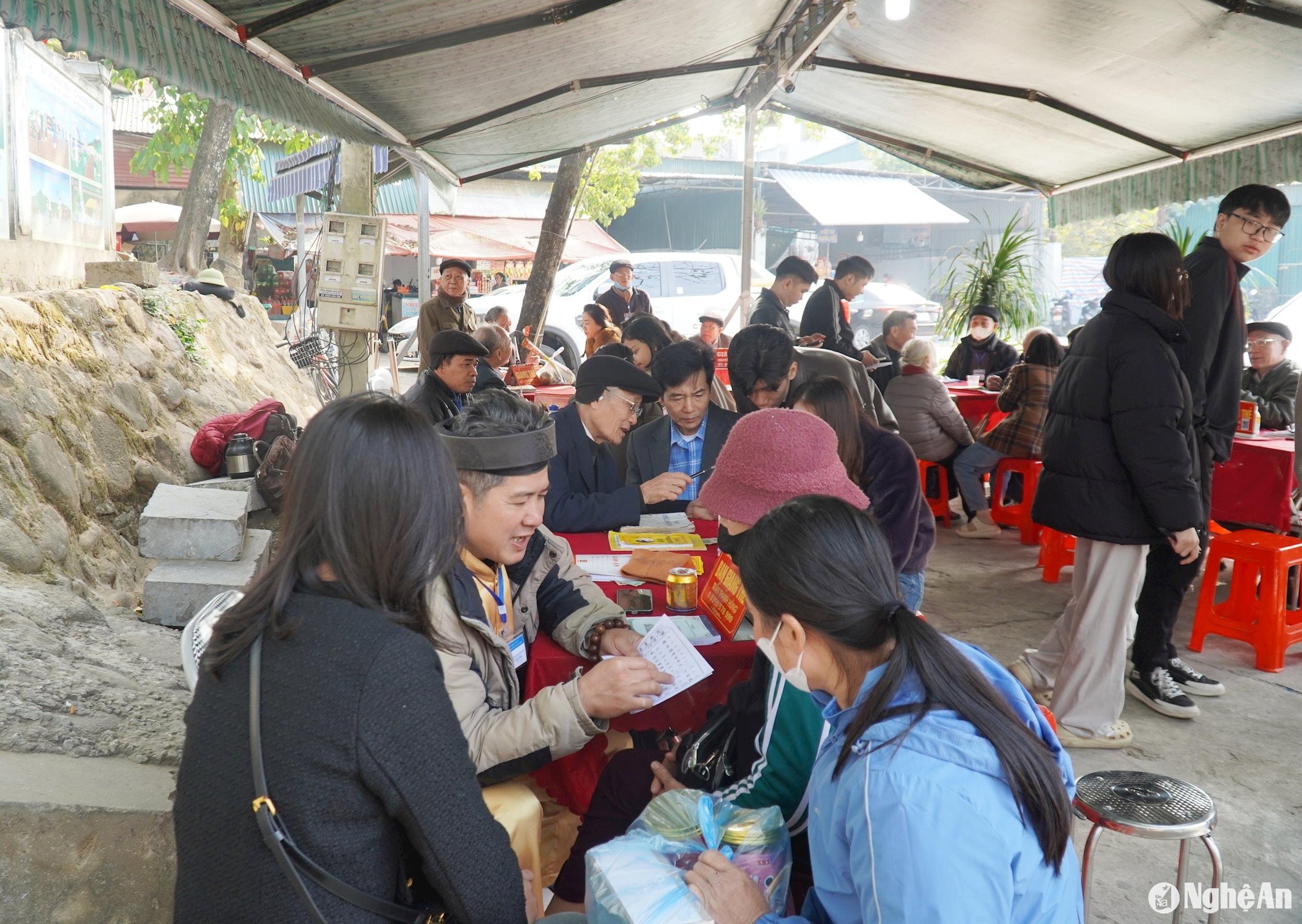
At Cờn Temple in Hoàng Mai town, the first days of the year are also packed with tourists. Around the temple, services such as writing prayers, fortune telling, and divination are also flourishing. These are long-standing spiritual activities of this famous temple in Nghệ An province.
According to the temple management, approximately 10,000 visitors come to the temple daily to worship or offer prayers and seek blessings. Most visitors seek fortune telling and divination to learn about their luck in the new year. After the divination results in a certain number, visitors take their card to the corresponding divination area to receive their fortune. Visitors who want a detailed understanding of their luck for the year need someone to interpret the numbers; thus, the temple offers two services related to this divination. The temple management also stated that the service is very inexpensive, so visitors don't complain, and furthermore, it's a long-standing tradition, so the temple continues to maintain it.
However, when asked if the fortune teller would provide guidance on how to avert misfortune if the divination indicated it, the answer was that it depends on the individual. The fortune teller would only provide guidance if the individual requested it...
On January 30, 2024, the Prime Minister issued Official Dispatch No. 11/CD-TTg on ensuring civilized, safe, and economical practices in religious activities during the Lunar New Year. According to the dispatch, religious establishments must prevent superstitious activities, distortions, and deviations from social norms, as well as the exploitation of spiritual activities for personal gain. They must also refrain from the indiscriminate burning of votive paper and offerings, which is wasteful and extravagant, or that takes place in inappropriate locations within religious establishments.
Currently, practices such as offering prayers to ward off bad luck, pray for peace, and pray for wealth are quite common, and almost every temple and pagoda engages in these activities. It can be said that this has become a familiar custom among the people. To prevent people from exploiting religious beliefs for profit, authorities at all levels need to implement stricter management mechanisms.
According to Assoc. Prof. Dr. Nguyen Quang Hong - Vinh University
"To have a joyful and civilized Spring Festival, a time for religious and spiritual celebrations, people should understand that no religion or belief encourages human greed. Regularly cultivating and sharing positive energy with those around you will create a peaceful and happy atmosphere, leading to greater efficiency in work. This is also the universal goal that all religions and beliefs strive for," shared Associate Professor Dr. Nguyen Quang Hong.


