Along the winding roads through the vast forests of western Nghe An, where villages are separated by mountains, there are people who quietly go about their community work every day. They are village elders, community leaders, and respected figures – people whose words, actions, and exemplary behavior have become a bridge between the Party, the government, and the ethnic minority communities.
The "torchbearer" in Pà Khốm
In the border regions of our country, protecting the border and boundary markers is not only the responsibility of the Border Guard forces but also requires the joint efforts of the people. Among them, influential figures in the community are crucial in connecting with and mobilizing the people to participate.
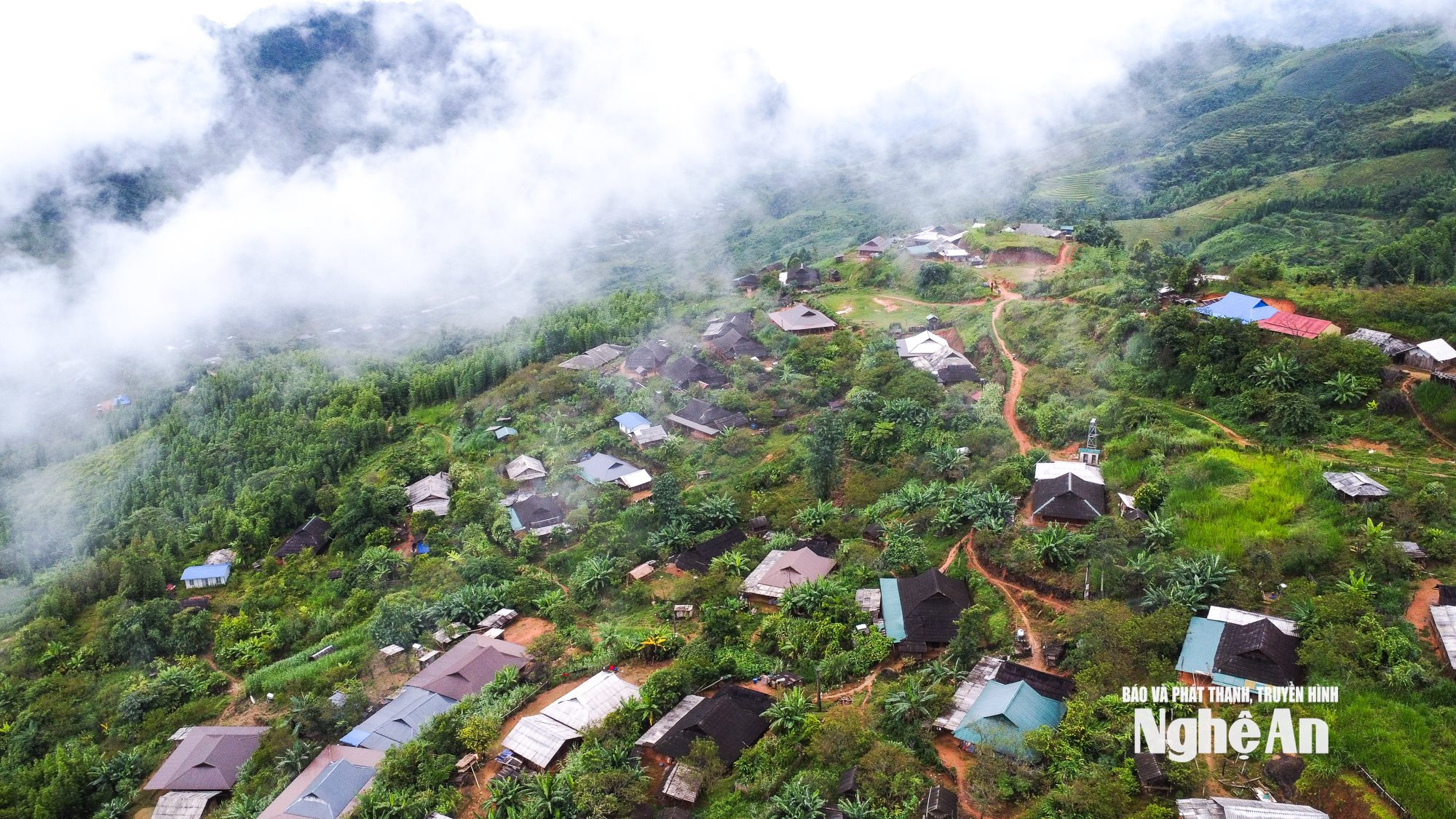
Pa Khom village, Tri Le commune. Photo: Thanh Cuong
Mr. Thò Chứ Hờ, a respected figure among the Hmong people in Pà Khốm village, Tri Lễ commune, is one such person. Despite being nearly 70 years old, he still diligently visits each family and meets with each villager to spread awareness and encourage participation. He describes this work with a familiar expression: "Going from street to street, knocking on every door, and identifying every individual."
Pà Khốm is a village inhabited entirely by the Hmong ethnic group, with approximately 50% of the population not fluent in the common Vietnamese language. This language barrier makes conveying policies, laws, and regulations to the people difficult. In this context, people like Mr. Hờ become the "extended arm" of the Party committee, the government, and the Border Guard.
Speaking in the Hmong language, he explained border regulations to the villagers, helping them identify the border line and markers; reminding their children not to listen to the enticements of bad people, not to cross the border illegally, and not to encroach on border areas. Issues that might seem dry and rigid became easier to understand and remember through the familiar way of speaking of someone from the same village and ethnic group.
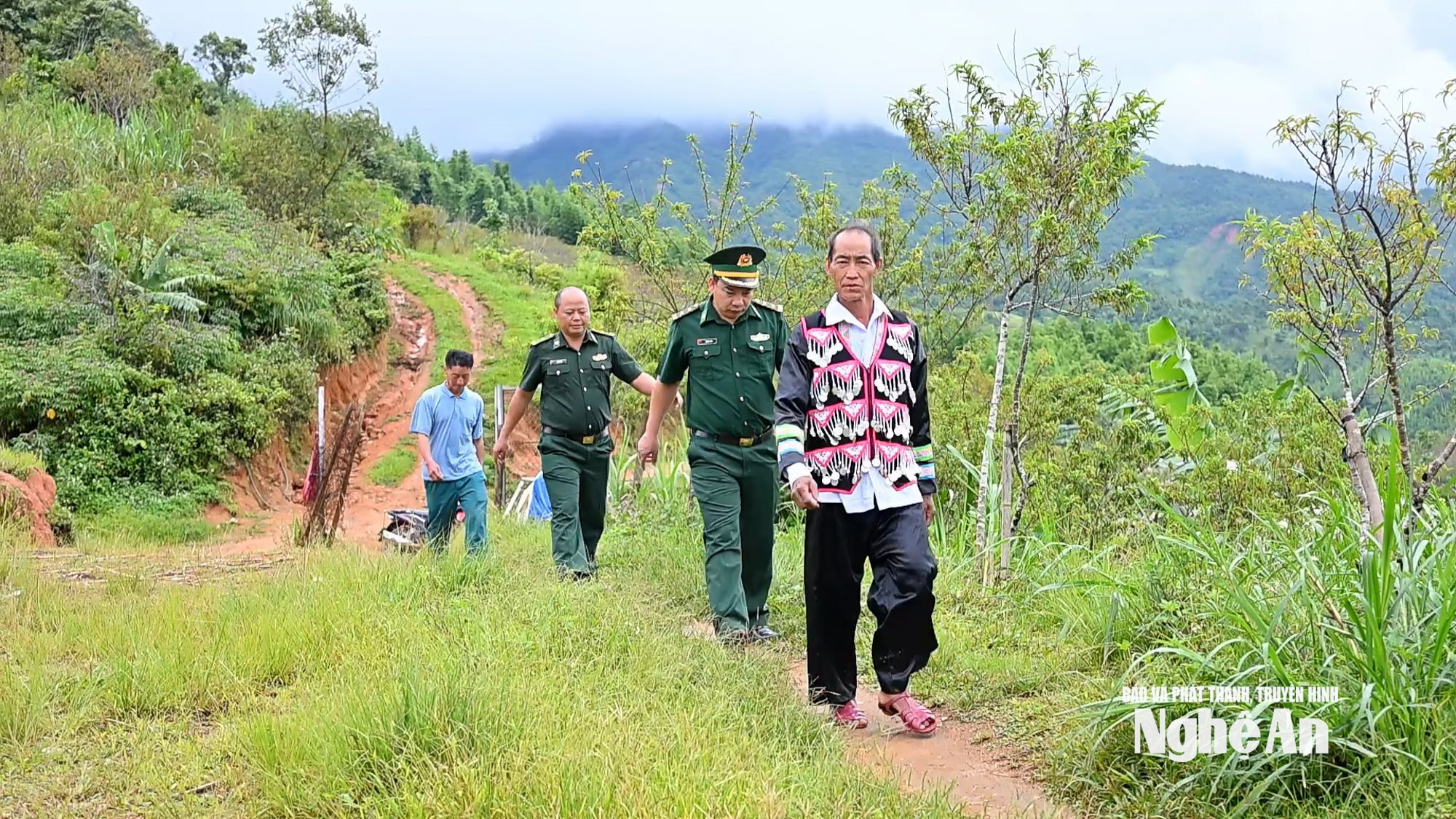
Mr. Tho Chu Ho, a respected figure in Pa Khom village, along with officers from the Tri Le Border Guard Post, disseminate information about the Border Guard Law. Photo: Thanh Cuong.
A few awareness campaigns alone cannot immediately change long-standing perceptions. Therefore, Mr. Tho Chu Ho chose a persistent approach, explaining things repeatedly. When people didn't understand, he would explain again; when a family still had concerns, he would visit their home. This sincerity and persistence gradually brought about change.
From believing that border patrol and protection were the responsibility of the Border Guard and the government, the people of Pà Khốm village are increasingly understanding that protecting the border is also protecting their village, their fields, and the peaceful lives of their families. As awareness changes, the spirit of self-governance within the community is gradually being awakened.
Beyond simply disseminating information, influential figures in border communes also directly accompany functional forces in patrolling the border and boundary markers, monitoring the local situation. With their thorough knowledge of every road, stream, field, and family in the village, they become crucial "eyes and ears" at the grassroots level, helping functional forces detect and prevent illegal activities, illegal border crossings, and disputes in border areas; they also participate in mediating conflicts arising within the community.
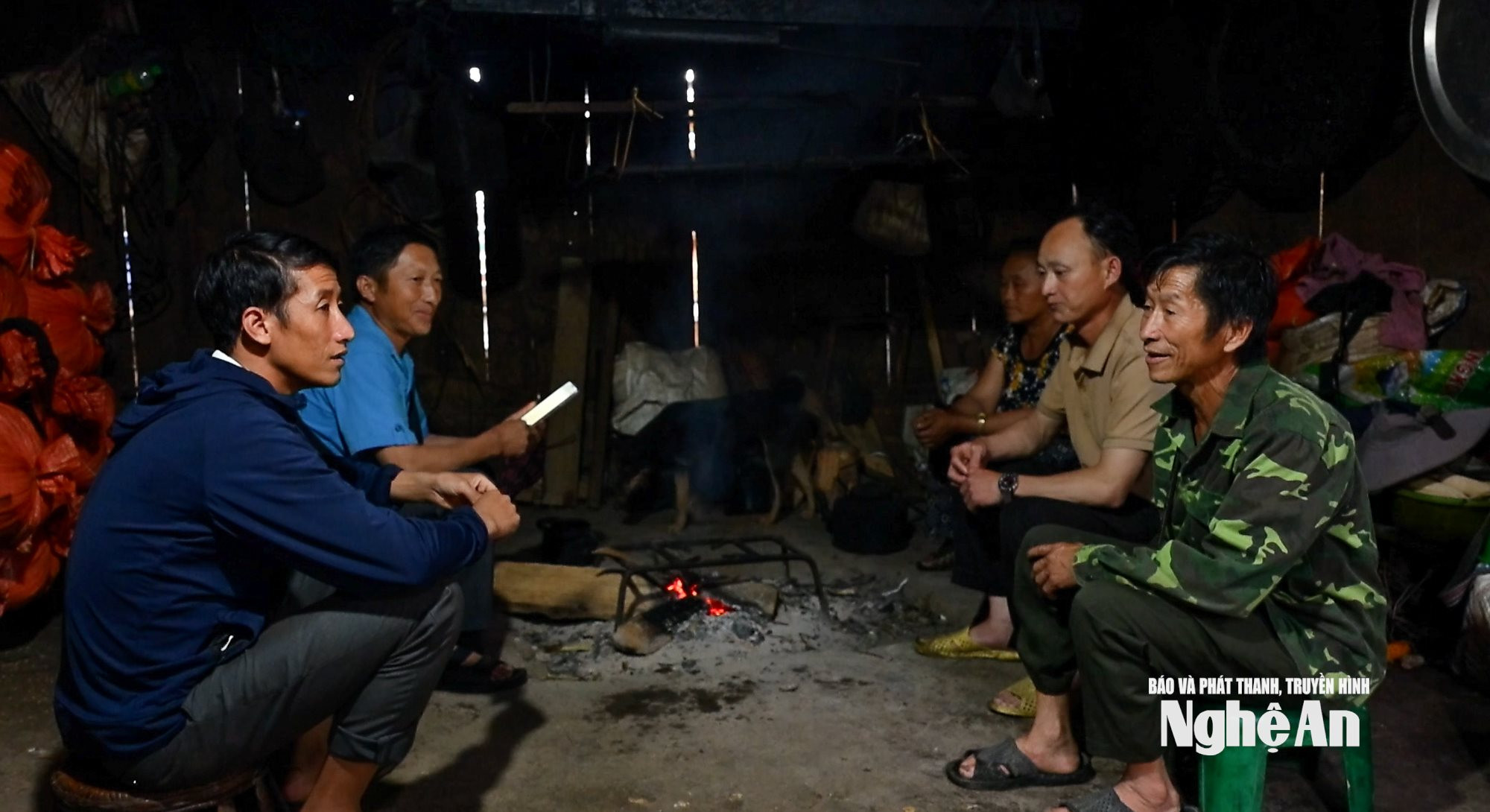
Photo: Thanh Cuong
"
Mr. Thò Chứ Hờ was not only a role model but also helped bring the policies of the Party and the State closer to the people.
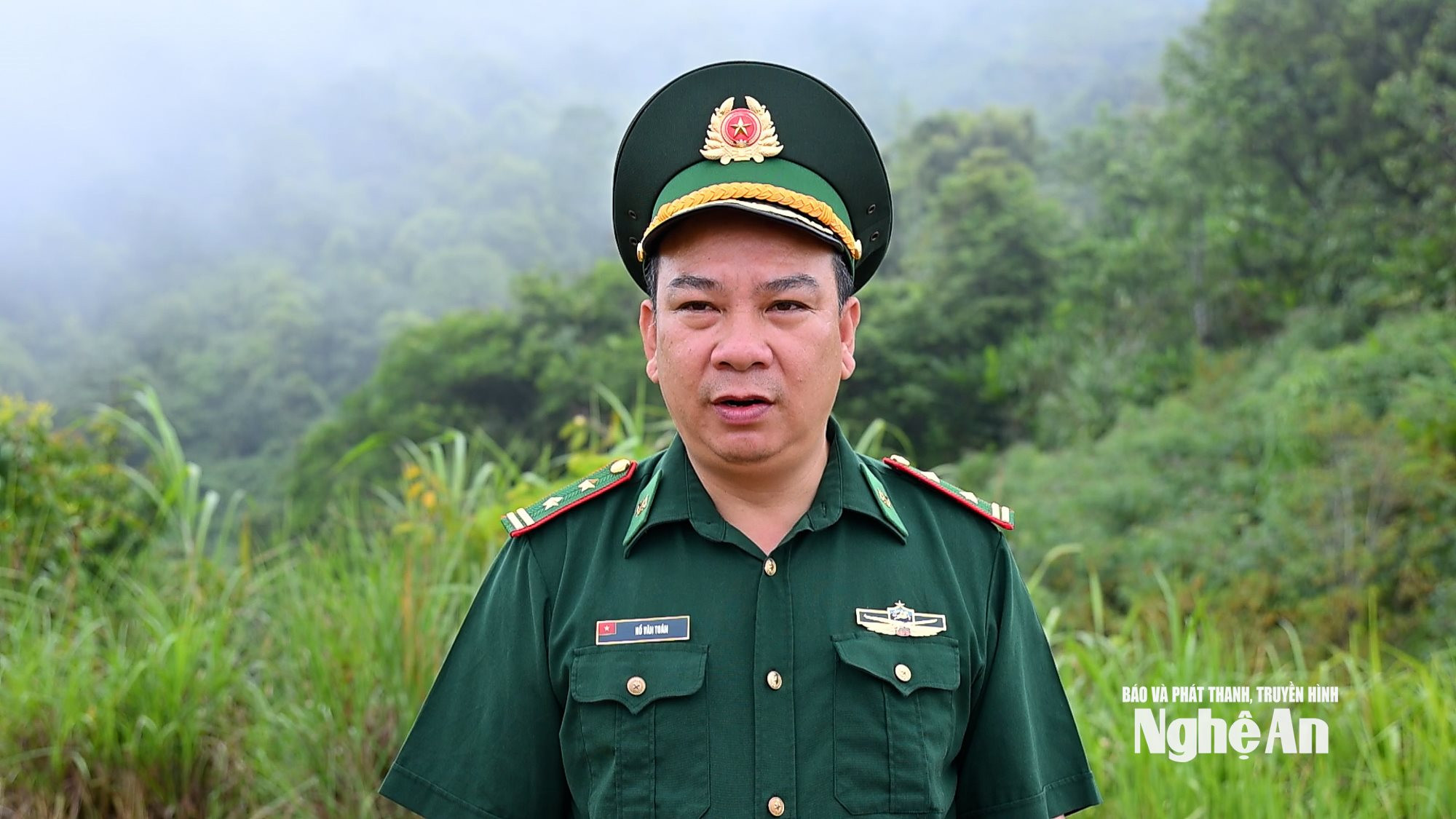
Lieutenant Colonel Ho Van Toan - Deputy Political Officer of Tri Le Border Guard Station
Lieutenant Colonel Ho Van Toan, Deputy Political Officer of Tri Le Border Guard Station, assessed that Mr. Tho Chu Ho is not only exemplary but also helps bring the policies of the Party and State closer to the people. Through persistent efforts, the awareness of the people of Pa Khom village regarding their responsibility to protect the border has changed significantly.
And Thò Bá Lý, the head of Pà Khốm village, succinctly summarized that role: "A person with prestige in the village speaks in a way the people understand, and acts in a way the people follow."
It is precisely because of their closeness to the people, their understanding of the people, and the trust they enjoy that people like Mr. Hờ have contributed to bringing policies and laws into life in a very unique way. In this way, prestige does not come from titles but is built over time, through concrete actions and responsibility to the community.
"The leading force"Huoi Co peak
While in Pa Khom village, Mr. Tho Chu Ho contributed to maintaining peace on the border, in Huoi Co village, Nhon Mai commune, Mr. Va Chan Do is known by the villagers for his exemplary conduct in many village affairs, from encouraging children to attend school and mediating conflicts to developing the economy.
Mr. Va Chan Do (far right) with village officials promoting the policy of integrated school system. Photo: Thanh Cuong.
Nhon Mai and Tri Le are mountainous areas still facing many difficulties. The long distance, difficult transportation, and language barriers have created numerous obstacles in disseminating information and mobilizing the people. In such cases, the role of village elders, community leaders, and influential individuals becomes even more prominent.
Taking advantage of his days off from farming, Mr. Va Chan Do would visit each family with children of school age. Some parents were hesitant about sending their children to boarding school, but he patiently explained in both Hmong and Vietnamese: “Rest assured! Sending your children to a boarding school means the government will take good care of their food and accommodation. With education, your children will be able to escape poverty and hardship in the future. Don’t worry, the village elder guarantees it!”
That simple "guarantee" carried weight because it was backed by the reputation he had accumulated over many years. People trusted him because what he said was always consistent with what he did.
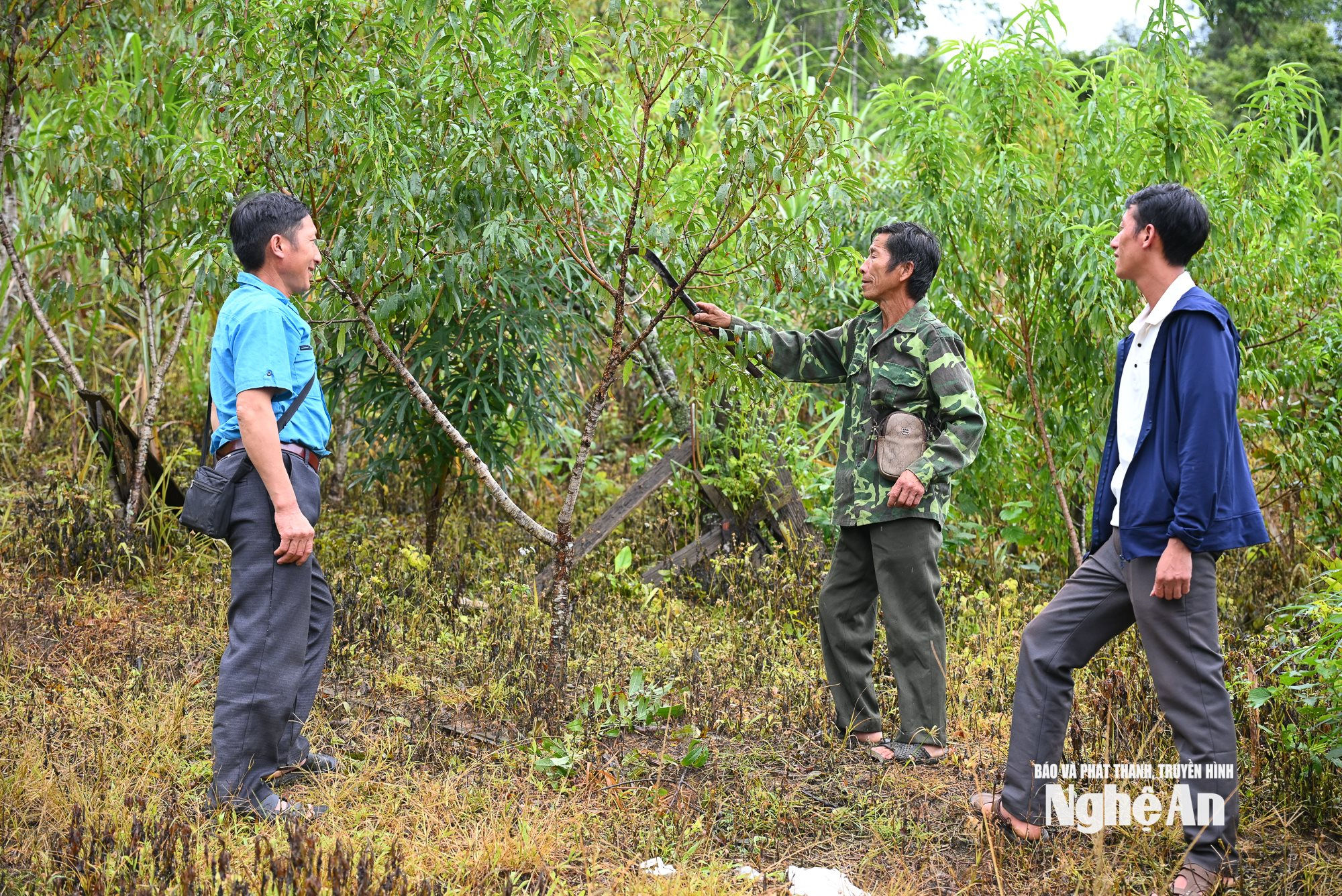
Mr. Va Chan Do instructs on how to care for peach trees, which have high economic value. Photo: Thanh Cuong.
According to Anh Va Ba Lu, a resident of Huoi Co village, Mr. Do frequently reminded the villagers to ensure their children received a full education, so that no child in the village would be left without literacy. However, Mr. Do believes that the story of escaping poverty doesn't just begin with school, but also with changing the way of thinking and doing things in production.
Therefore, along with encouraging children to go to school, he guided people in planting peaches, passion fruit, and other fruit trees supported by the State, gradually creating livelihoods and stabilizing their lives. To get people to follow suit, his family had to lead the way first.
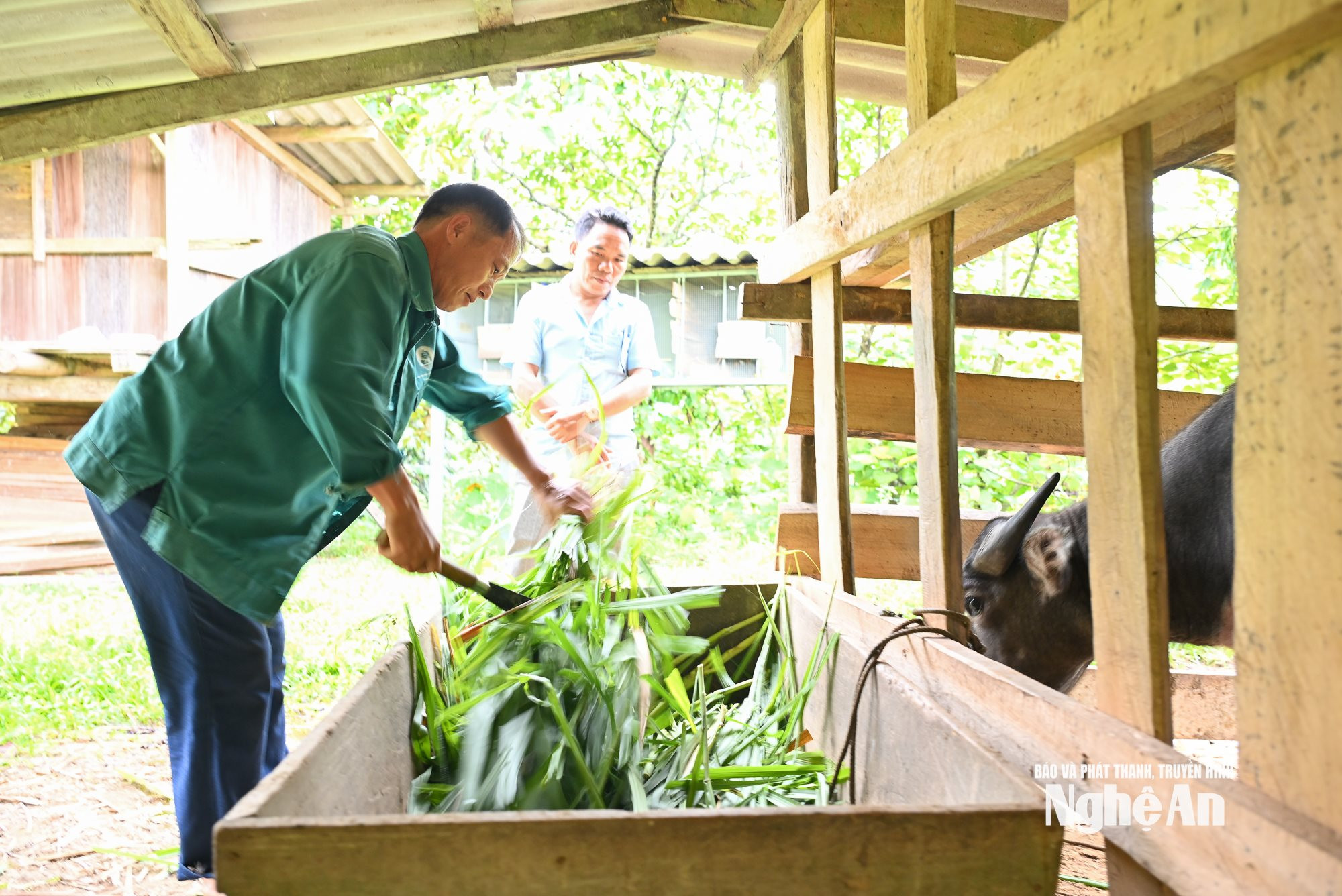
Based on that idea, he built an economic model with over 1,000 peach trees along with herds of buffalo, cows, pigs, and chickens. Besides livestock farming and perennial crops, his family also cultivated rice and grew various cash crops. The results of his family's model became concrete evidence that he used to encourage other villagers to change their production methods.
In a remote mountainous area, persuasive words are difficult to follow if the speaker cannot deliver on their promises. Therefore, Mr. Dờ chose to act first, achieve results, and only then persuade others. This principle of "words matching deeds" helped him build trust within the community.
Photo: Thanh Cuong
"
He is a shining example of economic development for the people of Huoi Co village to follow.
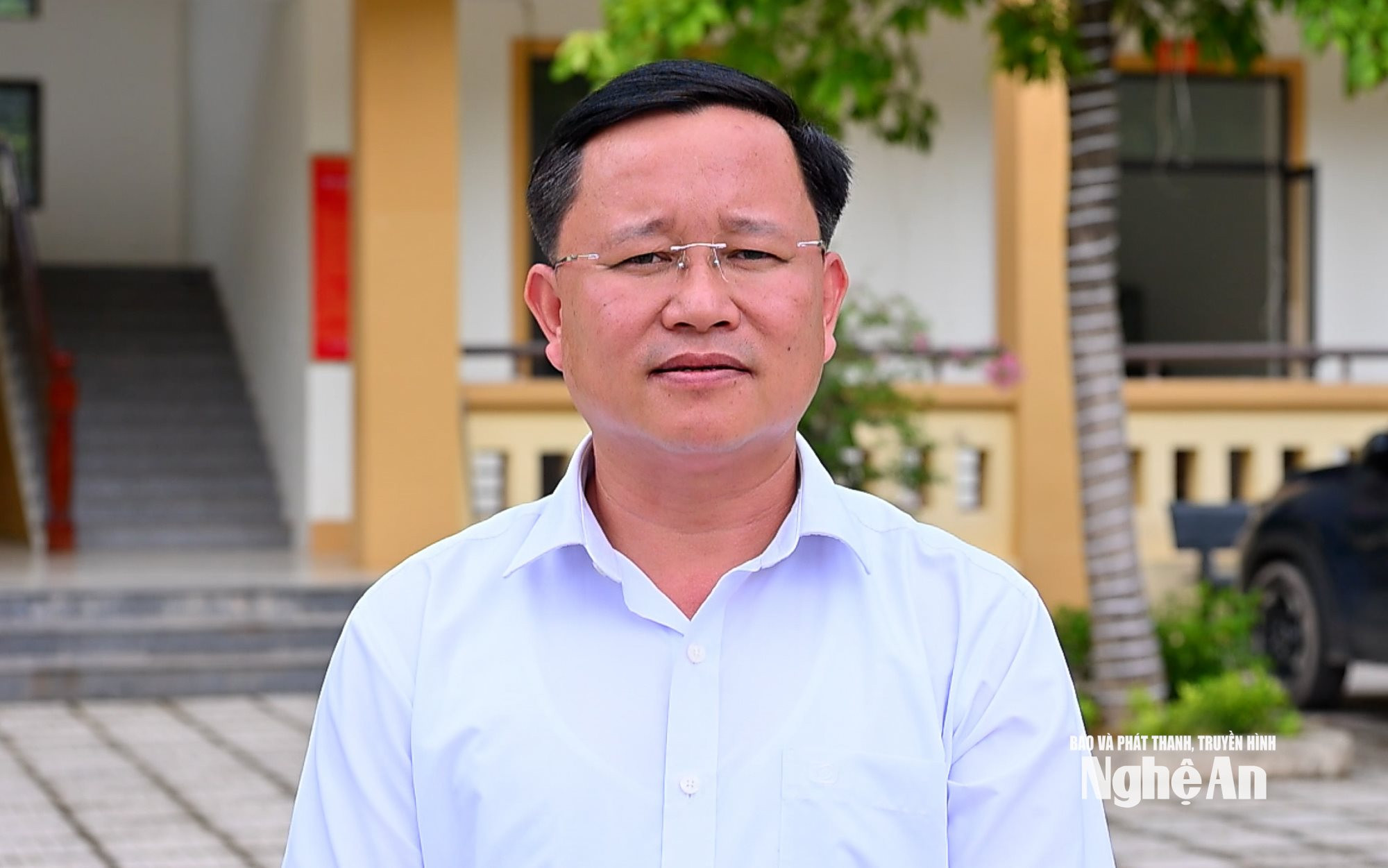
Secretary of the Party Committee of Nhon Mai Commune, Mac Van Nguyen
According to Mac Van Nguyen, Secretary of the Party Committee of Nhon Mai commune: “Village elder Va Chan Do is one of the exemplary individuals, with a household economy among the best in the village. He is a shining example of economic development for the people of Huoi Co village to follow.”
Based on such models, the locality has determined to continue promoting the role of influential individuals as key figures in disseminating information and mobilizing people to implement national target programs, develop production, and achieve sustainable poverty reduction.
But Mr. Va Chan Do's influence doesn't stop at economic matters. For many years, he has also been involved in mediating conflicts related to land, boundaries of cultivated fields, and kinship relations. Mr. Va Khua Do, the head of Huoi Co village, said that Mr. Do regularly collaborates with the village management board to educate people on developing production, protecting border security, and preventing child marriage. When disputes arise in the village, including complex conflicts within kinship groups, he and those in charge find ways to analyze and persuade all parties to resolve the issues.
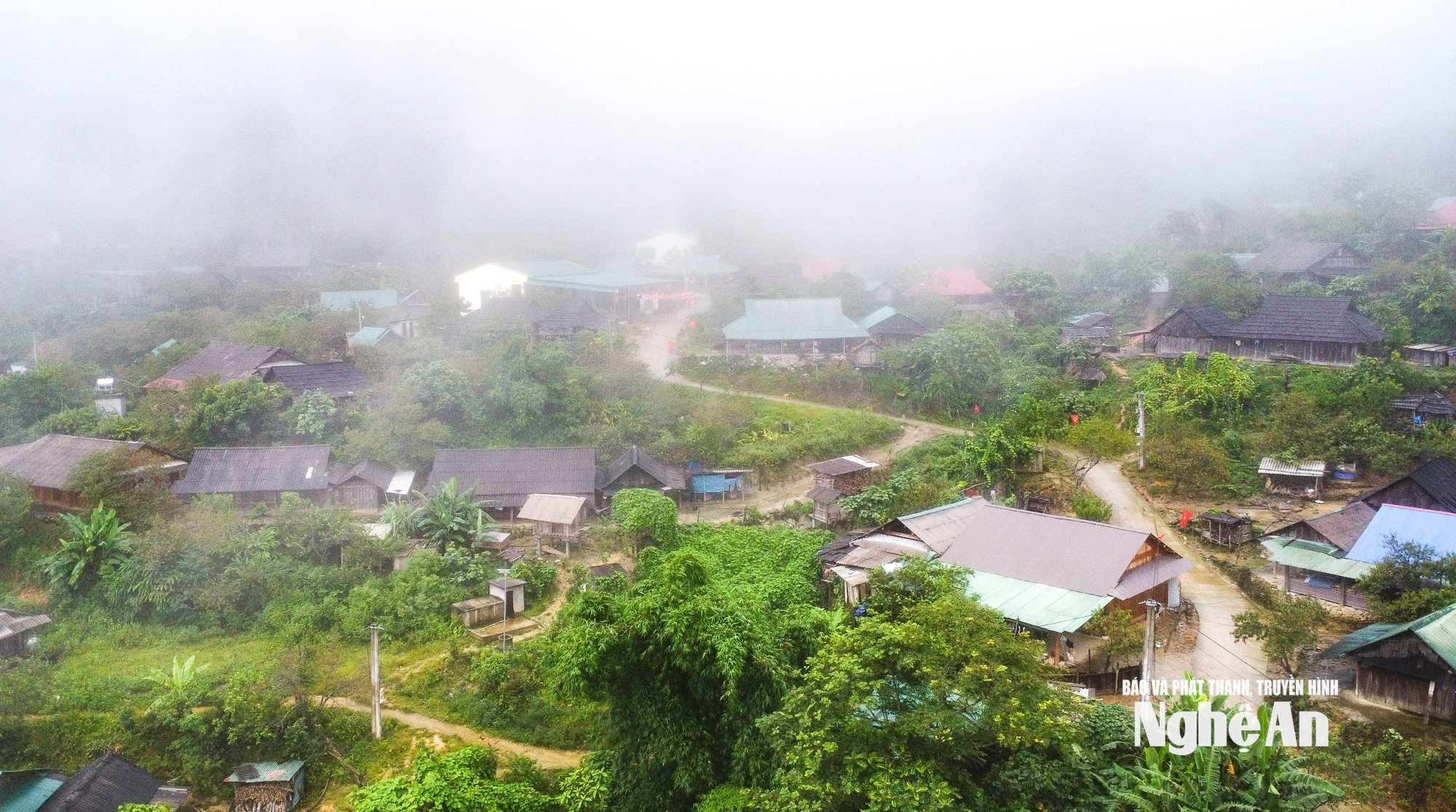
Huoi Co village, Nhon Mai border commune, is home to the Mong ethnic minority. Photo: Thanh Cuong
In communities where kinship ties, customs, and traditions deeply influence life, not all conflicts can be resolved through administrative regulations. Understanding the customs, language, and psychology of the community, especially among respected individuals, helps resolve many issues at the grassroots level, preventing minor conflicts from escalating and becoming more complex.
From the stories of Mr. Tho Chu Ho in Pa Khom and Mr. Va Chan Do in Huoi Co village, we can see that the greatest value of a respected person lies in the trust of the community. This trust does not come naturally, nor can it be formed simply from a title, but is cultivated through exemplary conduct, responsibility, and concrete actions over many years.
In Nghe An province, there are currently 983 influential figures among the Thai, Tho, Mong, Kho Mu, and O Du ethnic groups. Each has their own circumstances and methods of mobilization, but they all share the common traits of being close to the people, understanding the people, and having the ability to unite the community.
Thanks to the exemplary leadership of respected individuals, many economic models in border areas have been implemented effectively, contributing to improving the lives of local people. Photo: Thanh Cuong
In border areas, they cooperate with the Border Guard to patrol the border and boundary markers; provide information, contributing to preventing violations of the law, illegal encroachment, illegal settlement, illegal migration, and maintaining security and order at the grassroots level. In economic development, they are the pioneers, guiding people to apply new production models. In socio-cultural life, they contribute to gradually eliminating outdated customs such as child marriage, exorbitant dowry demands, and inappropriate funeral practices.
More importantly, through their prestige, they help connect major policies with very specific issues within each family, clan, and village. There are things that officials have to explain many times, but when village elders and respected individuals speak in the voice of the people, using familiar stories from their own communities, the people easily understand, agree, and follow.
Your comment has been submitted and will be displayed after being reviewed by the editorial team. The editorial board reserves the right to edit comments to comply with the newspaper's content guidelines.