
The weakness of Iran's outdated air force in modern confrontations.
Iran's use of aircraft from the 1960s and 1970s puts it at a significant disadvantage against Israel's and the US's F-35 stealth fighters in recent conflicts.
The Iranian Air Force is revealing serious strategic vulnerabilities as it deploys outdated aircraft against the world's most advanced combat systems. According to military experts, maintaining a fleet considered "antique" makes it difficult for Iran to control its airspace and counter precision attacks.
The technological gap between the Yak-130 and fifth-generation fighters.
In recent engagements, technological disparities have led to asymmetrical results. A prime example is the downing of an Iranian Yak-130 by an Israeli F-35 fighter jet. The Yak-130 is a subsonic jet trainer developed by Russia in the early 1990s, and only received by Iran in 2023. While possessing light combat capabilities, its speed is only half that of the F-35, and it completely lacks stealth capabilities.
Conversely, the F-35, manufactured by Lockheed Martin, possesses a stealth design and advanced avionics, allowing it to penetrate airspace undetected by traditional air defense systems. This makes Iran's outdated aircraft easy targets in air combat.
Condition of the aircraft fleet from the Cold War era
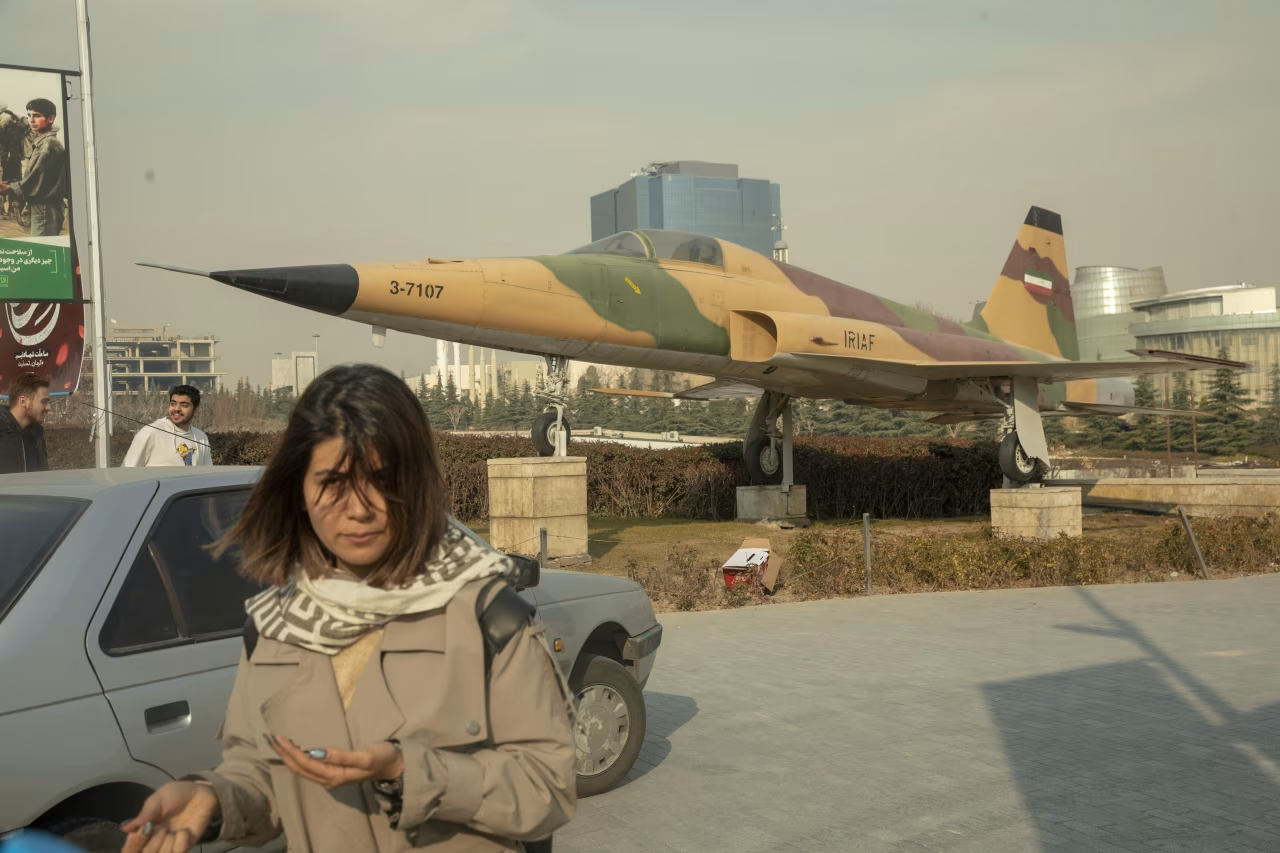
Much of Iran's current air force consists of aircraft acquired before the 1979 revolution. Names like the F-4 Phantom II and F-5 ceased production decades ago but still play a vital role.
- F-4 Phantom II:Introduced into service in the early 1960s, this type of aircraft was withdrawn from combat duty by the US military in 1996.
- F-5:This light fighter jet, contemporary with the F-4, is currently facing a shortage of components and structural aging.
- Sukhoi Su-24:Tactical bombers are Russian-made aircraft dating back to the early 1970s. Two Iranian Su-24s were shot down near the Persian Gulf in early March.
Statistics show that by 2025, Iran will operate approximately 218 fighter jets, a number lower than Israel's 278. Notably, the operational efficiency of the Iranian fleet has been severely impacted by prolonged sanctions.
Logistics and maintenance difficulties
Unable to purchase new aircraft or official components, Iran has to rely on intermediary markets and international brokers to maintain its fleet. Gathering components from old civilian aircraft or attempting to replicate technology independently has proven inefficient due to a lack of funding and specialized technical expertise.
As a result, accidents due to technical malfunctions occur frequently, even during training. Typical examples include the Bell 212 helicopter crash in 2024 that killed President Ebrahim Raisi, and the recent F-4 crash in Hamedan province that killed a pilot.
Shifting to missile and UAV tactics.
Aware of its air force's weakness, Iran has focused its resources on ballistic missile and unmanned aerial vehicle (UAV) programs. This is seen as an effort to create an alternative deterrent. However, developments in the June 2025 conflict showed that this strategy still has limitations, as Iran's critical military infrastructure and command chain continued to suffer heavy damage from enemy air attacks.


