
DIU: Russia integrates R-60 missile onto Geran-2 UAV
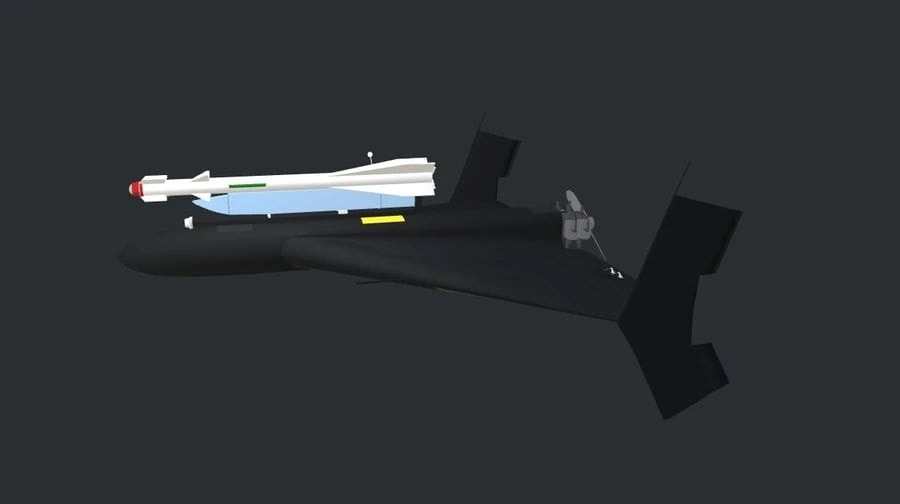
Ukrainian defense intelligence reports that Russia has modified the R-60 air-to-air missile to be mounted on the Geran-2 UAV, using a camera and Xingkay modem for launch control, after which the infrared seeker automatically locks onto the target.
The Ukrainian Defense Intelligence Agency (DIU) reported that Russia has modified the R-60 air-to-air missile for integration onto the Geran-2 unmanned aerial vehicle (UAV), targeting Ukrainian helicopters and aircraft. The DIU believes this configuration increases the threat to tactical aircraft and makes it more difficult for Ukraine to intercept UAVs.
The information below is presented according to DIU's description and does not include independent verification evidence from the source data.
How Russia integrated the R-60 onto the Geran-2, as described by DIU.
DIU stated that the R-60 missile is mounted on the APU-60-1MD launch rail. This assembly is attached to a special support located on the upper, front part of the UAV's body.
Regarding sensors and controls, DIU stated that the UAV is equipped with two cameras: one at the nose and one located behind the missile launcher. Image transmission and control commands are sent via the Xingkay Tech XK-F358 network modem.
Navigation components and anti-interference capabilities
DIU stated that the UAV's flight controller, navigation system, and inertial units remain similar to previous Geran variants.
To maintain satellite positioning capabilities under electronic warfare conditions, the UAV uses a Kometa module with 12 anti-jamming channels, according to DIU.
Operational principle: remote control and infrared sensors.
DIU describes the principle of using the R-60 on UAVs as possibly based on transmitting images from a camera to the operator. When a Ukrainian aircraft or helicopter enters the combat zone, the operator will send a launch command to the missile's automation system.
After liftoff, the R-60's infrared seeker will automatically lock onto the target. DIU also outlined another scenario: the infrared seeker identifies the target before launch and transmits the data to the operator for a firing decision.
Electronic components: DIU states multinational origin.
According to DIU, the electronic components of the UAVs originate from several countries, including the United States, China, Switzerland, Taiwan (China), Japan, Germany, and the United Kingdom.
The configuration summary is mentioned by DIU.
| Category | Description according to DIU |
|---|---|
| Integrated missiles | R-60 (air-to-air missile) |
| Ray launch | APU-60-1MD |
| Installation location | Special mounting brackets are located on the upper, front part of the UAV's body. |
| Observation sensor | Two cameras: one at the nose, one at the rear of the launch pad. |
| Data transmission link | Xingkay Tech XK-F358 Network Modem |
| Maintain positioning during electronic warfare. | Kometa 12-channel anti-interference module |
Tactical implications at the technical description level
With the configuration described by DIU, the Geran-2 UAV not only serves as an attack/explosive weapon but can also become a platform for situationally guided infrared missiles, depending on a sequence of camera observations, data transmission, and launch commands from the operator, before the missile self-guides using an infrared seeker in the final stage.
The DIU argues that the primary goal of equipping the Geran-2 with missiles is to increase the risk to Ukraine's tactical aviation and diminish the effectiveness of Russian UAV interception efforts.


