
Putting the wrong fuel in your car - a disastrous mistake.
Putting gasoline in a diesel engine can damage the engine, requiring it to be completely replaced.
For many people, the common way to distinguish between gasoline and diesel engines is by their sound. Gasoline cars usually have a quieter engine sound than diesel cars. However, with current engine technology, diesel cars operating on the Common Rail system (high-pressure direct injection), especially in passenger cars, also produce an engine sound very similar to gasoline cars.
| ||
| Some car manufacturers "help" drivers avoid confusion by printing the fuel type name on the fuel tank cap. Photo: Caregraf |
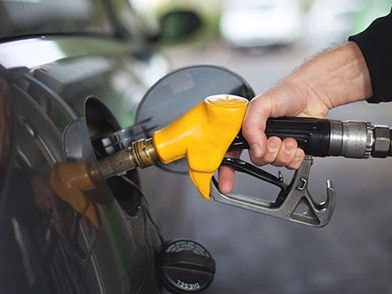
Mistakes in refueling can also occur in some cases when drivers borrow cars from others and are unaware of the type of fuel used for the engine. Even the habit of many people using the term "refueling" can lead gas station attendants to mistakenly refuel cars. According to him.Nguyen Dinh Hung, lecturer at the Faculty of Transportation Engineering, Department of Automotive and Electrical Engineering, Ho Chi Minh City University of Technology.The consequences are particularly bad when gasoline is mistakenly put in a diesel engine.
Diesel was mistakenly put in a gasoline engine.
This is a low-risk situation. The immiscibility of gasoline and diesel fuel causes the fuels to typically separate into two layers in the tank. Diesel is heavier than gasoline, so it settles to the bottom and enters the combustion chamber first. In a gasoline engine, along with pressure and temperature, the fuel-air mixture ignites thanks to the spark plug.
Diesel fuel, with its high compression ratio and low ignition potential, is difficult or impossible to ignite and produce power in a gasoline engine. This leads to the phenomenon of a car stalling quickly after mistakenly filling with the wrong fuel. If the driver tries to start the engine, the car will either continue to fail to start or emit a lot of black smoke from the exhaust pipe.
By mistake, gasoline was put in a diesel engine.
A diesel engine operates when a high-pressure atomized fuel-air mixture is injected into the combustion chamber. With a high compression ratio, the mixture spontaneously forms a flame, ignites, and produces power. With a low compression ratio, the ignition potential is high, and the fuel-air mixture self-ignites in the combustion chamber of a diesel engine. Multiple flame centers are formed, combustion occurs at multiple points, and multiple flame fronts are created in the combustion chamber.
The combined effect of multiple combustion reactions creates pressure that damages the piston head, bends or breaks the connecting rod, and damages the crankshaft. If the driver continues to operate the vehicle, ignoring signs such as jerking and a "clacking" sound at the front of the car, the engine system will be completely damaged.
How to fix it
Both situations have negative consequences, the severity of which depends on whether the driver continues to operate the vehicle or not. If you discover you've mistakenly put the wrong fuel in your car's engine, avoid attempting to start or force the vehicle to move. Drain the fuel from the tank, inspect and flush the engine system, including the fuel injectors, combustion chamber, and pistons.
However, the most important thing for car owners is to pay attention to refueling at gas stations. Don't leave it to the salesperson or ask someone else to refuel for you. Also, when lending your car, the owner should clearly state the type of fuel used for the engine.
According to VNE
| RELATED NEWS |
|---|


