
Measuring time with Tet flowers.
The hobby of growing flowers is not simply about appreciating beauty, but rather a way to express one's character, a subtle measure of personality, and a microcosm of social order that people aspire to reflect upon on occasions of bidding farewell to the old year and welcoming the new.
.png)
Content:Phuoc Anh/Present:Hong ToaiFebruary 12, 2026
*****
"Playing with flowers in Thang Long (Hanoi) was not just an ordinary matter; it was a way to express the principles of human conduct through flowers and plants. In other words, one could discern a person's character and integrity simply by observing their flower-playing. The way they played still implied the meaning of social morality and heavenly principles. Therefore, they used flower clusters and rocks to entrust their lofty aspirations." These words by the Confucian scholar Pham Dinh Ho in "Vu Trung Tuy But" (Essays from the Midst of War) are not merely a record of customs but also a silent cultural declaration about how the ancients viewed the relationship between humans and nature, between hobbies and the way of life. The hobby of flower playing was not simply about beauty to behold, but a place to express one's character, a subtle measure of personality, and a microcosm of the moral order that people aspired to reflect upon each occasion of bidding farewell to the old and welcoming the new.
*******
The tradition of enjoying flowers during Tet (Lunar New Year) is not unique to Thang Long – the thousand-year-old capital of culture – but is found throughout the country, blending into the rhythm of life and the mindset of each cultural region. Not every place enjoys flowers in the same way, nor do all flowers share the same meaning, but everywhere, during the Tet holiday, flowers hold a place of honor on ancestral altars, in living rooms, and on porches welcoming the new spring. Sometimes, a branch of peach blossoms evokes purity and integrity; sometimes, a pot of yellow apricot blossoms conveys hopes for wealth and prosperity; and other times, a cluster of chrysanthemums or a vase of narcissus are cherished as an elegant and refined pastime...
Each type of flower and each way of displaying them reflects a philosophy of life and a refined aesthetic, honed over time. From this, the tradition of displaying flowers during Tet (Vietnamese New Year) has become a lasting part of Vietnamese cultural life.
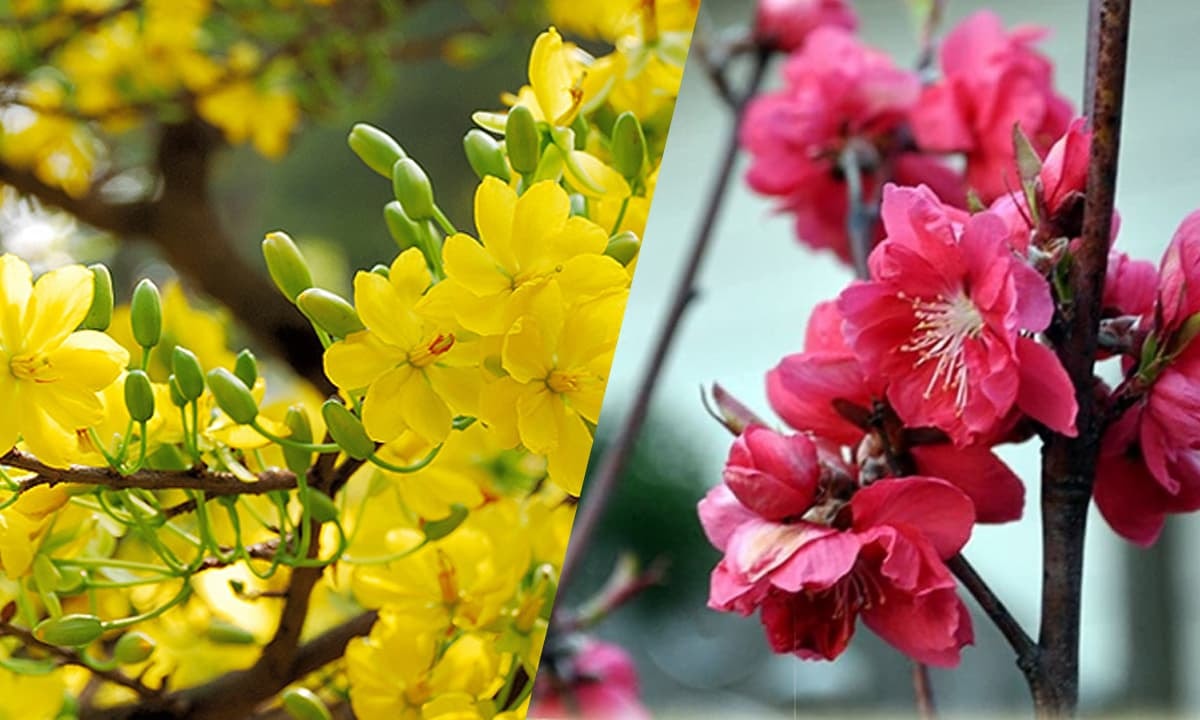
Peach blossoms and apricot blossoms remain familiar symbols of Vietnamese Tet (Lunar New Year), enduring through countless changes without ever leaving the spring-welcoming spaces of every family. However, alongside these enduring traditions, many ancient Tet flower-growing customs have gradually faded away in the modern era, remaining only in memories, books, or nostalgic literary works. Only in recent years, as the demand for more refined and leisurely cultural values has emerged, have some seemingly lost traditions begun to show signs of revival. Among them, the cultivation of daffodils is a special case.
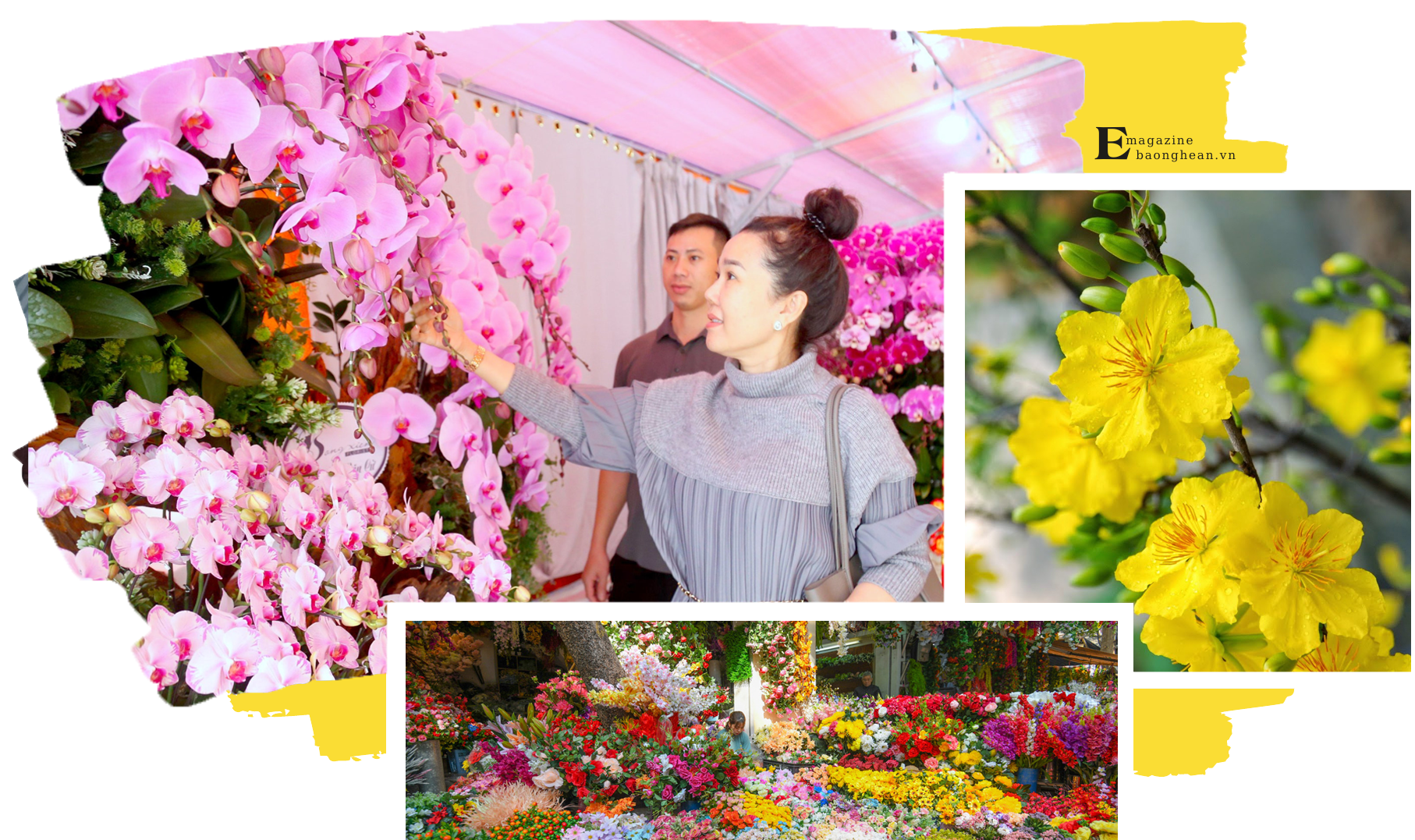
The writer Nguyen Tuan, who throughout his life cherished the enduring values of traditional culture, dedicated lines to the narcissus flower that were both nostalgic and respectful.
In the diary"In his book "Flowers," he calls the narcissus a kind of "clock" used by the ancients to measure time—a time that was not inanimate or dry, but one imbued with fragrance, color, and a ritualistic anticipation. "About half a century ago, I even saw our ancestors measuring time with flowers…," Nguyen Tuan wrote. From a single narcissus bulb, trimmed in the twelfth lunar month, through the skillful hands and meticulous calculations of the grower, the flower can bloom precisely at the moment of New Year's Eve—the most sacred moment of the year. At that time, the flower not only blooms for beauty, but also to "announce the time," to accompany people across the boundary between the old and the new, between the end of the year and the beginning of the next.
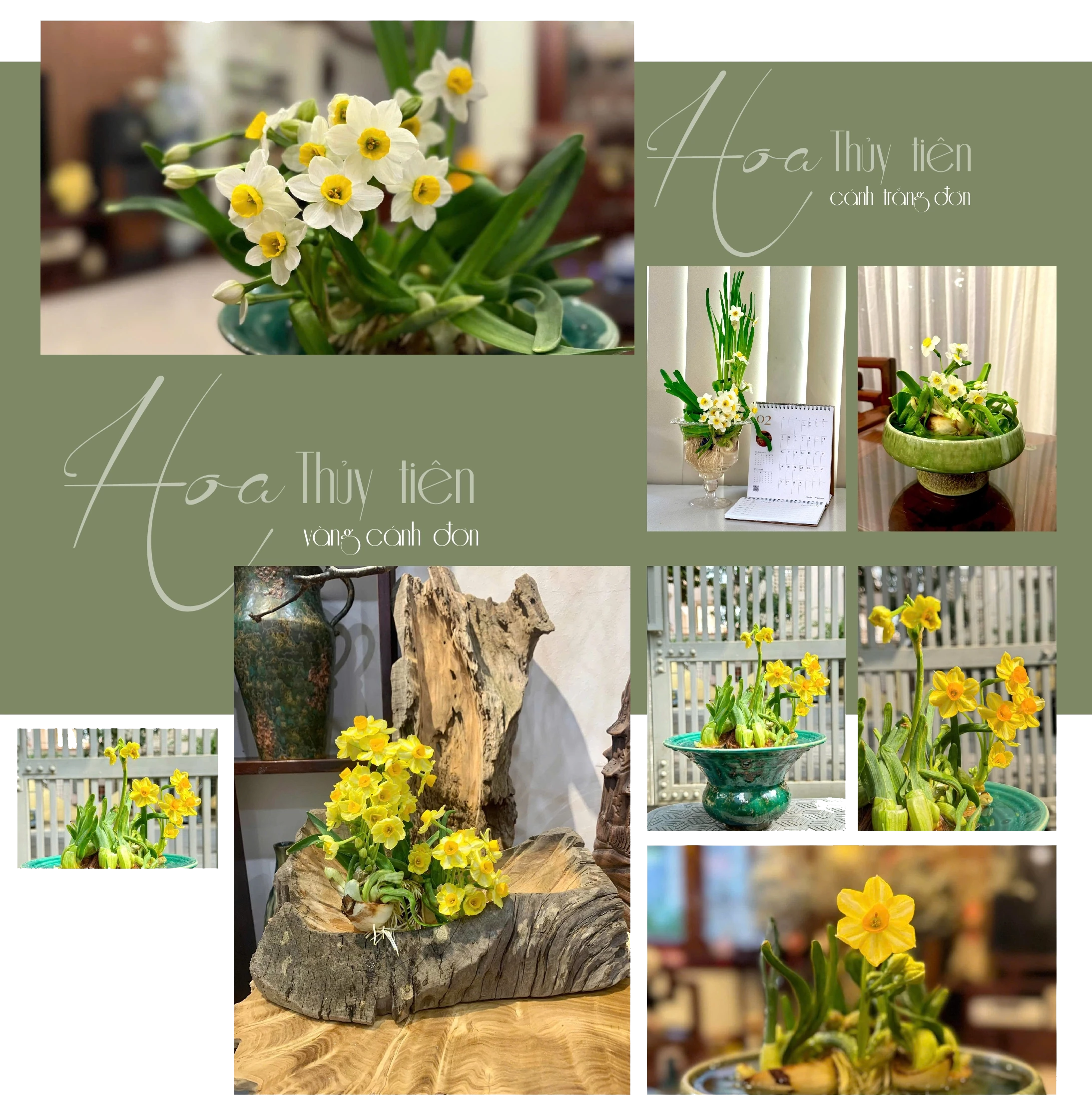
Daffodils, therefore, are flowers that require a high level of understanding, patience, and sophistication from the grower. Unlike other flowers that can simply be bought and placed in a vase, daffodils must be "pruned"—a task that is half technical, half artistic. The person pruning must know how to "read" the bulb, envision its future shape, and skillfully remove each layer of bark and root sprout to stimulate the flower to bloom at the right time while creating an elegant and balanced form. Just one hasty cut or a small mistake in controlling sunlight and dew exposure can ruin the entire process. Therefore, growing daffodils is not for the impatient, nor for those with a pragmatic mindset. It is a hobby of patience, of beauty created from meticulous labor and conscious waiting.
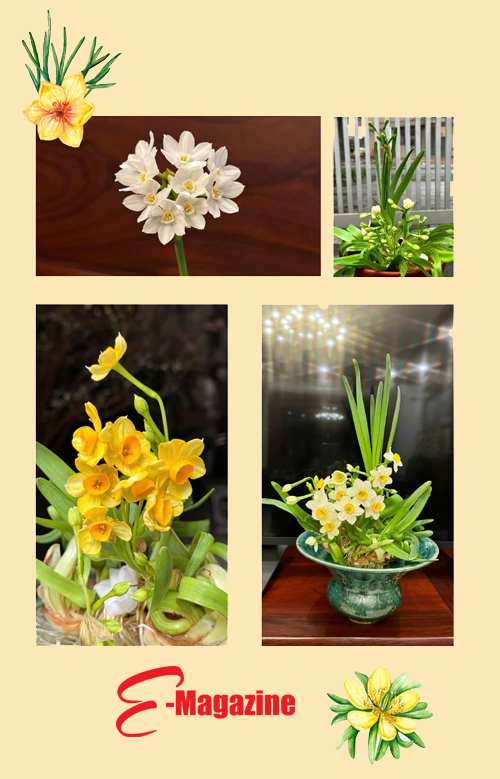
In ancient times, daffodils were often found in places of worship, in traditional homes, or at the entrances of temples and shrines – spaces of high symbolic significance. The pure white of the petals, the pristine yellow pistil, and the subtle yet enduring fragrance all created an unpretentious beauty, perfectly suited to the East Asian aesthetic that valued elegance, refinement, and tranquility over flamboyant and boisterous displays. Cultivating daffodils was therefore also a way for people of the past to cultivate self-discipline and self-control, embodying a slow, measured approach to life, knowing when to bloom and release their fragrance.
Over the decades, as urban life became more hectic and Tet celebrations shortened and simplified, the tradition of displaying daffodils gradually faded away. Few people still patiently learn the intricate flower-carving skills, and communal spaces like village communal houses no longer hold the central role they once did. Daffodils, once a flower that "measured time," quietly withdrew from Tet celebrations, giving way to more convenient and easier-to-display flowers.
However, in recent years, amidst the trend of reviving traditional Tet (Lunar New Year) celebrations, the hobby of cultivating daffodils has begun to resurface. In some major cities, groups of people who love traditional culture, elderly artisans, and young people passionate about classic beauty have sought to restore the techniques of shaping daffodils, organizing exhibitions and exchanging experiences. On social media, groups and communities of daffodil enthusiasts share meticulous and refined ways to care for and enjoy the flowers. Many young people share that they choose daffodils among countless modern flowers, hoping to have a vase of daffodils blooming precisely on New Year's Eve.
In old Vinh, there was a traditional flower displayed during Tet (Lunar New Year) that many people fondly remember: the peony. The recollections of older Vinh residents are not just stories about a flower, but about a historical period when flowers – seemingly frivolous – became a subtle expression of the yearning for spring, of the need to preserve a touch of beauty amidst a life of scarcity and hardship.
.png)
On the "Vinh of Yesteryear" group, many members share memories of the beauty of dahlias during Tet (Vietnamese New Year). In those years when "vegetables were more precious than flowers," and when praising beauty was easily viewed with suspicion, celebrating Tet with flowers could not be noisy or ostentatious. Flowers were present very humbly: a branch of peach blossoms borrowed from someone's garden, a few bougainvillea flowers placed on the altar, or, very rarely, a few daffodil bulbs sent from Hanoi to families who still maintained the old tradition. It was in this context that the dahlia gardens along Tran Hung Dao Street - near the Right Gate of Vinh ancient citadel - became a quiet bright spot, softening the desolation of a city that had just emerged from war.
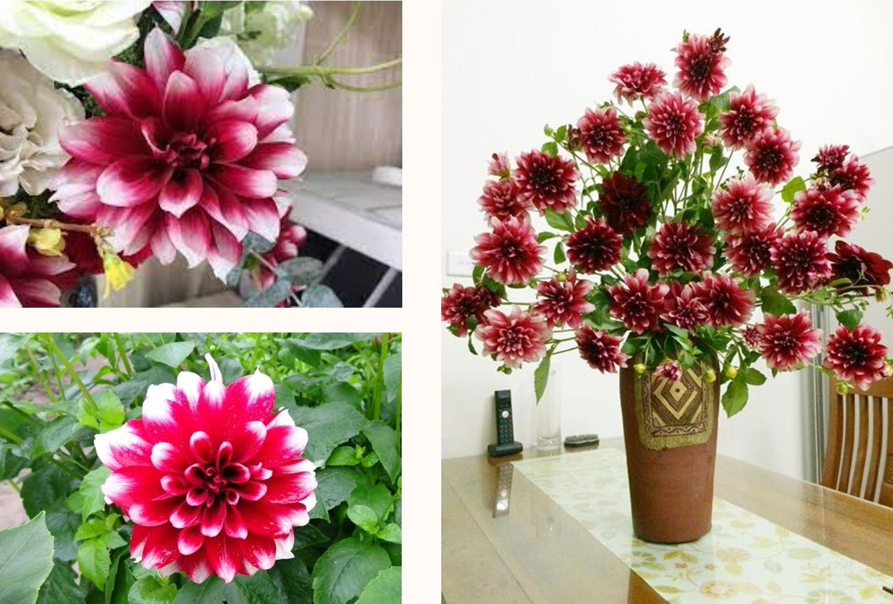
Peonies are not considered luxurious flowers in the traditional sense. They don't possess the gentlemanly air of plum blossoms, the refined elegance of peach blossoms, or the elaborate techniques required for cultivating daffodils. Yet, peonies have a powerful vitality and a full, vibrant beauty that is not harsh or glaring. Perhaps that's why they thrive in Vinh – a land rich in historical and cultural traditions, nurturing lush vegetation despite the vicissitudes of history and the harshness of the weather.
The memories of old Vinh still recall the spring flower gardens of "famous" families, like that of Mr. Tho, the tailor, which were not just places to grow flowers, but miniature cultural spaces. There, flowers were inseparable from daily life: in front were peonies, chrysanthemums, and roses; next to them was a trellis of jasmine; behind the house were bitter gourds and a fish pond. Flowers "lived" alongside vegetables, fish, and people – truly "flowers in life," not just for display. Flower growers had to have other jobs to make a living, because flowers were not commodities, nor were they a hobby to be bought and sold. Those who liked them asked for them, and those who valued them gave them away. Flowers, therefore, carried with them the neighborly affection and the silent sharing of difficult times.
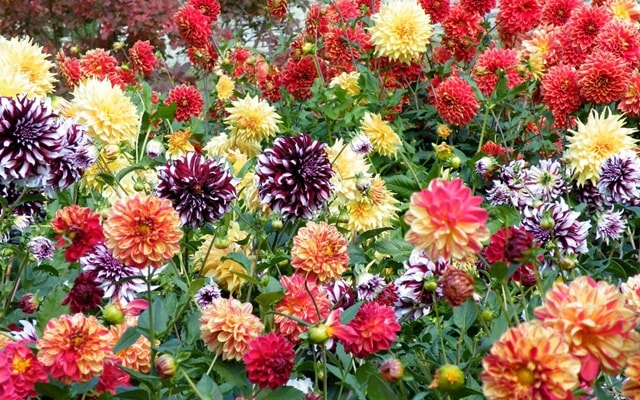
In the memories of the people of Vinh, peonies appear in many varieties and shapes, but the most haunting is the double-flowered peony, especially the white one. The white color of the peony is not cold, but soft, full, and stands out in the cool spring breeze of Nghe An. It is a white that is not ostentatious, not pretentious, but "very Vinh": simple, straightforward, discreet, and enduring.
Someone recounted a story from Tet (Vietnamese New Year) when they received a peony plant, carefully nurtured it, and waited until the eve of Tet to transplant it into a pot, only to have it stolen on the night of the 30th! Oh, those Tet days of scarcity, anticipation, and regret. Losing a single flower left them bewildered for days, because at that time, the flower was not just a flower, but represented the joy and hope that had been suppressed for months.
Today, with the abundance of Tet flowers, and peonies being just one of countless varieties brought to Vinh City each spring, the old flower gardens have faded into memory. Land is scarce, the population is dense, and the fast pace of life is shrinking the space for leisurely pastimes. Flowers are more beautiful, more numerous, and come in countless colors and forms, but the feeling of waiting for them to bloom – a feeling once associated with the Tet season of yesteryear – is becoming increasingly rare. And so, every time I pass through the old land where those peony gardens once stood, memories of those pristine white flowers return like an unnamed nostalgia.
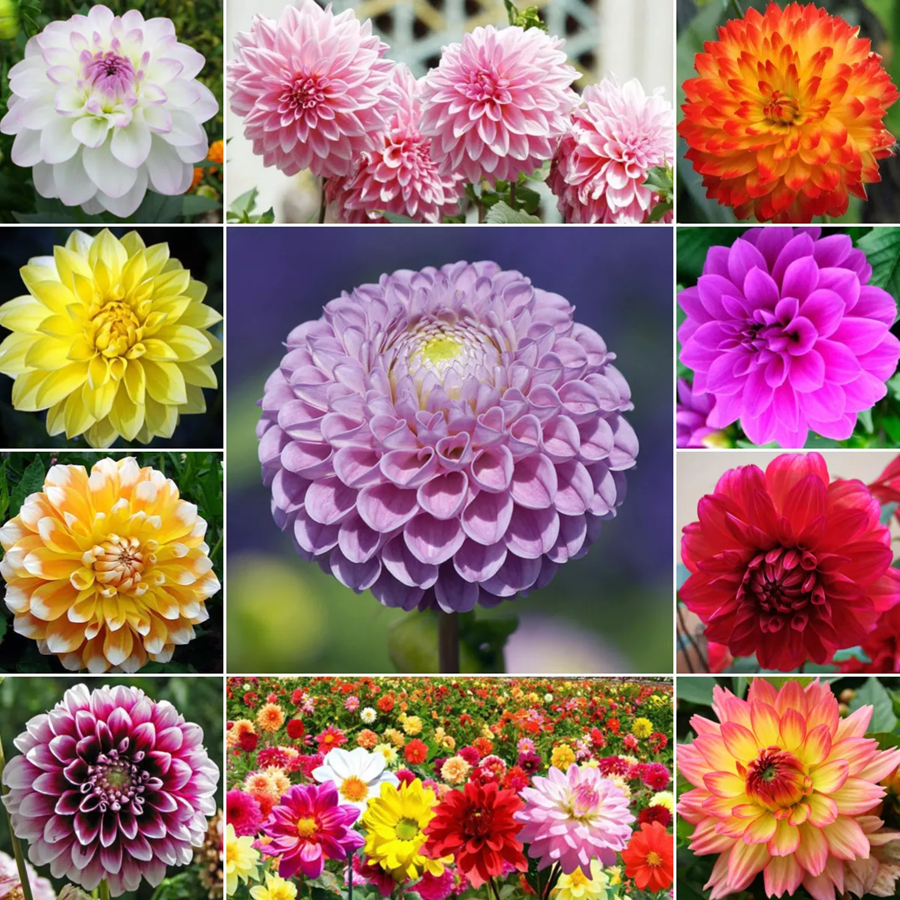
Perhaps, in the story of the peonies in Vinh of yesteryear, what remains is not just the memory of a flower that thrived in the soil, but a lesson about how Vietnamese people used to enjoy Tet flowers – enjoying them in moderation, under limited conditions, yet still cherishing and appreciating their beauty. From this, we see that the enjoyment of Tet flowers lies not in their expensiveness or rarity, but in the relationship between people and the land they live on, with the rhythm of time they experience – where a single peony blooming at the right time of spring is enough to warm the entire Tet season.


