
Threatening to leave the EU: A bluff from Türkiye?
(Baonghean) - Turkish President Recep Tayyip Erdogan affirmed on November 29th that his country has not abandoned its ambition to join the European Union (EU), but still has "many other options" if the process fails. Thus, within just one week, Türkiye has warned the EU twice about the possibility of abandoning the EU accession process and potentially shifting towards China and Russia. Is this just a tactic to pressure the EU, or is it a genuine calculation by Türkiye?
Tensions are rising.
Speaking at an international conference in Istanbul, Turkish President Tayyip Erdogan emphasized that if the path to EU membership is blocked, "Türkiye will continue on its path by considering one of several other options." Although Erdogan did not name these options specifically, it is widely understood that he was referring to the Shanghai Cooperation Organization (SCO), with its two rivals that the EU is very wary of: Russia and China.
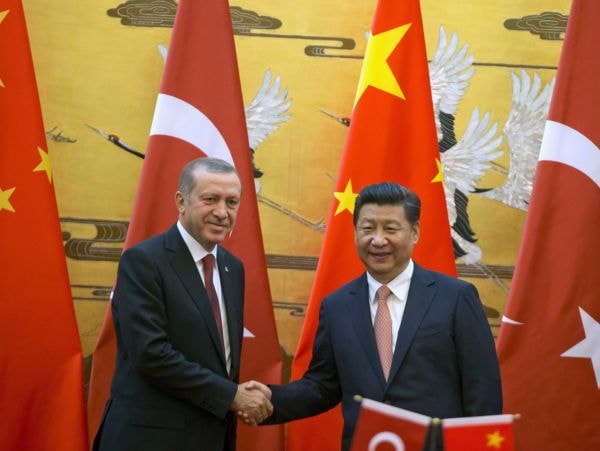 |
| China is ready to welcome Türkiye's membership in the SCO. Photo: Reuters |
Erdogan's move is seen as retaliation for the EU's earlier announcement last week to "freeze" Turkey's membership negotiations. Furthermore, citing Turkey's violations of fundamental human rights in the post-coup crackdown, the EU is also considering economic sanctions against Turkey.
Türkiye has shown it's not one to back down, hinting at the possibility of joining the SCO while simultaneously threatening to sever its March agreement with the EU to curb the massive influx of refugees into Europe. Erdogan declared that his government is responsible for governing the country and that the EU has no right to interfere in Turkey's internal affairs. As a challenge to Europe, Erdogan also left open the possibility of extending the state of emergency in Türkiye.
Erdogan's anger at the EU's move is understandable, given that 11 years have passed and negotiations for Türkiye's accession to the EU have made little progress. Europe has consistently placed numerous obstacles on Turkey, particularly on human rights issues.
To date, Ankara and Brussels have only agreed on one of the 35 points Türkiye must fulfill to become a full member of the EU. By March 2016, when Türkiye agreed to help the EU stem the flow of migrants into Europe, the path to EU membership was considered very promising. However, obstacles were immediately erected after the failed coup attempt in Türkiye in July, bringing all of Türkiye's efforts back to square one.
Ankara is in a position of "upper hand".
Experts believe that Türkiye's statement that "there may be alternatives outside the EU" is not just empty threats. In 2017, Türkiye will host the SCO Energy Club Summit, becoming the first non-member country to host the event.
Given its strategic location as a gateway between Asia and Europe, if Türkiye were to truly align itself with Russia and China – two key members of the SCO – this would pose a significant security concern for Europe on its eastern flank. This is especially important given the still-undefined cooperation within NATO following Donald Trump's presidency.
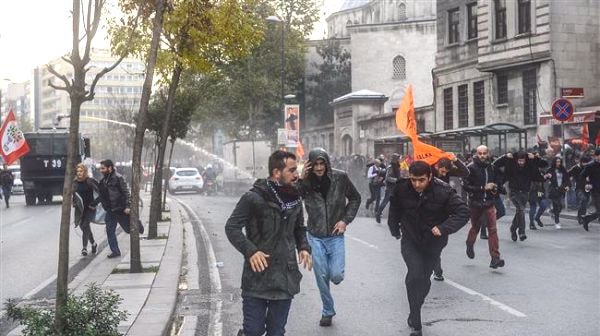 |
| The crackdown following the coup attempt is one of the reasons the EU rejected Türkiye. Photo: PressTV |
Leaving aside the complex security issues of the future, even in the current situation, the EU is completely dependent on Türkiye to prevent the influx of refugees from Syria into Europe. Therefore, it can be said that Turkey holds the absolute upper hand. European countries need to rely on Türkiye more than the other way around, and Ankara even has enough power to make demands that the EU must meet if it wants to prevent another uncontrolled wave of refugees from entering the EU.
Although Turkey is genuinely trying to pressure the EU through repeated warnings about abandoning its efforts to join the bloc, the economic, trade, financial, and investment incentives offered by EU membership remain a key factor in its appeal – provided, of course, that the EU does not continue to "make concessions."
Currently considered the "ball holder," the EU's dilemma is to clearly define the gains and losses between two options: pushing Türkiye's accession or pushing it into the hands of Russia and China. Undeniably, there are many values that Europe and Turkey do not share, and this is the biggest obstacle to Ankara's application for EU membership.
Europe has never been completely satisfied with the situation in Türkiye, particularly on issues related to human rights, freedom of speech, and individual liberties. However, the EU also needs to recognize that its voice has never carried enough weight to force the Turkish government to change.
Furthermore, the allure of the EU, coupled with its financial crisis, public debt, refugee crisis, and Brexit, will undoubtedly diminish Ankara's enthusiasm for joining the European Union. Considering the current situation, where Turkey is fully capable of abandoning the EU to join the SCO, perhaps it is Europe that needs to change its approach if it wants to avoid creating new security concerns for the bloc.
Thuy Ngoc
| RELATED NEWS |
|---|


