
The Nghe An provincial delegation attended an international seminar on green finance and sustainable agriculture in Switzerland.
As part of their visit and working trip to Switzerland, on November 28th, the Nghe An provincial delegation, led by Mr. Phung Thanh Vinh - Vice Chairman of the Provincial People's Committee, attended the seminar "New Global Trends in Green Finance and Sustainable Agriculture – Policy Implications for Vietnam" in Switzerland.
The event was organized by the Permanent Mission of Vietnam to the United Nations. It took place in a hybrid format, combining in-person and online participation, with representatives from Nghe An, Hai Phong, Lam Dong, Dien Bien, Hue City, and Quang Ninh provinces. Leaders from the Department of Foreign Affairs and the Department of Agriculture and Environment of Nghe An province attended the event.
Important networking activities
The seminar took place in the context of 2025, when Vietnam would celebrate the 95th anniversary of the founding of the Communist Party of Vietnam, the 50th anniversary of the liberation of the South and national reunification, and the 80th anniversary of National Day on September 2nd. This was an important occasion to promote sustainable development policies, foster international cooperation, and support localities in implementing the new phase of green transformation goals.
Attending the seminar, on the international partner side, were many experts from major organizations such as the World Trade Organization (WTO), the Organization for Economic Co-operation and Development (OECD), the World Economic Forum (WEF), and the Forest Stewardship Council (FSC), along with representatives of the financial community in Switzerland.
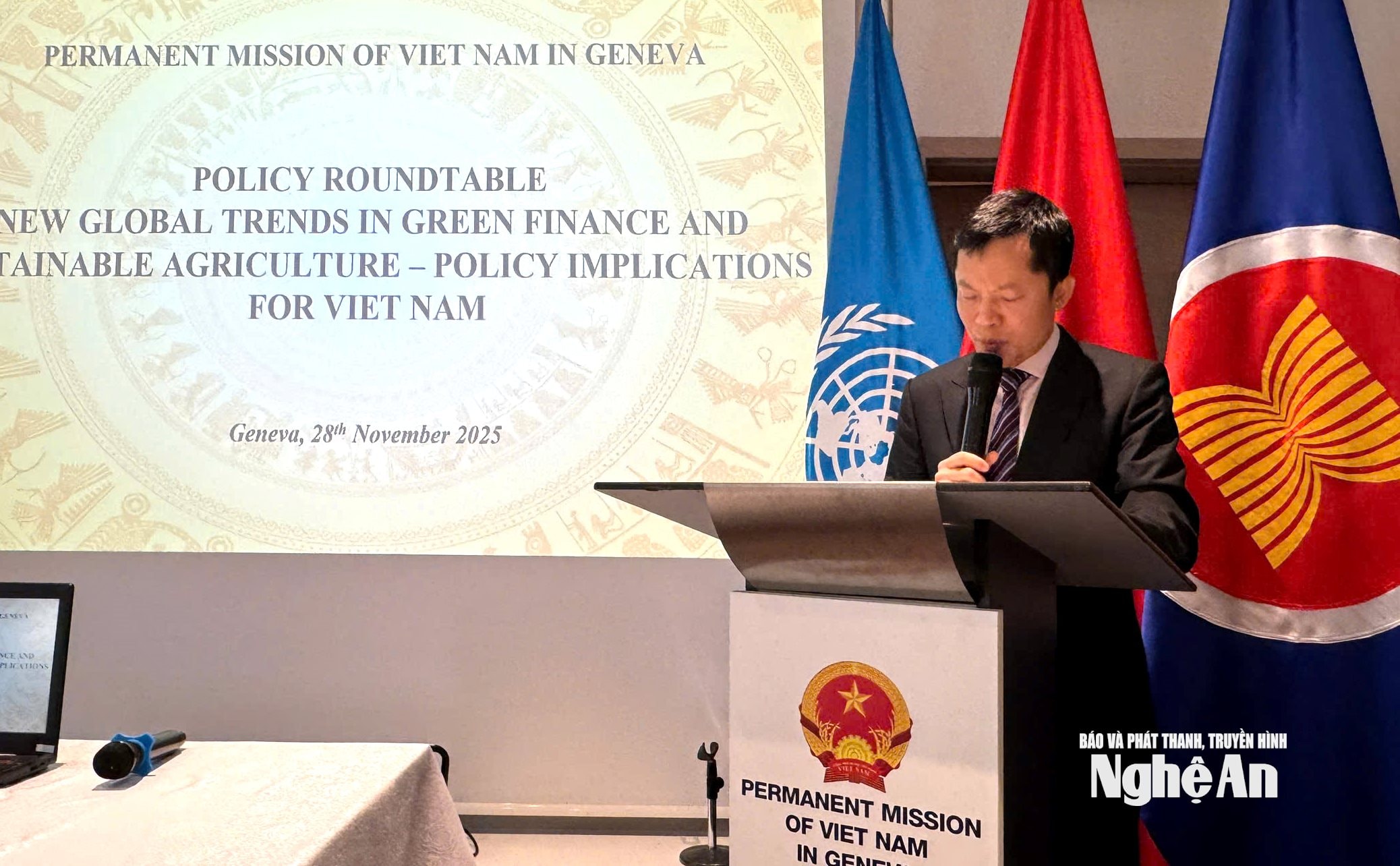
Mr. Cung Duc Han, Chargé d'affaires of the Permanent Mission of Vietnam to the United Nations in Geneva, emphasized that Vietnam is vigorously implementing its commitments on emission reduction, circular economy, and sustainable agriculture in the spirit of COP26. He stated that the increasing demands for environmental standards, traceability, and emission assessment from major markets present both challenges and incentives for Vietnamese localities to enhance their production capacity and participate more deeply in global value chains.
The Chargé d'affaires affirmed that the Delegation will continue to act as a bridge between Vietnamese localities and international organizations in Geneva to promote substantive cooperation in the fields of green finance, green agriculture, and sustainable trade.
At the seminar, international speakers analyzed global trade prospects, green finance trends, new requirements in sustainability certification, experiences in mobilizing capital for the renewable economy, and the impact of climate change on the economies of developing countries, and offered numerous recommendations for Vietnam.
WTO representatives emphasized the trend of "greening" global trade and the importance of data transparency in agricultural supply chains. OECD experts suggested that Vietnam has the opportunity to attract green capital if it strengthens ESG standards and improves its sustainability reporting mechanisms.
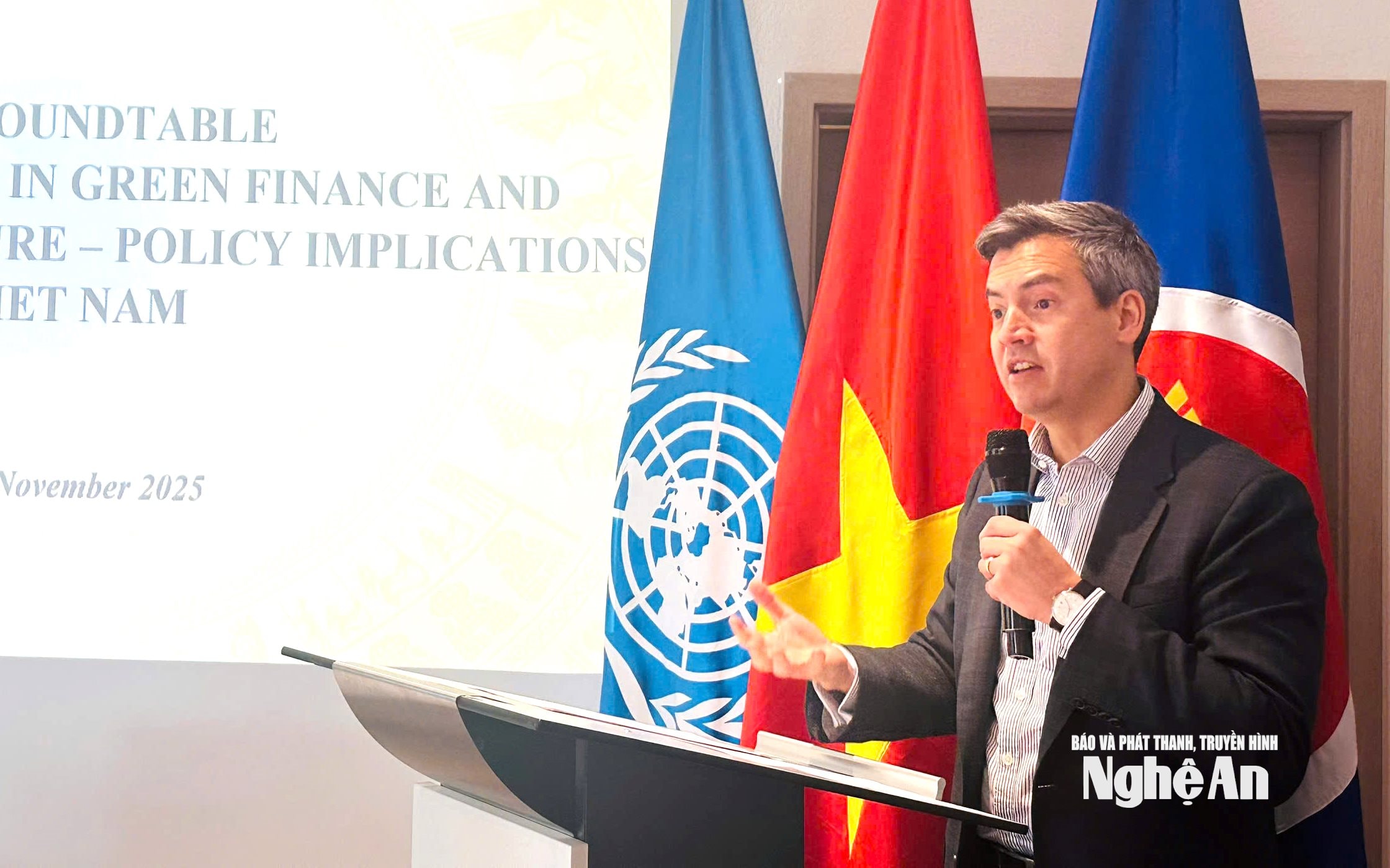
WEF representatives focused on the impact of climate change on food security and recommended that Vietnam expand climate-adaptive production models, enhance disaster resilience, and innovate water resource management. FSC representatives noted that sustainable forest certification is a key factor in helping Vietnamese forestry products penetrate high-quality markets.
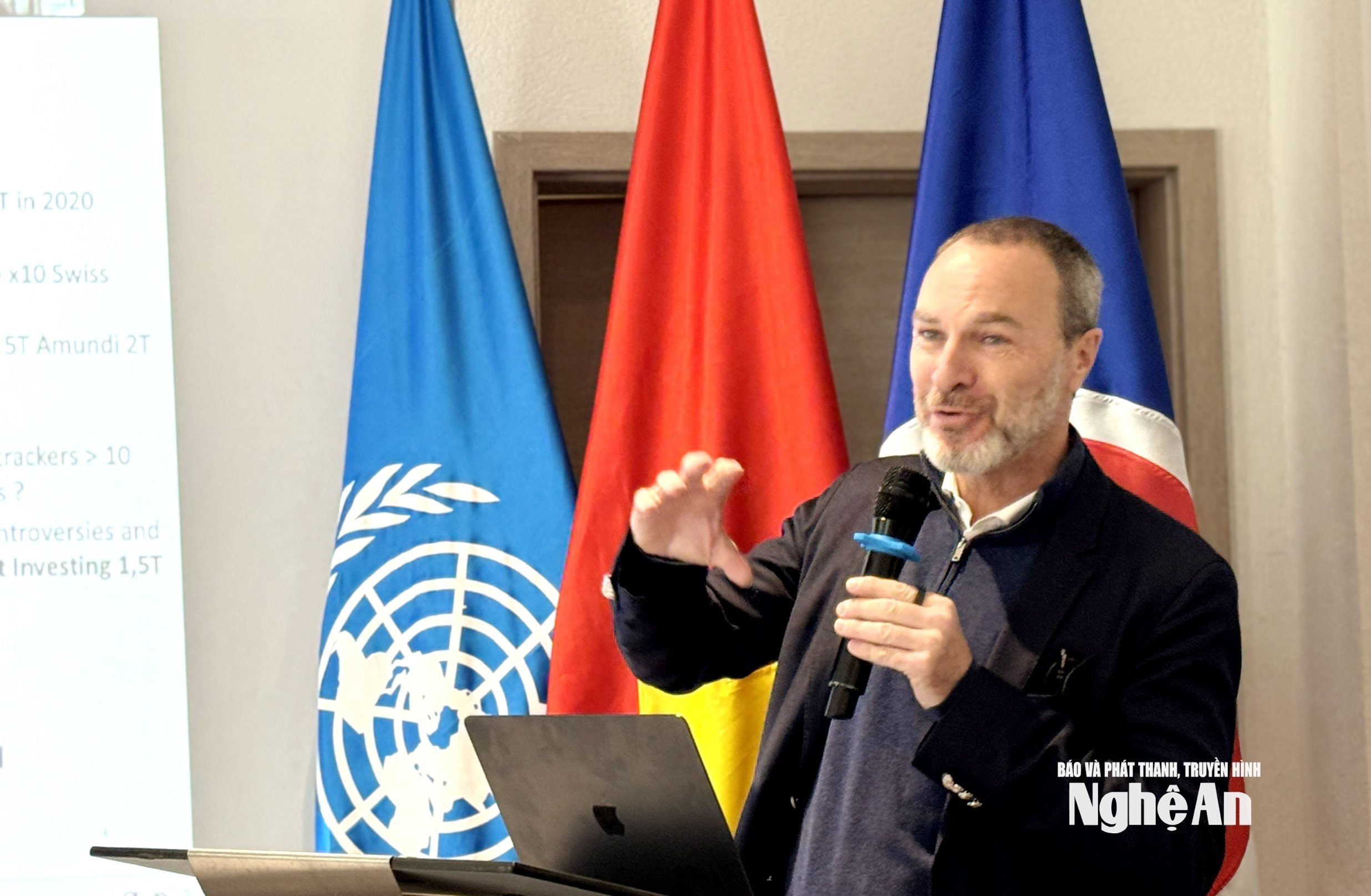
In addition, Swiss experts on impact investing shared their experience in mobilizing private capital for regenerative economic models and sustainable agriculture, thereby suggesting some directions for Vietnamese localities in designing projects and attracting investors.
Green transition and aspirations
Speaking at the discussion session, Mr. Phung Thanh Vinh, Vice Chairman of the People's Committee of Nghe An province, emphasized that in the context of the world strongly shifting towards a low-emission, circular, and sustainable development model, Vietnam and its localities must proactively seize opportunities to enhance competitiveness. New global policies such as EUDR, CBAM, green finance systems, and carbon credit markets are creating demands for restructuring the global agricultural and forestry supply chain.
In this context, Nghe An province has identified green transformation as a long-term strategic direction, linked to the goal of sustainable economic development, enhancing resilience, and reducing greenhouse gas emissions.
Comrade Phung Thanh Vinh stated that Nghe An is actively implementing many programs, including developing high-tech agriculture, expanding organic production models, and gradually building a sustainable agricultural value chain. At the same time, it is developing mechanisms to attract green financial resources, promoting business participation, and encouraging environmentally friendly investment activities.
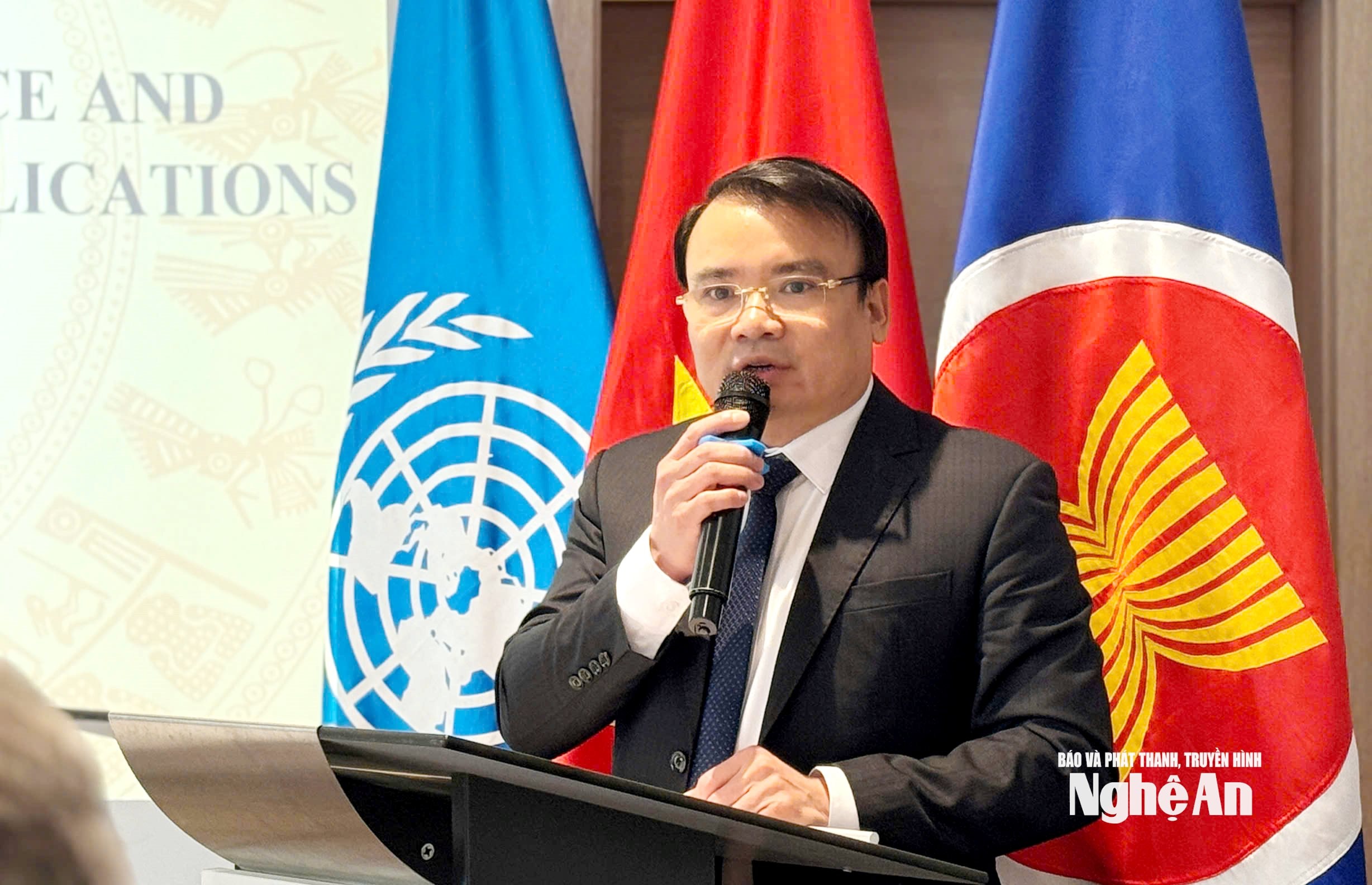
The Vice Chairman of the Provincial People's Committee shared many outstanding achievements that Nghe An has attained, such as: effectively participating in the Emission Reduction Payment Program (ERPA) in the North Central region, with total payments reaching 197 billion VND by 2025; stable forest cover of over 58%; over 590,000 hectares of forest under sustainable management; 39,000 hectares of high-tech agricultural production area, and 135 hectares of high-tech aquaculture; the rate of urban solid waste collection and treatment reaching 97.3%; and the implementation of green transportation through 13 bus routes and a plan to convert vehicles to clean energy.
However, the province also acknowledges the challenges of limited resources, high industrial emissions, small-scale agricultural production with low added value, and inadequate access to international climate funding. Furthermore, it faces the impact of climate change on ecosystems, infrastructure, and people's livelihoods.
Representatives from Vietnamese localities also shared their priorities in developing sustainable agriculture, strengthening environmental management, improving traceability data, and enhancing the ability to meet green standards in international trade. Many localities stated that developing climate-adaptive agriculture is becoming increasingly urgent, especially in the context of increasing floods and natural disasters due to the impacts of climate change. This is an area where localities wish to expand international cooperation to improve capacity and access advanced technologies.
Many localities proposed the need for a more comprehensive policy framework to promote green agriculture development, including improving regulations on environmental standards, traceability, and emission measurement indicators; they also requested continued support from international organizations in technology transfer and experience sharing to enhance capacity to meet green standards in international trade.
Alongside the event, the Delegation organized an exhibition space showcasing information and publications on the economic development potential, industry strengths, and investment opportunities of Vietnamese localities. This activity contributed to promoting the image of the localities, fostering connections, and expanding cooperation with the international community.


