
The US cargo fleet is outdated and unlikely to meet the requirements of the ACE strategy.
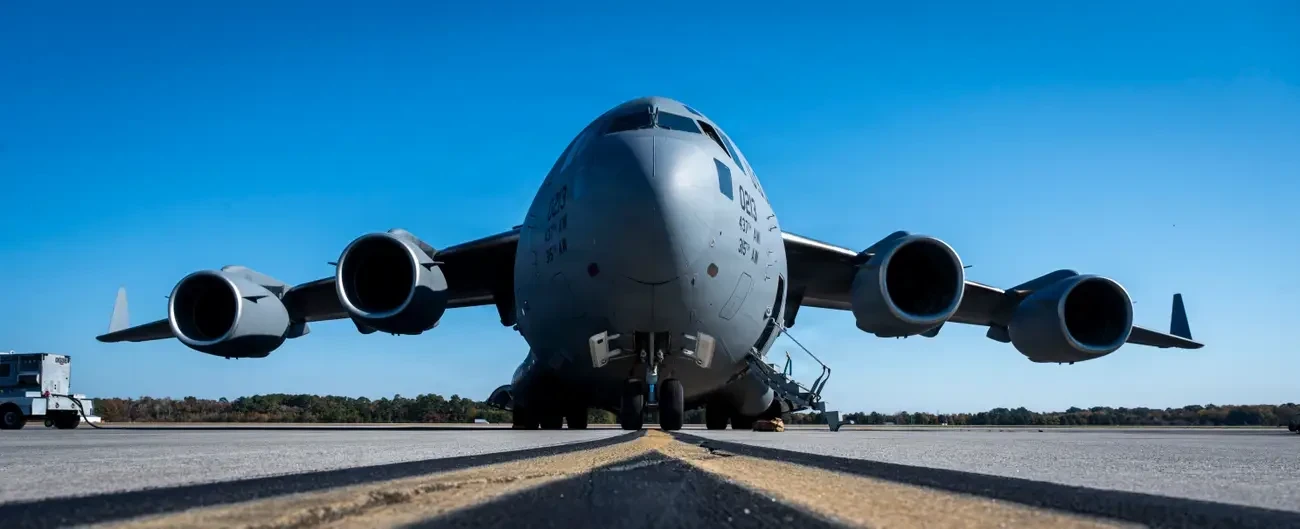
The Mitchell report warns that the shrinking and aging US transport fleet may not be sufficient for ACE in the Indo-Pacific; the 52 C-5M aircraft are an average of 37 years old.
A new report from the Mitchell Institute for Aeronautical Research, led by Robert Owen (a retired U.S. Air Force colonel), warns that the size and condition of the U.S. Air Force's transport fleet is shrinking and aging, potentially failing to meet the requirements for mobility, resupply, and maintaining a dispersed force in a conflict with a peer adversary like China. This risk directly impacts the ability to implement the Agile Combatant Action (ACE) strategy.
Warning Overview
Owen emphasized, "In a conflict with a peer adversary, transport aircraft fleets may not be sufficient to meet the mobility, supply, and other logistical needs of the various branches of the military." He argued that the U.S. Air Force currently "may not have enough transport forces to support" the concept of ACE, which relies on asset dispersion to avoid being neutralized by an overwhelming strike.
Current status of the cargo aircraft fleet
The U.S. transport fleet is responsible for transporting military personnel, weapons, and supplies globally, comprising heavy transport aircraft such as the C-17, converted civilian aircraft, and helicopters. Reports indicate that many of these airframes are decades old and becoming obsolete; some models, including the C-17, have exceeded their original service life.
The U.S. Air Force currently has 52 C-5M Super Galaxy transport aircraft with an average age of 37 years and a low combat readiness rate. This is not unusual, as much of the mobile fleet is rapidly becoming obsolete. General David Allvin, then Chief of Staff of the U.S. Air Force, stated that the average age of the entire fleet increased from 17 (in 1994) to 32 (in 2024), while operational readiness declined significantly.
ACE and the requirement for mobility in unconventional terrain.
The ACE strategy envisions fighter squadrons and support forces moving in a rotational, unpredictable manner between a network of fixed bases, semi-fixed deployments, and forward refueling and weapons resupply points (FARPs). At FARPs, small detachments are almost entirely dependent on C-17s and mobile aircraft on-site for resupply, weapons, and personnel.
The U.S. Air Force has been practicing ACE for years, allowing flight crews to operate from “non-standard” locations such as simple makeshift airfields or even a stretch of highway. The goal is that when major bases are within range, dispersing them across the Indo-Pacific will make it difficult to cripple them with a single strike.
Reported capacity gap
According to Owen, the U.S. Air Force “has not acquired a significant number of aircraft” capable of meeting the minimum requirements of ACE: bringing equipment and supplies to short runways and poor road surfaces. He emphasized that there are “no public plans” for this goal, and “the budget is not designed” to expand the mission. Therefore, expanding and maintaining the transport fleet should be the priority.
The consequences of three decades of continuous exploitation.
Owen noted that transport aircraft “have been exploited to their maximum capacity for three decades” in global operations. Compared to the period of Operation Desert Storm (1991), air transport capacity has declined significantly. With the U.S. shifting its focus to high-level threats such as Russia and China, this decline presents a clear challenge.
Risks in a peer-to-peer scenario
In a conflict scenario in the Indo-Pacific, the U.S. plans to disperse its aircraft and operations rather than concentrate them at a few bases. If the transport fleet is not large enough and lacks the variety suitable for high-intensity warfare, the plan to maintain dispersal and ensure the viability of its forces could be undermined.
Comparative context and risk balance
Senior military leaders, former personnel, and air force experts acknowledge that the Chinese Air Force is expanding and modernizing very rapidly. They also point out that the U.S. still holds a significant advantage in stealth aircraft, global logistics, combat experience, and allied support. However, China's continued investment is narrowing the gap and shifting the balance of risk.
Conclusion according to the report
The Mitchell Institute for Aeronautical Research report concludes that avoiding weaknesses in the ACE strategy requires prioritizing the expansion and upgrading of the transport fleet, especially its operational capacity on short runways and poor runway surfaces. Otherwise, in a conflict with peer competitors, the dispersed maneuvering-resupply-maintenance chain risks failing to meet requirements.


