
Drone attack exposes weaknesses in Russia's S-400.
The destruction of a Russian S-400 launcher in Belgorod does not diminish the overall power of the system, but it reveals a significant vulnerability against small, low-value targets such as drones and highlights the need for multi-layered air defense.
Drone footage shows that Ukraine completely destroyed a 5P85SM2-01 self-propelled launcher belonging to the S-400 long-range air defense system in the Belgorod region (Russia) and damaged another launcher. While the physical damage at the combat unit level wasn't significant, this attack highlights a core weakness of the S-400: its limited ability to counter small, low-value targets like drones when not deployed within a multi-layered air defense network.
Overview of the attack on the S-400 position
According to a report from the General Staff of the Ukrainian Armed Forces, the attack, carried out on December 14th, directly targeted the S-400 system belonging to the 568th Anti-Aircraft Missile Regiment of the Russian Aerospace Forces. The unit that carried out the attack was the 15th Independent Artillery Reconnaissance Brigade, nicknamed "Black Forest".
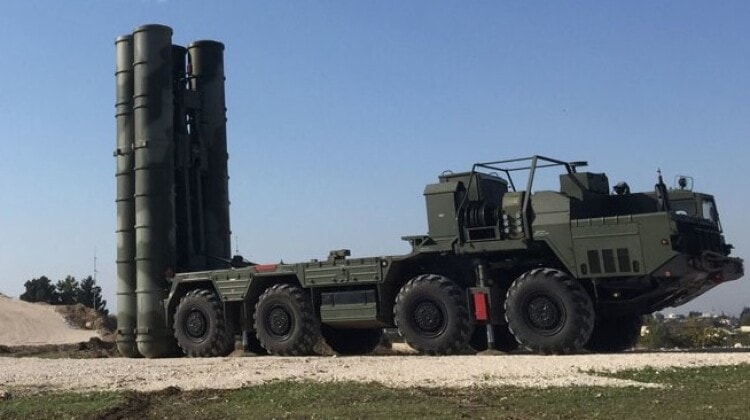
From a technical standpoint, the launch vehicle is the most vulnerable and least expensive component in the S-400 system, with a capacity of four surface-to-air missiles per vehicle. Training requirements for the launch vehicle crew are also much simpler compared to key components such as the reconnaissance radar, fire control radar, or central command post.
Therefore, the current damage is primarily tactical, not yet impairing the overall firepower and combat control capabilities of the S-400 system. However, the true value of the strike lies in another aspect: it reveals how a modern long-range air defense system can be hampered by low-cost targets if it lacks adequate close-range protection.
The S-400's weakness lies in its ability to counter small, low-value targets.
By design, the S-400 is a long-range, multi-purpose air defense system optimized for intercepting targets such as cruise missiles, ballistic missiles, and fighter aircraft. It is not designed to operate independently but rather as part of a multi-layered air defense network supported by surveillance radars, early warning aircraft, and short- and medium-range air defense systems.
In that configuration, the S-400 acts as the "outer layer," engaging high-value, high-speed, long-range targets. Conversely, the task of destroying small, low-flying, low-value targets such as drones is usually assigned to short-range systems using automatic cannons or lower-cost missiles, to avoid wasting the expensive S-400 missiles.
The S-400's vulnerability to drones is therefore not a problem unique to Russia. The Western MIM-104 Patriot system also faces similar difficulties when deployed in Eastern Europe and the Middle East amidst increasingly dense drone populations. Long-range systems, primarily designed for strategic targets, are not the optimal solution when constantly facing inexpensive, hard-to-detect targets that can operate in swarms.
Lessons from Syria and the need for multi-layered air defense
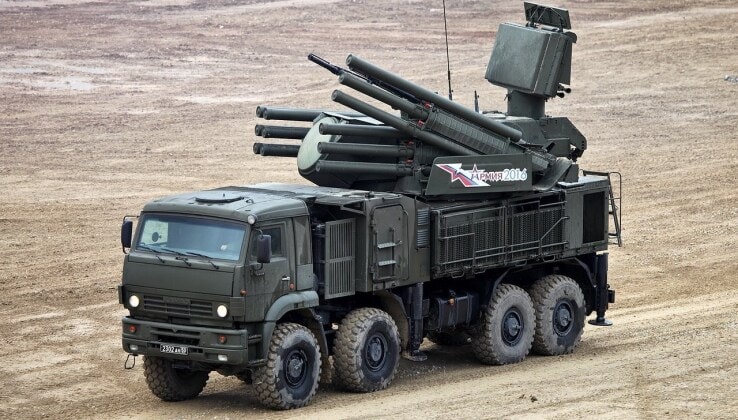
Real-world combat experience has demonstrated the need for multi-layered air defense. In the 2010s, S-400 sites at the Khmeimim base (Syria) were repeatedly attacked by Turkish-backed rebel forces using drones. At that time, Russia protected the base not only with the S-400s but also with a surrounding layer of close-range air defense consisting of Pantsir systems.
Pantsir uses automatic cannons combined with shorter-range, lower-cost missiles to destroy small targets at close range. Models combining the S-400 with Pantsir demonstrate that without close-range and very close-range protection, even modern long-range systems can become vulnerable to drone attacks or other inexpensive offensive weapons.
The attack at Belgorod once again underscored that the S-400 needs to be deployed according to its intended use: placed within a multi-layered air defense network, with coordination between various radars, long-range, medium-range, and short-range weapons, and air forces.
How to counter drones and new solutions.
A notable recent trend is Russia's deployment of specialized weapon systems to counter drones. Footage released in May 2025 showed the Russian military beginning to use the 30 kW Silent Hunter laser weapon, supplied by China. This system utilizes advanced optical sensors and is considered a specialized "shield" for destroying drones at suitable ranges.
Furthermore, integrated solutions such as China's SkyShield system – combining laser weapons and electronic warfare – are being considered as a way to form a multi-layered drone defense "barrier." In this structure, drones can be detected, jammed, neutralized, or destroyed by various means depending on their range and threat level.
The emergence of systems like Silent Hunter and SkyShield shows that the role of long-range air defense systems like the S-400 is gradually being adjusted: from being almost the sole "shield" against airborne threats, they are now becoming an important component in a broader air defense network, where each weapon class is responsible for a different range of targets and distances.
The role of the S-400 in modern warfare.
Despite its weaknesses in dealing with drones when operating alone, the S-400 remains a versatile air defense system with powerful firepower, capable of intercepting cruise missiles, ballistic missiles, and various types of fighter aircraft. The main issue lies in the organization of combat operations and the deployment of supporting forces, rather than the S-400 losing its strategic role.
With the rise of drones, support systems like Pantsir at close range and Silent Hunter at appropriate distances have become almost indispensable. They take on the front line of defense, offloading the S-400 from handling small, low-value targets, allowing the long-range system to focus on the specific types of targets it is optimized for.
From a theoretical perspective, this development confirms a principle in modern warfare: no single weapon can guarantee absolute security for territory or airspace. The effectiveness of heavy weapon systems largely depends on the ability of different branches of the military to coordinate effectively, as well as the way a layered air defense network is constructed to suit the threat.
S-400 production and the ability to compensate for losses.
Alongside tactical adjustments, Russia has maintained its ability to compensate for losses by boosting S-400 production. According to available information, the current production rate not only meets battlefield needs but also allows Moscow to continue fulfilling export contracts for this system abroad.
In that context, attacks like the one in Belgorod primarily demonstrate the evolving nature of modern warfare and the need to restructure air defense networks, rather than altering the balance of power for a single system like the S-400.


