
Are Russia's diplomatic sanctions against the US really that frightening?
Analysts believe that Russia's retaliatory sanctions against the US have been limited and have had only minimal impact.
The US calls, Russia answers.
A day after the US Senate passed a new sanctions bill targeting Russia for alleged human rights violations and corruption, focusing on key sectors of the Russian economy such as arms sales and energy exports, and limiting President Donald Trump's control over sanctions against Russia, Moscow responded.
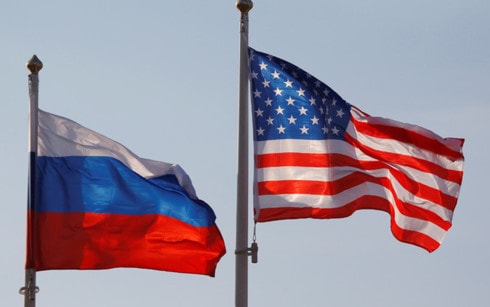 |
| Russia is demanding that the US reduce its diplomatic staff in the country, in retaliation for Washington passing a new bill imposing sanctions on Moscow. (Illustrative image: RT) |
"We propose that the US reduce the number of diplomatic and technical staff working at the US Embassy in Moscow and the consulate general to match the number of Russian diplomats and technical staff in the US," AFP quoted a statement from the Russian Foreign Ministry on July 28 as saying.
According to the Russian Foreign Ministry, the number of American diplomats and staff after the reduction will be 455.
The deadline set by Russia is September 1st. Russia also announced it would seize a complex and a warehouse used by the US diplomatic mission, threatening a proportionate response if Washington attempts to expel more Moscow diplomats.
In a subsequent phone call with his American counterpart Rex Tillerson, Russian Foreign Minister Sergei Lavrov emphasized that the decision to "level the playing field" in terms of the number of Russian and American diplomatic staff, as well as to close two US embassy facilities, was due to a series of hostile actions from Washington.
Specifically, these inappropriate actions include illegal sanctions against Russia, defamatory accusations against Russia, mass expulsions of Russian diplomats, and the seizure of their diplomatic property.
Lavrov stated that Russia had done everything possible to improve relations and that Moscow had responded to provocations with great restraint. However, recent events show that US policy has fallen into the hands of anti-Russian forces, pushing the two sides into confrontation.
According to Lavrov, the restrictive measures recently adopted by Russia are entirely appropriate; they are not a tit-for-tat response but rather "reluctant" measures, entirely consistent with international practice and aimed at protecting Russia's legitimate interests, with the hope that the US will eventually consider the harmful consequences of its current course of action.
Lavrov affirmed that Russia is ready to normalize bilateral relations with the United States and cooperate with Washington on the most important issues on the international agenda. However, this can only be achieved on the basis of equality, mutual respect, and a balance of interests.
Conversely, the US State Department also voiced its opposition and expressed "disappointment" on the same day regarding the measures taken by Russia in response to Washington's sanctions against Moscow. However, the State Department added that both sides continue to work to remove some obstacles in order to improve bilateral relations.
Minimal impact
Commenting on Russia's retaliation against the US following recent diplomatic disputes, John Quigley, Professor Emeritus of International Law at Ohio University, told Sputnik that Moscow's response has been limited and has had only minimal impact.
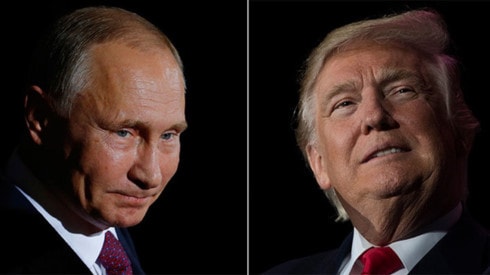 |
| Russian President Vladimir Putin and US President Donald Trump. Photo: AFP. |
"Russia's measures are relatively small compared to those taken by the U.S., such as closing Russian diplomatic facilities in New York and Maryland last winter, as well as the new sanctions recently passed by both houses of Congress," Professor Quigley said.
According to Professor Quigley, the interesting story after Russia decided to take retaliatory measures is not about waiting to see how the two sides will react further and whether tensions will escalate to a "new level."
Quigley argues that the most significant aspect of Russia's "counterattack" is that it suggests President Putin has seemingly reached his own conclusion: that nothing can be gained by ignoring US provocations in the hope that patience will improve bilateral relations.
"Russia has clearly lost hope of a better relationship with the US administration under President Donald Trump," Quigley observed.
Professor Quigley noted that US President Donald Trump has faced, is facing, and will continue to face significant political pressure if he wants to improve relations with Russia, especially since allegations that his campaign team colluded with Russian counterparts during the 2016 presidential race remain unanswered.
The Russian government has so far denied all allegations of interfering in the US election or influencing Trump's victory.
Echoing Quigley's sentiment, Professor Francis Buckley of George Mason University argues that Russia cannot continue to ignore US sanctions. However, Buckley suggests that the Kremlin seems to have calculated its response, opting for minimal impact to avoid further deterioration of bilateral relations.
Professor Buckley points out that this does not mean the US will continue to do what it considers right without regard for Russia, because there is a limit to tolerance. The current tension in US-Russia relations is largely the responsibility of President Donald Trump, who once advocated for a better relationship with Russia.
"The ball is still in Trump's court, and he'll have to make a wise decision to resolve this issue," commented expert Buckley.
According to VOV


