Comrade Nguyen Thi Ninh (1901-1944): Upholding the qualities of a communist.
Nguyen Thi Ninh was born in 1901 in Yen village, De Thap street (now part of Ben Thuy ward, Vinh city, Nghe An province).
In 1970, under the direction of the Nghe An Provincial Party Committee, the Vinh City Party Committee organized a conference to verify the history of the Party during the clandestine period of the Vinh-Ben Thuy Party Committee (from March 11 to March 17, 1970). This historical conference unanimously honored nine exemplary cadres and Party members representing the heroic struggle tradition of the Party Committee and people of Vinh-Ben Thuy city (in the period before the August 1945 Revolution). Among these nine exemplary individuals, there was a former member of the Central Committee of the Party (such as Comrade...).Le Mao), some are members of the General Farmers' Association of Nghe An (like comrade ).Hoang Trong Tri). Notably, there was only one woman, a regular party member, working in communications and transportation: Nguyen Thi Ninh (commonly known as Vi Ninh, alias Binh).
In the past, the Ben Thuy region had a high population density, and arable land was scarce and mostly sandy, infertile, resulting in constant poverty and hardship for the people. Income was already very low, and the people had to bear the burden of contributing to poll taxes, land taxes, and various forced labor. Because Ben Thuy was located on the North-South highway, the people of this region regularly assigned people to work as "postal carriers." These carriers acted as intermediaries, transporting documents, decrees, and orders from the imperial court to the local area, as well as petitions, memorials, and other correspondence from other regions to the imperial court.

The Quyết station at the foot of Quyết Mountain was one of the province's largest stations, so the proportion of people from the Bến Thủy area who had to work as station porters was significantly higher than at other stations. Regardless of day or night, rain, storms, freezing cold, or scorching sun, as soon as they heard the three drumbeats of the station, the porters had to immediately be present to "run the station," usually on foot. Besides delivering official documents and papers, the porters also had to transport state goods and carry the palanquins of high-ranking officials on their journeys to the capital (Hue), or on their travels to various places, or on their triumphant return home after passing the imperial examinations... Therefore, the Bến Thủy region once had a very beautiful folk song:
Loving you makes me want to love life.
Hearing the three drumbeats sent shivers down my spine.
Due to their impoverished lives, hardship caused by natural disasters, and the oppression and exploitation of colonial and feudal forces, the people of Ben Thuy region possessed a courageous and enthusiastic character, unafraid of their rulers and ready to sacrifice themselves for a greater cause.
Since the French colonialists imposed their yoke of slavery on our people with the Patenôtre Treaty of 1884, Ben Thuy, once an agricultural area, transformed into a city with numerous large industrial and commercial establishments. In 1914, the Governor-General of Indochina forced King Duy Tan to issue a decree on March 11, 1914, elevating the town of Ben Thuy to the status of a city. Hundreds of hectares of farmland belonging to the farmers of Ben Thuy were then confiscated by the French colonialists to build factories. The farmers gradually became hired workers in these factories. They were known as the "brown-coated" workers (to distinguish them from the "blue-coated" workers - technicians from Northern Vietnam).
At just 14 years old, Nguyen Thi Ninh had to work at the Ben Thuy Match Factory. Although it was called work, it was like living in a prison. In the factory's production workshops, every 15 meters or so, there was a tube filled with rattan and bamboo whips, which the foremen used to beat workers whenever they were late or too slow to greet the foreman or the owner. The majority of the workers at the match factory were women and children. The factory had no separate toilets or urinals for women.
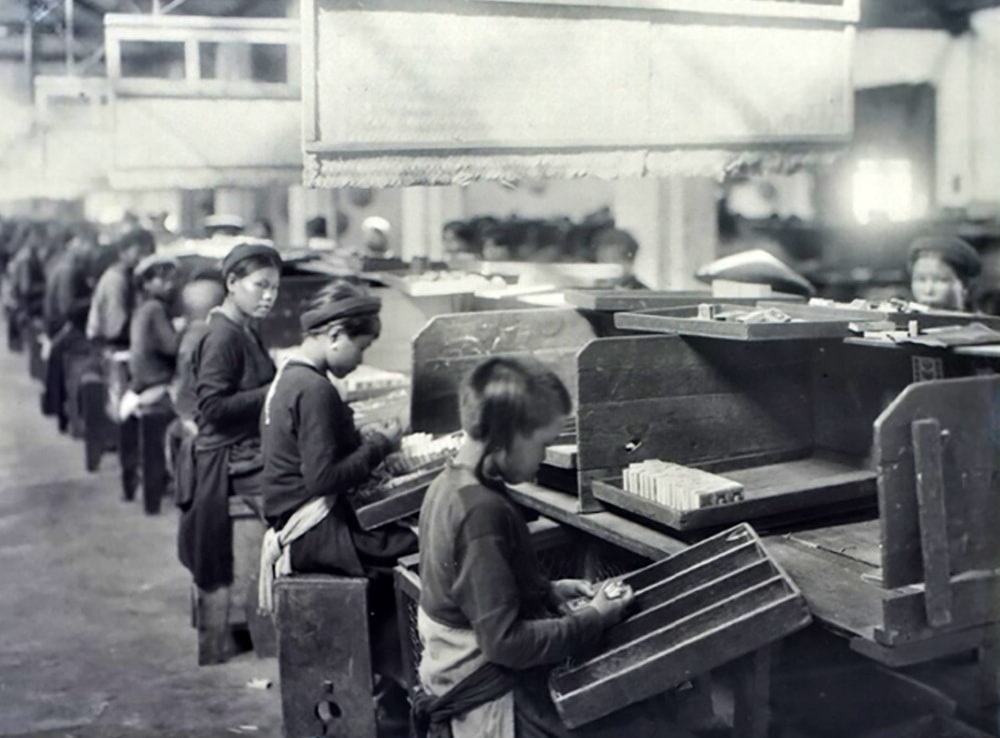
Nguyen Thi Ninh's younger sister, Nguyen Thi Hai, also worked as a matchstick maker at the match factory from the age of 12. One day, the foreman, Hach, discovered her dozing off while putting matches in the factory. He beat her severely, then stuffed her into a matchbox and shook her violently until she fainted. Upon returning home, she became seriously ill, and due to poverty and lack of medicine, she died before reaching adulthood.
Having lost her parents at a young age, Ninh and her siblings raised each other. The painful and unjust death of her younger sister fueled Ninh's hatred for the landlords, the invaders, and the traitors.
Upon reaching adulthood, Nguyen Thi Ninh married Le Viet Vi, a porter from her hometown. From then on, people commonly called her Vi Ninh.
Comrades Le Mao, Le Viet Thuat, Nguyen Loi, and Nguyen Phuc, who were from the same hometown as Nguyen Thi Ninh and worked together in the match factory, were among the first members of the Phuc Viet Society in Vinh - Ben Thuy. Fortunately for Vi Ninh, these comrades awakened her national consciousness and recruited her into the Phuc Viet Society (also known as Tan Viet). From then on, Vi Ninh became even more enthusiastic in participating in the struggles within the factory.
In 1925, a cholera epidemic killed many workers. Taking advantage of the situation, the foremen forced the workers to contribute money to buy offerings for a ritual twice a year to pray to God and Buddha for protection against evil spirits and disease. Faced with the exploitation and oppression of the foremen, the workers of the Match Factory organized many struggles, initially to boycott the farcical rituals to ward off the epidemic. Gradually, the struggles became more concrete, such as demanding higher wages, shorter working hours, the use of female supervisors to manage female workers, and the construction of separate toilets for women. The most notable was the strike in June 1926. The workers' demands were to protest the forced labor system and to expel the wicked foreman Hong from the factory. After four days of fierce striking and struggle, the owners of the Match Factory were forced to accept the workers' demands.
In 1928, the struggle movement developed to a new level. This was due to the active work of Vi Ninh and other women in the Tan Viet sub-group, the Workers' Union, the Mutual Aid Society, and the Friendship Society. In early 1928, the workers of the Match Factory forced the owners to dismiss the most notoriously cruel foremen, such as Foreman Nhuan and Foreman Cuong; at the same time, they forced the owners to accept workers-elected individuals as "foremen" to manage the factory's operations. Le Huy Hoc was elected by the workers to replace Nam Tuong Hach as the head of the entire Match Factory. The active work of the workers of the Match Factory, with core figures such as Le Mao, Le Viet Thuat, Le Doan Suu, Nguyen Phuc, Nguyen Loi, Vi Ninh, Nguyen Thi Bay, Nguyen Thi Due... strongly influenced the struggle movement in other factories in Vinh - Ben Thuy.
The tremendous achievements were made possible because the workers endured hardships and sacrifices, shedding much sweat and blood. During the struggles, the employers colluded with secret agents to arrest many people and brutally torture them, with two women, Le Thi Tu and Nguyen Thi Ninh, being the most cruelly beaten.
From March 1930, the Match Factory had a branch of the Indochinese Communist Party. Nguyen Thi Ninh had the honor of participating in the branch with Comrade Le Mao - the branch secretary and Secretary of the Vinh - Ben Thuy Provincial Party Committee (until October 1930, he was an alternate member of the Central Committee of the Party), and Comrades Nguyen Phuc and Nguyen Loi, both members of the Central Committee of the Central Region in 1930-1931.
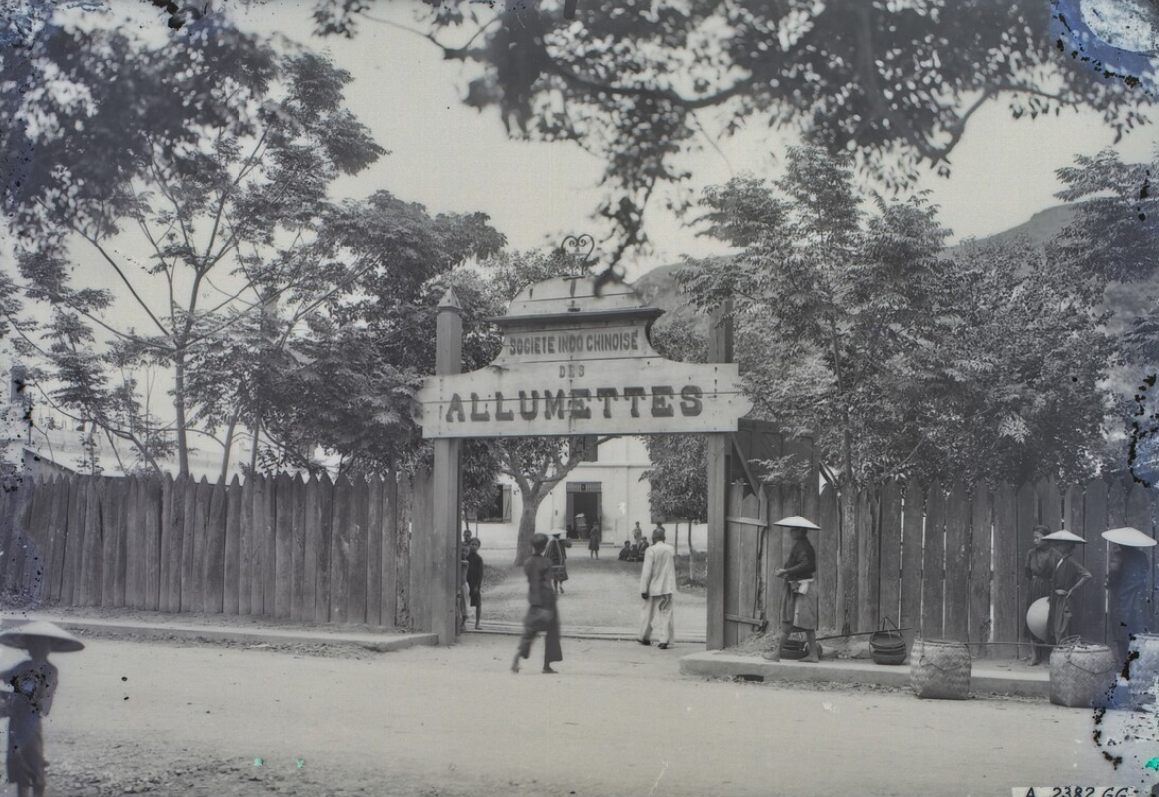
In 1930, a severe famine struck the provinces of Nghe An and Ha Tinh. In Vinh - Ben Thuy, the price of rice suddenly skyrocketed from 3-4 dong per quintal to 20 dong per quintal. Rural areas suffered crop failures. While farmers' lives were already difficult, the lives of workers were even more dire, as prices soared while wages remained unchanged. Faced with this situation, the factory's Party cell organized a struggle demanding that the owners increase workers' wages by 5 cents to 10 cents, reduce working hours from 16 hours to 12 hours, implement labor insurance for those injured, provide workers with boiled water to drink while working, add more windows and paint the glass to protect against the heat, build separate toilets and urinals for male and female workers, and appoint female supervisors to manage the female workers (replacing the male supervisors who often exploited and mistreated them).
When the workers presented their demands, the employers refused to address them. Immediately, the workers declared a strike. Vi Ninh, along with other comrades in the Party branch and the trade union, actively mobilized their fellow workers to participate in the struggle through various means: female workers resolutely refused to go to work; those at home encouraged their husbands and children to persevere in the struggle to the end. They also mobilized support for families facing difficulties to increase the resources for the strike. It was Vi Ninh who first proposed establishing a relief fund to help families of striking workers facing particularly difficult circumstances.
Three days later, Bidez, the chief of the Vinh-Ben Thuy secret police, brought two squads of soldiers to the factory to intimidate them, but the workers' fighting spirit remained unshaken. Finally, the owners had to compromise. They had to sell rice to the workers at 6 dong per quintal. The workers were allowed to appoint several women as "foremen," such as Nguyen Thi Bay (Nguyen Viet Luc's sister) as the foreman of the matchstick-making department; Nguyen Thi Due as the foreman of the packaging department; and a woman from Northern Vietnam was appointed to guard the factory gate, replacing the cruel and ridiculous foreman. Working hours were reduced from 16 hours to 12 hours per day. Other demands were also met to a certain extent by the owners. Once again, the victorious struggle of the match factory workers quickly had a positive influence on the struggle movement at the Wood factory and other factories in Vinh-Ben Thuy.
Due to her outstanding achievements in the struggles at the Match Factory, Nguyen Thi Ninh was assigned by the Central Vietnam Regional Party Committee to work as a liaison officer for the Central Vietnam Regional Party Committee during the revolutionary high tide of 1930-1931, culminating in the Nghe Tinh Soviet. Liaison work was extremely important and also very dangerous. The most difficult and arduous period of testing was during the retreat, when leading cadres of the Regional Party Committee successively sacrificed their lives or fell into the enemy's trap (Le Mao, Nguyen Duc Canh, Nguyen Phong Sac...).
With the venomous curse, "With Nghe Tinh, there is no wealth; without Nghe Tinh, there is no poverty," the French colonialists and their collaborators ruthlessly murdered revolutionary cadres, party members, and the masses. Many places in the province had mass graves, such as in Phuc Son (Anh Son district), Phuc Chau, Phu Long (Hung Nguyen district), Ngu Phuc, and Vo Liet (Thanh Chuong district)... Secret agents and soldiers often searched and surrounded revolutionary cadres from around midnight to 2 a.m. In the Ben Thuy area (as well as many other areas), they cut down trees, leaving them only waist-high to easily monitor passersby. In De Thap Street (Vi Ninh's hometown), they erected four tall guard towers on all four sides of the street to control people passing by. Those going out for work were only allowed to pass through during designated hours.
Overcoming all hardships and dangers, Vi Ninh skillfully evaded the dense encirclement network to deliver leaflets and documents from the Provincial Party Committee to localities in Nghe An province and the Nghi Xuan region (Ha Tinh).
Vi Ninh's family's livelihood still depended on her husband's meager wages at the match factory and his work as a porter. When the factory owners laid off a large number of workers they considered politically involved, Vi Ninh also lost her job, making their family's situation even more difficult. But what troubled her husband was that they had been married for so long without having children. Seeing his wife's clandestine activities, he worried even more about her safety and the peace of their family. She patiently explained to her husband the plight of a nation in turmoil and the necessity of having someone to participate in activities to save the country and its people...
By the end of 1931, the only key cadre of the Central Vietnam Regional Party Committee remaining was Comrade [Name].Le Viet ThuatAnd Nguyen Loi. Vi Ninh and Nguyen Loi created a very secret headquarters for the Regional Party Committee right in the area of De Thap Street. She persuaded her husband to give up the family's valuable timber to the Regional Party Committee. This secret location was in a desolate area with dense trees and many thorny vines, a place no one ever visited. Nguyen Loi and Vi Ninh asked other comrades to buy many raincoats to use as shelters. Comrade Le Viet Thuat, the Secretary of the Regional Party Committee, stayed there regularly; besides Nguyen Loi and Vi Ninh, no one else was allowed to visit. Vi Ninh persuaded her brother-in-law, Le Viet Loi, to pretend to fish in the nearby area every day while keeping watch for anyone approaching and to find a way to inform Nguyen Loi and Vi Ninh.
It was thanks to the protection of the core leadership of the Regional Party Committee that, until the end of 1931 and the beginning of 1932, the Nghe An and Ha Tinh Provincial Party Committees continued to receive directives from the Central Vietnam Regional Party Committee. Therefore, the situation of impulsive and spontaneous unrest was overcome, the loss of life of Party members and revolutionary masses was reduced, and the movement was maintained in some areas of the two provinces.
In the Central Committee's directive to the Nghe An Provincial Party Committee dated August 13, 1931, there is a passage that reads:"...Each Party committee at every level must send reserve cadres to replace each other when captured by the enemy... In places where everything is lost, find the members of the old mass organizations, use the 'Shipwreck Diary' and recall the struggles of the previous year to motivate their enthusiasm and re-establish new organizations... During the period of enemy terror, even if contact with superiors is lost, comrades continue to operate as usual..."
One day in late August 1931, while Vi Ninh was away on business, she received news that soldiers from Hung Nguyen district had raided her house with an order from the district chief summoning Nguyen Thi Ninh to the district office. Knowing she had been exposed and could not escape the dense network of secret police, she calmly returned to the Provincial Party Committee office to report on her work and say goodbye:"They've sent soldiers to arrest me, but you guys stay put, keep that cave a secret so you can stay there. Even if I die, I won't confess or admit anything. Just stay strong and stay there."
When Comrade Nguyen Loi suggested to Vi Ninh that she not return home, and that the Provincial Party Committee would introduce her to work elsewhere, Vi Ninh replied: "Where else can I go without them catching me? As you said, the best course of action is to remain silent and not confess. Besides, I still have a family. So just let me go and let them catch me. What can they do to me?"
Vi Ninh thought carefully. If he tried to escape, he couldn't, and within a few days his house would be destroyed and his loved ones would be harmed because of them. Very confident in his conscience, sense of responsibility, and self-reliance, Vi Ninh calmly entered prison after introducing a female comrade to the Provincial Party Committee to replace him in handling communications for the Provincial Party Committee.
She confided to her fellow prisoners that if she didn't confess or admit to anything, the enemy wouldn't have any evidence to accuse and convict her; she might only spend a few months in prison before being released... But reality wasn't as simple as Vi Ninh had imagined. She was interrogated in Hung Nguyen prison and then in Vinh prison. It's difficult to recount all the brutal and unforgiving torture inflicted by the prison guards on a frail woman like Vi Ninh. They used four ropes to tie her hands and feet, then pulled them down, leaving her body suspended in the middle of the room, slamming her against the walls. In the four corners of the room, four soldiers stood ready with whips, occasionally lashing her while shouting demands for confession.
Comrade Nguyen Loi, who was imprisoned later, was taken by the prison guards to witness them torturing Vi Ninh and Cu Le in the same way described above. A few days later, Nguyen Loi was also tortured in the same manner and even had steel wire whipped against his body. Vi Ninh endured this torture for 1 month and 20 days, but she still refused to reveal what the enemy wanted to know.
The brutal actions of those devils ravaged Vi Ninh's body horribly, leaving her seemingly lifeless. Her entire body was swollen, her legs were bruised and purple with blood, her arms were so swollen that the ropes binding her were invisible, her skin was ulcerated and infested with maggots, and blood oozed out, causing her to collapse. Her hair hung down like someone who had been hanged, her mouth was wide open, and her eyes were sunken, a truly heartbreaking sight.
Vi Ninh described the harsh conditions of imprisonment in a few lines of poetry:
Handcuffs, leg shackles, body aching.
The shirt and pants were stained with sweat, causing painful skin irritation.
Looking at that prison food still sends shivers down my spine.
With swarms of hungry mosquitoes awake all night.
Because her hands were so swollen, Vi Ninh couldn't eat by herself, so her fellow prisoners took turns helping her eat and change her clothes. When she was confined alone in a cell, she had to bend down and eat rice to sustain herself and continue fighting.
Although someone working in the Party's transportation department (at the provincial level), unable to withstand the torture, confessed that she was a transportation officer of the Regional Party Committee, she steadfastly refused to admit it.
Seeing Vi Ninh's heavily wounded body, one of the prison guards shuddered and gritted his teeth, exclaiming, "Wow, this communist aggressor is really brave! I've never seen a woman this brave, refusing to utter a word even in death."
At Vinh prison, Nguyen Thi Ninh, along with Nguyen Thi Nghia (from Northern Vietnam), were exemplary figures of extraordinary courage, demonstrating absolute loyalty to the Communist Party and the revolutionary path outlined by leader Nguyen Ai Quoc.
Despite his physical disfigurement, Vi Ninh remained lucid and calm, his conscience unburdened, for he had done nothing to harm the revolution, his comrades, or his compatriots. Perhaps Vi Ninh's only profound sorrow was learning that the secret headquarters of the Provincial Party Committee had been exposed. It was a place that Nguyen Loi and Vi Ninh had painstakingly created and protected for a considerable period, yet the enemy had discovered it. Even more painful was the fact that Comrade Le Viet Thuat, the last Provincial Party Secretary of the Nghe Tinh Soviet Uprising, had also been arrested and died in the Vinh prison cell, very close to where Vi Ninh was imprisoned.
Political prisoners and ordinary prisoners in Vinh prison, across generations, all admired and loved Vi Ninh. Whenever they had the chance, the female prisoners would gather around to care for and comfort Vi Ninh, and organize struggles to demand the prison release a man who had been tortured to the point of disability without sufficient evidence to convict him.
Unable to extract any secrets from the prisoner who had died and come back to life, lacking evidence to prosecute, and due to the continuous struggle of political prisoners in Vinh prison, by the end of 1934, the French colonialists and their collaborators were forced to release Nguyen Thi Ninh.
Despite her physical disability, Vi Ninh's spirit and unwavering will were like tempered steel, unshakeable. She kept her sacred promise to the Central Committee of the Vietnam Communist Party to maintain her communist integrity, to not succumb to the enemy's power, and to resolutely protect the Party's secrets, even at the cost of her youth.
Nguyen Thi Ninh truly deserves to be considered a shining example of a model communist of the Nghe An Party Committee.