
The AL-41ST-25 engine is derived from the AL-41F engine of the Su-35 and has an efficiency of 39.3%.
The Russian AL-41ST-25 industrial engine, developed from the AL-41F core used in fighter aircraft, incorporates seven technical improvements and is designed to replace imported engines, achieving an efficiency of 39.3% at a power output of 25 MW.
The new generation Russian AL-41ST-25 industrial engine, developed from the AL-41F fighter jet engine core, has been upgraded and transferred to the Arskaya compressor station for testing. This design incorporates seven technical improvements, aiming to replace imported engines while achieving an efficiency of up to 39.3% at 25 MW under ISO standard conditions.
The development context and origins of the technology
The AL-41ST-25 was introduced by the United Engine Manufacturing Corporation (UEA) as a new generation of industrial engines designed for compressor units. Notably, this engine is based on the core of the domestically produced AL-41F fighter jet engine, which was developed for modern fighter aircraft. This approach allows for the reuse of an engine platform already proven in military applications for civilian and industrial use.
Modifications from the AL-41F platform have given Russia a line of domestically produced industrial engines, with the clear objective of replacing imported engines in applications requiring high reliability and performance, such as gas compressor stations.
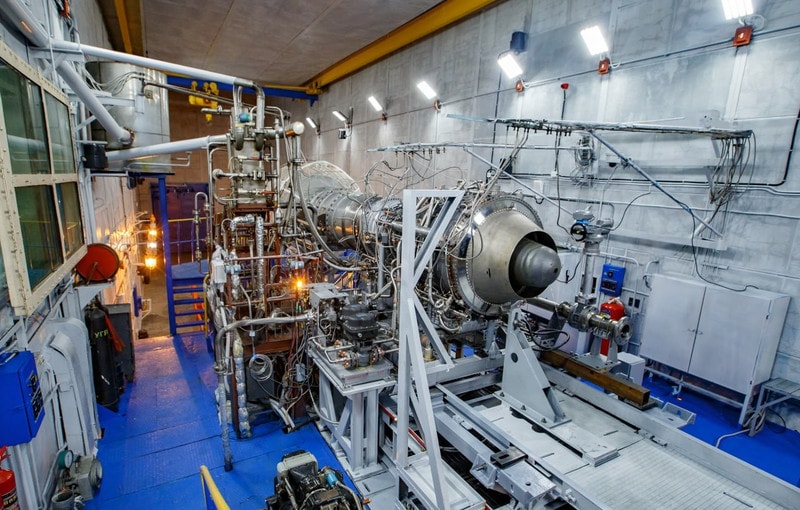
AL-41ST-25 design and major improvements
According to the UEA, the AL-41ST-25 is the result of a deep upgrade carried out by engineers at the A. Lyulka Design Bureau. The new design incorporates seven technical improvements, developed based on the results of prototype testing at the Arskaya compressor station itself. These improvements focus on optimizing the engine's airflow and fuel delivery systems.
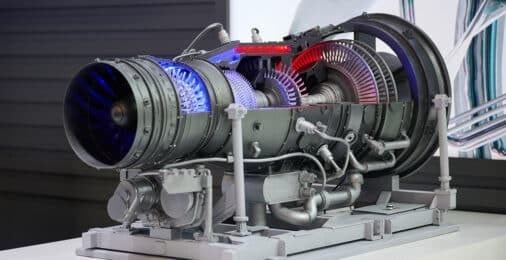
Optimizing aerodynamics and fuel delivery systems.
Specifically, the modifications directly affected the aerodynamics in the engine's airflow system, as well as the air and fuel intake systems. Fine-tuning these elements significantly improved the gas turbine's efficiency, increased power output, and enhanced operational reliability. These are key areas that determine the overall performance of a gas engine used in a compressor unit.
Efficiency of 39.3% at 25 MW
According to acceptance tests, the AL-41ST-25 achieved an efficiency of up to 39.3% under ISO standard conditions at 25 MW. The UEA rated this as the highest efficiency among similar products. In the field of industrial gas engines, exceeding efficiency by nearly 40% indicates a significant level of optimization in terms of thermodynamics and internal mechanical losses within the system.
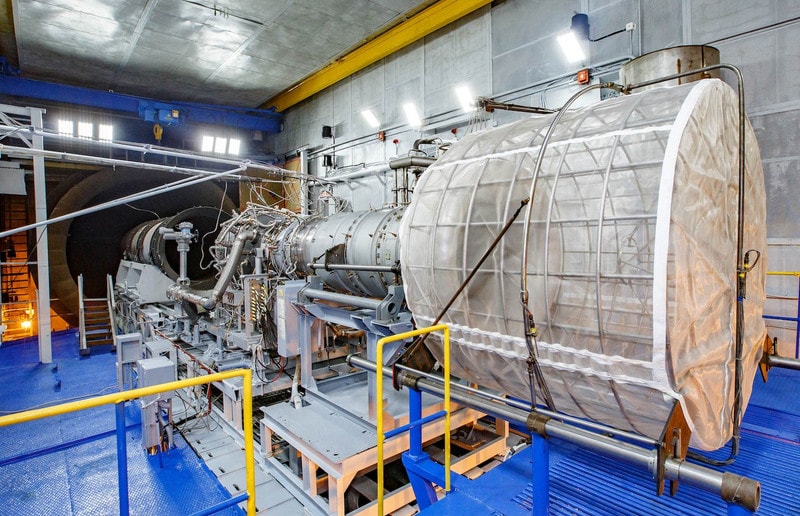
Ability to operate in harsh environments
The AL-41ST-25 design is optimized to maintain performance at high ambient temperatures. In piping systems and air compressor stations, temperature conditions often vary greatly, so the ability to maintain stable performance over a wide temperature range is critical for operational continuity.
Furthermore, the motor has a compact structure and good modularity. This significantly simplifies installation, commissioning, and maintenance. For air compressor units, downtime for installation or maintenance is a direct cost, so the accessibility and replaceability of the design is a clear technical advantage.
Product lines and import substitution strategies
The AL-41ST-25 is presented as the first generation in a new line of industrial engines, based on the core of the domestically produced AL-41F fighter jet engine. According to plans, Russian engineers will develop a power range of 25 MW, 32 MW, and 42 MW, to meet various compressor unit configurations.
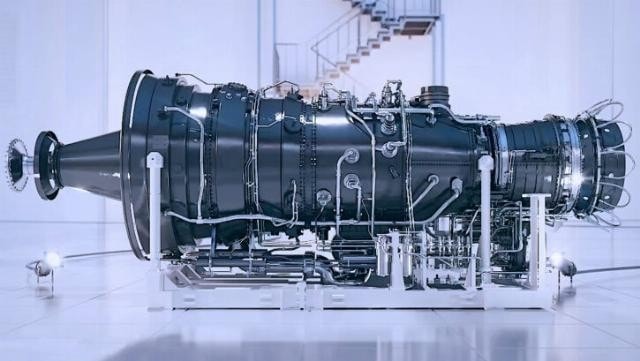
The engine is designed to replace imported engines in the same power segment. Leveraging existing technology from the aerospace engine sector saves time and development costs, while shortening the roadmap for bringing the new product into operation in civil and industrial projects.
Following this direction, the AL-41ST-25 and its related engine family represent not only a technical step but also a solution to increase technological independence in industrial engine development, building upon the established technical foundation in the field of fighter aircraft engines.


