
The Izdeliye 177 engine elevates the capabilities of the Russian Su-57 fighter jet.
The Izdeliye 177 engine, with afterburner thrust up to 16,000 kgf, improved fuel efficiency, and longer lifespan, is being tested by Russia on the Su-57, opening a new phase of modernization for this fifth-generation fighter jet.
The commencement of flight tests with the Izdeliye 177 (Product 177) engine on the Su-57 fighter jet marks a significant modernization step for Russia's fifth-generation fighter aircraft. The new engine not only increases thrust but also improves fuel efficiency and lifespan, thereby significantly expanding the Su-57's combat capabilities.
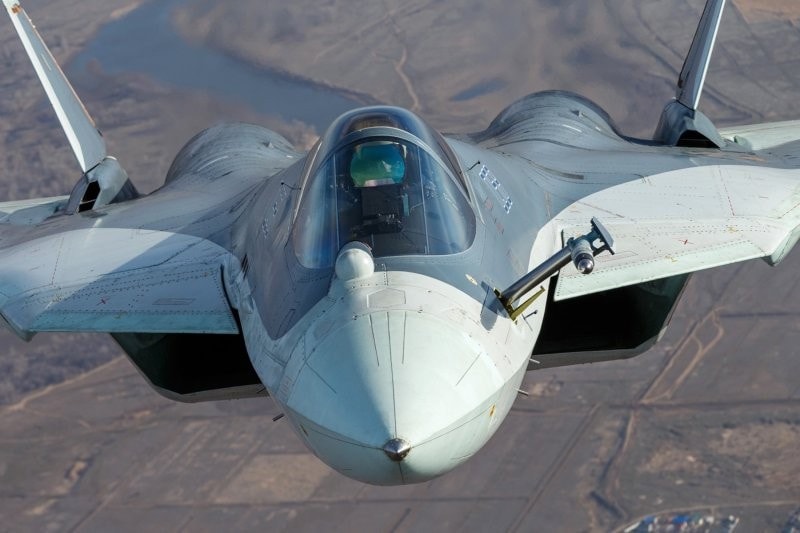
Overview of the Su-57's latest modernization phase.
According to published information, the integration of the Product 177 engine on the Su-57 is not simply a replacement for the previous generation engine. It is a step in a comprehensive upgrade of the Su-57 platform, which has already proven its capabilities in real combat conditions. The new engine is expected to help the aircraft better utilize the characteristics of a fifth-generation fighter, from high maneuverability to range and survivability on the battlefield.
Thrust specifications and technical advantages of Product 177
The most significant highlight of the Izdeliye 177 is its significantly increased thrust. In afterburner mode, this engine reaches 16,000 kgf, higher than the currently used AL-41F1 and AL-41F1S engines.
| Engine | Maximum afterburner thrust (kgf) |
|---|---|
| AL-41F1 / AL-41F1S | 14,500 - 15,000 |
| Izdeliye 177 (Product 177) | 16,000 |
This increase in thrust directly impacts the Su-57's flight dynamics. The improved thrust-to-weight ratio allows the aircraft to accelerate faster, climb more efficiently, and maintain high maneuverability even when carrying significant weapon payloads. In air combat, especially in vertical maneuvers, this is a crucial factor giving the fighter an advantage over modern adversaries.
Improved engine performance also supports more efficient use of the thrust vectoring system. This allows the Su-57 to better exploit its high-angle maneuverability and challenging flight modes, which are hallmarks of next-generation fighters.
Fuel savings and extended combat radius.
Another significant improvement of Product 177 is the reduction in fuel consumption in all operating modes. In practice, this has two main effects: increased combat radius and extended airborne time without refueling.
For fifth-generation aircraft, missions often involve stealthy penetration deep into enemy defenses and attacking targets protected by powerful air defense systems. Combining higher thrust with lower fuel consumption gives the Su-57 greater range and time spent in the combat zone, enhancing its ability to complete missions in heavily threatened environments.
Engine lifespan and technical maintenance efficiency
Extending engine lifespan is another key element of the upgrade program. Product 177 is expected to have longer overhaul cycles, thereby reducing the workload for the technical maintenance workforce.
Extended overhaul cycles mean engines can operate for longer periods between major maintenance. This directly enhances the combat readiness of the Su-57 fleet, as the number of aircraft grounded for routine maintenance is reduced. From an operational perspective, this is a key factor in maintaining long-term combat effectiveness.
Development trends towards radar and infrared signal reduction.
Besides new engines, the Su-57 is also undergoing research to enhance its stealth capabilities. Last December, a variant of the Su-57 with flat nozzles was showcased for the first time. This nozzle design aims to further reduce the aircraft's radar and infrared signature.
Currently, the Product 177 engine is being tested with traditional round nozzles. However, the phased modernization roadmap of the Su-57 platform suggests the possibility of combining the new engine with a flat nozzle solution in the future. In that case, the increased thrust and fuel efficiency of the Product 177 could be further enhanced by a reduced thermal signature, contributing to a comprehensive improvement in the aircraft's survivability against modern detection systems.
The foundation for further upgrade packages for the Su-57.
The inclusion of Product 177 in flight testing on the Su-57 should be viewed within the broader context of this fighter jet's development program. Along with the gradual modernization of weapons and aircraft systems, the new engine provides the technical foundation for subsequent upgrade packages.
The combination of higher thrust, better fuel efficiency, longer lifespan, and radar and infrared signature reduction solutions allows the Su-57 to maintain competitiveness against new-generation foreign fighters. This is a step to ensure that the Su-57 platform can continue to be developed and adapted to future operational requirements.
According to Rossiyskaya Gazeta.


