
'Japanese driving force' for Vietnamese football?
(Baonghean.vn) - The news that Saigon FC is "exporting" four players to Japan is attracting attention from the public near and far.
For the first time, a V.League team boldly sent many talented players to one of the most advanced football leagues in the continent, the J-League, to compete and learn.
However, there are also many concerns because the exchange of players between V. League clubs and J-League 1, 2, or 3 has been mentioned by the owner of Saigon FC, but nothing has come of it, or it has even faded into obscurity. Wasn't there information that Van Trien and Danh Trung were preparing to go to Japan, then everything went silent, and the reason given was the Covid-19 pandemic? Now, not just two players, but four names are clearly mentioned. Perhaps the hype has intensified, and we'll see how things unfold later?
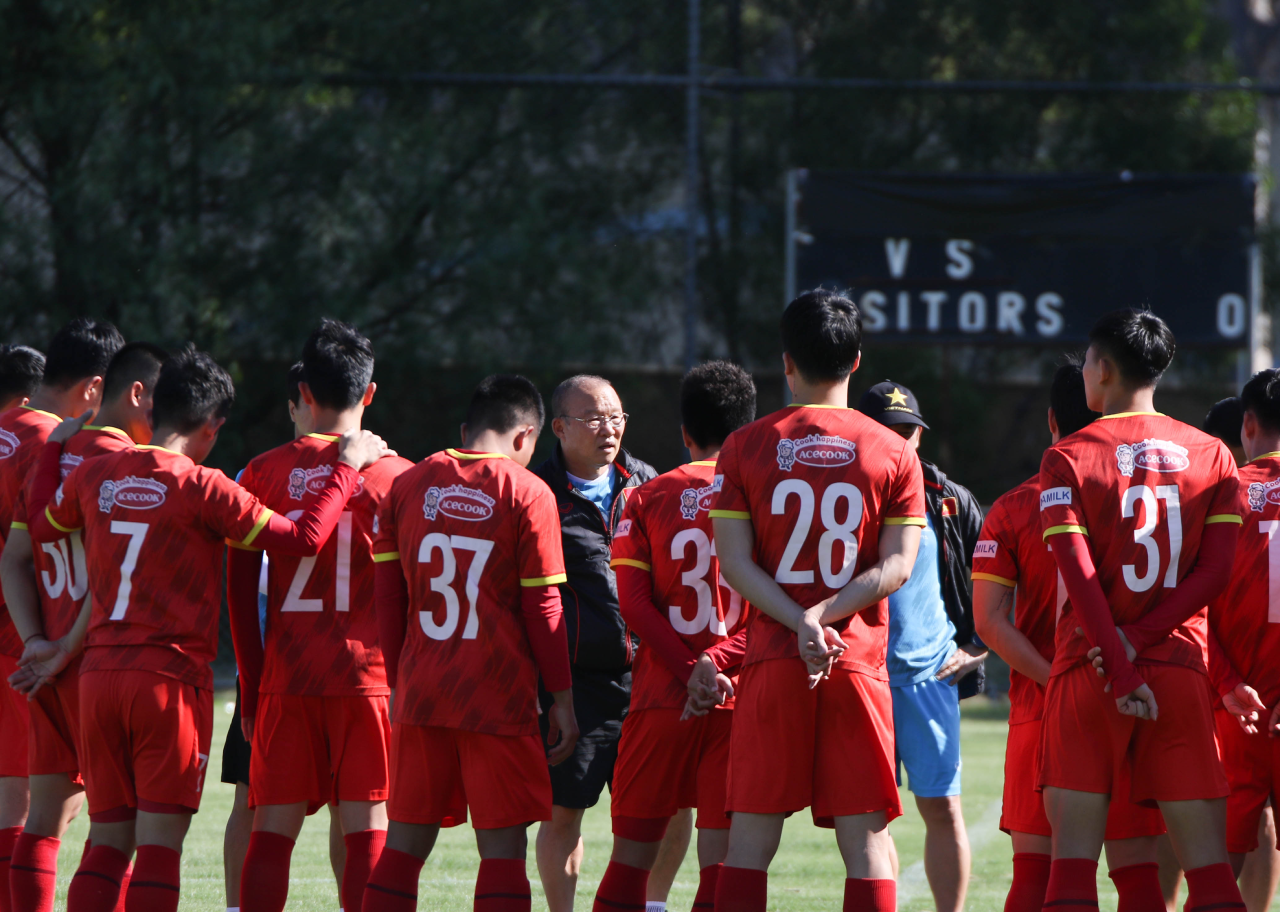 |
| The Vietnamese national team held their first training session in Australia. (Photo: VFF) |
First of all, cooperation and exchange between professional football clubs in the era of integration is essential and welcome. Those who act first will reap the rewards first. These results, of course, will primarily benefit the clubs that invest time and resources to perform well and achieve the best possible results in V. League 1, 2, etc. Afterward, the national teams will benefit from outstanding players training and competing in those advanced football leagues. The problem is that if someone, without having done anything for their club, makes grandiose pronouncements about future prospects and immediately dreams of giving credit to the national teams, it's too early, too hasty, and too unrealistic!
The next point is that for a long time, truly dedicated and influential club owners like Mr. Duc and Mr. Hien have also undertaken this important and necessary work, but it wasn't easy to succeed, so they didn't make as big a fuss as others?
Everyone knows that Cong Vinh, Tuan Anh, Xuan Truong, and Van Hau… were allowed to play abroad for a short time, before realizing that things weren't quite right and ultimately had to return to find their "stage" in Vietnam.V.LeagueThis is a familiar situation. So, the matter of 2 or 4 promising players from Saigon FC moving to J-League 2-3 in the near future is, ultimately, a normal exchange like any other daily routine in football. Of course, only time will tell.
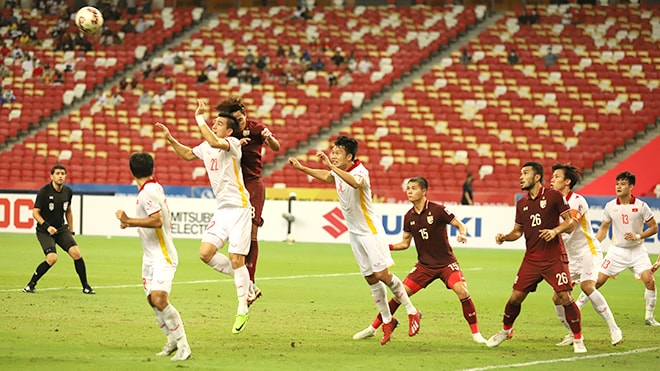 |
| The Vietnamese national team's strikers (in white shirts) just had a disappointing AFF Cup campaign. Photo: The Vu - VNA. |
Indeed, to elevate Vietnamese football towards the ultimate goal of qualifying for the 2030 World Cup, for example, football strategists have long had to address numerous issues comprehensively and satisfactorily. However, a sudden setback occurred in the Vietnamese national team's disappointing performance in the third round of World Cup qualifiers. This result reveals a significant gap between the current Vietnamese team, after its successful four-year period, and the overall standard of top-tier football in Asia. Therefore, we must "start over and reinvent" the game, as head coach Park Hang-seo is currently doing, if we don't want to be left behind.
Of course, the process of rediscovering themselves at a higher level and standard involves many important and urgent tasks undertaken by the clubs, the most crucial of which is upgrading the quality of players in all aspects, from domestic training to experience and honing their skills abroad. The work of Saigon FC, if it yields good results, is commendable, and other clubs should learn from and follow suit, in addition to many other daily tasks as required and assigned.
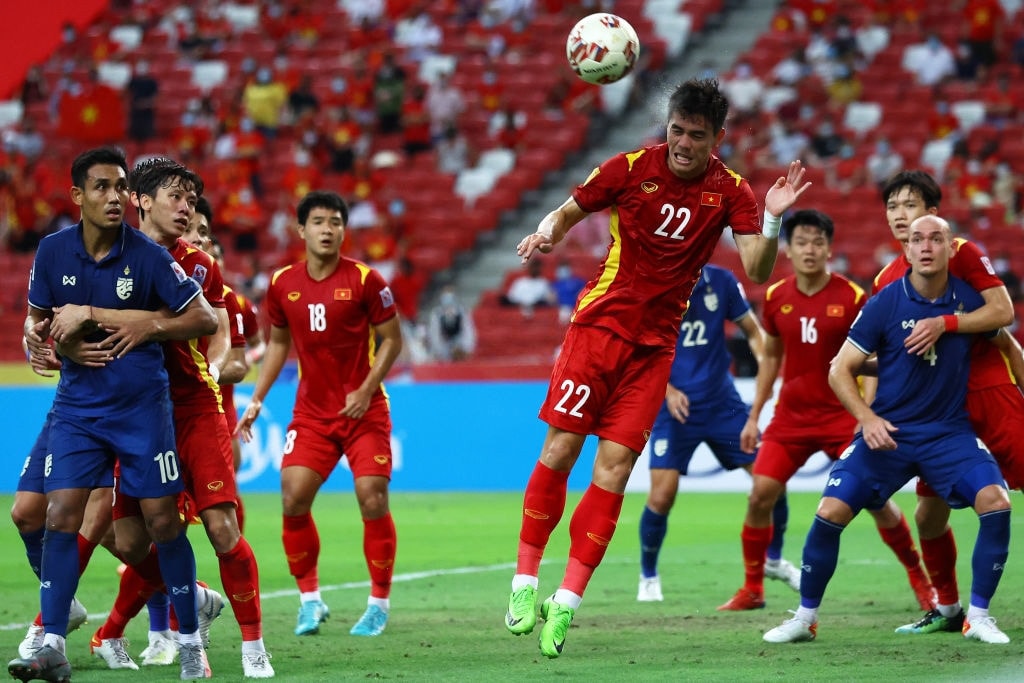 |
| A ball contest between players of the Vietnam national team (in red shirts) and the Thailand national team during the first leg of the semi-final. Photo: VNN |
In reality, learning and improving skills can be done in many different ways. Studying abroad in a structured, long-term manner is a practical approach, as exemplified by the Thể Công football team's trips to North Korea and East Germany in the past. Most national teams competing in the SEA Games have undergone training and competition abroad, both during the Cold War and in the post-integration era. Studying domestically under the guidance of foreign experts seems to be a significant advantage. Consider the success of the HAGL U19 team under coach Grachen and the teams at PVF coached by foreign coaches – this clearly demonstrates the effectiveness of this appropriate approach. The remaining question is why, with the same method of inviting experts and using advanced training programs, some places achieve the expected success, while others only boast and boast even more?
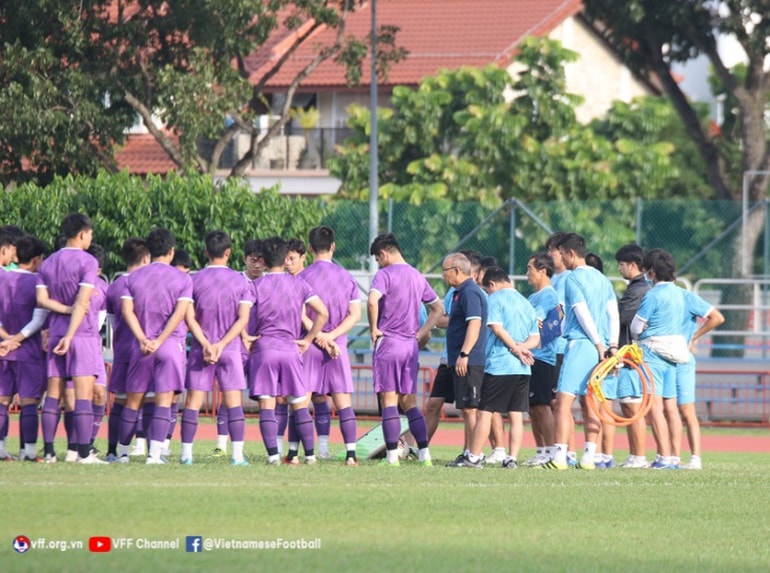 |
| The Vietnamese national team held a tactical meeting right on the training ground. Photo: VFF |
Therefore, the reality is that aspirations and desires are one thing, while feasible plans are another. Running a top-level football club isn't a matter of one or two seasons, but a long-term career. It's not uncommon for club owners to genuinely want to achieve something but are unable to do so, as many people know. While football life is never-ending or satisfying, demanding constant movement from the entire system, each football club must find its own path to success, one that is both right and suitable, including collaboration, exchange, and creating conditions for mutual development.
For the past few years, Saigon FC's strategy of seeking strength from a "Japanese engine" is fundamentally correct, as Japan has the most advanced football system in the continent and is open to any ambitious endeavor. However, for things to become truly effective and yield real results, it cannot happen overnight, as Saigon FC has been struggling with for a long time. And perhaps we must anticipate unexpected events, as have happened before, requiring a different approach and strategy, not only for Saigon FC?


