
3D-printed Krasnoyarsk rocket engine passes launch test.
Two low-thrust engines developed by students at Reshetnev University completed three 30–60-second launches at the Keldysh Center in Moscow; the combustion chambers were 3D-printed from heat-resistant alloys.
Two experimental low-thrust rocket engines developed by students and alumni of Reshetnev University (Krasnoyarsk) have passed launch tests in Moscow. According to information released to TASS, the combustion chambers of these engines were manufactured entirely using 3D printing technology from a heat-resistant powder alloy; telemetry results matched calculations, and no structural damage was detected after testing.
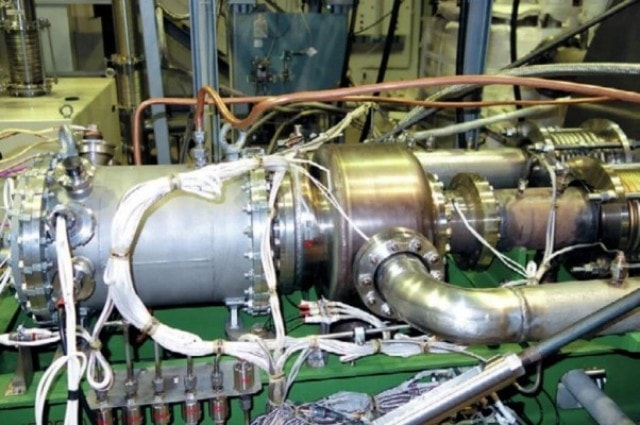
Key information from the test
- Test facility: Keldysh National Research Center (part of the Roscosmos state corporation), in Moscow.
- Subject: Two experimental low-lift rocket engines (LTREs) designed and developed by a team of students and alumni from Reshetnev University.
- Results: Three successful launches, each lasting 30–60 seconds.
- Technical condition: Visual inspection revealed no structural damage; telemetry data is consistent with calculated values.
- Key features: 3D-printed combustion chamber made from heat-resistant powder alloy.
Technical analysis
A notable aspect of the program is the application of 3D printing technology to fabricate the combustion chamber using heat-resistant powder alloy. This approach typically shortens fabrication time, integrates complex cooling channels directly into the structure, reduces the number of parts requiring machining and assembly, thereby facilitating rapid testing, improvement, and iterative processes. The fact that the measured parameters matched calculations and there were no failures after 30-60 second combustion cycles demonstrates that the combustion chamber fabrication quality and testing procedures met the set objectives.
According to Professor Vladimir Nazarov (Department of Aircraft Engines, Reshetnev University), the successful test results of the Krasnoyarsk solid-state rocket engine open up the possibility of developing advanced rocket engines running on gas fuel. This is the next direction mentioned in an interview with TASS.
The intended application
- Lightweight launch vehicle.
- The upper floors.
- The spacecraft's braking and trajectory correction system.
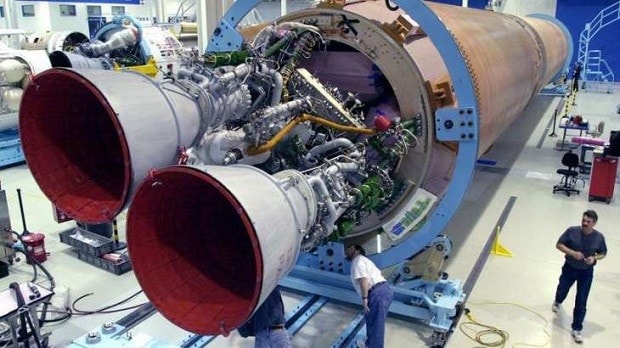
Participating organizations and their roles
- Developed by: A group of students and alumni from the Fakel Student Design Department, Faculty of Aircraft Engines, Reshetnev University.
- Academic supervisor: Professor Vladimir Nazarov.
- Industrial partner: Polikhrom handles engine production.
- Test site: Keldysh National Research Center (part of Roscosmos), in Moscow.
The Siberian State University of Science and Technology, named after Academician MF Reshetnev, was founded in 2016; the institution specializes in space technology, satellite engineering, forestry, and chemical engineering.
Test summary table
| Category | Information |
|---|---|
| Number of test engines | 2 |
| Number of launches | 3 |
| Duration of each session | 30–60 seconds |
| Location | Keldysh National Research Center (Roscosmos), Moscow |
| Technical results | No structural damage; telemetry data matches calculations. |
| Manufacturing characteristics | 3D-printed combustion chamber made from heat-resistant powder alloy. |
| The intended application | Lightweight launch vehicle; upper stage; spacecraft braking/correction system |
Assessment based on data source and scope
The information in this article is based on a publication by Reshetnev University to TASS and an interpretation by Professor Vladimir Nazarov. According to the publication, Russia holds a leading position in space rocket engine technology. The article does not provide data on thrust, specific impulse, particular fuel type, or engine operating cycle; therefore, no quantitative comparison with equivalent systems is made.
Impact and significance
The test results confirm the design and fabrication capabilities of low-thrust engines with 3D-printed combustion chambers at both the academic and industrial levels (Fakel/Polikhrom), and also demonstrate the verification process at the specialized testing facility (Keldysh). With the applications mentioned, this type of engine is significant for orbital missions requiring precise control and high reliability. All comments regarding the next step (development of gas-fueled engines) were made by Professor Nazarov.


