
Double earthquake in Venezuela: Why are they so rare and devastating?
Earthquakes in Venezuela are considered a rare phenomenon, occurring frequently and causing unprecedented disasters.
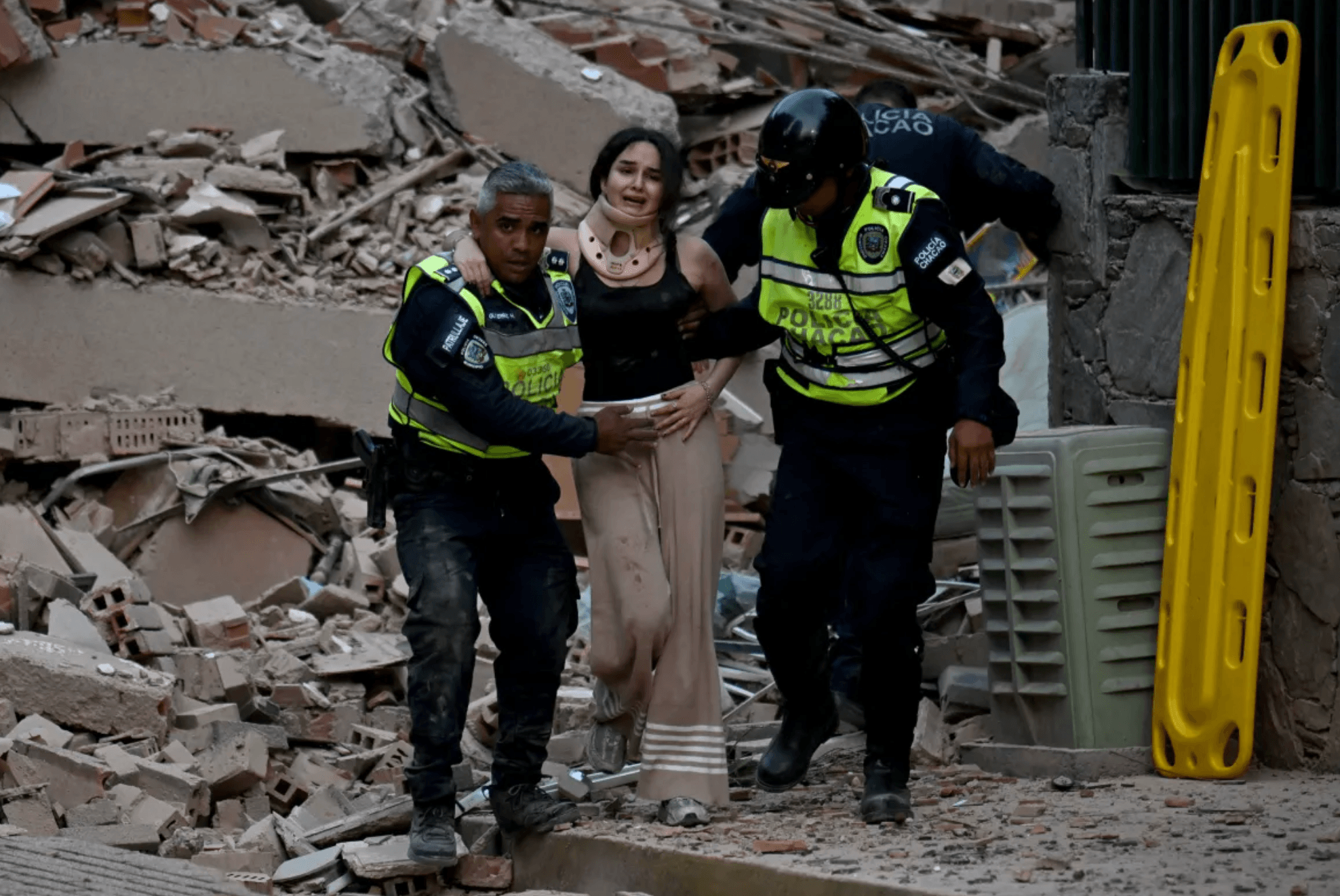
A series of powerful earthquakes struck Venezuela on the evening of June 24th, killing nearly 1,000 people and injuring tens of thousands more. Geologists say the disaster stemmed from a rare phenomenon called a "double earthquake"—a term referring to two large earthquakes occurring simultaneously in quick succession.
The death toll from the two earthquakes, measuring 7.2 and 7.5 on the Richter scale respectively, is expected to rise further. Rescue teams are racing against time to search through the rubble in cities near the epicenter, located about 170 km west of the capital Caracas.
According to the U.S. Geological Survey (USGS), models estimate that damage from a disaster of this magnitude could range from 10,000 to 100,000 deaths.
The nature of the double earthquake phenomenon in Venezuela
This seismic event is considered exceptionally rare and highly destructive in many respects. The main earthquake occurred at 6:04 PM (local time), and is recorded as the strongest earthquake in this South American country since 1900.
However, the severity of the disaster lies not only in the intensity of the tremors. The key point is the rapid occurrence of two earthquakes in quick succession. Geologist Piero Poli from the University of Padua (Italy) commented: "It cannot be ruled out that this is actually a single, complex series of events."
The time interval between the first and second shocks was a mere 40 seconds. Geologist Thomas Lecocq of the Royal Belgian Observatory said: "People in the disaster zone felt like it was an endless earthquake."
The two earthquakes occurred almost simultaneously and were only about 45 km apart. Geologist Piero Poli explains that this characteristic perfectly matches the definition of a "double earthquake"—that is, earthquakes of the same magnitude occurring very close together in both space and time.
Also known as "twin earthquakes," this phenomenon is extremely rare. Normally, after a major earthquake, aftershocks will gradually decrease in intensity and frequency along the same fault line.
The danger from geological "twins"
In geological history, another notable double earthquake phenomenon occurred off the coast of the South Sandwich Islands in 2021, when a magnitude 7.5 earthquake was immediately followed by another measuring 8.1. Most recently, in 2023, Türkiye also experienced a devastating earthquake followed by another major tremor just hours later.
However, Poli points out a difference: in Türkiye, the seismic activity was triggered on two fault lines located close together; whereas in Venezuela, the two earthquakes appear to have occurred on the same fault line. This theoretically doesn't quite follow the usual principle of a "double earthquake."
The tremors appear to originate from the same fault line along the boundary between the Caribbean and South American tectonic plates. "This isn't the most seismically active region in the world, but we know fault lines exist there," Poli added. Expert Lecocq suggested that if these twin earthquakes originated from the same fault, it could be a chain reaction rather than a pair of independent earthquakes.
However, these scientific debates do not alleviate the suffering of the people in the disaster zone. Two American geologists, Judith A. Hubbard and Kyle Bradley, analyzed in an in-depth article that a single 7.2 magnitude earthquake in the area would be enough to trigger a serious emergency.


