
The Japanese yen is nearing 160 JPY/USD despite a record $73.6 billion intervention package.
The Japanese currency recorded the worst performance among G10 currencies in May. Market attention is now focused on the Bank of Japan's (BOJ) policy meeting on June 16th.
The Japanese yen continues to face strong downward pressure, risking breaking the crucial psychological threshold of 160 yen to 1 USD. According to CNBC data late afternoon on June 2nd (Vietnam time), the exchange rate was trading at 159.72 JPY/USD, despite strong intervention efforts from the Japanese government in recent times.
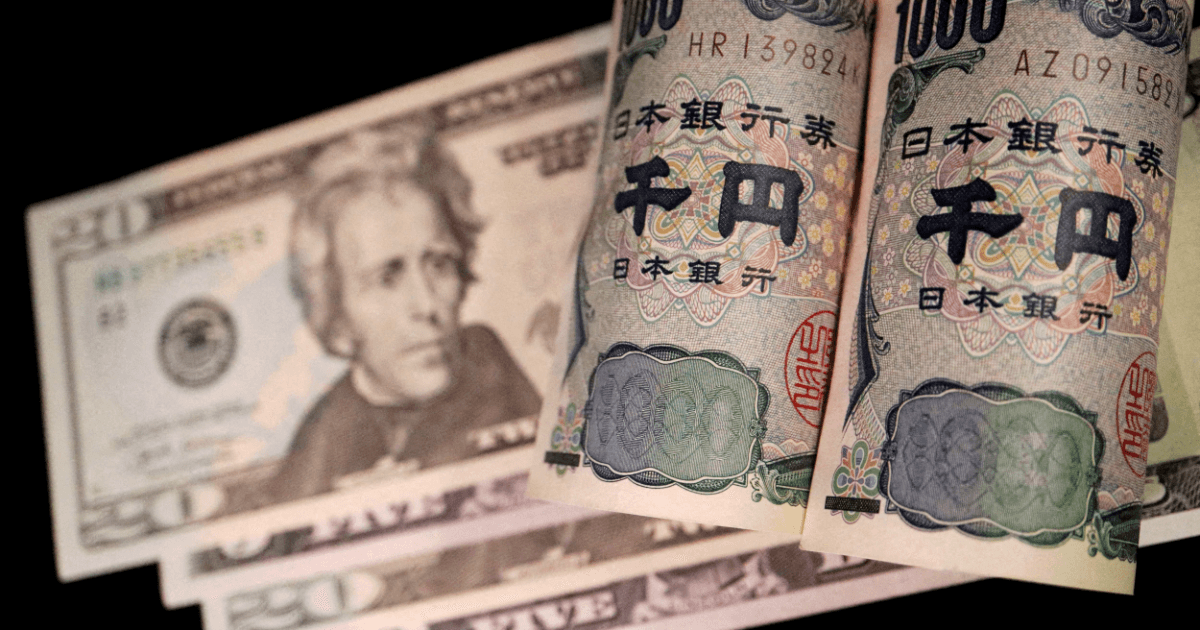
In May, the yen became the worst-performing currency among the G10 major currencies. Notably, data from the Japanese Ministry of Finance showed that the agency spent a record $73.6 billion between April 28 and May 27 to support the exchange rate. However, the effectiveness of this injection was considered quite limited, as the downward trend continued in the early trading sessions of June.
Barriers from interest rate differentials and geopolitical factors.
The core reason for the yen's weakening is attributed to the significant interest rate differential between Japan and the United States. While the US Federal Reserve (Fed) maintains high interest rates to curb inflation, the Bank of Japan (BOJ) has been slow to tighten monetary policy. Furthermore, conflicts in the Middle East driving up oil prices have also put significant pressure on Japan's trade balance and inflation, a country heavily reliant on imported energy.
According to data from the U.S. Commodity Futures Trading Commission (CFTC), investment funds and asset managers have increased their bets on the weakening of the Japanese yen. Net short positions in the yen reached their highest level since July 2024 in the week ending May 26. This indicates a pessimistic market sentiment regarding the short-term recovery prospects of the currency.
Expectations for a turning point from monetary policy.
Analysts believe that direct intervention in the foreign exchange market is only a temporary measure. Masahiko Loo, senior strategist at State Street Investment Management, argues that real change must come from the BOJ's monetary policy rather than relying solely on the Ministry of Finance's money-printing operations.
Currently, the overnight index swap market is reflecting a 78% probability that the BOJ will raise interest rates at its policy meeting on June 16th. BOJ Governor Kazuo Ueda is expected to deliver a key speech on June 3rd, where investors anticipate finding clearer signals about the path to interest rate normalization.
Masafumi Yamamoto, chief currency strategist at Mizuho Securities, warned that if the exchange rate exceeds 160 JPY/USD, the risk of the yen falling further below the low set on April 30 is very high. In that case, Tokyo might have to take stronger measures such as checking the exchange rate or continuing to launch practical intervention packages to prevent a wave of sell-offs.


