
Russian Rubicon drones destroyed more than 13,000 pieces of Ukrainian military equipment.
According to Russian Defense Minister Andrei Belousov, Rubicon unmanned aerial vehicle units have destroyed more than 13,000 weapons, accounting for more than a quarter of the total firepower generated by Russian UAVs, and are considered the spearhead force in the special military operation.
According to Russian Defense Minister Andrei Belousov, units using the Rubicon unmanned aerial vehicle system are considered by Russia to be among the most effective forces in the special military operation, with more than 13,000 units of weapons and equipment belonging to the Ukrainian Armed Forces destroyed.
Overview of the Russian Defense Minister's statement
Information about Rubicon was provided by Andrei Belousov at an expanded meeting of the Council of the Ministry of Defense of the Russian Federation. There, he stated that Rubicon drone units are at the forefront of the development of Russian unmanned forces and have demonstrated high effectiveness on the battlefield.
According to the Russian Defense Minister, the Rubicon units are at the forefront of the unmanned aerial vehicle (UAV) force. He emphasized that these units have destroyed more than 13,000 enemy weapons and equipment, accounting for more than a quarter of the total firepower inflicted by Russian UAVs within the framework of the special military operation.
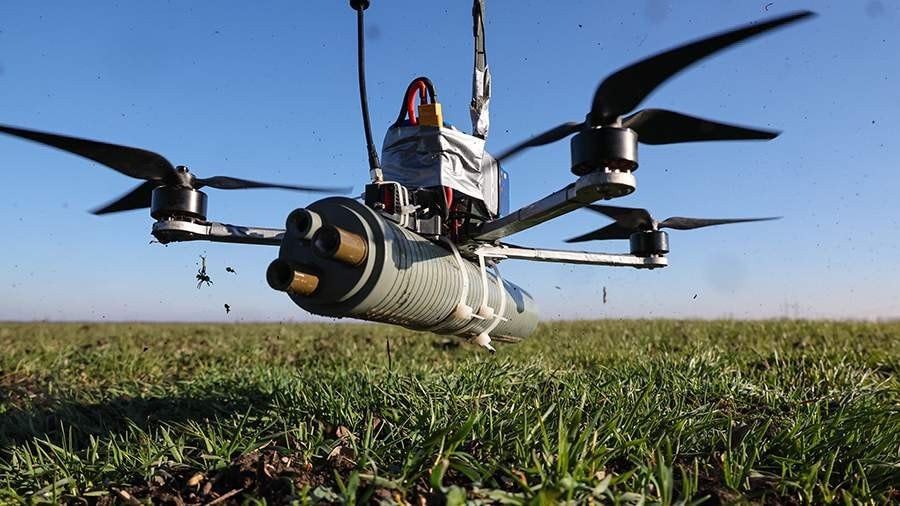
The role of the Rubicon unmanned system.
In his statement, Andrei Belousov described Rubicon as a leading unmanned system in the Russian UAV force. While not releasing detailed technical specifications, firepower figures suggest the system is deployed in areas and missions with high target value.
The fact that Rubicon is believed to be responsible for more than a quarter of the firepower caused by UAVs demonstrates its high frequency of use and priority role in operational planning. This also reflects a growing reliance on unmanned weapons to attack targets, reducing direct contact between infantry and manned equipment and enemy fire.
From a tactical perspective, Rubicon units are likely to be deployed in key operational directions requiring reconnaissance, precision strike capabilities, and repeated engagements. The figures presented at the meeting suggest they are considered an indispensable component of the overall firepower structure of the Russian UAV forces.
Robotic platforms and battlefield medical missions.
Besides Rubicon, Andrei Belousov also emphasized the role of robotic platforms on the battlefield, especially in the task of evacuating the wounded. According to him, experience from special military operations shows that the use of robotic systems for this task is highly effective.
In 2025, 288 robotic units were delivered to the Russian army. However, according to Belousov, this number only met about 20% of the force's actual needs. This shows that the Russian army is accelerating the application of robots not only in combat but also in logistics and medical support.
The Russian Defense Minister affirmed that in the coming year, the Russian Armed Forces need to be fully equipped with robotic systems. He considered this one of the priority tasks, directly related to the preservation of servicemen's lives in high-intensity combat conditions.
The significance of statistics on battlefield robots and casualty evacuation.
Regarding the effectiveness of military medicine, Andrei Belousov stated that Russian military doctors now save more than 90% of wounded soldiers brought back from the battlefield. At the same time, the time it takes to transport seriously wounded soldiers to specialized medical facilities has been shortened to 36 hours over the past two years.
Belousov linked these figures to the increased use of robotic platforms, including robots for evacuating wounded soldiers from combat zones. The integration of robots with a reorganized military medical system demonstrates an effort to minimize secondary casualties due to delays in treatment.
Compared to the 288 new robotic vehicles that only meet about 20% of the demand, it is clear that the Russian Ministry of Defense is planning to expand the deployment of this type of vehicle. If the demand is fully met, the frequency of robot use on the battlefield is likely to increase significantly, thereby further impacting the organization of wounded soldier transport and other support tasks.
Impact on force organization and combat doctrine
The points raised in the Russian Defense Minister's statement reveal two parallel trends: increased use of attack UAVs, notably the Rubicon, and the expansion of robotic platforms in battlefield support, particularly in medical assistance.
With Rubicon, achieving the destruction of over 13,000 weapons and equipment units and accounting for more than a quarter of UAV firepower results shows that this system is prioritized in the organization of unmanned forces. This could lead to changes in unit structure, with specialized UAV detachments tasked with coordinating closely with artillery, missiles, and ground forces.
Regarding robotic platforms, prioritizing their role in directly protecting the lives of military personnel indicates that they are not merely auxiliary equipment but are gradually becoming an integrated component in operational planning and logistical support. From the figures presented, the goal is to create a combat-medical system where most of the most dangerous tasks are performed by unmanned vehicles.
All of the above content is quoted from the statement of Russian Defense Minister Andrei Belousov at an expanded meeting of the Council of the Ministry of Defense of the Russian Federation, reflecting the current direction of strengthening the role of unmanned systems and robots on the battlefield.


