
The project is almost completed even though land compensation and clearance have not yet been completed.
(Baonghean.vn) - The project to expand the primary school began construction in September 2022, but the local residents were completely unaware, even though the area is their agricultural land. After nearly a year, the project is nearing completion, but the investor has still not completed the compensation and land clearance process.
"Execute first, report later."
For several days now, reporters from Nghe An Newspaper have been continuously receiving complaints from 12 households in Hamlet 5, Nghi Kim Commune (Vinh City), expressing their frustration regarding the expansion project of Nghi Kim Primary School. These households own agricultural land in the Dong Truong field, which is planned for the construction of projects such as the expansion of Nghi Kim Primary School, the expansion of Nghi Kim Kindergarten, and the construction of the Nghi Kim Commune Police headquarters. The Nghi Kim Primary School expansion project, which commenced nearly a year ago and is nearing completion, still lacks proper compensation and land clearance. The investor for all these projects is the People's Committee of Nghi Kim Commune.
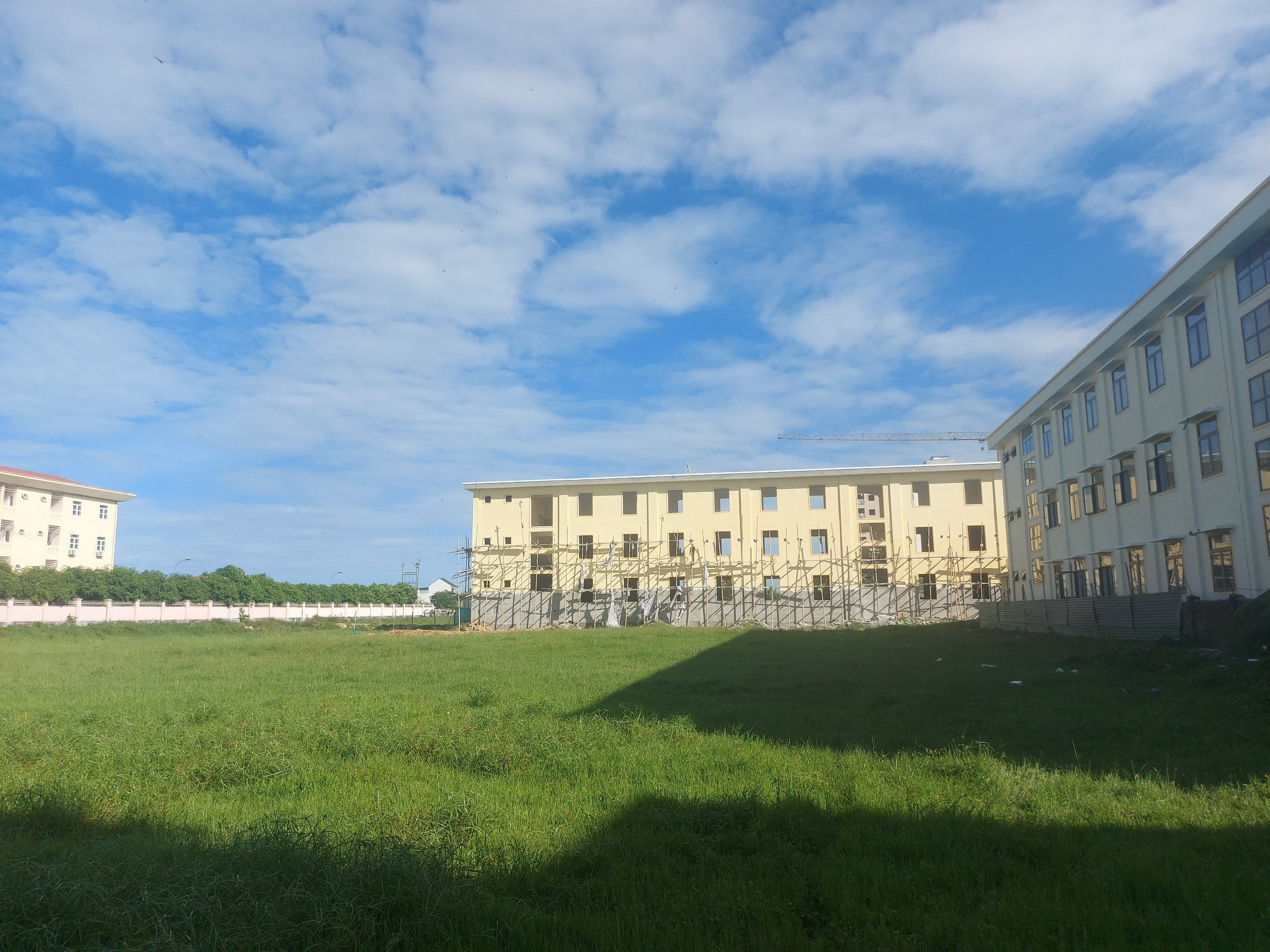
According to the reporter's observations, this agricultural land is located in a prime location, right in the center of Nghi Kim commune. One side borders three schools, another side borders a newly built high-rise residential area, and the remaining two sides border the commune's main roads. Most of these plots of land have long been granted land use rights certificates to residents by the Nghi Loc District People's Committee and the Vinh City People's Committee.
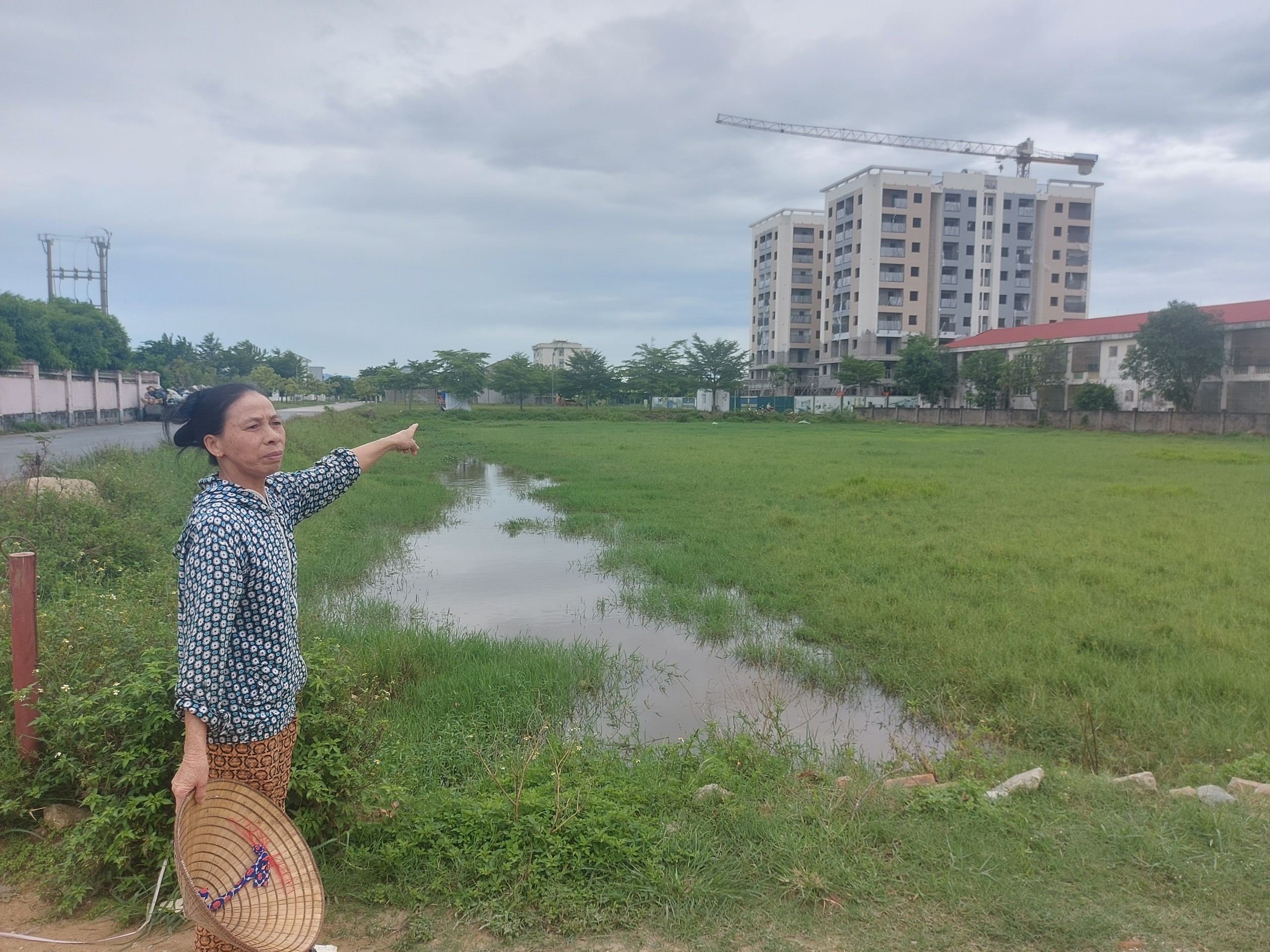
Ms. Vu Thi Minh (72 years old) said that her family owns more than one sao (approximately 1000 square meters) of land in this area, which they have been cultivating since the 1960s. “Previously, we planted rice in October and peanuts in May. This was the most productive peanut growing area in Nghi Kim commune,” Ms. Minh recounted. However, in recent years, due to urbanization, the soil in this field has gradually become depleted, and since 2018, it has become impossible to continue cultivating.
"Due to objective conditions such as urbanization, including investment in infrastructure construction, houses, and housing and school projects nearby, the irrigation system has been disrupted, turning the land into a low-lying area. The land is also polluted by wastewater from schools and neighboring households. This has led to low rice yields, causing people to gradually abandon investing in production," the report from the commune's People's Committee also stated.
In September 2022, the expansion project of Nghi Kim Primary School began. It was only when the construction unit brought in machinery to excavate the land for the school that residents learned the agricultural land was being reclaimed for construction. “That day, we happened to be passing by and saw the machinery arriving for construction. We all absolutely support the land reclamation for the school, but they should have informed us about the plan and compensation. Instead, they secretly started construction, which shows a lack of respect for the people, because we have been granted land use rights certificates by the State,” said Ms. Nguyen Thi Que (62 years old), expressing her frustration.
Representatives of the affected households subsequently frequently visited the project site, demanding an explanation from the investor, the Nghi Kim Commune People's Committee. According to videos recorded by the residents, on November 20, 2022, a leader from Nghi Kim Commune stood before the households, asking for their understanding and cooperation in handing over the land to the construction unit to meet the deadline. They also promised compensation before the Lunar New Year at a rate of 170 million VND per sao (approximately 1000 square meters). However, even as the year drew to a close, the residents still hadn't received their compensation, so they went to the Commune People's Committee office to inquire. The construction unit then distributed 500,000 VND to each affected household. Nearly a year has passed, and these households have still not received their land compensation.
The issue of subsidized pricing.
Speaking with a reporter from Nghe An Newspaper, Mr. Nguyen Van Khiem, Chairman of the Nghi Kim Commune People's Committee, admitted that the commune had been complacent in the implementation of this project. “We thought that sooner or later the people would be compensated, as some other projects in the area had been carried out similarly without any problems. Afterwards, we also held dialogues with the households, asking for their understanding and requesting that construction proceed first and compensation be paid later to meet the deadline,” Mr. Khiem said.
According to Mr. Khiem, because Nghi Kim Primary School has a large number of students and a shortage of classrooms, the commune has been requesting approval for a school expansion project since 2021. “According to the procedure, land must be reclaimed and cleared before construction can begin. However, at that time, Nghi Kim commune was striving to be recognized as an advanced new rural area. This includes the education criterion; if even one of the three schools doesn't meet the standard, the commune will not be recognized. If the school isn't completed, the education criterion will be missed, so construction had to be expedited,” Mr. Khiem explained.
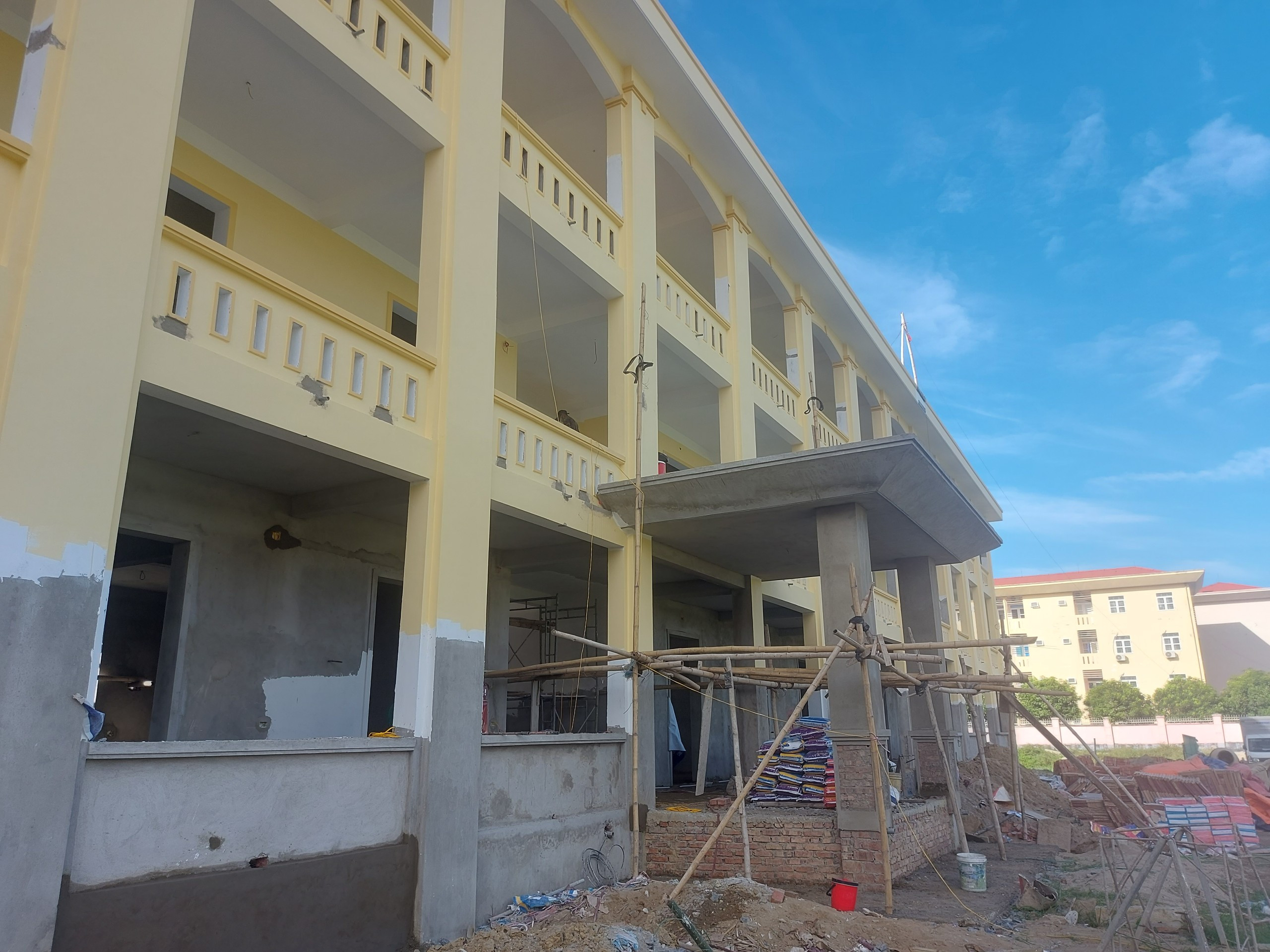
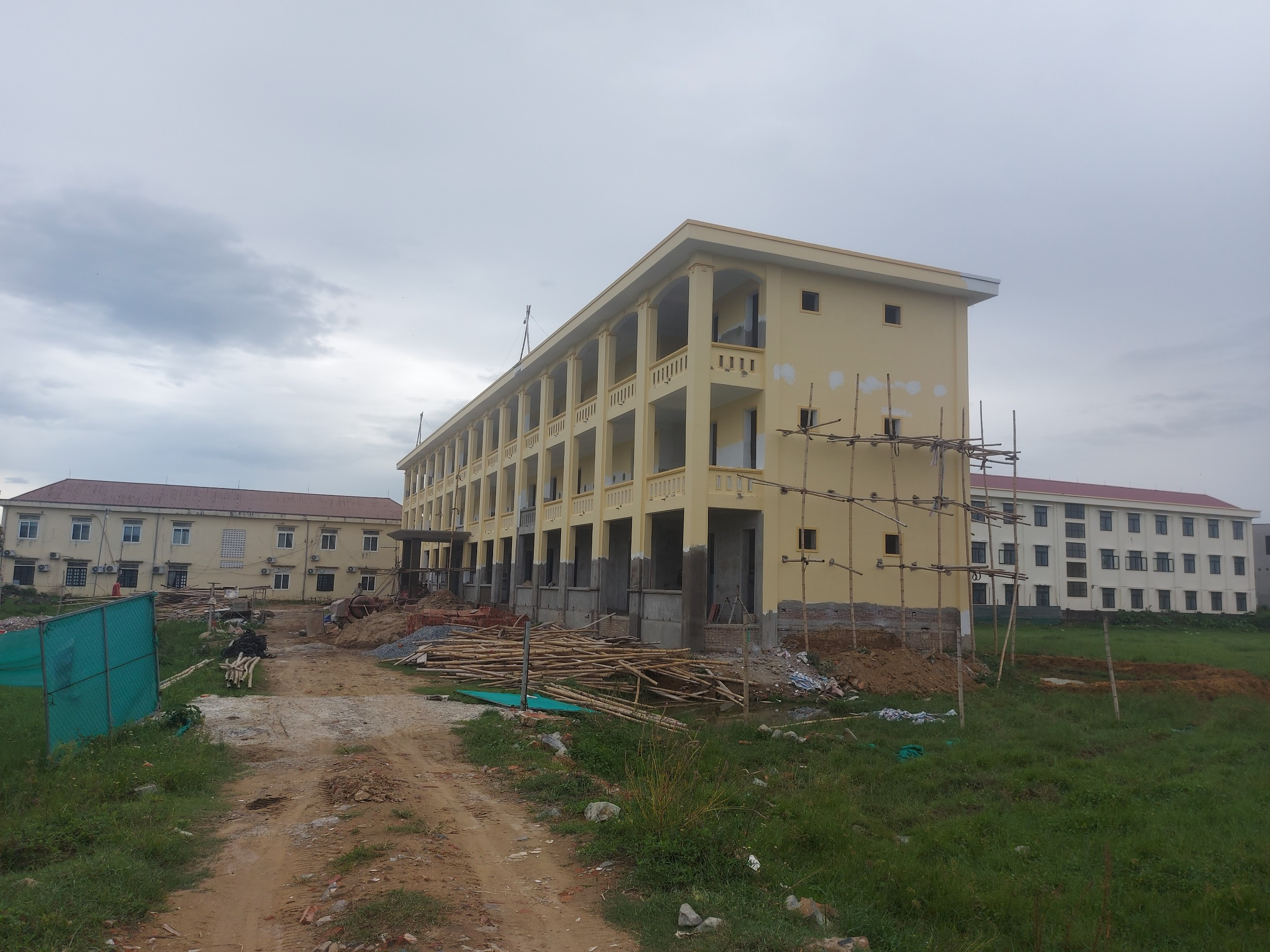
According to our reporter's observations, the three-story building with 18 classrooms has now completed its structural work. The building's area is over 600 square meters.2Almost the entire building was constructed on agricultural land belonging to local residents. In addition, the schoolyard in front of the building also occupies more than 2,000 square meters.2The land is agricultural land. According to the construction company's representative, the project was stalled for two months at one point due to angry residents protesting against the project. The building is expected to be operational when the new school year begins. The total investment for the building is over 14 billion VND, not including compensation for land clearance and construction of the schoolyard in front.
According to the Chairman of the Nghi Kim Commune People's Committee, after the dialogues, the people understood the commune's situation and agreed to allow the contractor to complete the construction on schedule. However, the issue that later angered the people was the excessively low compensation price. Accordingly, on June 27th, the Provincial People's Committee issued a document agreeing with the Department of Finance's proposal to provide support to households at twice the price of agricultural land as stipulated in the land price table. "Thus, each sao (approximately 1000 square meters) will only receive 85 million VND in support. The reason given by the Department of Finance for this low support is that the land has not been used for 12 consecutive months," Mr. Khiem said.
Regarding this project, the Department of Natural Resources and Environment had previously commented, stating that "to ensure fairness and protect the rights of households whose land is being expropriated by the State for the project, the Department of Natural Resources and Environment agrees with the principle of providing alternative support. The level of support is proposed to be considered specifically by the Department of Finance, ensuring it is the same as similar land expropriation projects implemented in Nghi Kim commune."
According to Mr. Nguyen Van Khiem, Chairman of the Nghi Kim Commune People's Committee, the commune will continue to submit a proposal to the Department of Finance to consider increasing the support level for people whose land is affected. “Around there, many projects with similar land origins have received support of 170 million VND per sao (approximately 1000 square meters). Now, only 85 million VND is unfair to the people. In reality, this land is not abandoned but uncultivable due to objective reasons. Therefore, in my opinion, the support should be four times the price of agricultural land, or at least three times, which is nearly 130 million VND per sao,” Mr. Khiem said.


