
It is tentatively planned to allocate an average of 60 personnel per commune, ward, or special zone.
After the agencies and organizations of the commune-level political system become stable, it is temporarily planned to allocate an average of 60 personnel per commune, ward, or special zone (including personnel for the Party, mass organizations, and local government at the commune level).
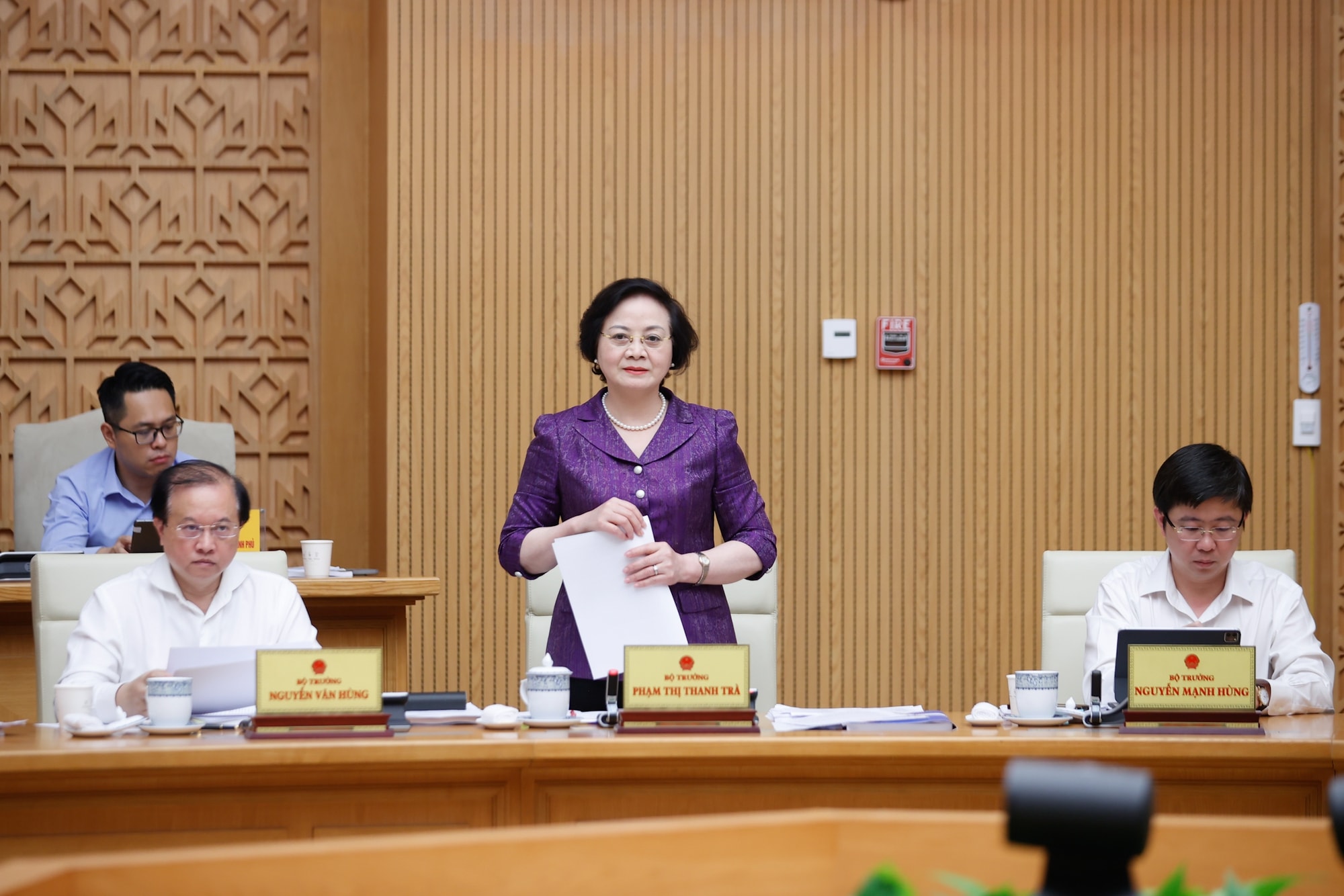
At the Government's thematic session on the restructuring and reorganization of administrative units at all levels and the construction of a two-tiered local government model, Minister of Home Affairs Pham Thi Thanh Tra stated that, with the spirit of "running and queuing at the same time," the entire political system is involved. Immediately after the conclusion of the Politburo's briefing conference, localities have established Steering Committees and issued plans for implementing the restructuring of provincial and commune-level administrative units.
By May 8, 2025, the Ministry of Interior had completed all the dossiers and proposals to advise the Government to submit to the Standing Committee of the National Assembly for consideration and decision on the rearrangement of administrative units of 63 provinces and cities (belonging to 34 new provinces and cities) and the dossier of the Provincial-level Administrative Unit Rearrangement Plan to be submitted to the National Assembly for consideration and decision.
According to the Minister, the Government Steering Committee has also guided the placement of officials and civil servants at the two levels of local government according to certain principles. Regarding provincial-level staffing, the maximum number of officials, civil servants, and public employees at the provincial level after reorganization shall not exceed the total number of officials, civil servants, and public employees (those present) at the provincial level before reorganization. The downsizing of staff is linked to restructuring and improving the quality of the workforce, ensuring that within 5 years, the basic placement is in accordance with regulations.
When the reorganized provincial-level local governments become operational, the Government assigns the Ministry of Interior, in coordination with the Central Organization Committee and relevant agencies, to finalize job positions based on population size, natural area, functions, tasks, and powers of the provincial-level local governments, and submit them to the competent authority for allocation of personnel to the localities.
Regarding staffing at the commune level (communes, wards, special zones), for the time being, the existing staffing levels at the district and commune levels will be basically maintained to allocate to the new communes (except for commune-level officials and civil servants who do not meet the prescribed standards and conditions and request to resign).
After the agencies and organizations of the commune-level political system become stable, it is temporarily planned to allocate an average of 60 personnel per commune, ward, or special zone (including personnel for the Party, mass organizations, and local government at the commune level).
Reward localities that perform well and urge them to expedite the completion of institutional reforms.
Minister of Home Affairs Pham Thi Thanh Tra also stated that, immediately after the Government meeting this morning (May 9th), the Government assigned the Ministry of Home Affairs, on behalf of the Government and authorized by the Prime Minister, to sign and submit to the National Assembly and the Standing Committee of the National Assembly the dossier on the Project for the reorganization of provincial and commune-level administrative units in accordance with regulations.
Regarding the dossiers on the reorganization of provincial-level administrative units submitted to the 15th National Assembly for consideration and approval of a Resolution at the 9th Session (May 2025), the Standing Committee of the National Assembly will simultaneously issue 34 resolutions on the reorganization of commune-level administrative units (of 23 new pairs of provinces and 11 provinces not reorganized) immediately afterward, ensuring that the resolutions are issued synchronously and uniformly, completed by June 2025.
During the process of finalizing the project proposal and submitting it to the Government, the National Assembly, the Standing Committee of the National Assembly, the Government Steering Committee, and the Ministry of Interior will continue to closely monitor and promptly identify and summarize any difficulties and obstacles that arise in order to advise competent authorities on consideration, resolution, or adjustment as appropriate, so as not to affect the overall progress.
The Ministry of Interior also proposed that the Prime Minister promptly commend and award Certificates of Merit from the Prime Minister to 10 localities that have implemented the preparation of project dossiers for submission to the Government, ensuring quality and ahead of the required deadline (Thai Nguyen, Bac Kan, Lai Chau, Lang Son, Quang Tri, Long An, Tra Vinh, Hau Giang, Soc Trang, Can Tho).
The Ministry of Interior also requested central ministries and agencies to closely coordinate with National Assembly agencies to submit laws to the National Assembly for consideration and approval according to the program of the 9th session of the National Assembly; to urgently complete the drafting of the Decree regulating the authority, tasks, powers, administrative procedures and to promote decentralization and delegation of power to provincial and commune-level local governments in specialized fields, to be submitted to the Government for promulgation before June 10, 2025; and to proactively issue legal documents within their authority no later than June 20, 2025.
Continue to coordinate closely with localities in the implementation of tasks in specialized fields, promptly guiding and resolving difficulties and obstacles within the scope of management. Guide and allocate funds to pay for the implementation of policies for cadres, civil servants, public employees, and workers who retire early or resign due to organizational restructuring as prescribed.
The Ministry of Finance reports to the Government and the Prime Minister for consideration of financial support for localities to reorganize administrative units according to Resolution 76/2025/UBTVQH15 of the Standing Committee of the National Assembly on the reorganization of administrative units in 2025, contributing to the rapid stabilization and effective operation of reorganized administrative units.
Openness and transparency in developing personnel restructuring plans.
The Minister of Home Affairs also expressed his hope that local authorities in provinces and centrally-administered cities would continue to play a proactive and positive role in implementing the Project at the local level, proactively preparing the necessary conditions (infrastructure, offices, finances, public assets, personnel arrangement and placement plans) to implement it immediately when the National Assembly and the Standing Committee of the National Assembly issue resolutions on the rearrangement of provincial and commune-level administrative units.
During the implementation phase, localities are requested to closely follow the central government's directives, while also being flexible and creative in their implementation, adapting to the specific characteristics of their respective localities. Continue to thoroughly disseminate and widely publicize the objectives and significance of the administrative unit reorganization within the local political system and among the people; uphold the sense of responsibility and exemplary conduct of each official and Party member in implementing the policy.
Simultaneously with implementing the Central Committee's directive on reorganizing administrative units to form new provincial and commune-level administrative units, localities need to focus intensely on reorganizing the organizational structure and personnel placement. They should proactively develop plans to consolidate the agencies and organizations of the Party, government, Fatherland Front, and other mass organizations at the local level after reorganization; and promptly propose to the competent authorities decisions on the appointment, arrangement, and placement of key leadership positions at the local level after reorganization.
Effectively carry out ideological work with cadres, civil servants, and public employees affected by the restructuring; ensure openness and transparency in developing personnel restructuring plans and resolving benefits and policies for cadres, civil servants, public employees, and workers affected after restructuring, creating high consensus during the implementation process.
In addition, emphasis should be placed on maintaining the smooth operation of the government apparatus at all levels during the transition period, ensuring that all state management tasks in the area are carried out continuously and effectively, without interrupting the provision of administrative services and public services to citizens, organizations, and businesses.
According to the Ministry of Interior's submission to the Government on May 8, 2025, regarding the reorganization of provincial and commune-level administrative units in 2025, after the reorganization, the country will have 34 provincial-level administrative units, including 6 centrally-administered cities (Hanoi, Hai Phong, Hue, Da Nang, Can Tho, and Ho Chi Minh City) and 28 provinces (including: Lai Chau, Dien Bien, Son La, Lang Son, Cao Bang, Tuyen Quang, Lao Cai, Thai Nguyen, Phu Tho, Bac Ninh, Hung Yen, Ninh Binh, Quang Ninh, Thanh Hoa, Nghe An, Ha Tinh, Quang Tri, Quang Ngai, Gia Lai, Khanh Hoa, Lam Dong, Dak Lak, Dong Nai, Tay Ninh, Vinh Long, Dong Thap, Ca Mau, and An Giang).
After the 2025 administrative unit restructuring at the commune level, the whole country will have a total of 3,321 commune-level administrative units (2,636 communes, 672 wards, and 13 special zones), including 3,193 newly formed commune-level administrative units resulting from restructuring, mergers, and adjustments, and 128 administrative units that were not restructured (remaining unchanged), a reduction of 6,714 commune-level administrative units (from 10,035 to 3,321) compared to before the restructuring (achieving a reduction rate of 66.91%).


