
Nightlife tourism in Nghe An: Why hasn't it been elevated to a higher level?
Nghe An province boasts Vinh city, Cua Lo beach, a rich system of cultural heritage sites, and a relatively growing number of tourists. However, after sunset, products that can retain tourists, extend their stay, and increase spending remain scarce. Some models that were once expected to create highlights for nighttime tourism have not been able to maintain sustainable appeal.
There is a model, but it's not yet a product.
In recent years, Nghe An province has made many efforts to create spaces and products to serve night tourism. In the former Vinh city,pedestrian street(including the routes Ho Tung Mau, Nguyen Van Cu, Nguyen Tai and the alley connecting to Nguyen Trung Ngan) was put on trial operation from April 2022, officially opened in May 2023, and was once expected to create a highlight for entertainment, shopping, performances, and food on weekends.
However, after a rather vibrant initial phase, this model gradually lost its appeal; the number of visitors decreased, and many stalls closed. After the implementation of a two-tiered local government system from July 2025, the street faced further gaps in direct operational management and ceased operations at the end of December 2025.
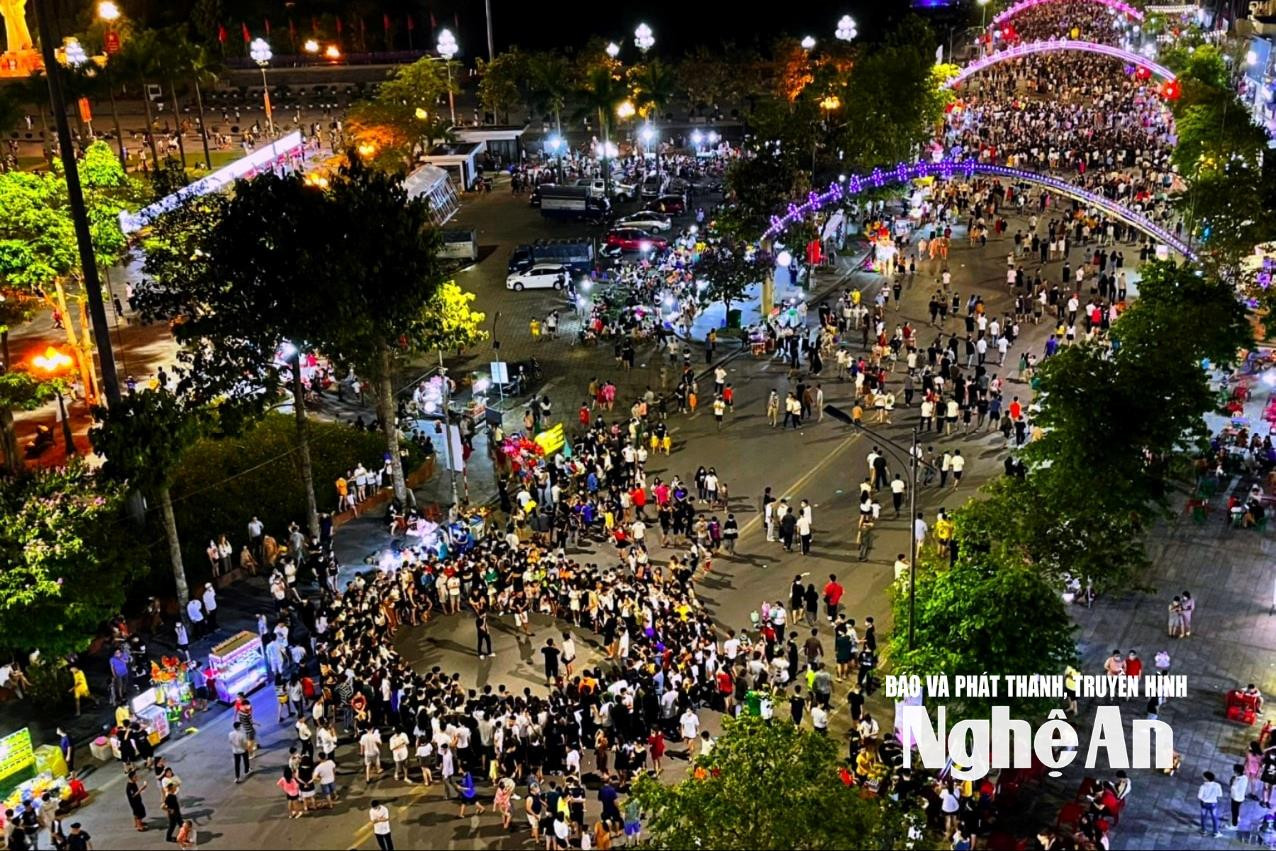
Besides pedestrian streets, Vinh also previously developed a night food street around the ancient citadel on Dao Tan Street and the surrounding area, hoping to connect culinary activities with the historical site. Several central streets such as Ho Sy Duong, Phan Dang Luu, Nguyen Van Cu, Le Hong Phong, and Quang Trung have also formed clusters of food, coffee, and shopping services, meeting the nighttime experience needs of tourists staying in Vinh. However, most of these spaces still lean towards urban services and have not yet been connected into a night tourism product with a structured itinerary, highlights, and the ability to retain tourists for longer periods.
The Cao Thang night market in front of Vinh market also received investment in infrastructure, landscape improvements, and the arrangement of shopping stalls, art performances, and folk games. However, due to a lack of distinctive products, a lack of regular experiential activities, and a failure to create reasons for locals and tourists to return, this model gradually lost customers and eventually ceased operation. This reality shows that opening new nighttime spaces is only the initial step; what is more important is how to organize, innovate, and operate them.
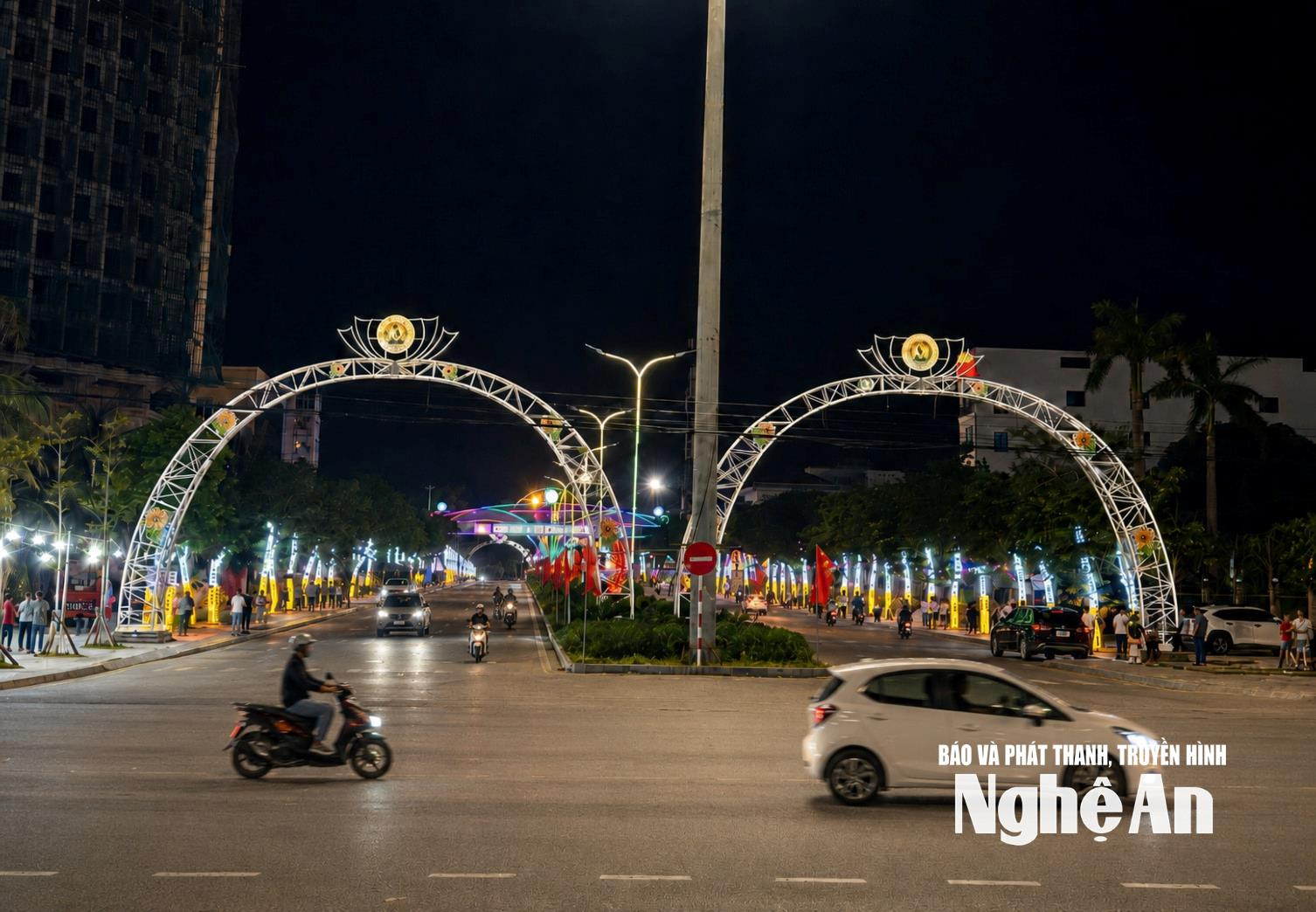
In Cua Lo,Nguyen Hue night streetThe Nguyen Hue night street, formerly located in Nghi Thu ward, was inaugurated during the 2024 tourist season, taking place on Saturday evenings from May to August, featuring street music, folk games, souvenir stalls, local specialties, and food. This was an effort to create an additional destination after beach activities and dinner, rather than relying solely on accommodation and seafood. However, this model only operated for one tourist season. In 2025, amidst administrative restructuring and the establishment of a two-tiered local government, the Nguyen Hue night street was not reopened; and there are no clear signs of a restart in 2026.
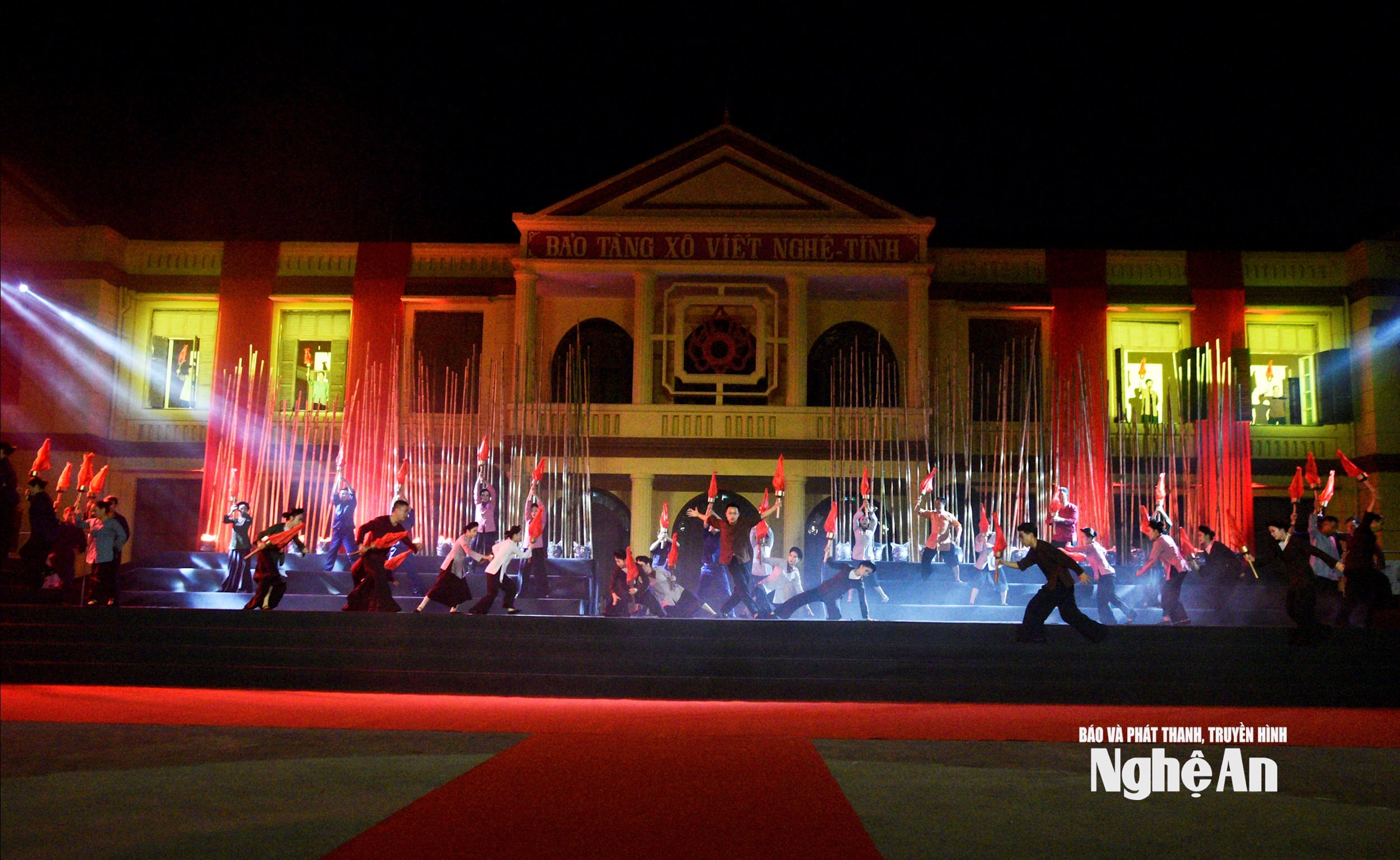
The gap between idea and implementation is also evident in the product "Soviet Fire" – a 3D mapping projection program associated with the Nghe An – Soviet Nghe Tinh Museum, recreating the revolutionary spirit of Nghe Tinh in 1930–1931 using the language of light, music, and modern technology. In terms of concept, this product has the potential to innovate the way history is told, opening up avenues for transforming museums, historical sites, and cultural spaces into after-hours destinations.
However, despite being planned to be operational in the final months of 2025, the product has yet to be launched. The obstacles lie not only in the project's design but also in investment costs, equipment, technical personnel, maintenance plans, ticketing or service ordering mechanisms, and a long-term operating unit.
We need more authentic "night journeys".
This reality shows that night tourism in Nghe An lacks diversity and a sufficiently sustainable operating mechanism. Many activities still mainly rely on food, coffee, souvenirs, and simple musical performances. Meanwhile, today's tourists need experiences with stories, interaction, beautiful images to share on digital platforms, local products to buy, and activities suitable for a wide range of tourist groups.
The idea is to pilot the "Lighting Up Lotus Village" night tourism program within the framework ofLotus Village Festival 2026This is a noteworthy approach, but it needs to be considered cautiously. Sen Village – Kim Lien is a special cultural space, closely associated with the birthplace of President Ho Chi Minh. Therefore, if studied and implemented, this program cannot be seen as a typical "night street" or entertainment space, but rather as a gentle cultural and historical experience, with controlled time, sound, lighting, number of visitors, and commentary content.
Mr. Ta Khac Uyen, Chairman of the Nghe An Travel Association, believes that what businesses need most is stable products to include in tour programs. "Travel agencies cannot sell a product that is available today but not next week. If night tourism has a fixed schedule, consistent quality, clear pricing, and accompanying services, then businesses can include it in their programs for tourists," Mr. Uyen said.
For night tourism, Nghe An should not spread itself too thinly, but instead select a few high-potential locations to serve as models. In Vinh city, the axis of the Ancient Citadel – Nghe An Museum – Soviet Nghe Tinh could be redesigned into a cluster offering nighttime cultural experiences, cuisine, performances, light shows, and specialty shopping. In Cua Lo, nighttime products linked to the sea should be developed: Nguyen Hue pedestrian street, Binh Minh street, seafood market, fishing village, squid fishing, street music, photo-taking spaces, and family-friendly services. For Kim Lien, if night tourism is to be implemented, it should be approached in a solemn, profound, and educational way.
Mr. Ta Khac Uyen - Chairman of the Nghe An Travel Association
Meanwhile, Mr. Vo Ba Nguyen – Director of Vinh Guru Tourism Company – believes that the weakness of many night street models is that they focus too much on the "street" aspect and not enough on the "tourism" aspect.
"If you just close the road, set up stalls, and sell food, it's very difficult to retain customers in the long term. Nighttime products must have a story, a rhythm of activity, cultural highlights, and accompanying services. More importantly, you must clearly identify who your target customers are to design a suitable experience," Mr. Nguyen analyzed.
Based on this need, Nghe An needs to shift from a "activities-organizing" mindset to a "tourism itinerary design" approach. Tourists visiting Cua Lo in the evening need to know where to eat seafood, what to see, what souvenirs to buy, what time to attend performances, and how to get around and park. Tourists visiting Vinh city need suggestions for eel cuisine tours, nighttime visits to the ancient citadel, historical screenings, folk music performances, and purchasing Nghe An specialties. With a clear itinerary, travel agencies will have products to sell, hotels will have packages to offer, and tourists will have a reason to stay longer.
Therefore, night tourism in Nghe An should not be limited to simply opening more night streets or organizing a few seasonal events. What is needed more is a product with a distinct identity, a stable operating schedule, and the ability to transform the cultural, coastal, and heritage elements of Nghe An into a truly memorable experience for tourists after sunset.


