
Watermelons escape the "bumper harvest, low prices" dilemma thanks to a change in farming methods.
Years ago, the worry of "bumper harvest, low prices" plagued watermelon growers in Nghe An. Now, by staggering harvests, applying technological advancements, and diversifying crop varieties, farmers are becoming more proactive in production, opening up avenues for increasing value and sustainable development for watermelon cultivation.
Spread out planting to catch market prices, avoid oversupply.
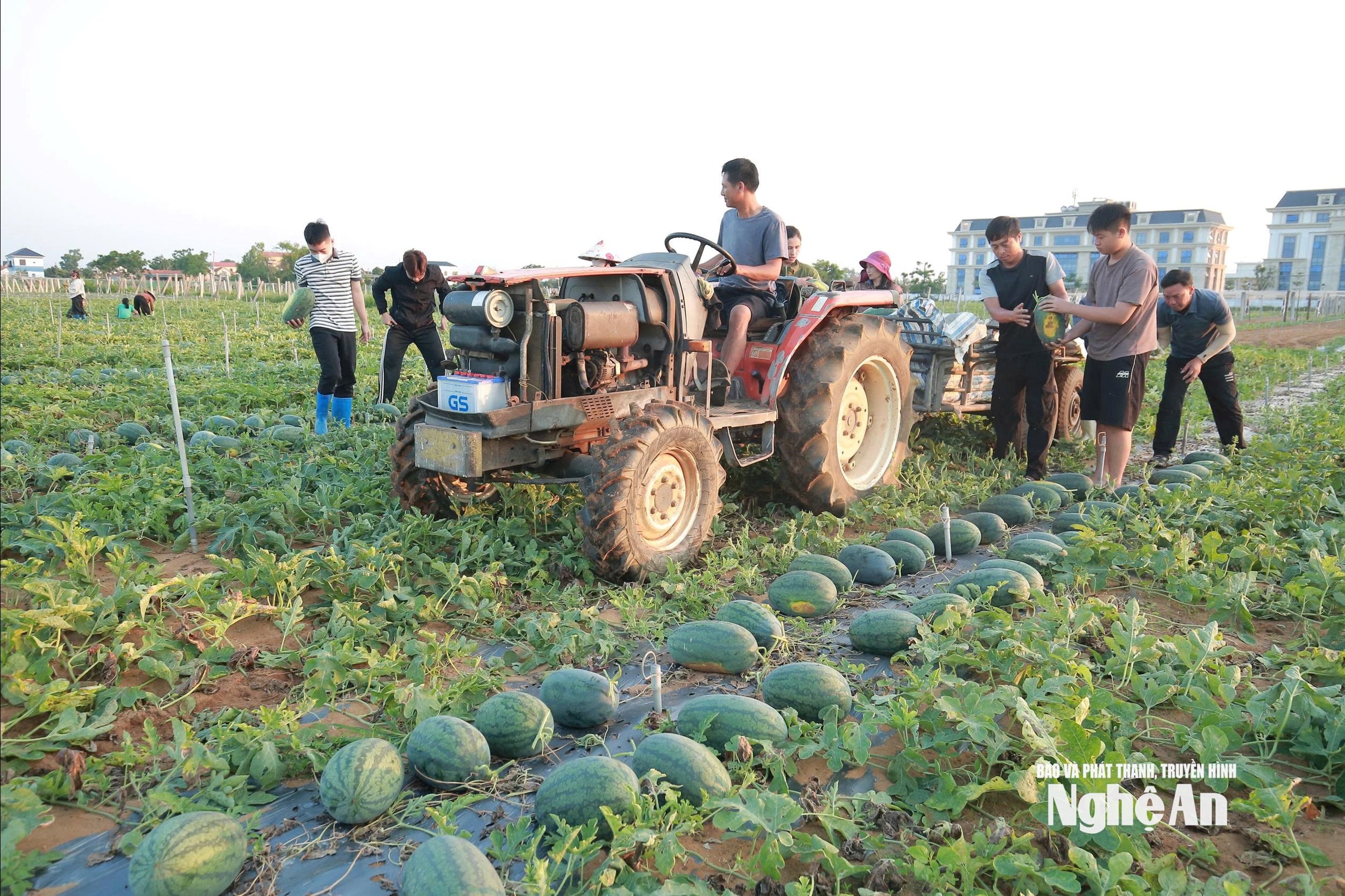
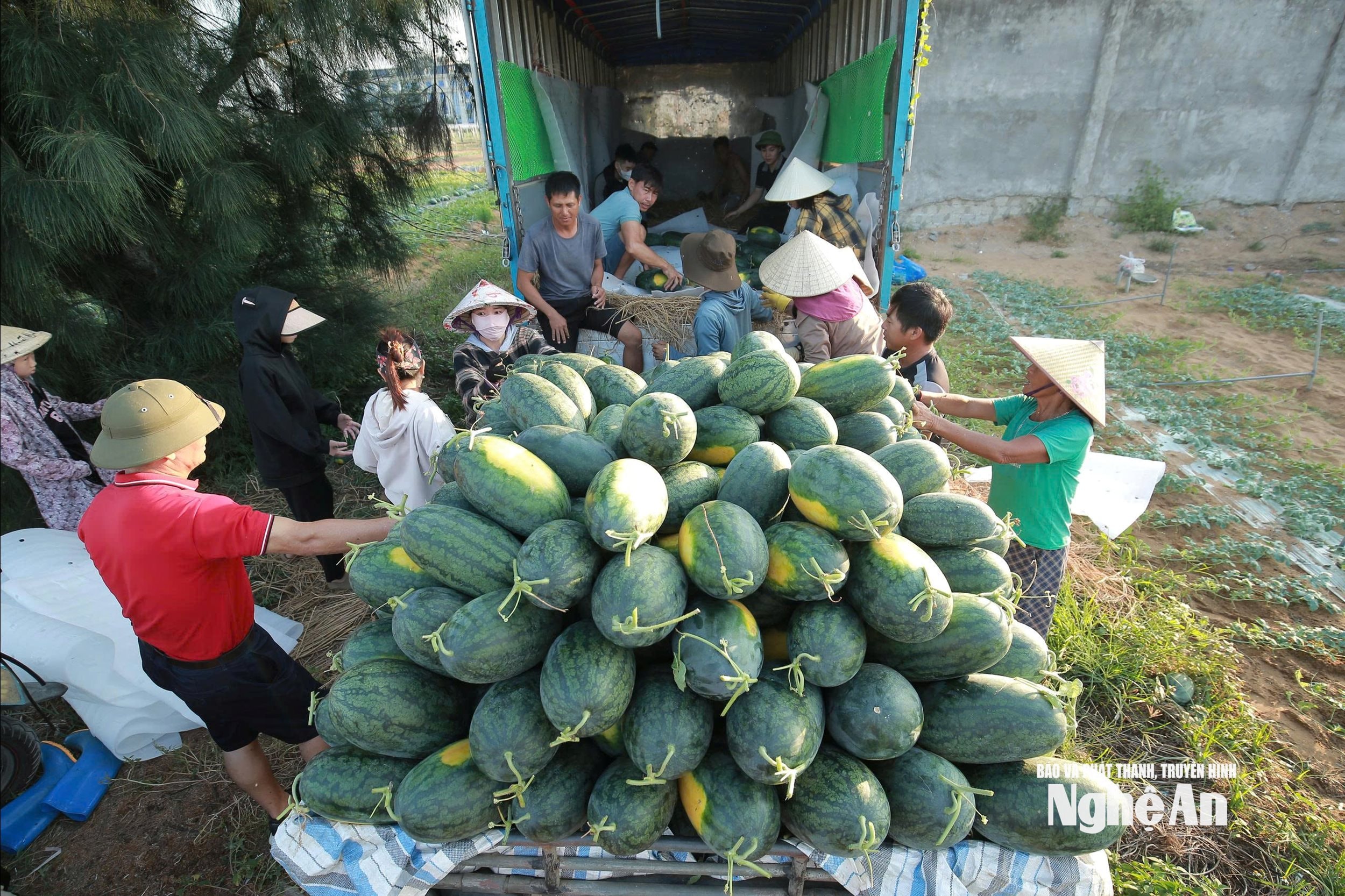
Before the sun rose high, the melon fields in Quynh Mai ward were bustling with harvesters. From around 5 a.m., dozens of laborers were out in the fields cutting melons, loading them onto handcarts, and then transferring them to waiting trucks. Trucks continuously left the fields, carrying the joy of the melon growers in the early days of the season with favorable prices. However, what is noteworthy is not only the favorable selling price but also the change in the production methods of the local farmers. From being heavily dependent on seasonal cycles, the people have proactively staggered planting, applied techniques, and calculated planting times to suit market demand.
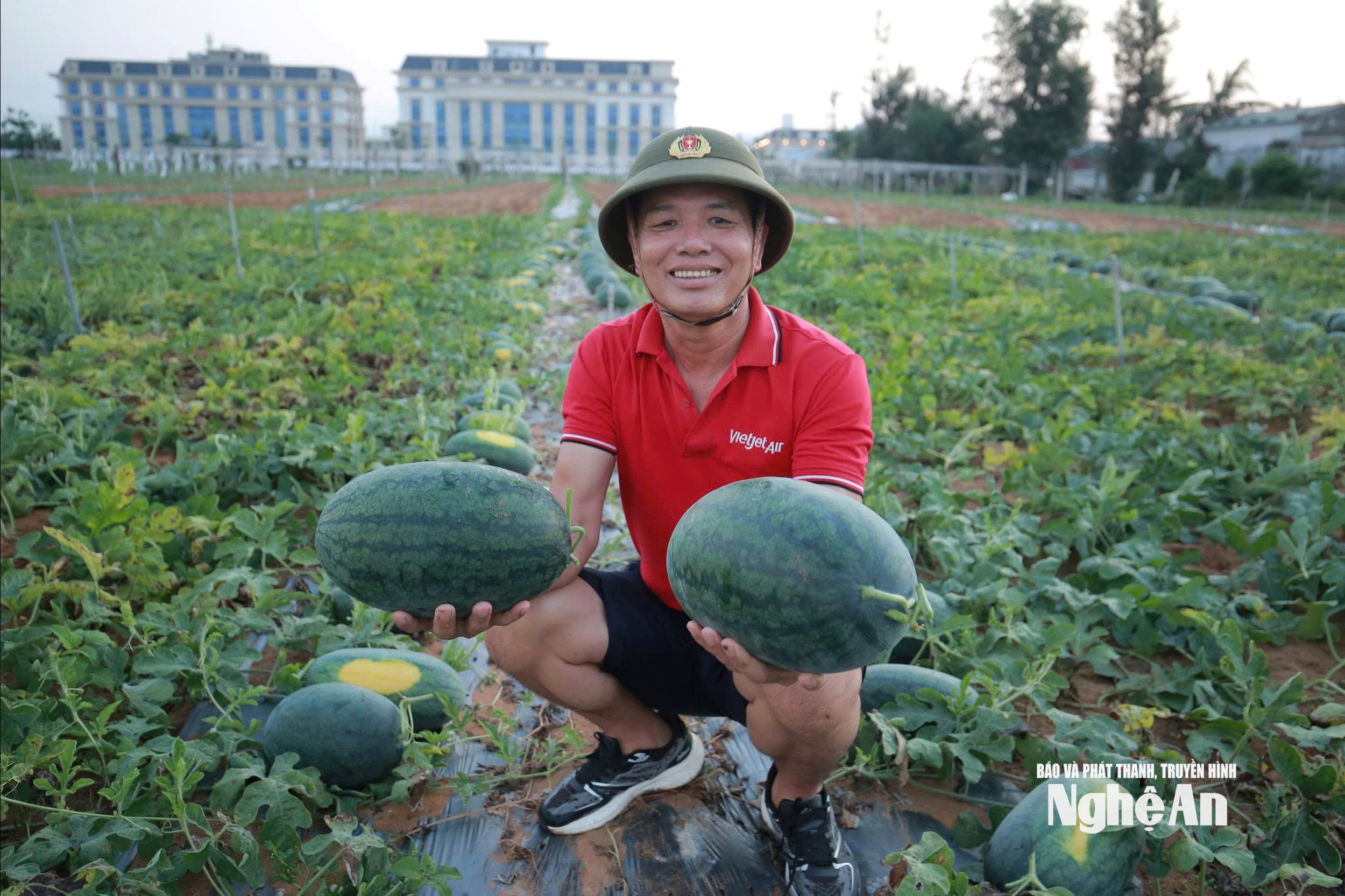
Mr. Ho Van Sy's family in Binh Minh Hamlet, Quynh Mai Ward, currently cultivates 1.5 hectares of watermelons. Instead of planting all the seeds at once as before, he divides the area into several planting cycles. This method helps him proactively respond to the weather, reduces the pressure of care, and especially extends the harvesting period. "This year's watermelon crop suffered from unfavorable weather, so the yield decreased, reaching only about 25 tons/ha, lower than last year. However, the quality of the fruit is better, and the appearance is more attractive, so traders are offering higher prices," Mr. Sy shared.
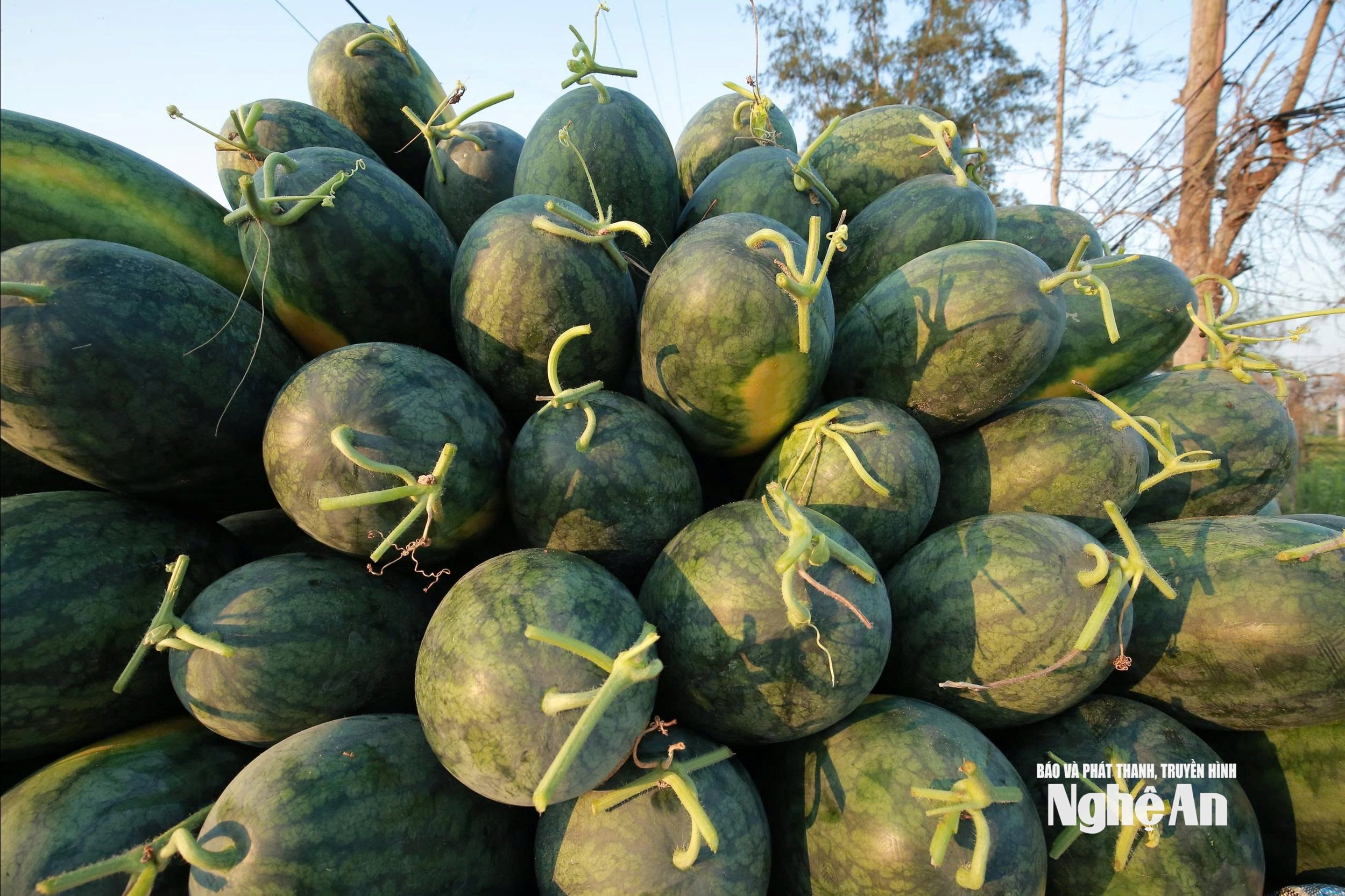
Thanks to harvesting at the beginning of the season, when supply was limited while consumer demand surged due to the prolonged heatwave, his family's watermelons were bought by traders directly from the field at around 12,000 VND/kg, nearly three times the price of the same period last year. After deducting investment costs of about 6 million VND/acre, each acre of watermelon yielded a profit of about 18 million VND.
Not only in Quynh Mai, but many melon-growing areas in the province are also shifting from a seasonal production mindset to one based on market signals. Instead of planting all at the same time, farmers are proactively dividing their crops into different batches to extend the product supply period. In Dong Hoi area, Tan Mai ward, households growing cantaloupe and watermelon on an area of more than 7.5 hectares are also applying the method of planting in multiple batches. This makes caring for the plants and managing pests and diseases easier, while also avoiding the pressure of simultaneous harvesting that leads to consumption problems.
Not only does planting in multiple batches help melon growers be more proactive in production, but it also helps regulate the amount of produce brought to market. By avoiding concentrated harvesting at the same time, the pressure on consumption is significantly reduced, creating favorable conditions for traders to purchase more easily.
Ms. Nguyen Thi Luong, a major watermelon trader in Quynh Mai ward, said that she buys over 20 tons of watermelons daily to supply distributors in the province, the former Vinh City area, and transports them to Da Nang in refrigerated trucks. During hot weather, the demand for cooling fruits increases sharply. Meanwhile, since the watermelon season is just beginning, the supply is still limited. Therefore, watermelon prices are high and sales are very favorable.
This positive trend is also observed in the melon-growing area of Dien Chau commune. In the early days of the season, traders are present in the fields from early morning to purchase the produce immediately after harvesting. The price of melons ranges from 5,000 to 8,000 VND/kg, higher than in previous years. Encouragingly, the scene of farmers carrying melons to the roadside to sell retail or anxiously waiting for "rescue" efforts, as in the past, has almost disappeared.
This shows that proactively regulating production through staggered planting, along with increased consumer demand during the hot season, is helping farmers have a more stable market. When supply is no longer concentrated at one time, traders can easily purchase the produce, prices are maintained at a reasonable level, and the recurring problem of "bumper harvest, low prices" is gradually being eliminated.
Enhancing value through techniques and variety of melons.
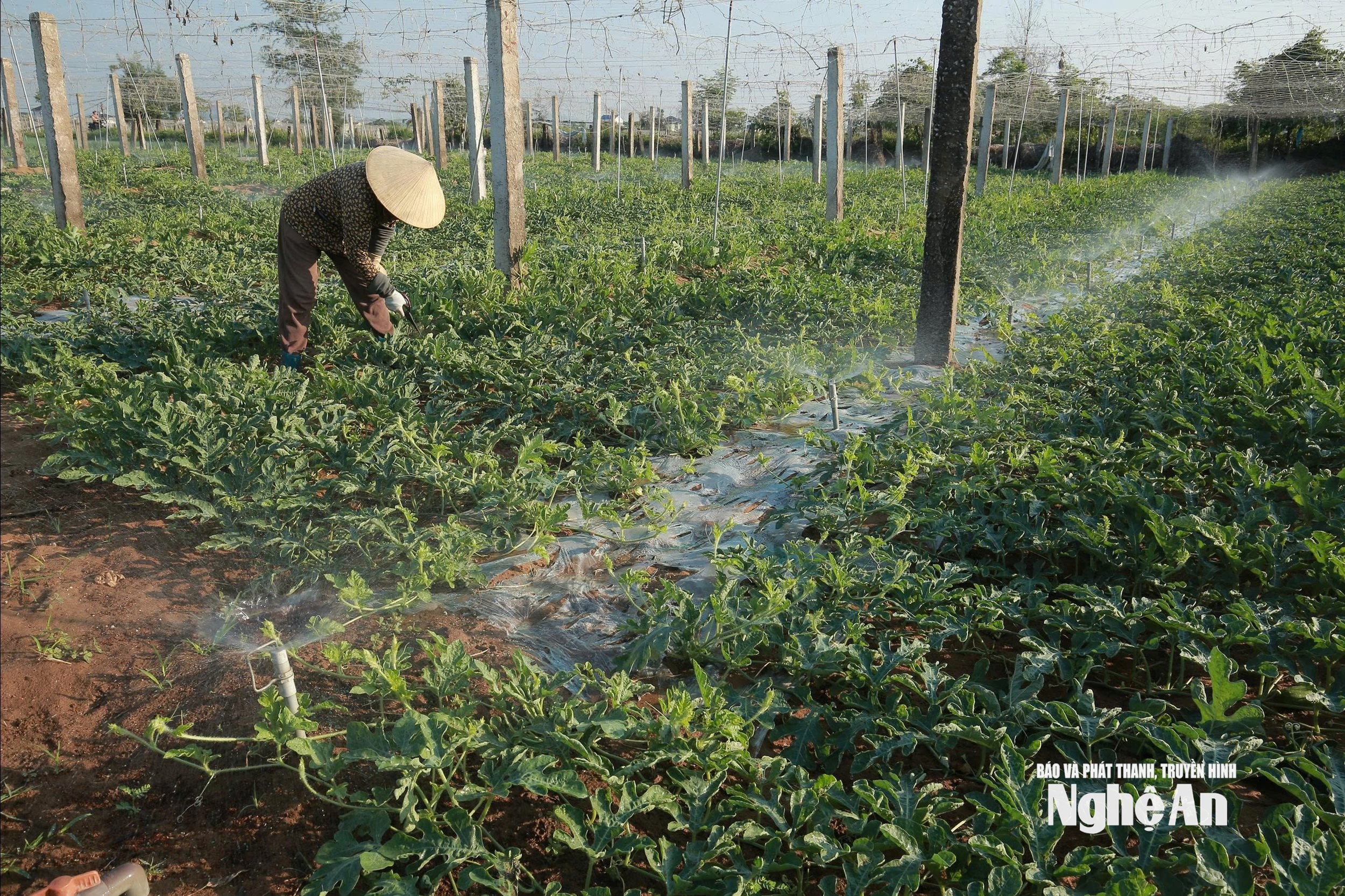
While staggered planting helps melon growers be more proactive in selling their produce, diversifying crop varieties and applying technological advancements are becoming crucial approaches to increasing value per unit of cultivated land. Instead of focusing solely on traditional watermelons, many farmers in Nghe An have boldly introduced cantaloupes, honeydews, and Korean cantaloupes into production, gradually meeting the increasingly diverse demands of the market.
In the Dong Hoi area of Tan Mai ward, Mr. Mai Thanh Chuong, Mr. Nguyen Van Ninh, and Ms. Mai Thi Ngan have invested in a model of growing watermelons and cantaloupes on an area of about 7.5 hectares. The combination of different melon varieties not only diversifies the product but also expands opportunities to reach different customer segments. The ripe, golden, crisp, and sweet cantaloupes from Dong Hoi Farm are now well-known and chosen by many consumers. With a yield of about 20 tons/ha and a selling price at the farm of around 20,000 VND/kg, cantaloupes are bringing significant economic benefits to the producers.
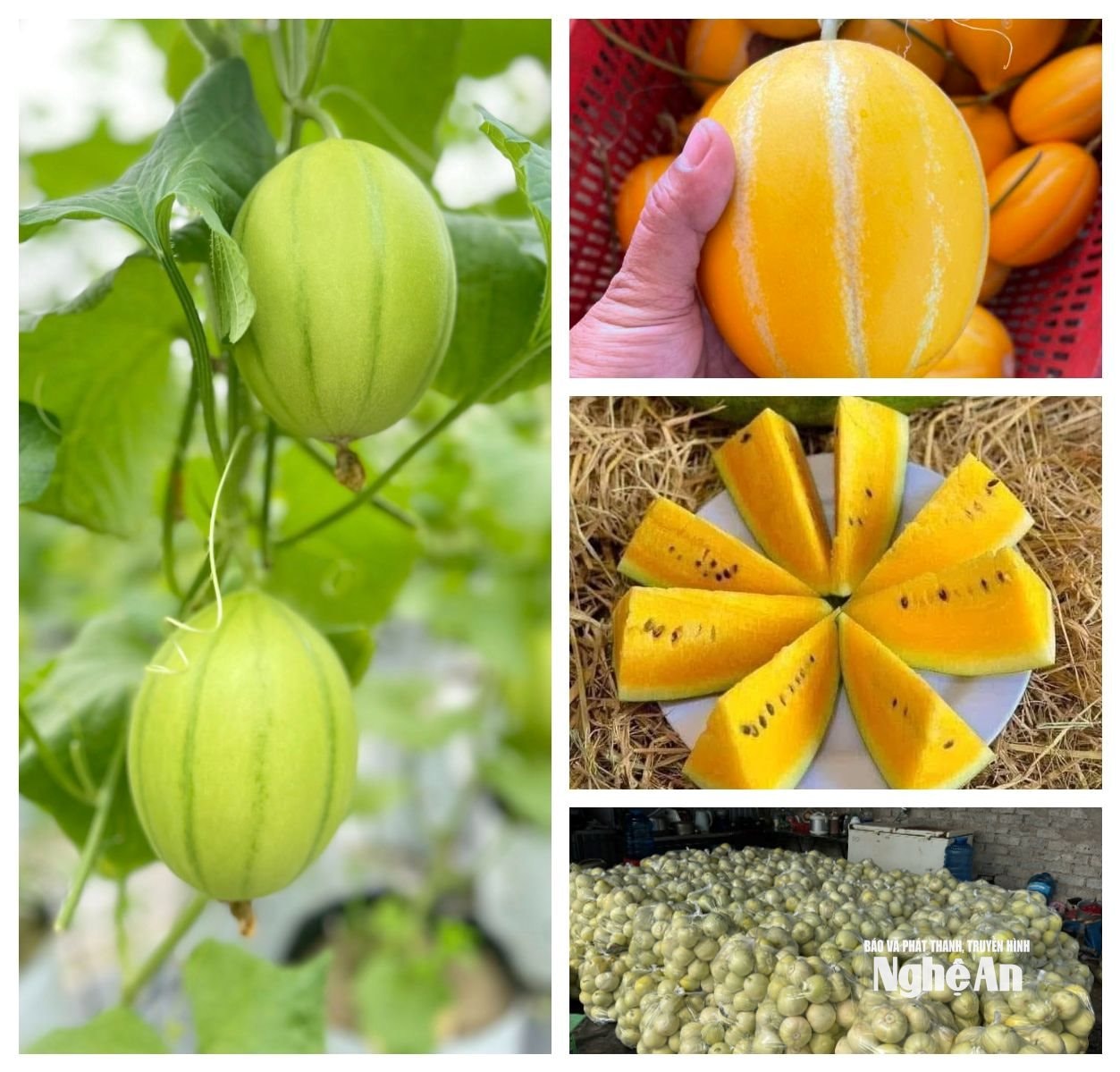
Similarly, in Van An commune, many households have proactively restructured their crop varieties to increase value. Ms. Nguyen Thi Nguyet, from Thien Tan hamlet, boldly introduced Korean cantaloupe varieties for cultivation. Thanks to selecting suitable varieties and adhering to technical procedures, this variety yields nearly 8 quintals per sao (approximately 800 kg per 1000 square meters), which traders purchase at prices ranging from 20,000 to 25,000 VND per kilogram. Meanwhile, many other households simultaneously cultivate watermelons, cantaloupes, and honeydews to create a diverse range of products to meet market demand during the hot season.
To maximize the effectiveness of melon varieties, farmers are increasingly focusing on applying science and technology to production. From water-saving irrigation systems and plastic mulching to retain moisture and proactively manage irrigation water sources to the use of organic fertilizers and pest control according to technical procedures, all are widely applied. These solutions not only help crops adapt better to harsh weather conditions but also improve product quality and appearance, meeting the increasingly high demands of consumers.
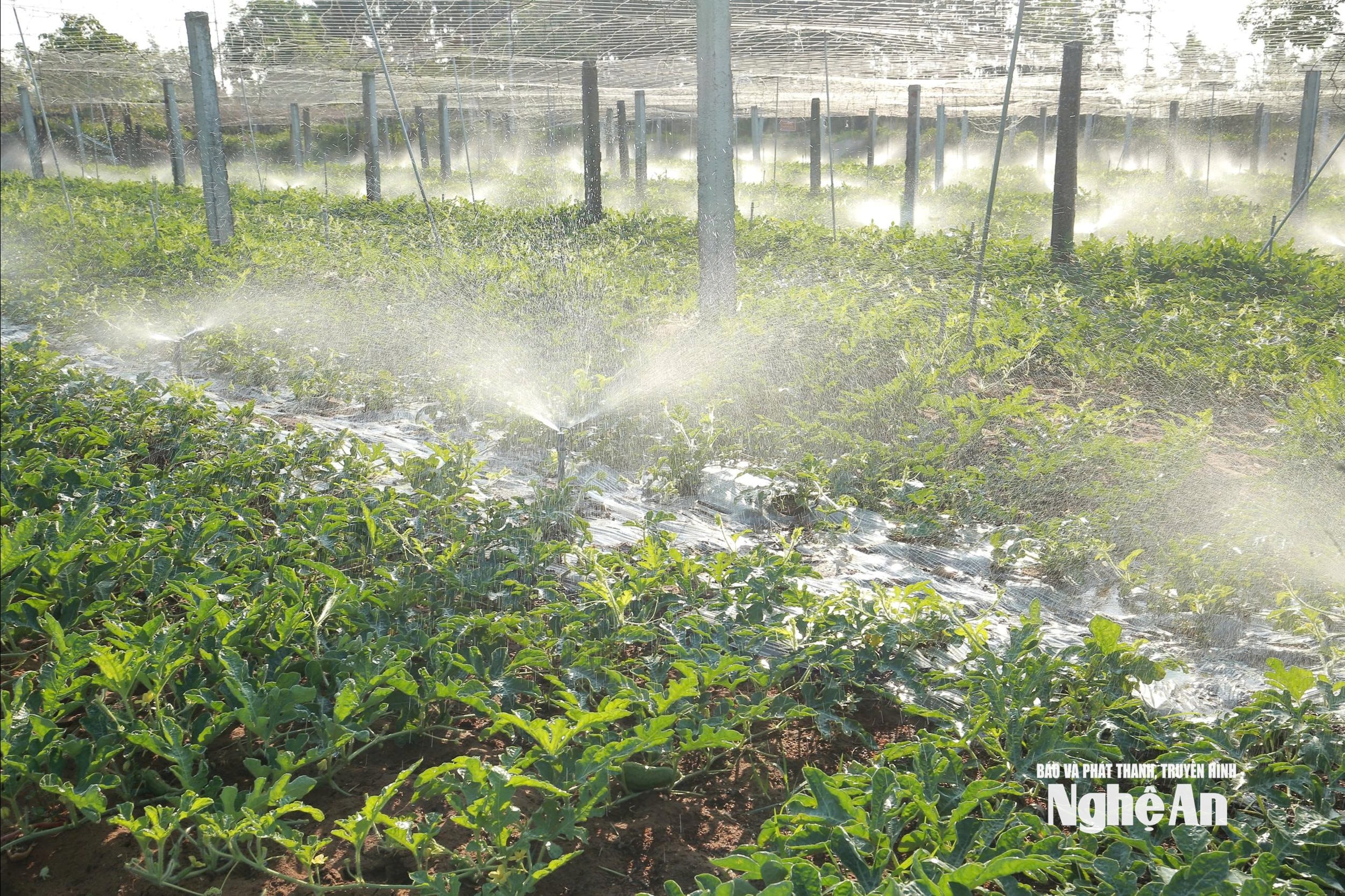
According to Ms. Nguyen Thi Ha, Chairwoman of the Farmers' Association of Van An commune, in addition to maintaining the traditional watermelon cultivation area, the locality is encouraging people to expand the cultivation of high-economic-value melon varieties. Currently, the entire commune has about 113 hectares of watermelon and 27 hectares of cantaloupe, an increase of 5 hectares compared to the previous year. Production results show that these melon varieties are bringing in about three times the economic value of many traditional dryland crops, contributing to increased income and improved living standards for the people.
According to data from the Department of Crop Production and Plant Protection of Nghe An province, the province currently has approximately 237 hectares of spring watermelons with a production of over 7,000 tons. This is one of the short-term crops that brings high economic efficiency in many localities.
However, melon production still faces numerous challenges such as extreme heat, hot winds, soil fertility degradation, and unpredictable market fluctuations. To ensure sustainable development, the agricultural sector is focusing on planning specialized cultivation areas, transferring heat-tolerant varieties, expanding safe production models, issuing planting area codes, and strengthening consumption linkages. In particular, attracting investment in deep processing and building integrated supply chains from production to consumption is expected to create further opportunities for melon cultivation in the future.


