
Turning the Resolution into action: Power from the people, action for the people.
The documents of the 14th National Congress emphasize the requirement for mass mobilization work in the new period to continue innovating the content and methods of propaganda and mobilization of the people; linking it with the effective implementation of socio-economic development policies, especially at the grassroots level.
Guided by the principle of "respecting the people and being close to the people," the new spirit of mass mobilization has been put into practice, spreading its combined strength and further strengthening the relationship between the Party and the people.
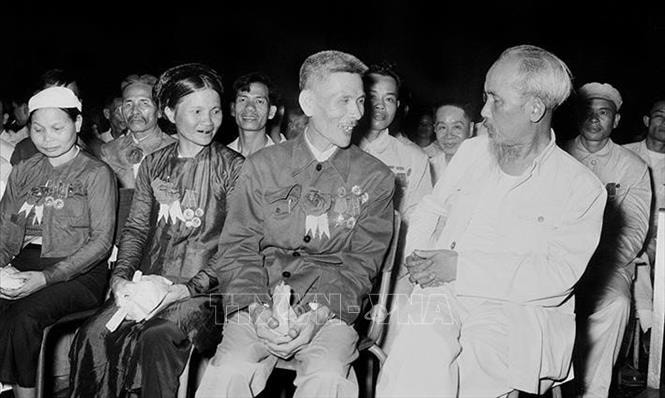
"With skillful mass mobilization, everything will succeed."
Mass mobilization work is a strategic and core task throughout the Vietnamese revolution, aimed at building national unity and forging a close, inseparable bond between the Party and the people. This work must be carried out regularly under all circumstances, in all areas, and with all strata of the population.
In its first Manifesto (February 1930), the Communist Party of Vietnam emphasized cooperation in mobilizing the masses when it stated: "The Party is the vanguard of the proletariat and must win over the majority of its class, and must enable its class to lead the people." (1)
Without Party leadership, the revolution cannot succeed. The revolution can only succeed if the Party is strong and stable. For the Party to be strong, it needs many factors, especially the relationship between the Party and the people. All Party activities are for the happiness and well-being of the people. Relying on the people to consolidate, build, and rectify the Party and the political system to be clean and strong. President Ho Chi Minh clearly stated: “The Party must maintain close contact with the people. It must not distance itself from the people. Distance itself from the people is isolation. Isolation will certainly lead to failure.” (2)
In particular, in the work "People's Mobilization" published in the newspaper Su That on October 15, 1949, President Ho Chi Minh affirmed: "The people's strength is very great. People's mobilization is very important. If people's mobilization is poor, everything will be poor. If people's mobilization is skillful, everything will be successful." (3)
In fact, throughout the revolutionary journey, guided by President Ho Chi Minh's ideology, the Party, the State, and the people of Vietnam have consistently performed well in mass mobilization work. The "Skilled Mass Mobilization" movement has spread widely, becoming a driving force for the vibrant patriotic emulation movement, leading our revolution from one victory to another.
The victory of the August Revolution in 1945, which gave birth to the Democratic Republic of Vietnam, affirmed the correctness of the first political program, serving as a banner of unity and gathering of the vast majority of the people, and the triumph of the Party's mass mobilization strategy. With only a few thousand Party members, the Party placed absolute faith in the immense strength of the people, clinging to their blood ties and relying on their support; it propagated and enlightened the people to understand the path to national independence; it organized and mobilized the people, working together to overthrow colonialism and feudalism, seizing power for the people, and achieving the victory of the national democratic revolution, opening a new era in the nation's history – the era of independence, freedom, and socialist construction.
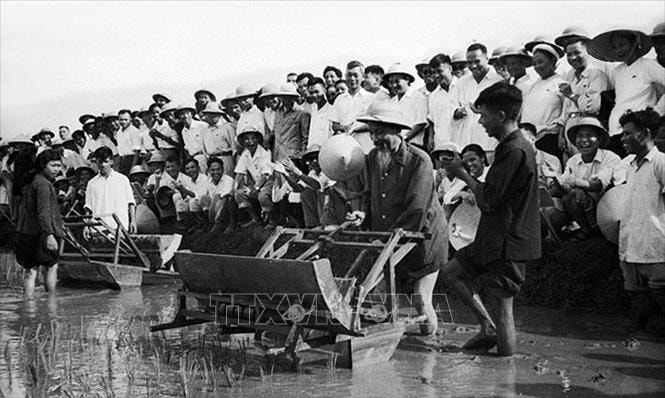
During the resistance war against French colonialism, our Party identified fundamental issues regarding the strategy of a comprehensive, protracted, and all-encompassing resistance war, relying primarily on our own strength. From this, we formulated the principle of mobilizing the strength of the entire nation. At this time, mass mobilization efforts encouraged the entire army and people to fight, work, and produce with determination; intensified enemy propaganda efforts to dismantle the ranks of the puppet army and government; mobilized young people to volunteer for the battlefield; and encouraged civilian workers to transport food, supplies, and weapons to the front lines to support the campaigns… This led to the historic victory at Dien Bien Phu in 1954, a victory that resonated throughout the world.
During the resistance war against the US, mass mobilization became a strategic front. The Party led, organized, and inspired patriotism, mobilizing human and material resources, transforming the will "Nothing is more precious than independence and freedom" into revolutionary action of millions of people. As a result, achievements were made in the construction of socialism in the North; the North's human and material resources were mobilized to the highest degree to support the South's great front in defeating the invading US imperialists, completing the cause of national liberation and reunification (April 30, 1975).
It can be affirmed that the Dien Bien Phu victory in 1954 and the Great Spring Victory in 1975 were not only the results of a correct political line, but also victories of the people's will, and a testament to the Party's skillful art of mobilizing the people.
Innovating mass mobilization work, focusing on the people and for the people.
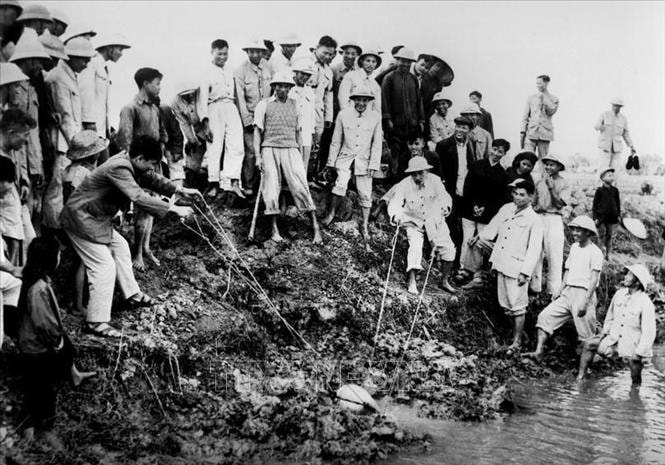
After the reunification of the country, mass mobilization work continued to be affirmed as an inseparable part of Party building. The Party's mass mobilization work was strengthened through important resolutions and directives.
The Sixth National Congress of the Party (1986), with its spirit of facing the truth squarely, renewing thinking, reforming organization and personnel, and reforming working styles, marked a crucial turning point, ushering the country into a period of reform. The first of four major lessons was: "In all its activities, the Party must thoroughly understand the ideology of 'putting the people first,' building and promoting the collective ownership rights of the working people"; "special attention must be paid to strengthening the relationship between the Party and the people."
Subsequently, Resolution No. 08B-NQ/HNTW (dated March 27, 1990) on renewing the Party's mass work and strengthening the relationship between the Party and the people demanded overcoming the situation where a segment of cadres and Party members were bureaucratic, authoritarian, detached from the people, corrupt, bribery-ridden, lived extravagantly and wastefully, diminishing revolutionary enthusiasm and hindering the development of the people's immense potential in national construction. This ideology was further affirmed in the Platform for National Construction during the transitional period to socialism (1991).
In particular, Resolution 25-NQ/TW (2013) on "Strengthening and renewing the Party's leadership over mass mobilization work in the new situation" continues to raise awareness and responsibility of Party committees and the political system at all levels regarding mass mobilization work in the new situation. The 13th Party Congress further clarified and fully explained the close relationship between the Party and the people regarding the people's right to self-governance: "In all the work of the Party and the State, we must always deeply understand the viewpoint that 'the people are the foundation'; truly trust, respect, and promote the people's right to self-governance, and persistently implement the motto 'the people know, the people discuss, the people do, the people inspect, the people supervise, and the people benefit'."
And Decision 23-QD/TW (2021) on the Regulations on Mass Mobilization Work of the Political System, focusing on "Skilled Mass Mobilization," strengthens trust and promotes the strength of national unity. Along with that, the "Skilled Mass Mobilization" emulation movement, launched in 2009, has become the focus of the patriotic emulation movement in the mass mobilization sector. Many localities have linked mass mobilization with economic development, multidimensional poverty reduction, new rural construction, urban beautification, digital transformation, environmental protection, etc. In many provinces and cities, "government mass mobilization" work has been strengthened in the direction of being close to the people, respecting the people, and relying on the people.
Many Party committees, governments, the Fatherland Front, and socio-political organizations have innovated the content and methods of mass mobilization to suit the characteristics of the digital age. Many new models, such as "Digital transformation - serving the people," have contributed to realizing the motto "The people know, the people discuss, the people do, the people inspect, the people supervise, and the people benefit."
With the implementation of the two-tiered local government model, grassroots mass mobilization work continues to be strengthened, becoming more closely linked to ideological work, creating unity between awareness and action, between "saying" and "doing," and between the Party's policies and the people's consensus.
Mass mobilization efforts have directly contributed to eliminating temporary housing, achieving sustainable poverty reduction, and ensuring social welfare, especially in remote areas, ethnic minority regions, and religious communities. Many key government programs, such as the National Target Program on Sustainable Poverty Reduction, the Project to build 1 million social housing units in the 2021-2030 period, and the Program to eliminate temporary and dilapidated housing for poor households nationwide, have been successful thanks to the involvement of the entire political system and the consensus and joint efforts of the people.
These outstanding results have demonstrated the strong spread and tangible effectiveness of mass mobilization work in the new period. Based on this, the Central Party Committee continues to set forth the requirement for comprehensive reform of propaganda and mass mobilization work to meet the requirements of national development in the new situation.
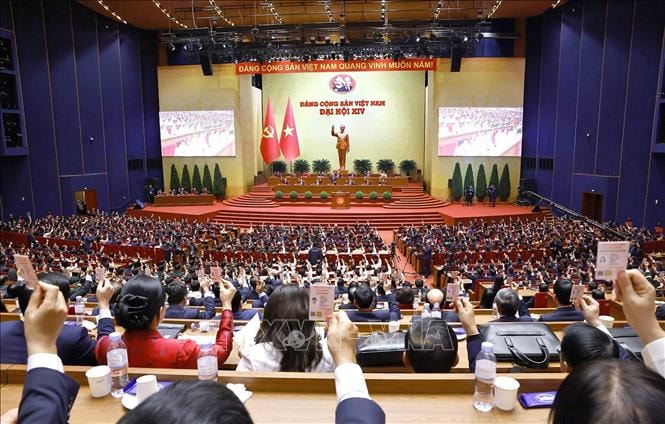
The documents of the 14th National Congress emphasize the requirement for mass mobilization work in the new period to continue innovating the content and methods of propaganda and mobilization of the people; linking it with the effective implementation of socio-economic development policies, especially at the grassroots level. Mass mobilization aims for high consensus, promotes the strength of national unity, and places the interests of the people first.
Over 96 years of formation and development, the Party's mass mobilization work has consistently affirmed its strategic role in the revolutionary cause, serving as a solid bridge between the Party, the State, and the people. With the involvement of the entire political system, coupled with determination, creativity, and renewed enthusiasm, mass mobilization work will continue to make new strides, contributing significantly to the cause of national construction and defense; consolidating the people's trust in the Party; strengthening national unity; and harnessing the people's strength to realize the goal of a prosperous and happy nation.
----------------------------------------------
(1): Communist Party of Vietnam: Party Documents, complete collection, National Political Publishing House, Hanoi, 2002, volume 2, page 4.
(2): Ho Chi Minh: Complete Works, National Political Publishing House, Hanoi, 2011, volume 5, page 278.
(3): Ho Chi Minh: Complete Works, op. cit., volume 6, page 234.


