
Queen Pineapple opens the way for sustainable crop conversion on hilly land.
With the coordinated efforts of the government and businesses, the development of pineapple raw material areas in Nghe An not only opens up an effective direction for restructuring crop patterns but also lays the foundation for sustainable commercial agricultural production, linked to deep processing and export markets.
Boldly transform the crop structure.
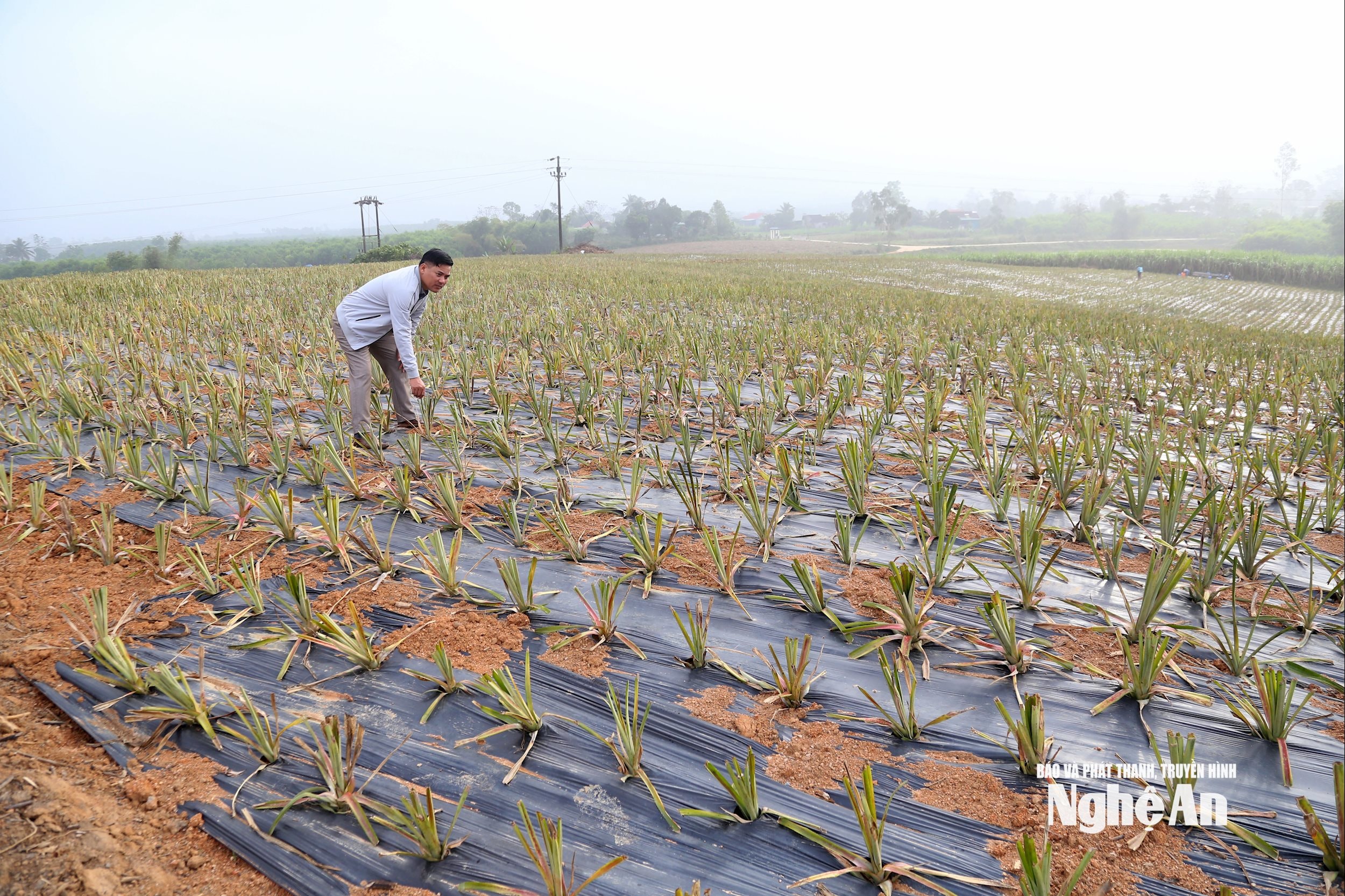
In the hilly area of Tan My hamlet, Tan An commune (formerly Tan Ky district), one can sense the new face of agricultural production here. Interspersed among sugarcane fields ready for harvest are hillsides recently planted with Queen pineapples. The rows of pineapples, neatly covered with plastic sheeting, stretch from the foot to the top of the low hills, creating a well-organized production scene, quite different from the fragmented landscape of the past.
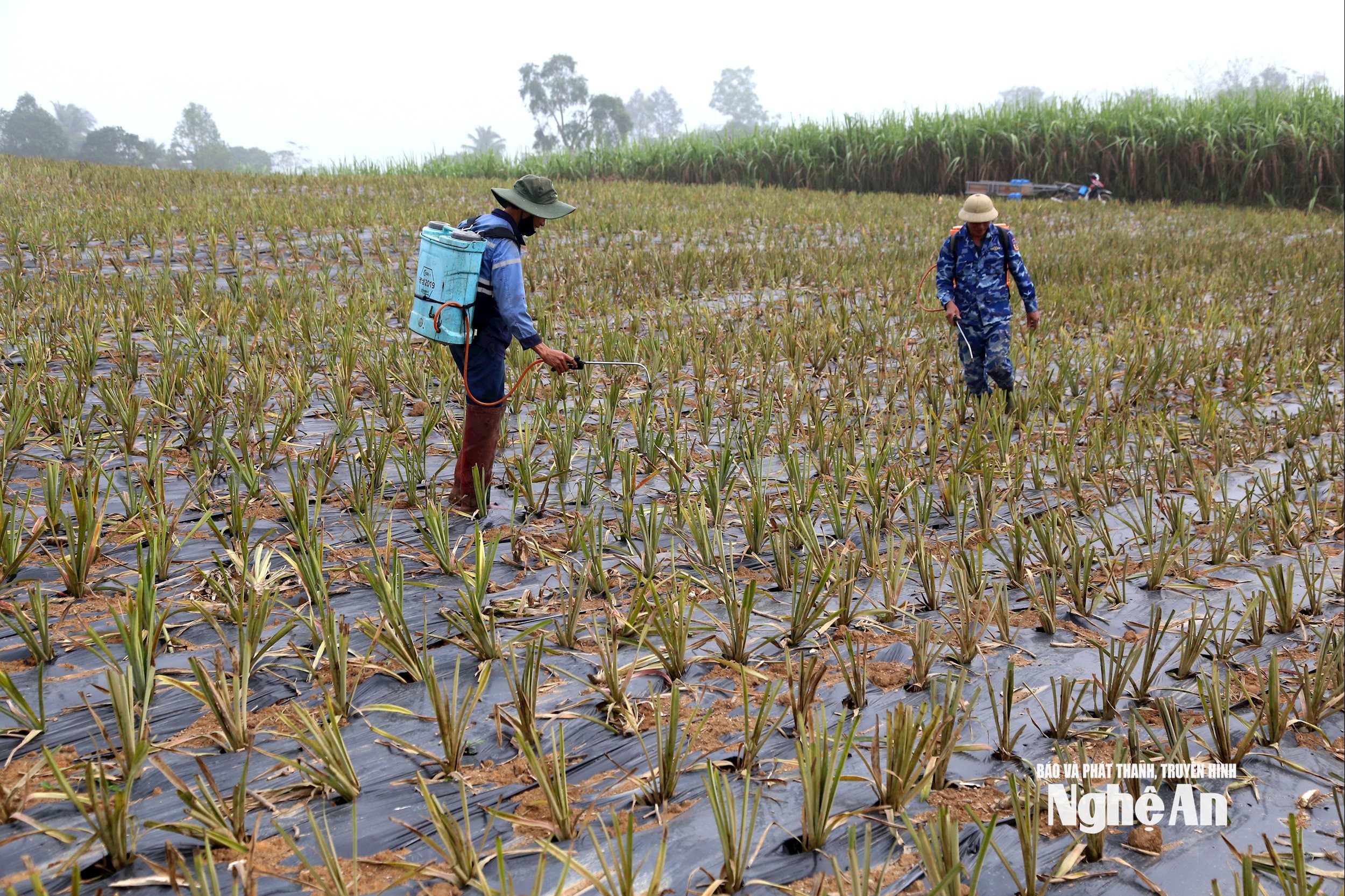
The pioneers in bringing the Queen pineapple variety to this new land were the family of Mr. Dau Van Hung in Tan My hamlet. More than two years ago, Mr. Hung's family boldly leased 7 hectares of land from the commune to plant Queen pineapples. According to calculations, after about 18 months of care, the pineapples begin to yield fruit. Thanks to their traditional pineapple leaf processing industry, Mr. Hung's family not only harvests the fruit but also utilizes all the pineapple leaves to produce fiber, increasing their economic value.
Now that the commune is implementing a policy to develop pineapple raw material areas in conjunction with crop restructuring, Mr. Hung has even more opportunities to increase his income by selling pineapples to factories and supplying seedlings locally to farmers. This is also a model for growing Queen pineapples, providing a practical basis for people in the commune to learn from and replicate in the future.
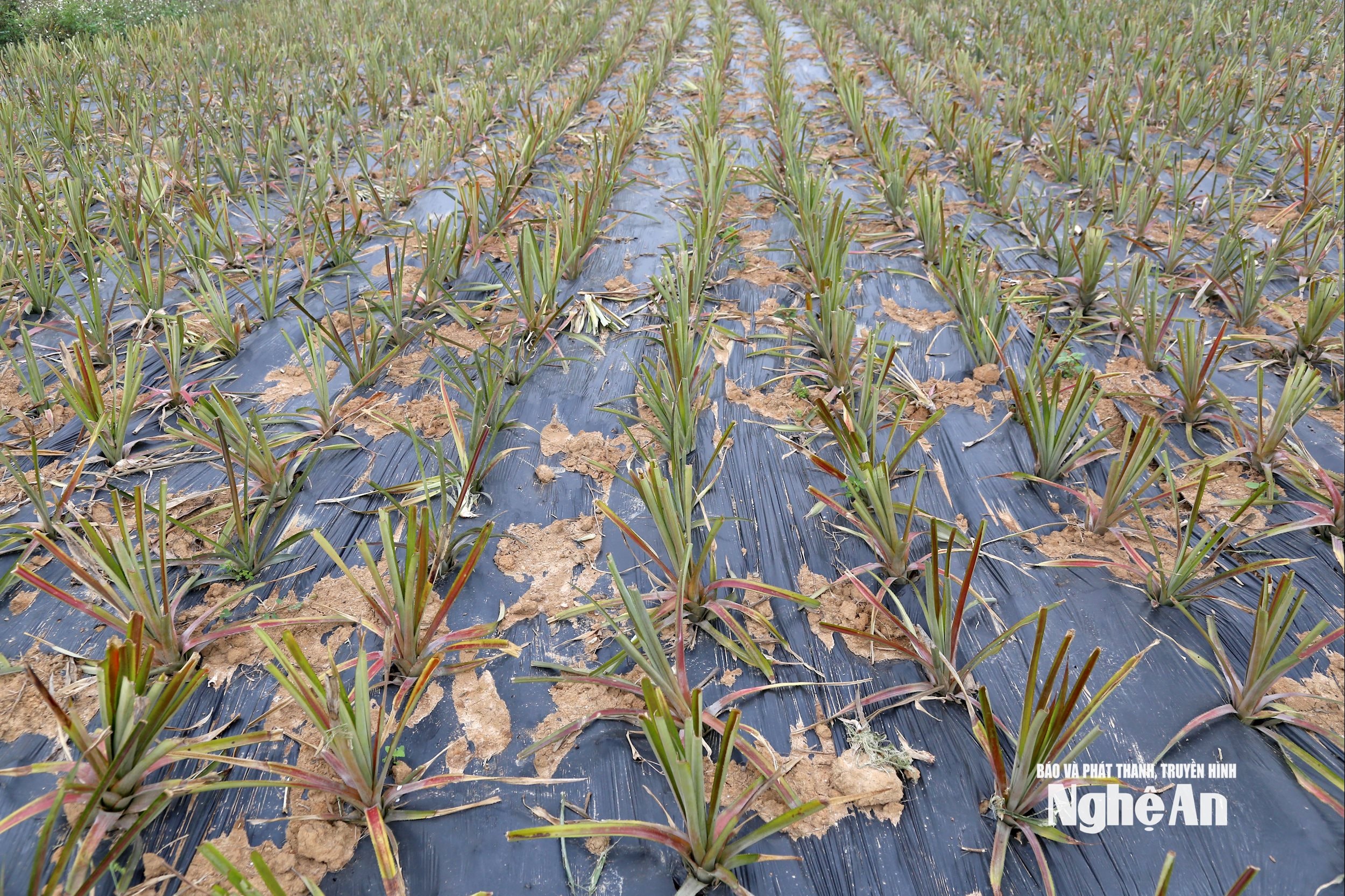
Mr. Dau Truong Son, Head of the Economic Department of Tan An Commune, said that the Commune Party Congress for the 2025-2030 term identified three breakthroughs, including the transformation of the agricultural sector structure, focusing on changing the crop structure, with pineapple as the main crop. Immediately after the Congress, the commune proactively worked with Dong Giao Company (Ninh Binh) to sign a memorandum of understanding on cooperation in product consumption. At the same time, the Commune People's Committee developed a plan to concretize the Party Committee's resolution and implement the development of pineapple raw material areas in the commune.
“According to the plan, in 2026 the commune aims to plant 100-200 hectares of pineapple, expanding the area to about 1,000 hectares by 2030. Currently, people have registered for 70 hectares, and the commune has compiled and reported to the province to receive support policies according to Resolution No. 34/2025 of the Provincial People's Council. Surveys show that the initial investment cost for 1 hectare of pineapple is about 220 million VND. After 18 months, the yield is 50-60 tons of fruit, with estimated revenue of over 500 million VND and a profit of about 300 million VND,” Mr. Dau Truong Son shared.
Giai Xuan commune is one of the localities planned to introduce Queen pineapple cultivation according to Resolution No. 34 of the Provincial People's Council on crop restructuring. According to Mr. Bui Duc Hong - Chairman of the Giai Xuan Commune People's Committee, the locality aims to establish a Queen pineapple growing area of approximately 300 hectares, distributed across many hamlets in the commune.
To ensure coordinated implementation, the commune is developing a specific plan and issuing a thematic resolution of the Party Committee to focus leadership and guidance. Propaganda and mobilization efforts are being intensified to create consensus among the people. To date, the commune has received applications to participate in planting Queen pineapples with a total area of approximately 110 hectares.
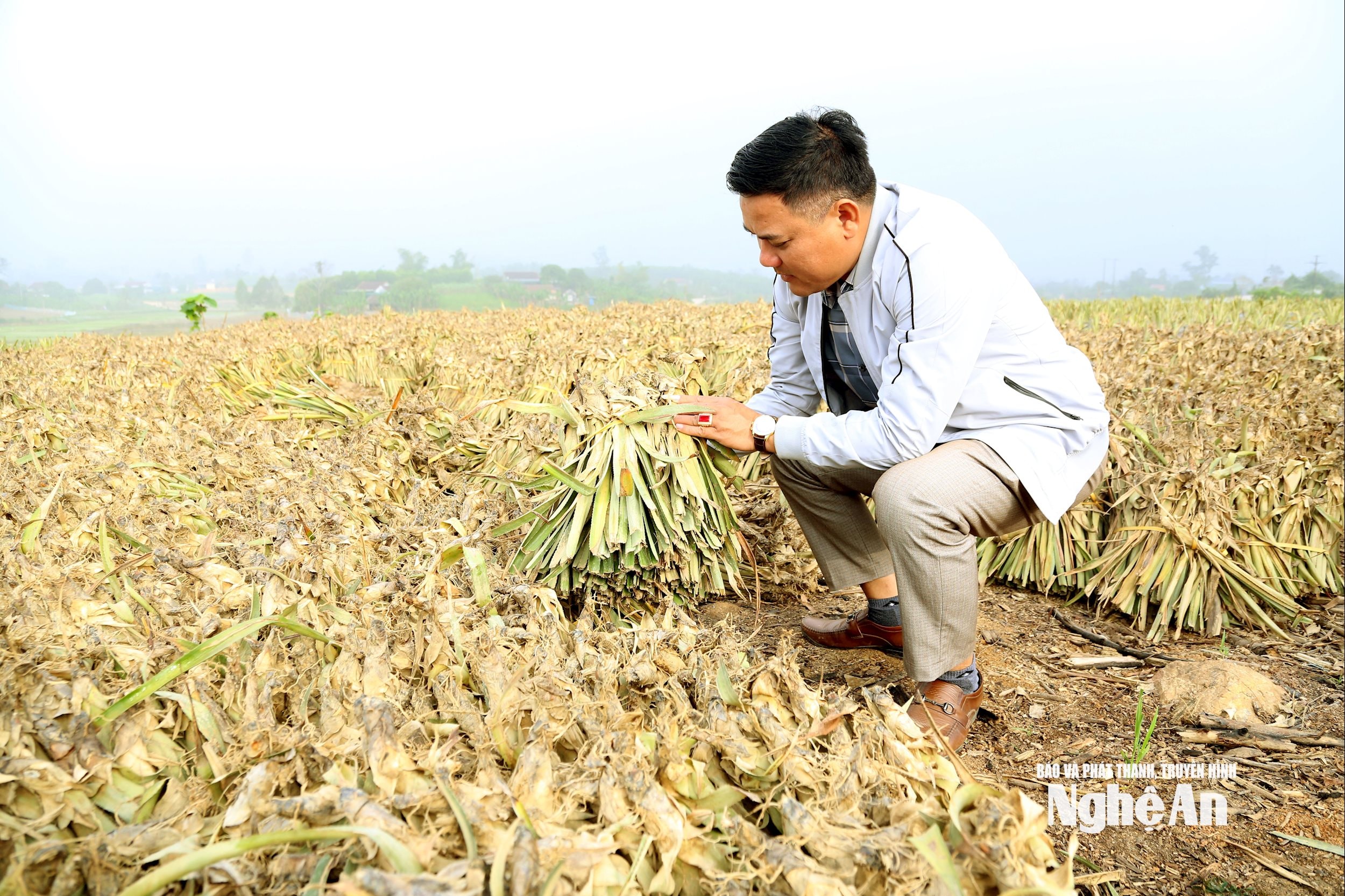
Simultaneously, the People's Committee of the commune coordinated the organization of technical training courses, guiding people on land preparation, planting, care, and pest and disease control in a safe and effective manner. Production gradually became more organized, reducing spontaneous practices. In recent times, the commune has also proactively coordinated with specialized agencies and businesses in supplying seeds, input materials, transferring technology, and linking product consumption.
Recently, the Provincial People's Committee signed a Memorandum of Understanding with Dong Giao Export Food Joint Stock Company on cooperation in investing in the construction of a high-tech fruit processing plant, linked to the development of raw material areas in the province. This is considered an important prerequisite, opening up favorable opportunities for the locality to promote the sustainable development of pineapple cultivation.
Mr. Bui Duc Hong - Chairman of the People's Committee of Giai Xuan Commune
Business linkages are the "key" to sustainable development.
A positive sign for pineapple and other fruit products in the province is that Nghe An is gradually attracting large-scale agricultural processing projects. Recently, the People's Committee of Nghe An province and Dong Giao Export Food Joint Stock Company signed a Memorandum of Understanding to cooperate in investing in the construction of a high-tech fruit processing plant linked to the development of raw material areas in the province. This is considered an important step, contributing to promoting deep processing, increasing the added value of local agricultural products, and creating a stable and long-term market for key agricultural products, including pineapples.
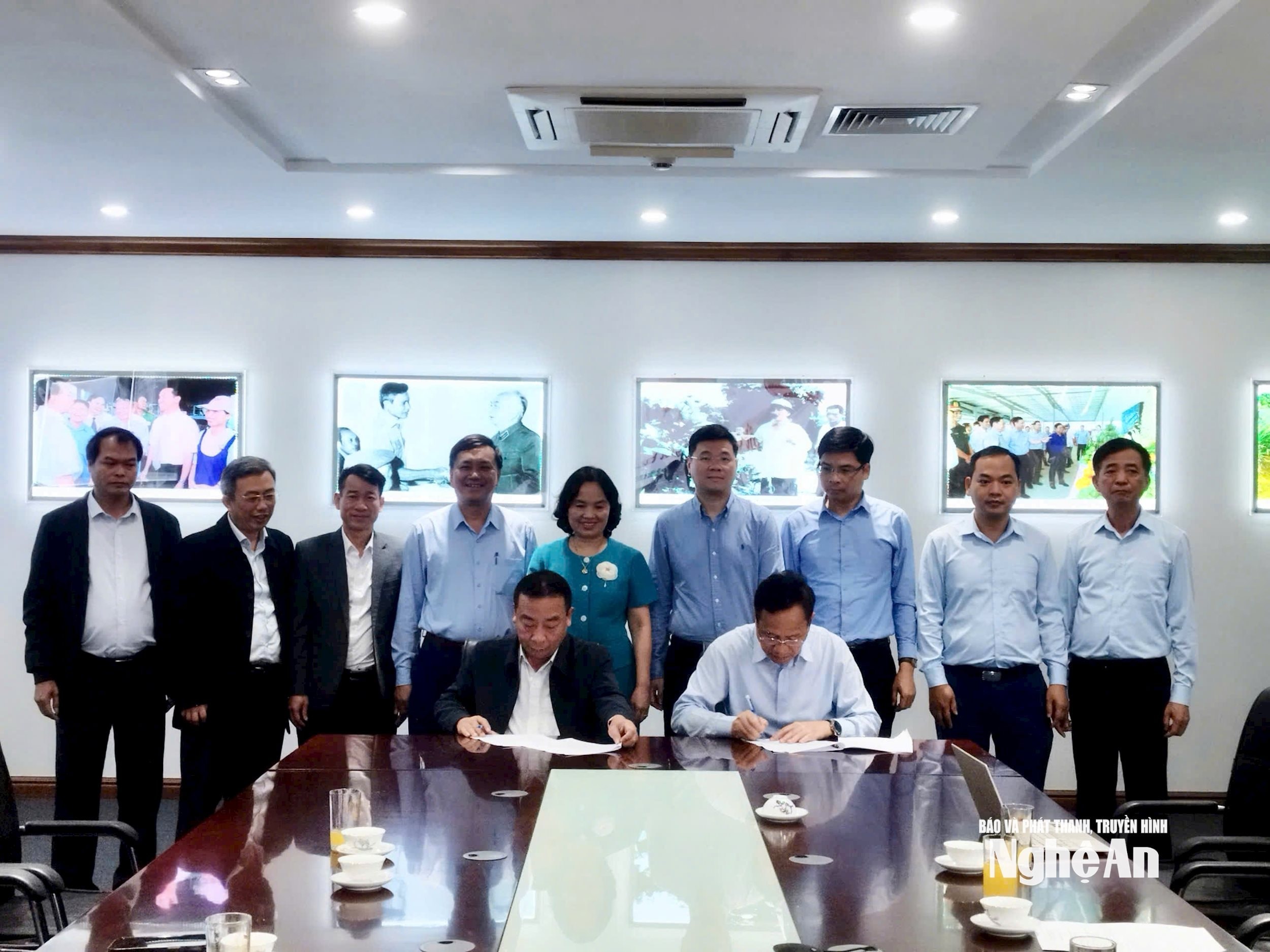
According to the Memorandum of Understanding, the two parties agreed to coordinate in submitting to the competent authorities for consideration and approval the investment plan for the construction of a large-scale fruit processing plant using modern technology in Nghe An. The project aims to form a closed-loop chain from raw material production to processing and consumption, contributing to the restructuring of the agricultural sector towards concentrated and sustainable commodity production.
According to the plan, the Department of Agriculture and Environment will complete the survey and site selection for the factory, covering approximately 10 hectares, by February 2026. Simultaneously, the provincial agricultural sector will collaborate with businesses to develop a roadmap for raw material development from now until 2030. Specifically, the province aims to achieve approximately 1,000 hectares of pineapple cultivation in 2026; 2,000 hectares in 2027; and approximately 5,000 hectares by 2030. In addition, the province also plans to develop 1,000 hectares of sweet corn and about 1,000 hectares of other fruits and vegetables, creating diversity in raw materials for processing.
On the business side, Dong Giao Export Food Joint Stock Company is committed to focusing resources and completing legal procedures to start construction of the factory in September 2026; investing in modern technology lines to meet processing and export standards for demanding markets. In particular, the company will sign a contract to guarantee the purchase of 100% of the products from farmers in the raw material area, while also providing support with seeds, fertilizers, and technology transfer.
Along with the involvement of businesses, the province's support policies are considered an important "lever" to encourage people to boldly switch crops. Resolution No. 34/2025 of the Provincial People's Council stipulates many policies to support agricultural and rural development in the period 2026 - 2030, with pineapple being one of the priority crops.
With the support of the government, specialized agencies, and businesses, the Queen pineapple is gradually asserting its role as a new key crop on the hilly land of Nghe An province. Not only does it bring higher economic efficiency, but the pineapple cultivation model combined with deep processing also opens up a direction for sustainable agricultural development, creating momentum for the restructuring of the province's agricultural sector in the coming period.
According to Resolution 34/2025, the province will support 80% of the cost of purchasing seedlings; provide 5 million VND/ha for land preparation costs for new plantings and 3.5 million VND/ha for purchasing plastic mulch to cover the planting beds. This policy applies to areas where pineapples are being planted for the first time, implemented according to the plan and guidelines approved by the Department of Agriculture and Environment.


