
Germany spends 24 billion euros on weapons: Why is foreign goods preferred?
To accelerate its military modernization by 2025, Germany is spending billions of euros purchasing weapons from the US, the Czech Republic, and Israel, instead of relying solely on domestic production.
In 2025, Germany plans to spend approximately 24 billion euros on military procurement to modernize its armed forces (Bundeswehr). According to the defense balance report, the German military is implementing 149 procurement projects, taking advantage of funding from special funds and simplified administrative procedures approved by the Federal Parliament (Bundestag).
A strategy combining internal and external forces.
The German military is not only relying on domestically produced weapons but is also actively diversifying its supply sources. While key domestic projects such as the Puma infantry fighting vehicle (manufactured by KNDS Deutschland and Rheinmetall Landsysteme) continue to be delivered, procurement from international contractors remains a significant proportion.
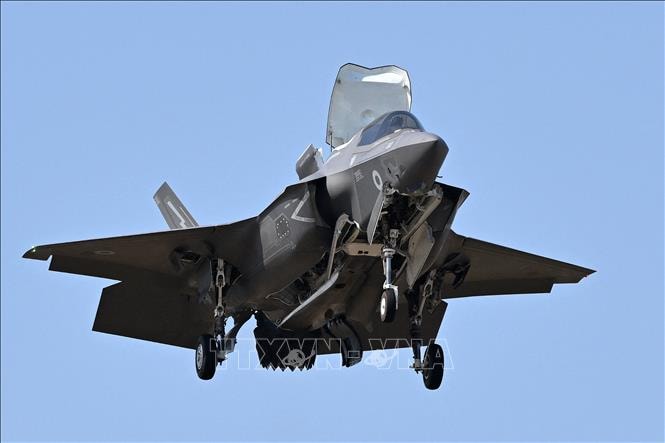
Despite prioritizing European suppliers, Germany still maintains approximately 8% of its contract value with the US for areas where domestic capabilities are insufficient. Key systems include the F-35A stealth fighter, the P-8A Poseidon maritime reconnaissance aircraft, and the Tomahawk cruise missile. Notably, the F-35A was chosen for its ability to carry the US B61-12 nuclear bomb, a strategic requirement in NATO's nuclear sharing program.
In Europe, Germany has signed a contract to replace its P8 pistol with the Czech Republic's CZ P13 model. Regarding missile defense, in addition to the domestically produced IRIS-T system, Berlin is also investing in the Arrow-3 system, jointly developed by the US and Israel.
Time and technology barriers
Explaining the lack of complete domestic production, military experts argue that time is the primary factor. Security expert Christian Molling believes that building new domestic factories and production lines for basic weapons such as handguns would consume too much time and upfront investment.
Meanwhile, long-term collaborative projects such as the Future Air Combat System (FCAS) between France, Germany, and Spain are facing numerous obstacles. Disagreements between Airbus and Dassault Aviation regarding leadership roles have slowed progress. The FCAS is expected to conduct test flights in 2030 and be operational by 2040.
The challenge of political balance and NATO standardization.
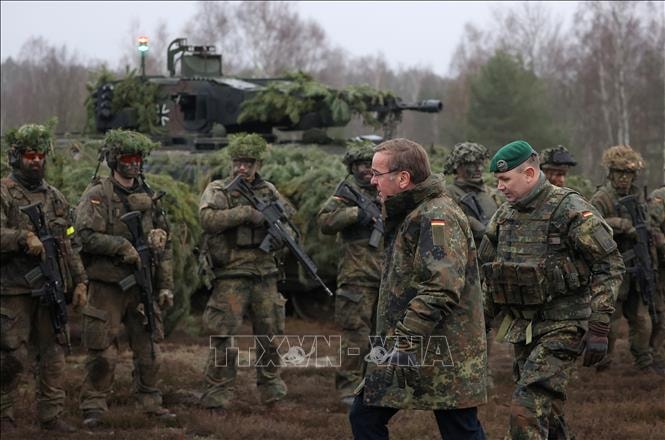
The purchase of foreign weapons also aims to enhance standardization within NATO and the European Union (EU). General Ben Hodges, a former senior officer in the US Army, affirmed that the Bundeswehr's top priority must be the best possible combat capability, regardless of the weapons' origin. The EU is also promoting joint procurement to reduce the fragmentation of the military equipment market and improve coordination in multinational operations.
However, political pressure from the US is also present. US Deputy Secretary of State Christopher Landau once warned European nations against over-prioritizing domestic industries while excluding American suppliers, emphasizing the goal of translating spending into actual combat capabilities on the battlefield.


