
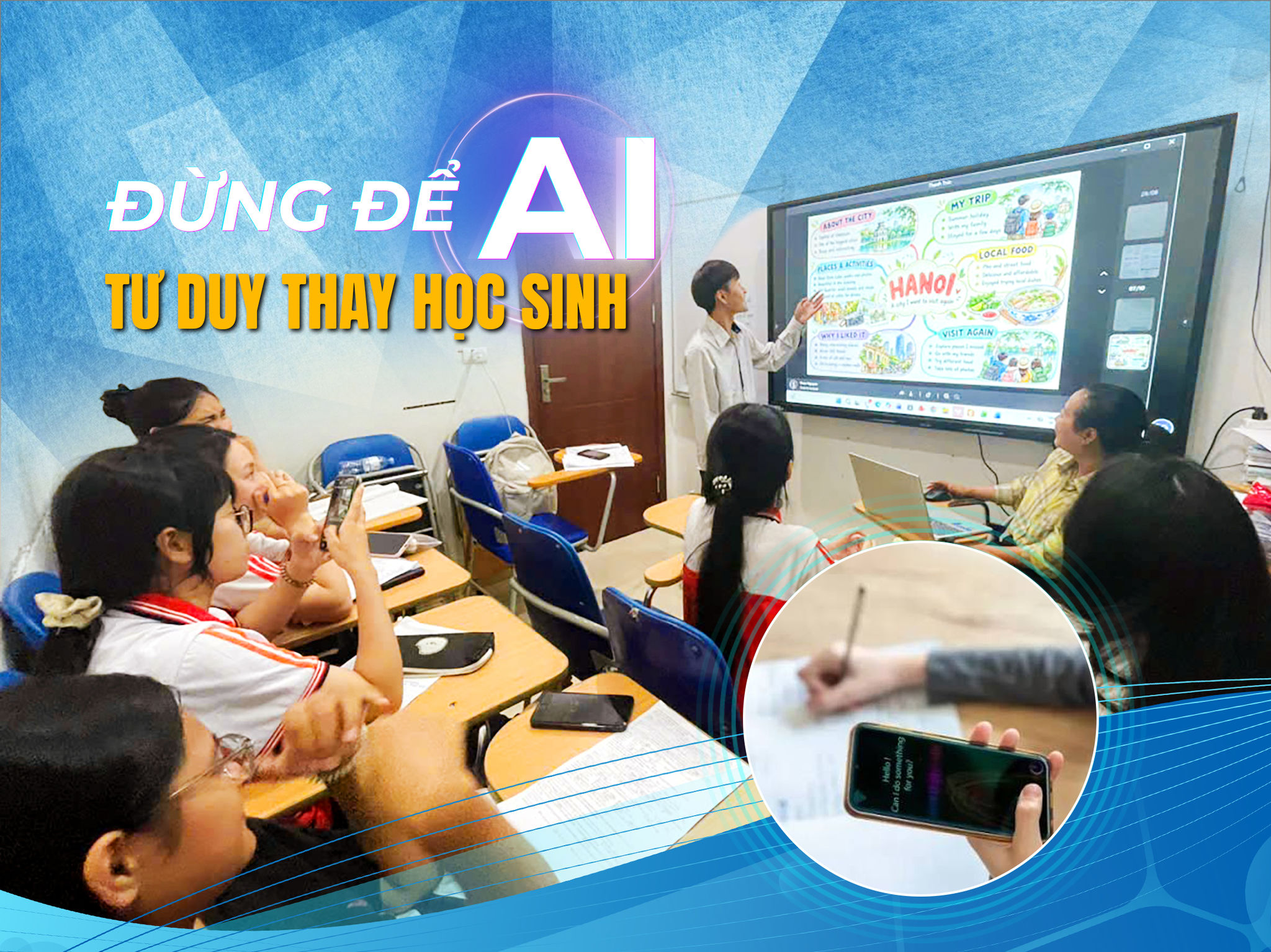
Don't let AI think for students.
AI is gradually becoming a learning companion for many students, from searching for materials and creating outlines to solving exercises and practicing foreign languages. But when a command can generate a solution in just seconds, the line between active learning and dependence on technology becomes more blurred.
Thanh NgaPresentation:Huu QuanOctober 28, 2026
AI is gradually becoming a learning companion for many students, from searching for materials and creating outlines to solving exercises and practicing foreign languages. But when a command can generate a solution in just seconds, the line between active learning and dependence on technology becomes more blurred.
In today's school environment, artificial intelligence (AI), with popular tools like ChatGPT or Gemini, is changing the way students access knowledge. Instead of spending a lot of time searching for materials, students can ask AI to systematize knowledge, explain difficult concepts, build outlines, or suggest solutions to an assignment. If used correctly, AI can make the learning process more flexible and proactive.
Vu Minh Hoang, a physics student at Vinh University, has been using AI to support his studies in various subjects for the past two to three years. Initially, he mainly relied on AI to create outlines for essays or compile materials for English speaking assignments based on teacher-assigned topics. He also used AI as a large resource for his physics class. Once familiar with the tool, Hoang began using different AI systems, choosing the one best suited to each subject.

According to Hoang, the biggest advantage of AI is its ability to provide information quickly, suggest multiple approaches, and explain unclear concepts. However, he also recognizes that if students become accustomed to accepting ready-made solutions, they will gradually lose their ability to reason independently. A problem might be solved quickly by AI, but without understanding the underlying principles, students will find it difficult to apply their knowledge when encountering new types of problems, especially those requiring comprehensive thinking.
Sharing the same view, Nguyen Anh Khoa, a student in class T1 at Huynh Thuc Khang School, believes that AI is only truly useful when used to stimulate critical thinking, rather than providing answers to be copied. Khoa often asks the AI to suggest solution approaches or point out areas to pay attention to, instead of requiring a complete solution to the problem.
According to Khoa, when students have tried many methods but still cannot solve a problem, they can ask the AI for step-by-step suggestions, then continue thinking and refining the solution. This method helps students compare methods and recognize new approaches. Conversely, if students are asked to have the AI solve the entire problem immediately after reading it, they are very likely to skip the process of exploring the essence of the problem.
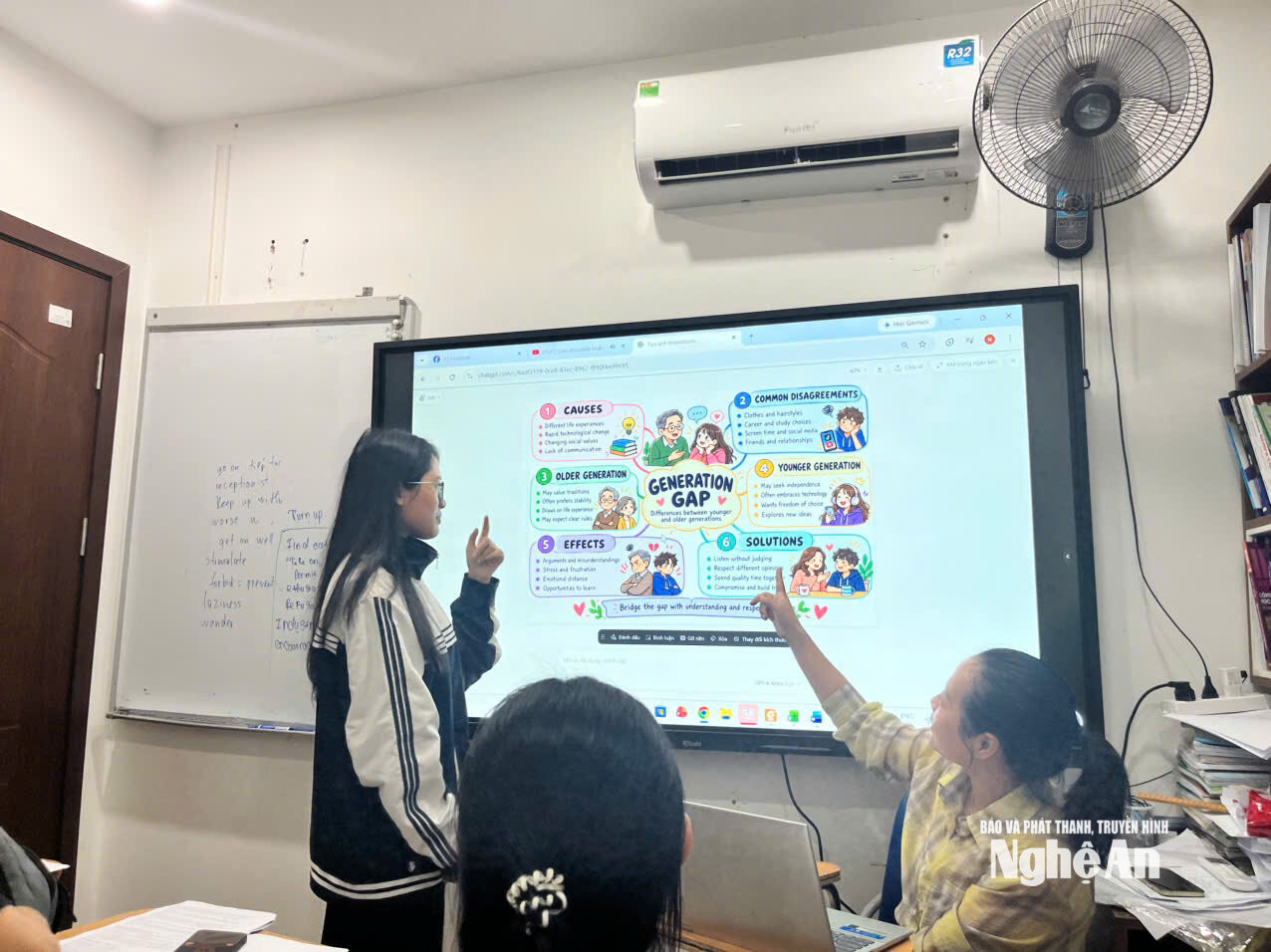
From the teachers' perspective, identifying students' true level of understanding in the context of widespread AI also presents new challenges. Ms. Nguyen Thi Soa, a science teacher at Truong Vinh 2 Secondary School, said that to assess whether students truly grasp the knowledge in their homework assignments, teachers need to check their theoretical understanding, ask them to explain their methods, and present the basis for their results.
According to Ms. Soa, for a more in-depth assessment, teachers need to ask students what basis they used to choose their solution method, why they performed the subsequent steps, and whether they can apply that method when the problem conditions change. The ability to explain and defend their reasoning will differentiate genuine understanding from simply accepting a pre-prepared solution.
According to Dr. Nguyen Ngoc Hieu, Rector of Nghe An University, AI, like other work support tools, can serve as a source of information or a link in the process of completing tasks, but it cannot completely replace humans. In education, this is even more significant because the goal of learning is not only to create a complete product but also to develop critical thinking, problem-solving skills, and proactive learning abilities.
In fact, the popularity of AI in learning is no longer an isolated phenomenon. A survey in Singapore, reported by Channel NewsAsia, showed that all 500 participants aged 15-25 had used AI to assist with homework; 84% of surveyed high school students said they used AI at least once a week. These figures reflect the popularity of the tool within the surveyed group, but cannot be generalized to the AI usage rate of students in all countries.
In Vietnam, where there is no unified, representative dataset to comprehensively assess the level of AI use in schools, the question that needs to be asked is not only how many students are using this tool, but also what they are using it for and what the actual learning effectiveness is.

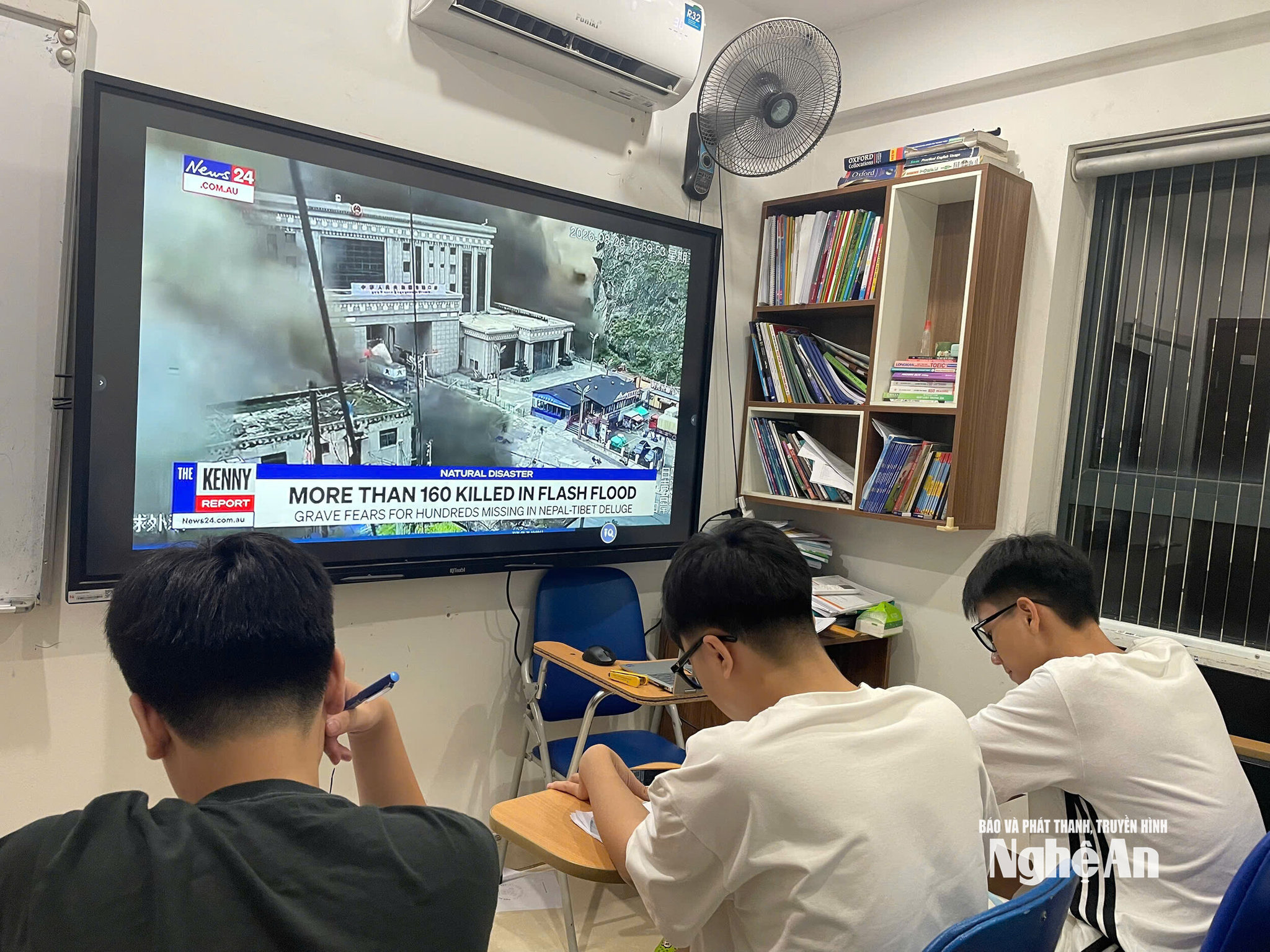
During a 12th-grade Literature class at Huynh Thuc Khang High School, the use of AI became a popular topic for discussion among students. Interestingly, despite being quite familiar with the technology, many students were still confused when asked how to use AI effectively, instead of simply receiving ready-made answers.
This reality shows that knowing and using tools does not equate to knowing how to learn using those tools. Teacher Hoang Thi Bach Tuyet from Huynh Thuc Khang High School stated: Students may be proficient in technical operations, but if they don't know how to verify information, evaluate answers, and apply knowledge, they can easily become passive recipients.
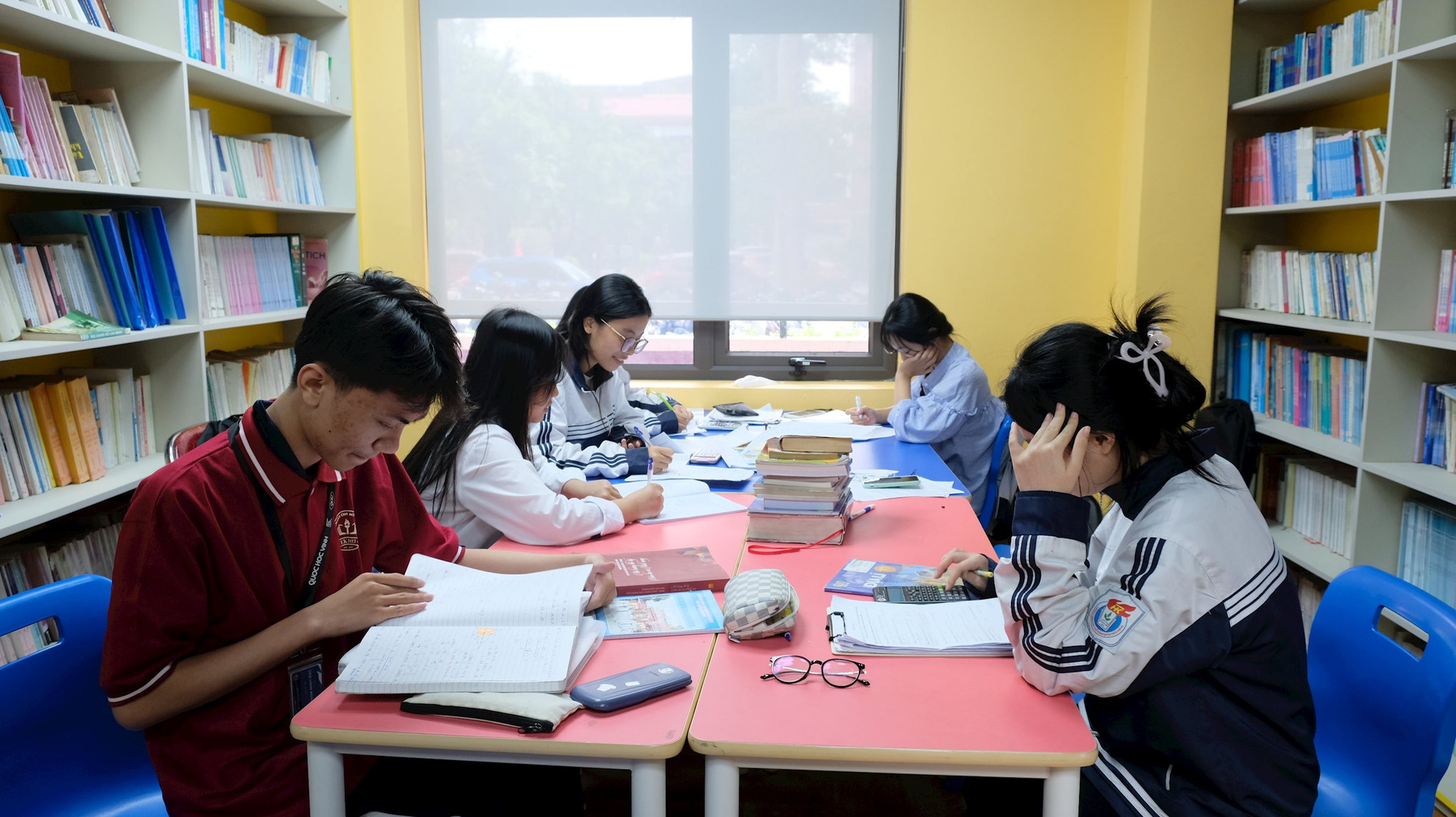
Meanwhile, for middle school students, early exposure to and dependence on AI can lead to a lack of critical thinking skills. Mr. Nguyen Van Thong, a math teacher at Truong Vinh 2 Middle School, warns that if students only use AI to copy solutions, they risk losing core skills such as understanding problem statements, identifying facts, choosing methods, and independently reasoning when faced with new problems.
According to Mr. Thong, AI can make mistakes, present flawed arguments, or provide information that is irrelevant to the problem. Without a solid foundation of knowledge, students may find it difficult to recognize errors, and may even memorize inaccurate results. The obvious consequence is that when entering an exam room or having to handle a situation without supporting tools, they may feel confused and not know where to begin.
Therefore, Mr. Thong advises students to outline their own solution approach before using AI. When encountering difficulties, they can ask the tool for suggestions, point out inconsistencies, or suggest alternative approaches for comparison. Afterward, students should present their solution again using their own reasoning and try applying the learned method to a similar problem.
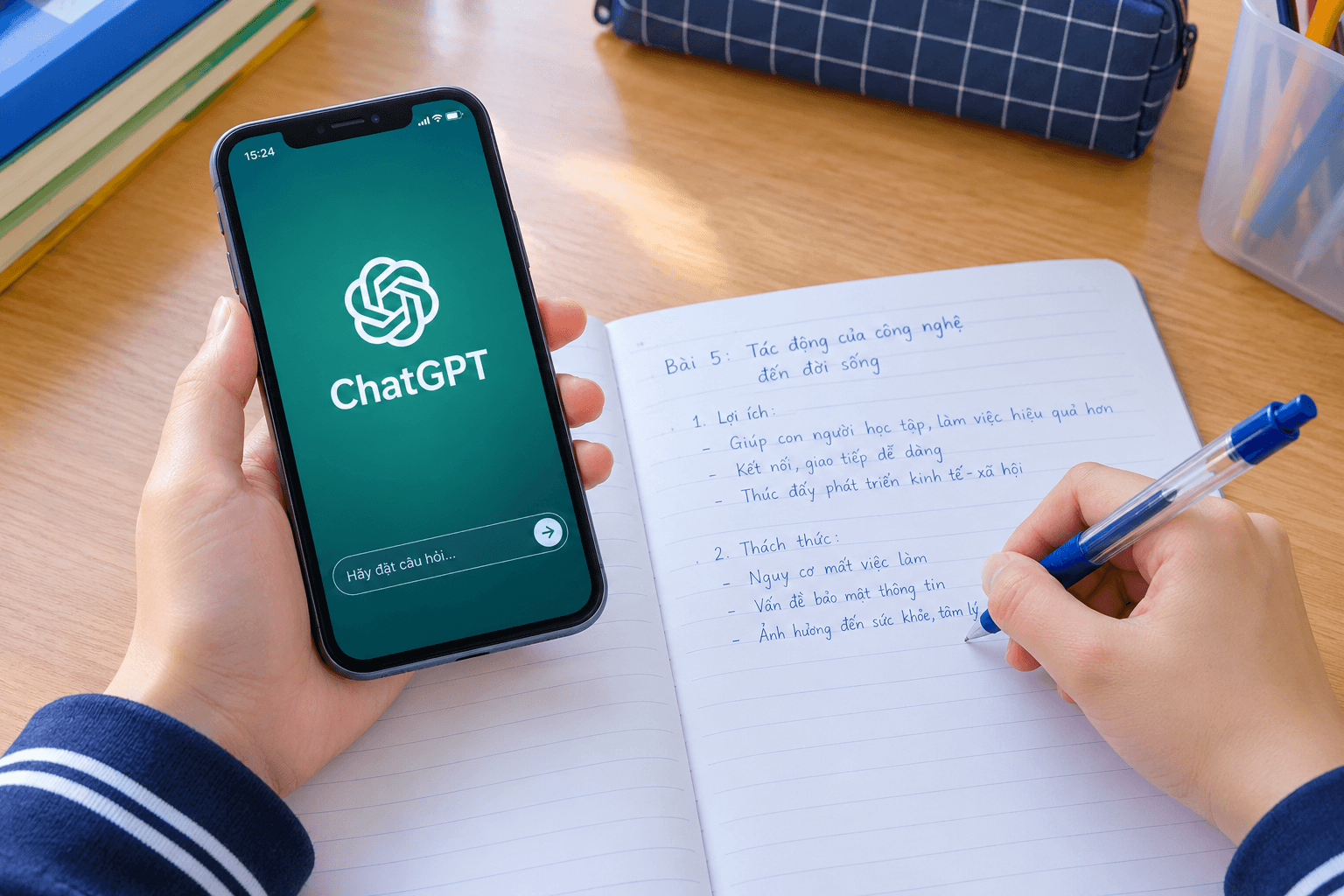
The risk of over-reliance on AI isn't limited to mathematics. In literature, students might skip reading texts, finding evidence, and forming their own opinions when tasked with writing essays using AI tools. Similarly, in foreign languages or presentations, the final product might be complete, but learners may not fully understand the content or be capable of answering critical questions.
However, AI should not be considered the sole cause of intellectual laziness. Technology makes it easier to skip the thinking process, while assessment methods that focus solely on the final answer can inadvertently encourage students to prioritize the product. Therefore, responsibility cannot be placed solely on the learners; adjustments from teachers, schools, and families are also necessary.
In the classroom, teachers can ask students to present their initial approach, explain their reasoning for choosing a method, and point out adjustments made after consulting AI. Critical thinking questions, novel application exercises, or requests for direct explanations also help to more accurately assess the level of understanding.
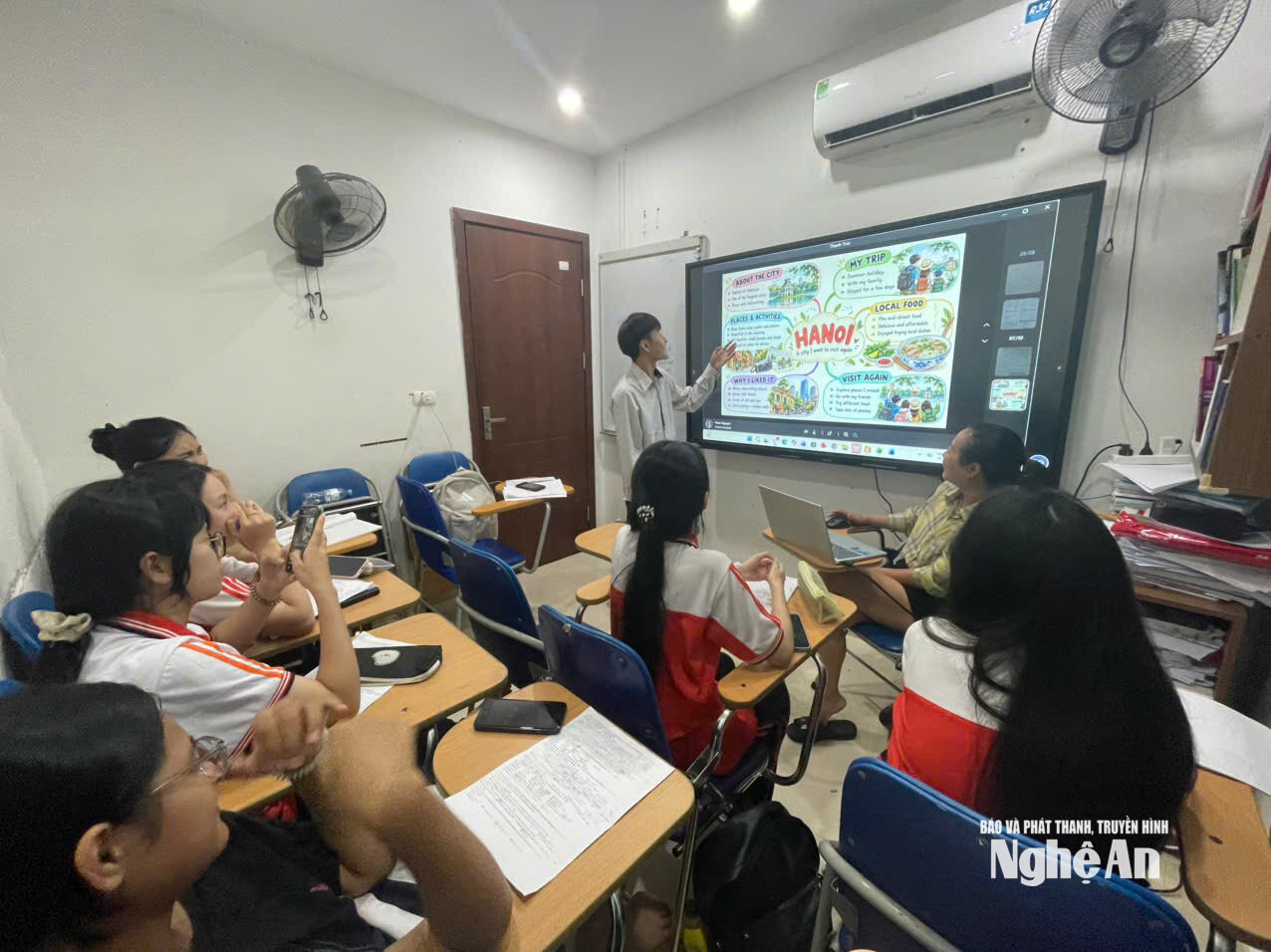
From a family perspective, instead of simply controlling whether their children use AI, parents should focus on how their children use the tool. Asking questions like, "How far did you get on your own before asking the AI?" can help students develop a habit of proactive thinking, rather than waiting for answers.
For students, the key principle is to read the question themselves, identify the problem, and try to come up with solutions before resorting to AI. Upon receiving the answer, they need to verify its accuracy, compare it with their learned knowledge, and rephrase it in their own words. Especially for exercises designed to assess individual abilities, students must adhere to the teacher's instructions regarding the scope and method of using the tool.
Using AI doesn't mean being lazy in thinking. However, if students let AI do the thinking for them, they might achieve immediate results while missing out on opportunities to develop long-term skills. The tool can make the learning process easier, but it is the learner's initiative that ultimately determines how much they truly understand and how far they can go.


