
Thai people in Nghe An province make their products into Tet (Lunar New Year) goods.
More than just a familiar household item, the sticky rice press of the Thai people in Nghe An has entered the market, becoming a product with cultural value, a source of livelihood, and a source of pride for the "hands that preserve the craft" in the villages.
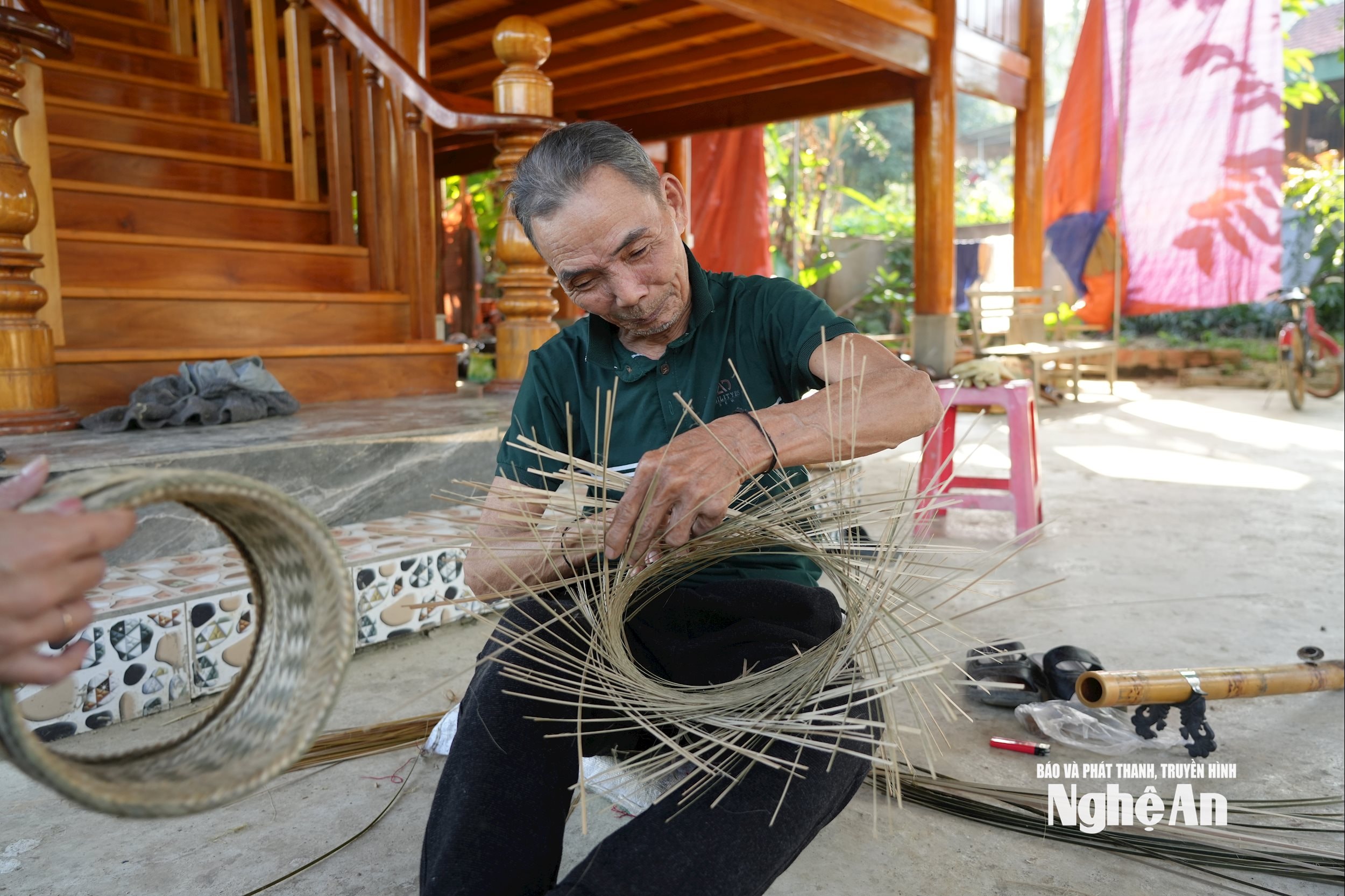
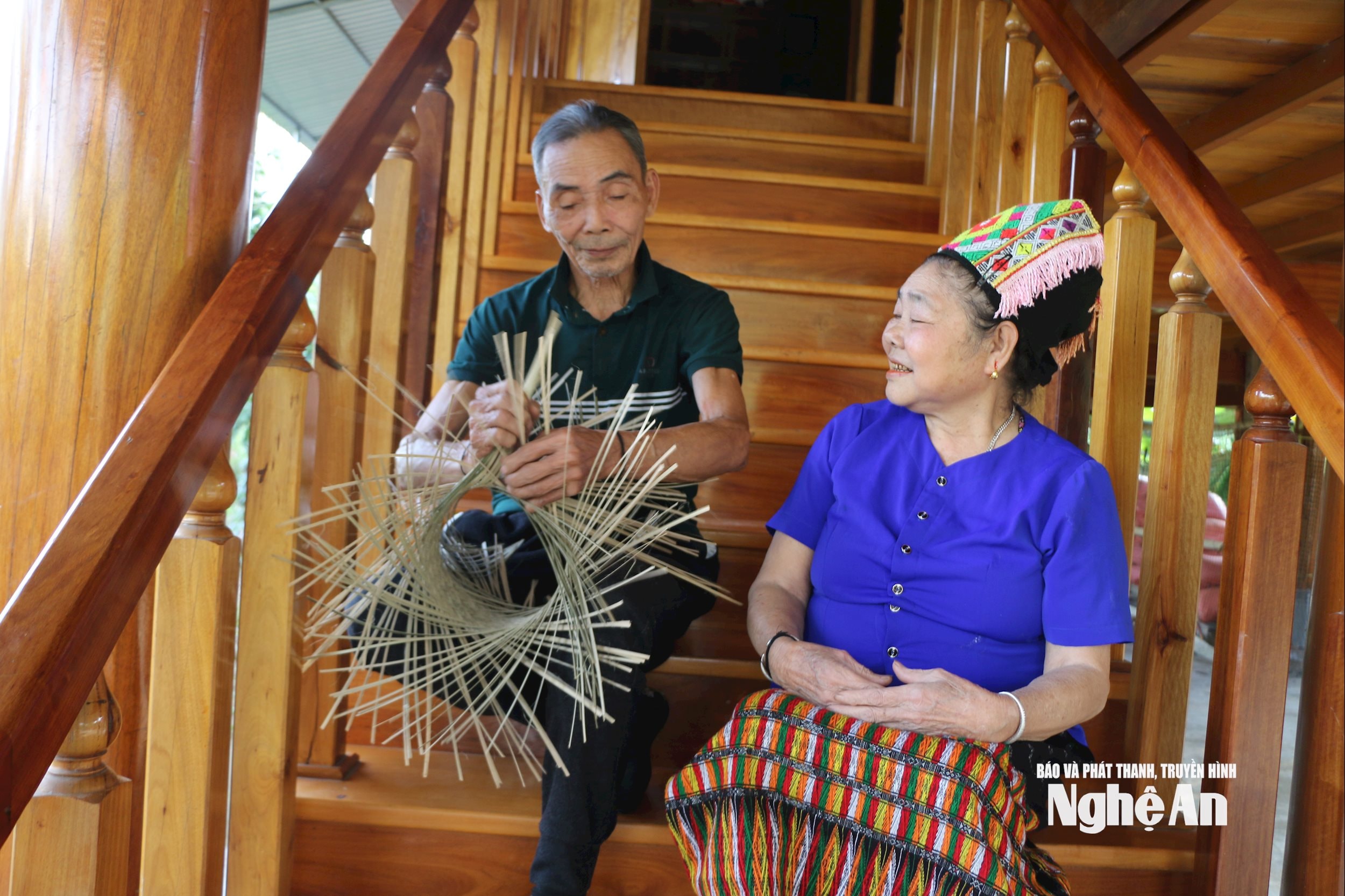
On a late winter afternoon, as the sunlight faded on the mountain slopes and a biting chill permeated the stilt houses of Chòm Muộng village, Mậu Thạch commune, nearly 80-year-old Mr. Ngân Trung Hoành diligently sat in the spacious courtyard in front of his house, meticulously weaving each ép khảu (a container for sticky rice) to serve the villagers during the Lunar New Year. His calloused hands nimbly whittled rattan, split bamboo, and pushed each weave joint to perfection. Each carefully selected strand of bamboo, soft, smooth, and just the right size, was connected to form the familiar shape of the ép khảu, a utensil that has been closely associated with the lives of the Thái people for generations.
According to Mr. Hoanh, weaving a durable, beautiful, and satisfactory bamboo mat is not simple at all. Every step requires skill, patience, and knowledge of forest materials. From going into the forest to select bamboo, reeds, and canes that are free from insects and decay, with long, straight joints, to splitting the strips evenly, thinly, and softly; then the technique of weaving the body of the mat in two layers, creating harmonious patterns; the bottom part is woven separately, with small, rounded bamboo strips serving as legs. A skilled weaver, working continuously, needs one and a half to two days to complete a beautiful pair of bamboo mats. "This craft isn't difficult, but it's very labor-intensive. If the strips are rough and thick, the mat won't look good or last long," Mr. Hoanh slowly shared.
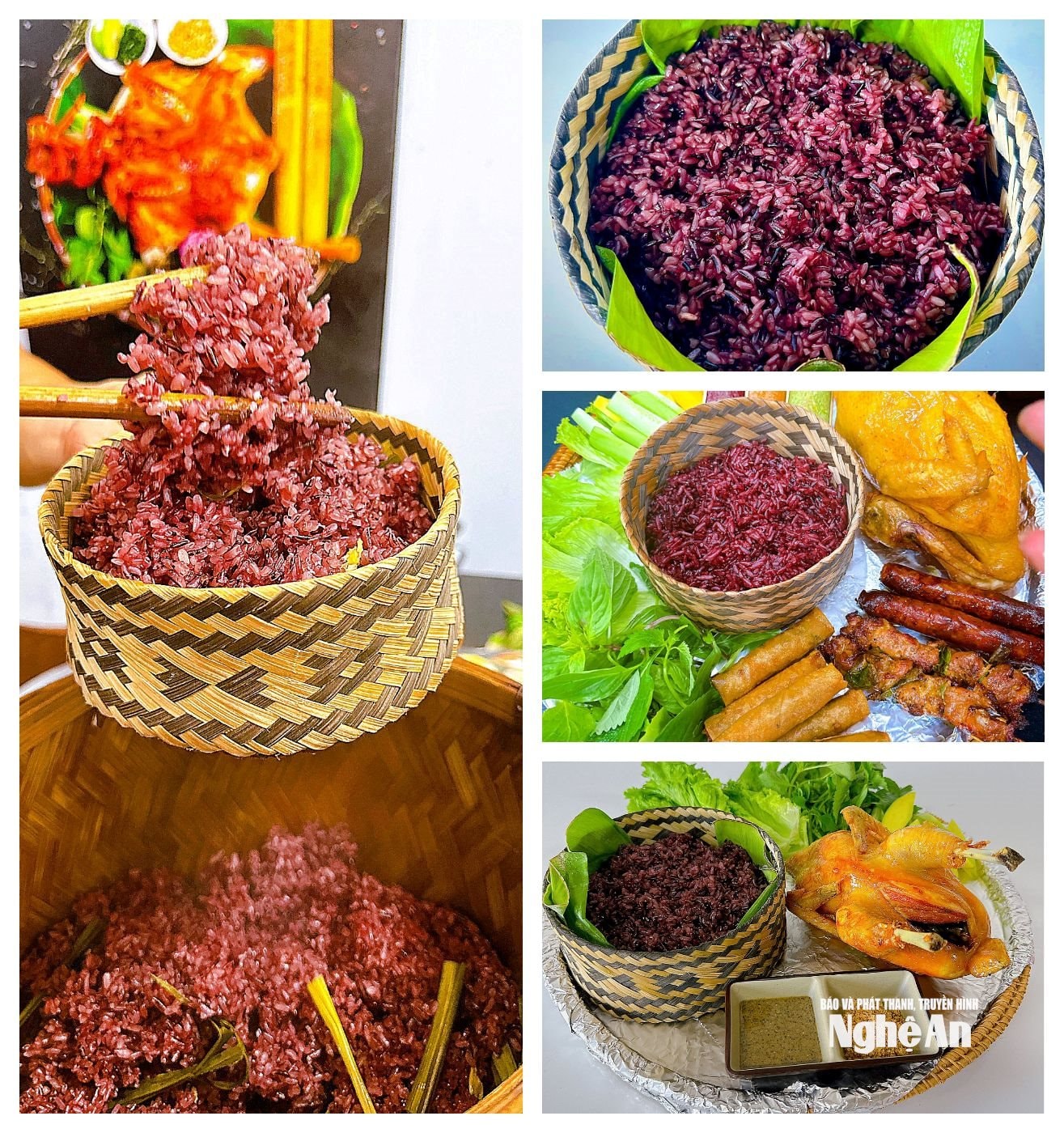
In the lives of the Thai people, the "ép khảu" (a type of rice container) plays a special role. Larger households use large containers in pairs, while smaller households use smaller ones, depending on their needs. Each pair of containers consists of two separate containers – one large and one small – that can be opened and closed flexibly. These containers are used to hold sticky rice or regular rice during daily meals, carried to the fields, or used formally at weddings, funerals, and festivals. Thanks to their woven structure made from natural materials, the steam from the sticky rice escapes evenly, preventing it from becoming soggy and preserving the fragrant, chewy texture of the glutinous rice – a flavor deeply rooted in the mountains and forests.
From a family setting, the traditional Vietnamese sticky rice container (ép khảu) has now entered the market. Many ethnic restaurants choose to use these containers to hold sticky rice and decorate their dining tables and banquets. Dishes like grilled chicken, grilled fish, smoked meat, wild vegetables, and boiled bamboo shoots seem to taste even better when eaten with sticky rice in a container. "The sticky rice container keeps the rice delicious, looks beautiful, and is true to the local culture. Customers find it more appetizing, and many even buy it as a gift," said Ms. Nguyen Thi Nga, owner of a restaurant in Truong Vinh ward.
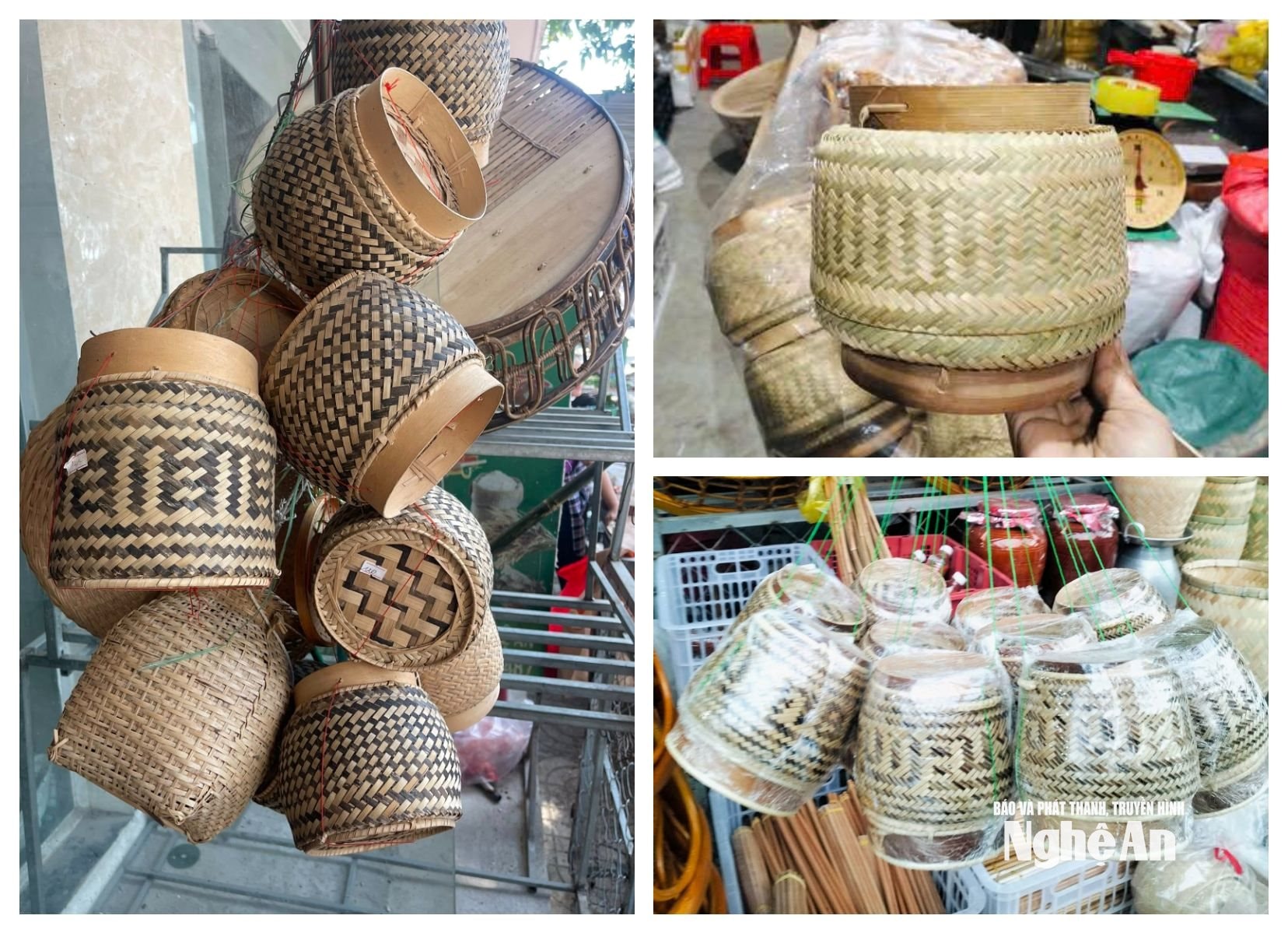
In particular, as Tet (Lunar New Year) approaches, the demand for woven bamboo trays increases sharply. Not only are they used to decorate traditional Tet feasts, but many people also buy woven bamboo trays as gifts, presents, or even collect them as handcrafted items with strong cultural significance. Ms. Ngan Thi Quyen, a seller of woven bamboo trays in Tien Phong commune, said: “During this time, orders are coming in from many places. I have to gather the goods and commission artisans in the village to weave them in time for customers.”
Market demand provides additional motivation for those who preserve the craft. For Mr. Hoanh, despite his advanced age, weaving the bamboo mats not only provides a small income but also a way to preserve the traditional craft. “If I work consistently, I can weave one large mat or two small mats in about a day and a half. I can't keep up with the orders. This craft relies on hard work for profit, and it suits my strength and age. In Chom Muong, there are now only about 5 people left who still practice the craft of weaving bamboo mats,” he said thoughtfully.
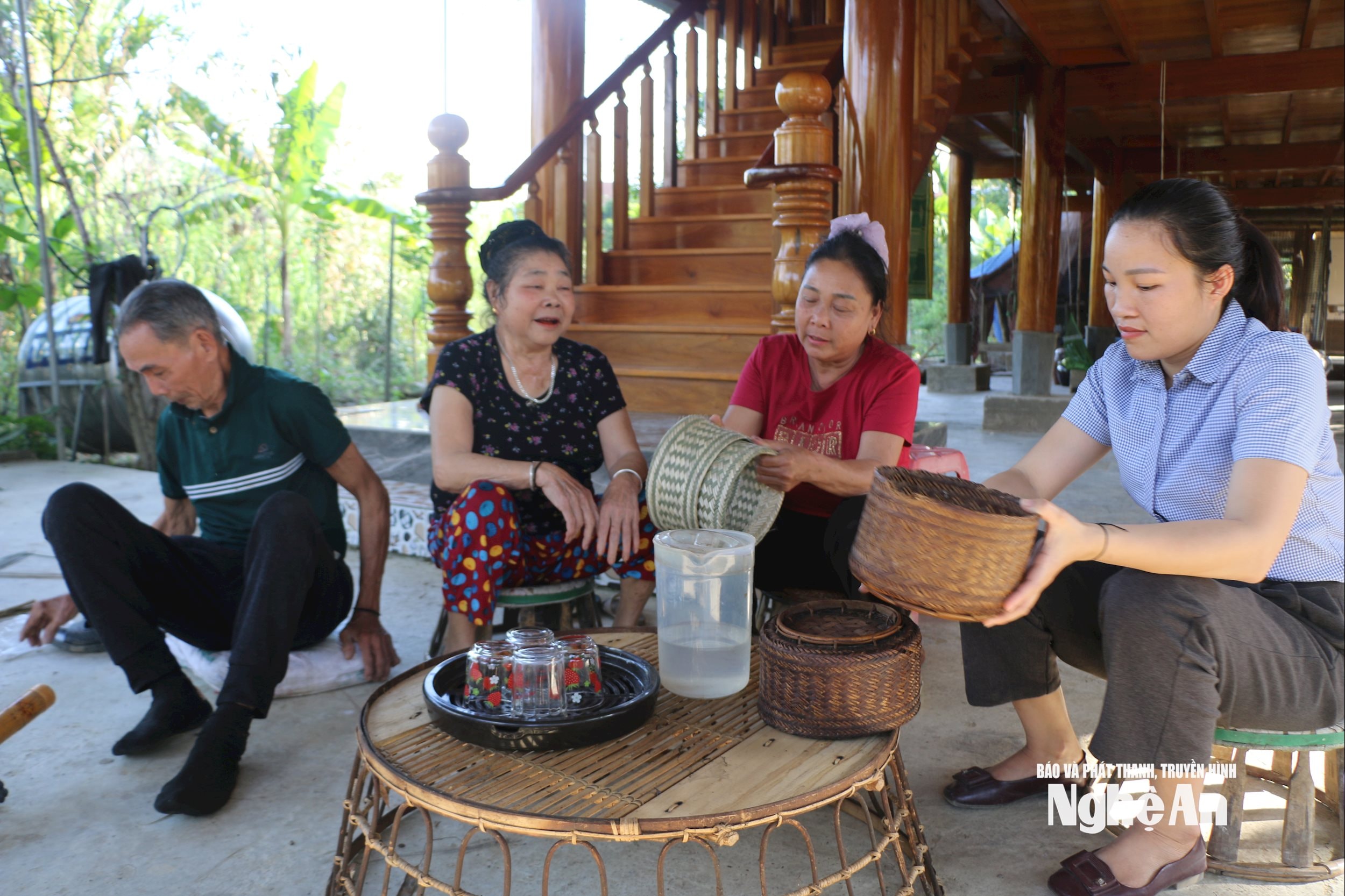
Not only in Chòm Muộng, but also in Tam Bông village, Tam Quang commune, Mr. Kha Văn Thương is busy preparing for Tet. With his skillful hands, he creates sturdy woven containers with harmonious patterns, which are popular in the market. Each container currently sells for between 150,000 and 250,000 VND, depending on the size. According to Mr. Thương, woven containers made from natural materials are not only safe for health but also highly durable, and can be used to hold hot food without worrying about the effects like some industrial materials.
On a collective scale, the rattan and bamboo weaving cooperative in Diem village is just as bustling in the days leading up to Tet (Lunar New Year). Nearly 20 members of the cooperative focus on whittling bamboo strips, dyeing them with natural herbs such as turmeric, beetroot, and yam, then weaving and smoking them to produce durable, beautiful, and harmoniously colored bamboo skewers for the market. Ms. Lang Thi Hoa, Director of the cooperative, said: “The weaving craft is maintained year-round, but it is busiest during Tet. Besides the demand from families and restaurants, many people returning to their hometowns to shop for Tet also buy bamboo skewers as gifts. To meet orders on time, we have to prepare materials early, selecting the right types of bamboo and rattan that meet the requirements.”
Society is changing, and household appliances are becoming increasingly diverse and convenient, yet in every Thai family in Nghe An, the rice cooker, the wooden steamer for sticky rice, and especially the "ep khau" (a type of steamer) are still cherished and preserved. More than just a utensil, the "ep khau" represents memories, a way of life, and the very soul of their culture. In the bustling market of today's Tet (Lunar New Year) celebrations, these simple "ep khau" are quietly continuing the story of the village, bringing the aroma of sticky rice and the spirit of the Thai people to many new living spaces.


