
EVN proposes banning the production and consumption of incandescent light bulbs.
The Deputy General Director of Vietnam Electricity Group proposed that the Government and the Ministry of Industry and Trade completely ban the production, distribution, and consumption of incandescent light bulbs because their electricity consumption is 20 times higher than that of LED lights, due to concerns about electricity shortages.
Speaking at an event on business environment reform and enterprise development, Mr. Vo Quang Lam, Deputy General Director of Vietnam Electricity Group (EVN), said that due to the lack of new power grid projects, localized power shortages will occur in the southern region from 2019 onwards.
"Currently, about 27% of electricity has to be supplied from the North to the South. Electricity in the South has to be supplied from the North and Central regions because domestic production is insufficient, so the ability to supply electricity in the South will be very difficult in the coming years," Mr. Lam said.
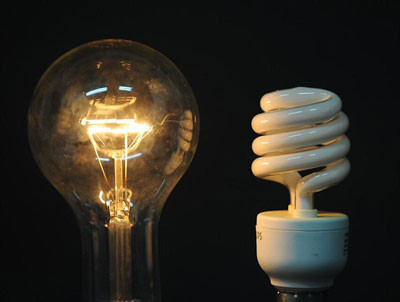 |
| Illustrative image |
Therefore, EVN's leadership hopes that all sectors, the business community, the association community, and the people will share EVN's concerns regarding the efficient and economical use of electricity, how to use modern electrical equipment that doesn't consume much electricity, and especially how to use energy-saving electrical equipment.
There are currently about 4-5 million incandescent light bulbs in use – a very energy-intensive type of light bulb. Therefore, EVN leaders have proposed to the Government and the Ministry of Industry and Trade to completely ban the production, distribution, and consumption of incandescent light bulbs because their electricity consumption is 20 times higher than that of LED lights.
According to Mr. Dau Anh Tuan, Head of the Legal Department of VCCI, a survey conducted by VCCI showed that access to electricity is one of the two areas most highly rated by businesses in Resolution 19.
Accordingly, the procedures and time for electricity connection have improved significantly, from 6 steps and 115 days to 4 steps and 31 days. The electricity infrastructure is considered the second best in Vietnam, only after the telephone network infrastructure. As a result, power stability has increased significantly, and power outages have decreased in both frequency and duration. In 2012, the average power outage was 8,000 minutes per customer, but now it is only 235 minutes per customer.


