
Norwegian F-35s encounter Russian aircraft and advances in the US Valkyrie combat drone.
The Norwegian Air Force deployed F-35 fighter jets to intercept Russian aircraft in the Arctic, while the US deployed Valkyrie drones for combat operations and India finalized an $8 billion submarine deal.
Military activity in the Arctic and Indian Ocean regions is witnessing significant turning points. The Norwegian Air Force just conducted its first interception mission of 2026 against a Russian patrol aircraft, while the US Marine Corps officially commissioned the XQ-58A Valkyrie drone, and India is nearing a strategic submarine contract with Germany.
Norwegian F-35s intercepted Russian patrol aircraft in the Arctic.
On January 6th, the Norwegian Air Force deployed two F-35 fighter jets from Evenes Air Base to identify a Russian Tu-142 Bear-F maritime patrol aircraft operating in international airspace near the Norwegian coast. This was Norway's first Quick Reaction Operation (QRA) mission of 2026, coordinated by the CAOC Bodø Air Operations Center.
The encounter proceeded safely and according to proper procedures. Although the Russian aircraft did not violate Norwegian airspace, this mission reflects the strategic importance of the Arctic region, where both sides maintain close surveillance. The use of the F-35 fifth-generation fighter jet with its advanced sensor systems allows NATO to effectively control vast areas of airspace even in harsh weather conditions.
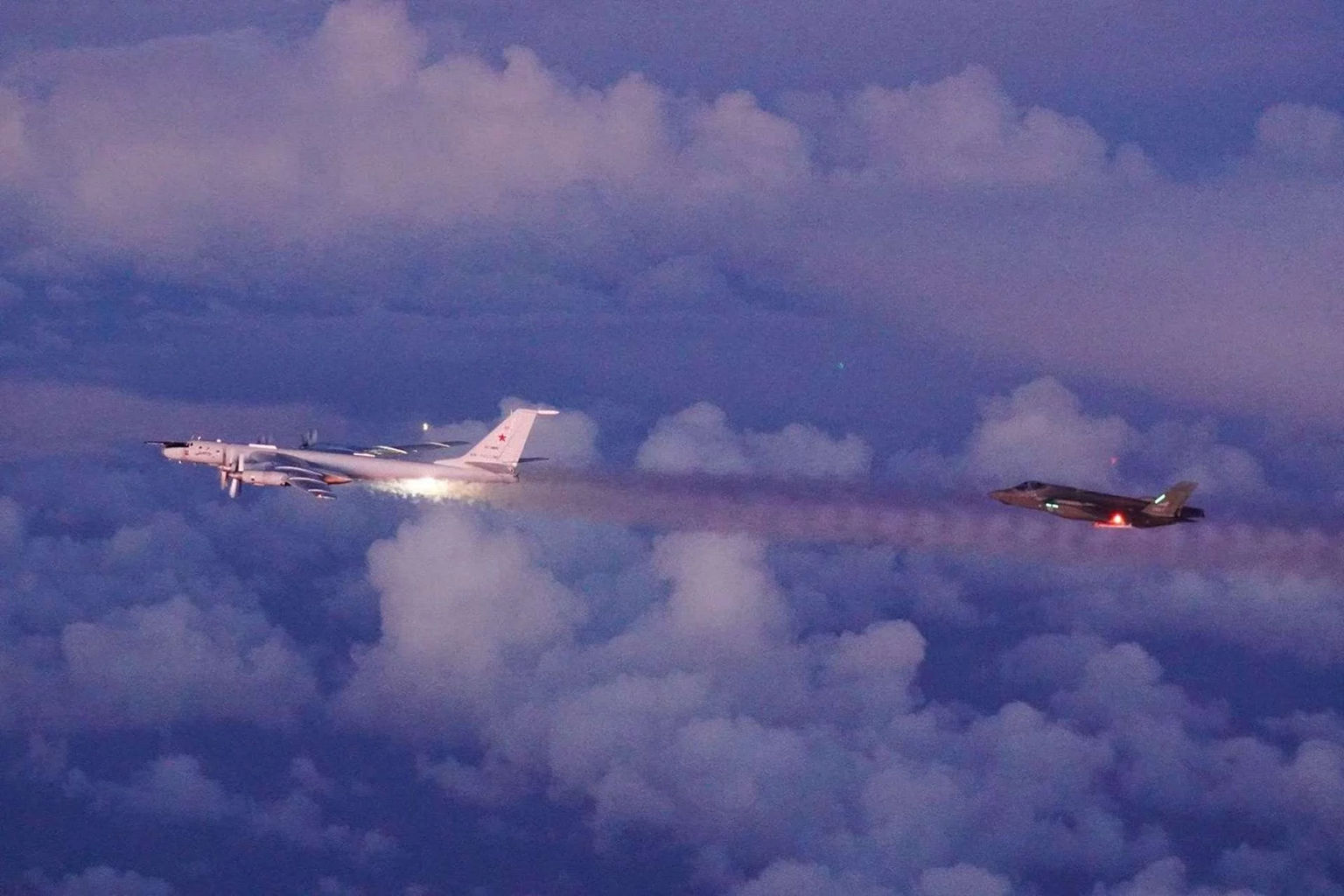
Notably, the frequency of these operations has remained stable. In 2025, Norway conducted 41 QRA sorties to identify 53 Russian military aircraft. Conversely, Russia continues to conduct reconnaissance and anti-submarine flights using Tu-142 aircraft from the Northern Fleet as part of its routine military operations in the North Atlantic.
The US Valkyrie combat drone enters the practical phase.
In addition to operations in European airspace, the U.S. Marine Corps has taken a significant step by selecting Northrop Grumman to deploy the XQ-58A Valkyrie combat drone. The MUX TACAIR contract, announced on January 8th, marks the transition of this platform from testing to a fully operational mission configuration.
The Valkyrie is designed based on the "loyal wingman" concept, operating in close coordination with manned fighters such as the F-35B. With its Prism open automation system and modular payload bay, the XQ-58A can perform roles ranging from fire support to electronic warfare and reconnaissance in highly competitive environments.
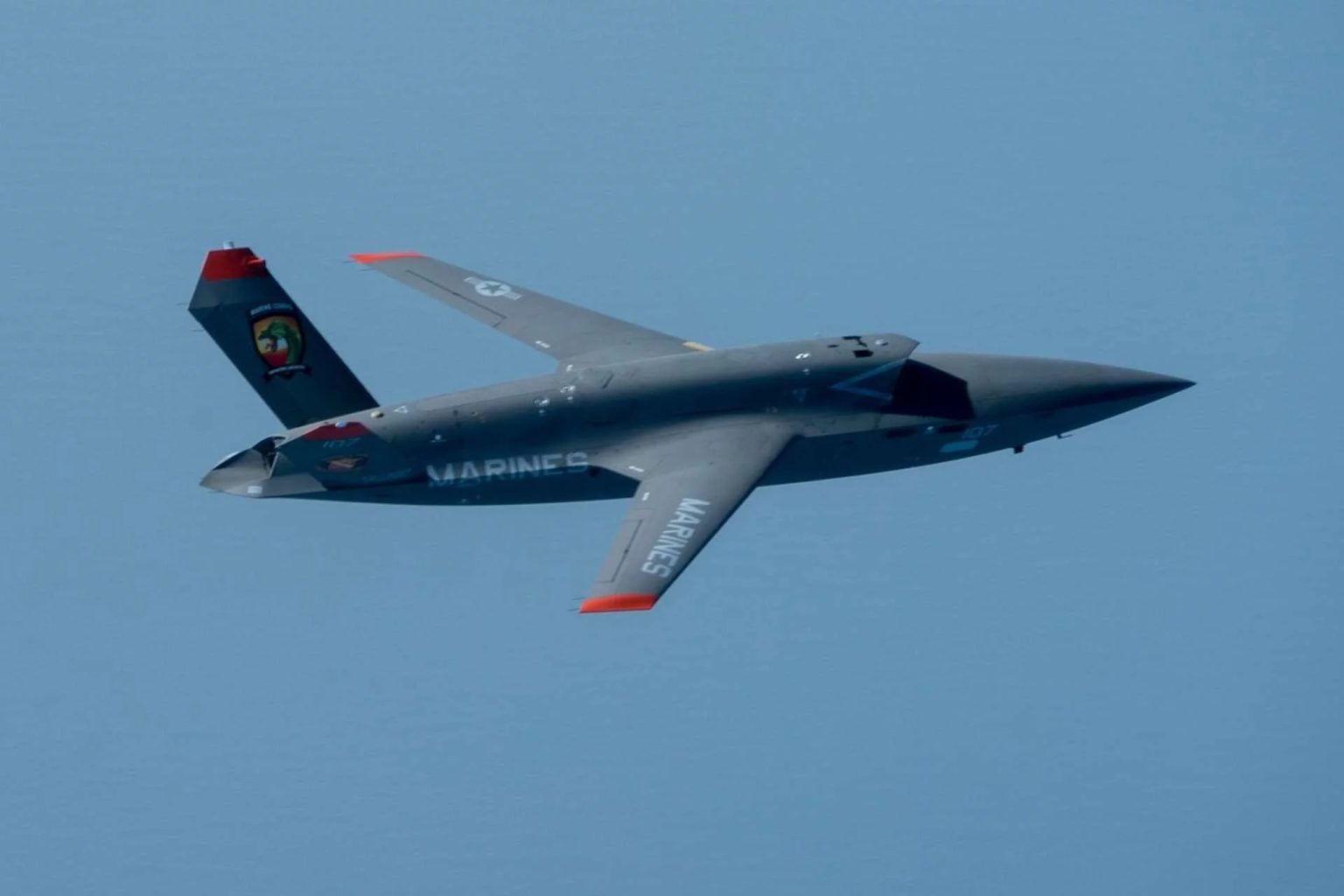
In particular, the Valkyrie's advantage lies in its low cost and its ability to "accept losses." This allows the U.S. military to build a dispersed, flexible air force, ready to deploy from forward bases or remote islands without standard runways, suitable for high-intensity conflict scenarios.
India and its $8 billion submarine deal with Germany.
In the Indian Ocean region, New Delhi and Berlin are nearing an agreement to build six diesel-electric submarines worth at least $8 billion. The project, under Project-75(I), focuses on shipbuilding in Mumbai with a full technology transfer from German partner Thyssenkrupp Marine Systems.
The centerpiece of the project was an air-independent propulsion (AIP) system, allowing the submarine to operate submerged for extended periods without surfacing, significantly increasing its survivability against modern surveillance systems. The German Type 214 submarine, with modifications to achieve a displacement of approximately 3,000 tons, was the most promising candidate for this requirement.
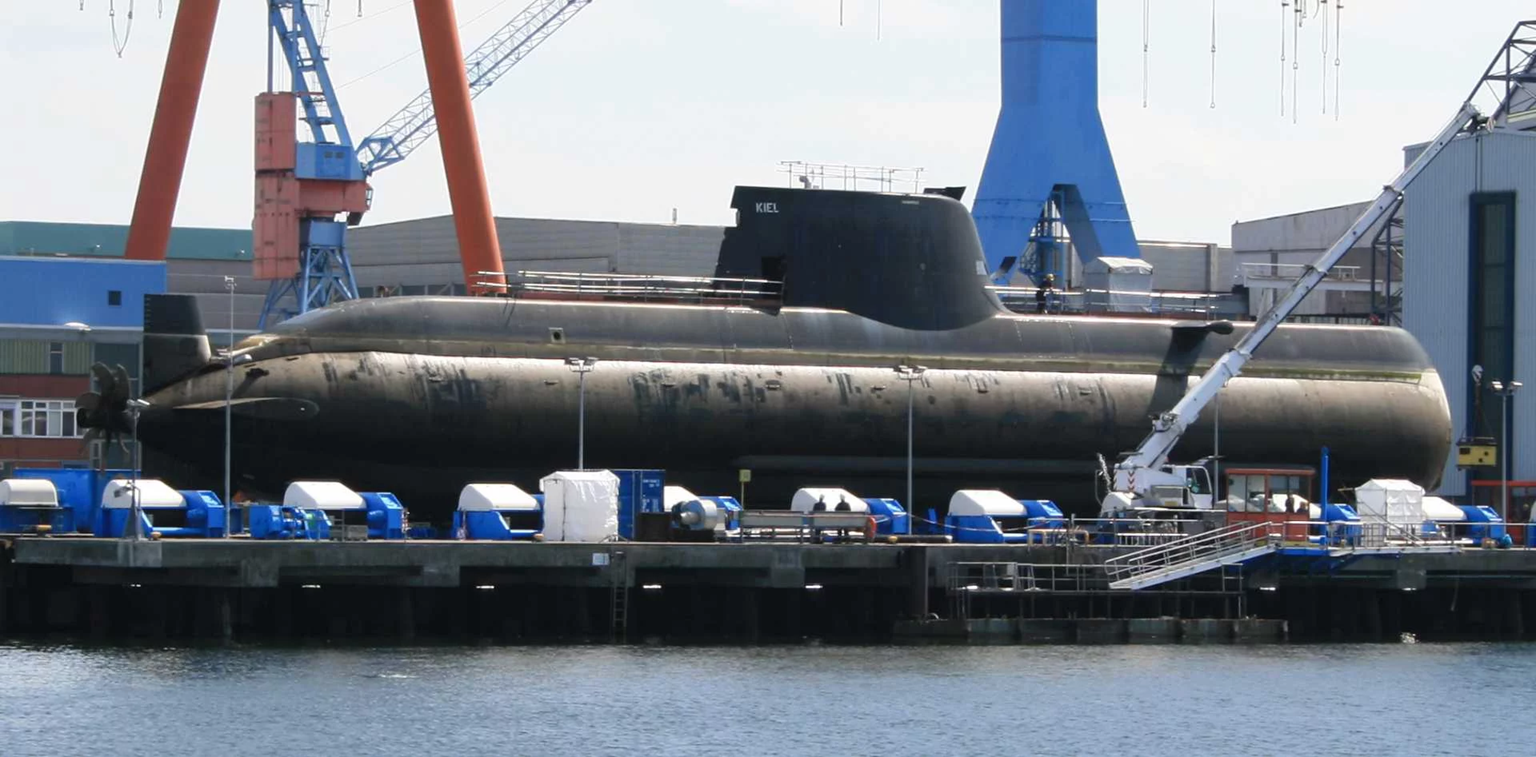
Pushing forward this agreement will not only help India modernize its aging submarine fleet but also gradually reduce its dependence on Russian weapons. For Germany, the willingness to transfer sensitive technology demonstrates a strategic shift in its defense industry policy aimed at strengthening ties with major partners in Asia.


