FAM accused of wrongdoing in the case of 7 Malaysian naturalized players.
The report by the independent investigative committee established by FAM concluded that weak administrative procedures prevented the full verification of the dossiers of seven naturalized players, while FAM was appealing FIFA's penalty to CAS.
The Football Association of Malaysia (FAM) is facing further pressure in the case involving seven naturalized players with "Malaysian blood," after the Independent Commission of Consent (ICC), established by FAM itself, released its findings on serious procedural errors. The report's focus wasn't on a single "paperwork error," but rather a series of administrative loopholes that prevented the seven players' files from being fully verified before being submitted to FIFA.
The ICC stated that many documents proving the eligibility of the players were "inauthentic" and "lacked sufficient supporting evidence." FAM's internal verification mechanism was deemed weak and incapable of detecting violations in a timely manner.
ICC report: “FAM has seriously failed” in its monitoring efforts.
According to the ICC's conclusion, headed by former Supreme Court Chief Justice Tun Md Raus Sharif, the key issue was the failure to meet verification standards: the documents lacked verifiable evidence, and the flow of paperwork within the internal administration system was not securely locked down by independent verification steps.
The report clearly states:“The committee was unable to pinpoint exactly who forged the documents. This was because the notary refused to cooperate, and the players' representatives were unable to contact anyone despite their efforts. It is clear that FAM has seriously failed in its oversight, inspection, and administrative control, allowing the incident to occur without timely detection or prevention.”
In the context of modern football, which increasingly relies on the validity of player registrations, this report serves as a "fault map" of the system: not just who signed and submitted, but how FAM designed (and operated) the process so that a file could pass through layers of checks without being fully verified.
Recommendation: Report to authorities, internal disciplinary action, organizational restructuring.
The ICC recommends that FAM immediately report the incident to the authorities and take internal disciplinary action against the individuals involved. At the same time, the ICC suggests that FAM should comprehensively reform its management structure towards greater professionalism and transparency.
From a sports governance perspective, this recommendation shows that the ICC assesses the problem as systemic: if only patching individual links is addressed, the risk of recurrence remains as long as the internal control system is not redesigned.
FIFA's penalty and the appeal to CAS.
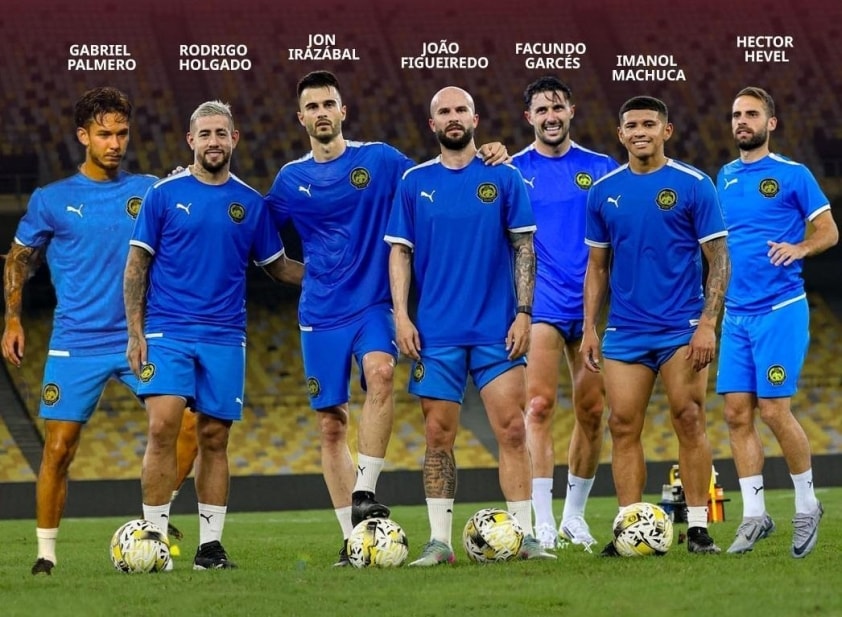
Previously, FIFA's Appeals Committee rejected the appeals of FAM and seven players, including Gabriel Palmero, Facundo Garces, Rodrigo Holgado, Imanol Machuca, Joao Figueiredo, Jon Irazabal, and Hector Hevel.
According to the original article, FAM was fined.350,000 Swiss francs(approximately equivalent to)11.5 billion VNDEach player was penalized.2,000 francsand12-month ban from competingFAM then stated that it had filed an appeal.Court of Arbitration for Sport (CAS)to mitigate the sentence.

| Content | Decision by source |
|---|---|
| The penalty for FAM | 350,000 Swiss francs (equivalent to approximately 11.5 billion Vietnamese dong) |
| The penalty for each player | 2,000 francs |
| The duration of the ban from competing. | 12 months |
| Player list | Gabriel Palmero, Facundo Garces, Rodrigo Holgado, Imanol Machuca, Joao Figueiredo, Jon Irazabal, Hector Hevel |
A breakdown of confidence and a "turning point" for Malaysian football.
The most significant blow to FAM right now is not just the financial penalty or the duration of the ban, but the crisis of confidence that follows the ICC's conclusion. When a committee established by the organization itself concludes that administrative oversight and control have "seriously failed," the pressure for transparency will increase in every subsequent decision: from how FAM cooperates with authorities to how it restructures the player registration and application review process.
In the original article, the incident was described as potentially directly impacting the future direction of Malaysian football in one of the most serious legal cases in the country's history. With FAM having filed an appeal with CAS, the next developments will not only be about the ruling, but also a test of governance capacity: whether the system can be fundamentally reformed to avoid a repeat of another "not fully verifiable" case.