
FBI - The world's most mysterious and famous law enforcement organization.
(Baonghean.vn) - In its more than 100-year history, the FBI has been at the center of hundreds of high-profile cases, some successful, some still shrouded in mystery. And now, as terrorism has reached a new peak, the FBI is becoming more complex and powerful than ever before.
1. The FBI - the arm of America
With the economic and political situation, and conflicts both outside and inside the United States becoming more complex than ever, it is clear that America needs a powerful arm like the FBI to protect itself – and be ready to intervene when necessary.
The FBI's mission is constantly expanding, and now their focus is on four main areas: 1. Counterterrorism; 2. Investigating and preventing organized crime; 3. Investigating and preventing cybercrime; 4. Investigating and preventing civil crimes.
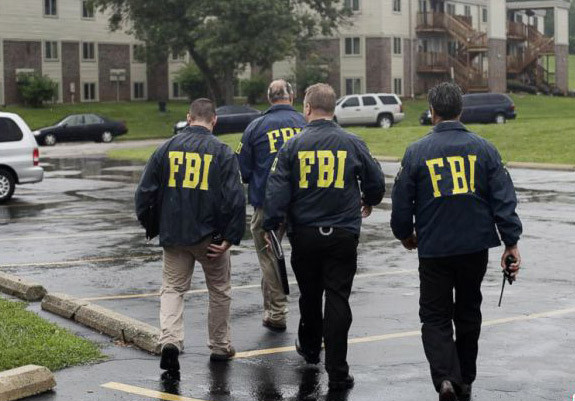 |
"The FBI's mission is to uphold law through the investigation of violations of federal law, to protect the United States from foreign espionage and terrorism, to assist the leadership of the United States and support federal, state, local, and international law enforcement agencies, and to fulfill its obligations to the public, and ultimately, to demonstrate allegiance to the United States."
2. The structure of the FBI
The FBI is part of the U.S. Department of Justice, headed by the Attorney General, and under the authority of this agency, the FBI serves as the arm for federal investigations and law enforcement. However, the Attorney General does not have direct control over the FBI; that is the job of the Inspector General.
Prior to 2002, the powers of an inspector general were very limited; however, following a series of scandals in 2001, culminating in the discovery that an FBI agent had sold U.S. national secrets to the Soviet Union for 15 years, the U.S. Congress passed legislation to expand the powers of the inspector general.
The position of FBI Director is appointed by the president, and a term in this position lasts for 10 years. Below the director are several deputy directors and assistant directors who oversee the FBI's 11 units.
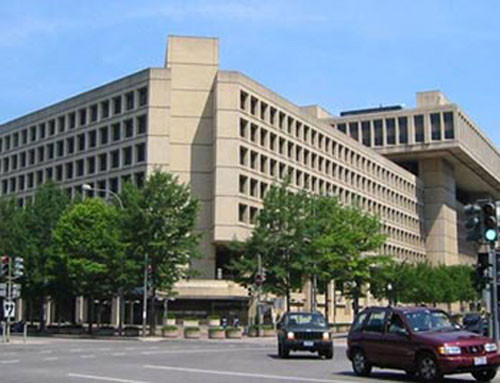 |
| FBI headquarters in Washington, DC. |
The FBI's current headquarters are located in the J.Edgar Hoover Building in Washington, D.C. The organization also has offices in many major cities – totaling 56 representative offices. In addition, the FBI has over 400 permanent bureaus in smaller cities and other "sensitive" areas requiring their presence.
In the past, the FBI was considered unfriendly to women and ethnic minorities. In 1972, there were no female agents, and ethnic minorities made up only a very small percentage of the workforce. Now, the FBI has over 13,000 female employees, nearly 8,000 ethnic minorities, and more than 1,000 people with disabilities.
The FBI's primary funding comes from the Department of Justice, and according to official reports, the FBI spent $7.9 billion and $8.3 billion of government funds in 2010 and 2011, respectively.
3. The FBI - A Journey
The U.S. Department of Justice has always possessed absolute power in investigating crimes; however, in its early days, it lacked the means commensurate with this power. In the 19th century, government agencies often used private detective agencies as their investigative tool.
In 1908, when the illegal sale of land in the American West became a major problem, and American law enforcement agencies could not find a solution, then-President Theodore Roosevelt authorized the Attorney General to establish an official detective agency to investigate and prosecute crimes. And in 1909, the FBI was born under its official name: The Bureau of Investigation.
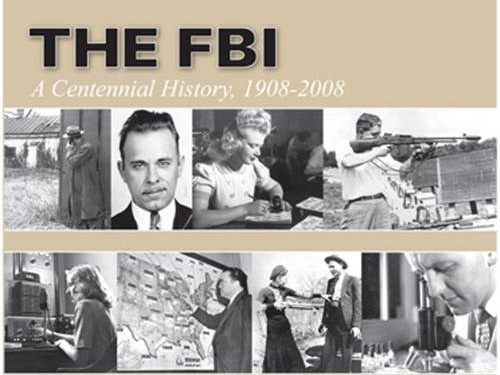 |
Initially, the FBI's authority was very limited. Land fraud, transnational bank fraud, and a number of other types of crime were within the FBI's purview. Over the next few decades, the U.S. Congress began to approve expansions of the FBI's scope, and the number of FBI agents gradually increased. At this time, with the outbreak of World War I, the FBI's primary work was to prevent espionage and sabotage, and to hunt down those who had not served in the military.
Until the early 1920s, FBI agents were mostly poorly trained and unqualified. Politics was extremely influential at the time, and bribery to turn a blind eye to investigations was rampant for a long period. Agents were often paid by politicians to gather information aimed at discrediting their opponents.
4. J. Edgar Hoover and the reform of the FBI
It's no exaggeration to say that this man revolutionized the FBI. He single-handedly transformed it: from a rotten organization plagued by bribery, extremely low professionalism, and a string of scandals, to the FBI we see today – an organization with supreme power and authority, operating with exceptional professionalism and efficiency.
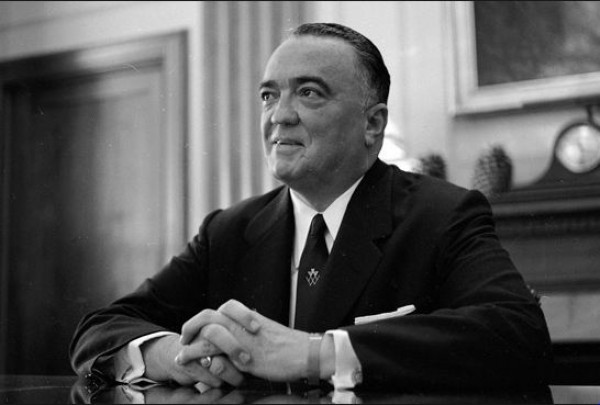 |
| Former FBI Director J. Edgar Hoover - the longest-serving powerful man in American history. |
Right from the start of his tenure, at the age of 29, he immediately fired more than 100 FBI agents in less than a month. Afterward, Hoover raised FBI hiring standards, requiring FBI agents to have a college education and experience in law enforcement.
He created a series of rules and procedures to keep his staff in line when investigating crimes. "We should have only one concern: the purging of criminals," Hoover said.
In addition, Hoover also introduced many reforms in the field of criminal investigation. The FBI Crime Lab, where criminal evidence was analyzed, was first established in 1932. In 1935, a training academy specifically for FBI agents was founded, and this was also when the name FBI officially appeared.
5. How the FBI operates
The FBI's mission is constantly expanding, leading to the development of numerous different units to handle information, incidents, and situations. The following only discusses the activities of three units, considered the FBI's largest and most effective arms.
- The Criminal Justice Information Services Division (CJIS) - roughly translated: Information Division.
 |
As the largest branch of the FBI, this is understandable given that collecting, analyzing, and comparing data gathered at crime scenes is the most crucial task in an investigation. Considered the world's largest criminal information archive, the FBI's archive contains over 47 million fingerprints, along with countless detailed pieces of information about various types of crimes across the United States.
The extremely secure security measures make this data repository impenetrable to hacker attacks, while access is also very quick and easy. Any law enforcement agency at the national, local, and state levels can access this data repository to quickly retrieve the necessary information.
- Evidence analysis and processing department
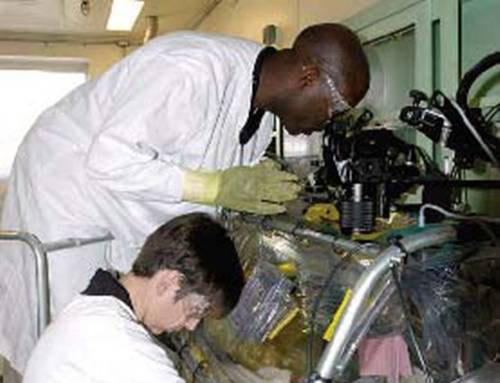 |
Equipped with state-of-the-art laboratories and technologies, this department analyzes all types of evidence, including DNA from blood, hair, weapons, fingerprints, and handwriting. All analysts undergo rigorous training at the FBI's laboratory and training center.
- Hostage rescue team
 |
The FBI also possesses one of the world's leading hostage rescue teams – The Hostage Rescue Team (HRT). Initially, the HRT was just like a regular combat team, equipped almost like a SWAT team.
Their job was to use force to rescue hostages. Meanwhile, the negotiating unit, whose main task was to rescue hostages peacefully and avoid bloodshed, would intervene before the HRT opened fire. However, an incident occurred in 1992 when the two teams operated out of sync; gunmen from the HRT opened fire before the negotiating team could intervene, resulting in the deaths of the entire victim's family.
Following this incident, HRT and the negotiating team were merged into a single organization – The Critical Incident Response Group – and this group will operate under a single commander.
Peace
(Synthetic)
| RELATED NEWS |
|---|


