
Ferdinand: Mbeumo and Cunha are changing Man United.
Rio Ferdinand believes Bryan Mbeumo and Matheus Cunha are key to Ruben Amorim's Manchester United's greater flexibility in transitions and ball control, following their three consecutive Premier League wins. At the same time, he warned of the difficulties some veterans, such as Casemiro, might face in adapting to the new environment.
Three consecutive Premier League victories have not only eased doubts about Ruben Amorim's philosophy, but also outlined a Manchester United team that knows how to change the pace of play. According to Rio Ferdinand, the answer lies in the two new signings, Bryan Mbeumo and Matheus Cunha – pieces that are making the Red Devils' system run more smoothly.
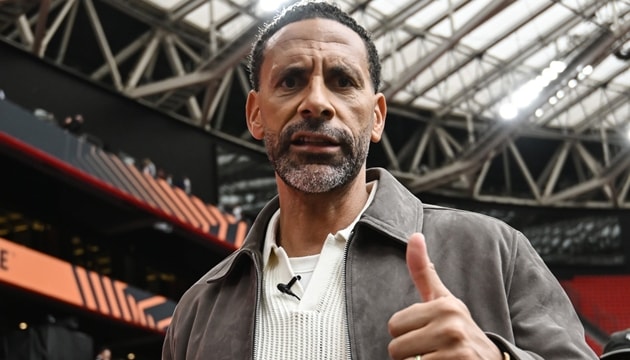
Mbeumo, Cunha, and the solution to the state transition.
On the podcast "Rio Ferdinand Presents," the Manchester United legend highlighted how the two new signings are making a difference in crucial moments: transitioning between phases and controlling the tempo of the game. Ferdinand stated: "I think Cunha holds the ball extremely well in the smallest situations with three or four players surrounding him." This provides a foundation for the defense to breathe more freely, and for the team to quickly become cohesive vertically across the pitch.
Regarding Mbeumo, Ferdinand pointed out his ability to make direct decisions: "And Mbeumo, he will always get a shot off or create something to trouble the defenders." When a striker can threaten the goal with a header, the opponent is forced to drop deep or stretch their defensive line – thereby opening up more channels for Man United to move the ball.
Amorim's tactics: flexible pressing, proactively dropping back blocks.
The new approach isn't about pressing more, but about the initiative in choosing when to press. Ferdinand analyzed: "There are times in the game when we don't need to press, we can drop deep." This suggests a Manchester United that knows how to change its structure depending on the play – not automatically resorting to high-pressure pressing, but willing to lower the team's block to wait for the moment to accelerate.
He added: "We can create two defensive blocks, but when we win the ball back, we will be a threat." The two defensive blocks here reflect the organizational mindset: maintaining distance, blocking the midfield, and then directing the break of pressing towards technical anchors – where Cunha allows the team to move forward without losing control, and Mbeumo forces the opponent into a defensive, improvisational situation.
From stubborn prejudices to the ability to adapt.
Under Amorim, Manchester United were once questioned for their consistency, bordering on rigidity. But with the introduction of new signings offering fresh options for both possession and counter-attacks, the perception changed. As Ferdinand noted, it was Mbeumo and Cunha's abilities that allowed the Portuguese manager more flexibility, breaking free from the stereotype of playing a one-dimensional style.
In that three-match winning streak, the value lay not in a single formula, but in the ability to switch between tactics: sometimes pressing to win the ball near the goal, sometimes dropping deep to close the gap between the lines. In each state, Man United had the right explosive element – one player retaining possession under pressure, another constantly threatening the goal.
The dark side of transformation: a challenge for veterans.
Ferdinand also issued a blunt warning: not everyone will adapt easily. He cited Casemiro as an example: "It's completely different from the way that helped Casemiro win five Champions League titles." The change requires veterans to adjust their habits, while the new structure is being built around the qualities of Mbeumo and Cunha.
In other words, if the new signings are the driving force behind the flexibility, then Amorim's next step will be to balance continuity with new tactical demands – ensuring cohesion in both defense and midfield as the team changes its pressing height.
Immediate impact and long-term message
Three consecutive wins have reinforced Man United's belief in Amorim's chosen path: control when needed, and direct attack when space arises. More importantly, the team now has the players to capitalize on crucial moments – a key factor at the highest level.
Ferdinand's assessment wasn't just praise for individuals. It reflected a structure being refined according to player capabilities: reducing the burden on the defense thanks to Cunha's ball-holding ability, and increasing the attacking threat thanks to Mbeumo's decisiveness. If they maintain the pace and continue to refine their pressing, dropping back, and transitioning tactics, Man United have a solid foundation to protect their progress without losing tactical balance.


