
FIFA ASEAN Cup and AFF Cup: A revolution in the legal status of regional football.
Analyze the core differences between the FIFA ASEAN Cup and the AFF Cup regarding the FIFA Matchday schedule, player release regulations, and ranking points on the world leaderboard.
Southeast Asian football is on the verge of a historic milestone with the simultaneous presence of two regional tournaments: the traditional AFF Cup (now the ASEAN Championship) and the newly introduced FIFA ASEAN Cup. The decisive difference between these two competitions lies not only in their names but also in their legal status within the global football system, promising to completely change the professional quality of national teams from 2026 onwards.
FIFA Matchday: The game-changing turning point
For nearly three decades since its inception in 1996, the AFF Cup's fatal flaw has been its scheduling. Despite being a measure of regional pride, the tournament frequently falls outside the FIFA Matchday system (the official International Match Schedule). This creates a chronic barrier: clubs are not legally obligated to release players to their national teams.
As a result, fans rarely get to see the strongest lineups. Especially in recent years, with the trend of Southeast Asian players moving abroad and countries like Indonesia and Malaysia increasing naturalization, national teams often have to play with makeshift lineups because clubs in Europe, Japan, or South Korea refuse to release players.
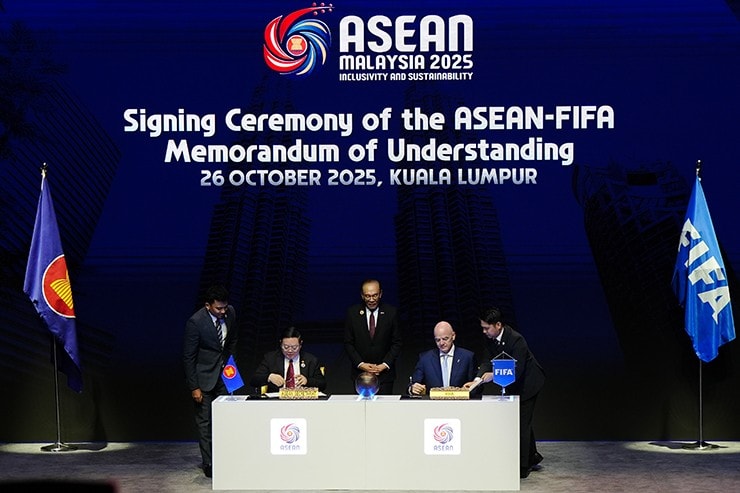
The creation of the FIFA ASEAN Cup and FIFA's commitment
Announced personally by President Gianni Infantino in October 2025 in Kuala Lumpur, the FIFA ASEAN Cup is not simply an additional tournament but a strategic boost aimed at elevating the "underdeveloped" region of world football. The core difference lies in the fact that the FIFA ASEAN Cup will always take place within the framework of FIFA Days.
Technically, being included in the FIFA Matchday calendar forces every club worldwide to release players for their national teams. This is key to ensuring that the region's brightest stars can gather, guaranteeing the highest level of professionalism for the tournament. This model is expected to achieve similar success to the FIFA Arab Cup, creating a more fiercely competitive and professional environment.
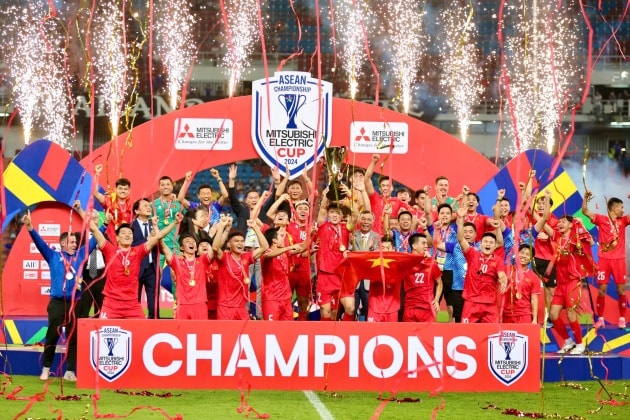
Impact on FIFA rankings and the future of the region.
Besides the personnel factor, the value of matches in the FIFA ASEAN Cup for the FIFA rankings is immense. As part of the official FIFA system, matches here have significantly higher ranking weighting compared to the AFF Cup. This directly gives Southeast Asian teams a chance to improve their world rankings more quickly, creating an advantage when drawing for Asian Cup or World Cup qualifiers.
Although the AFF Cup has attempted to revitalize itself by changing its name and rescheduling the tournament to mid-year from 2026 to minimize conflicts, the FIFA ASEAN Cup clearly holds an absolute advantage in terms of prestige and international standards. Overall, the emergence of the new tournament is a necessary transformation, lifting regional football out of its "local league" image and bringing it closer to modern global football standards.
Table of key features comparison
| Criteria | AFF Cup (ASEAN Championship) | FIFA ASEAN Cup |
|---|---|---|
| Legal status | Regional tournament, not part of FIFA Days. | An official tournament within the FIFA system. |
| Regulations for releasing people | It depends on negotiations with the club. | Mandatory according to FIFA regulations. |
| FIFA points weighting | Low (equivalent to international friendly matches) | Tall (according to official tournament standards) |
| Time of organization | Flexible, usually at the end of the year. | Fixed according to the FIFA Matchday schedule. |
For Vietnamese football, as the reigning AFF Cup champions, adapting to both competitions will be a crucial strategic challenge to maintain its position and take advantage of opportunities to compete against the strongest teams in the region.


