
FIFA announces the ASEAN Cup, a mini-World Cup of Southeast Asia.
FIFA has confirmed the FIFA ASEAN Cup, featuring 11 Southeast Asian teams, modeled after the 2021 Arab Cup format and included in the FIFA calendar; it is likely to take place every two or four years.
FIFA has officially announced the FIFA ASEAN Cup, a tournament bringing together 11 Southeast Asian national teams and described as a mini-World Cup for the region. The announcement came shortly after FIFA and ASEAN signed a five-year Memorandum of Understanding in Kuala Lumpur, Malaysia, in the presence of Malaysian Prime Minister Anwar Ibrahim. The tournament is expected to follow a group stage and knockout format similar to the FIFA Arab Cup 2021, taking place within the FIFA calendar to allow teams to field their strongest squads.
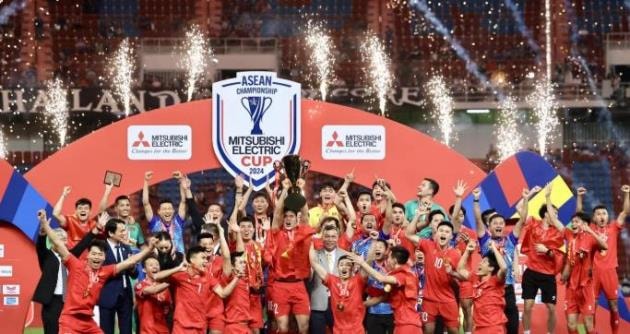
What's new about the FIFA ASEAN Cup for Southeast Asia?
According to the announcement, the tournament will bring together all 11 Southeast Asian national teams and will be held within the FIFA calendar, a feature that has hampered the AFF Cup for many years. Although no official schedule has been released, it is likely that the tournament will take place every two or four years.
Team composition
- Vietnam
- Thailand
- Indonesia
- Malaysia
- Singapore
- Philippines
- Laos
- Cambodia
- Myanmar
- Brunei
- East Timor
The tournament structure, similar to the 2021 Arab Cup, provides a familiar pace for fans: a group stage to determine the knockout stage, thus balancing opportunities for extensive experience with intense competition in the final stages.
A message from Kuala Lumpur and a 5-year vision.
The cooperation agreement was signed by FIFA President Gianni Infantino and ASEAN Secretary-General Kao Kim Hourn at the 47th ASEAN Summit. This is a follow-up to the first MoU from 2019, which opened up programs for school football development, public health, and coach training in the region.
Gianni Infantino emphasized: “Together we will bring football closer to millions of young people in Southeast Asia. The FIFA ASEAN Cup is not just a tournament, but also a symbol of solidarity and sustainable development.”
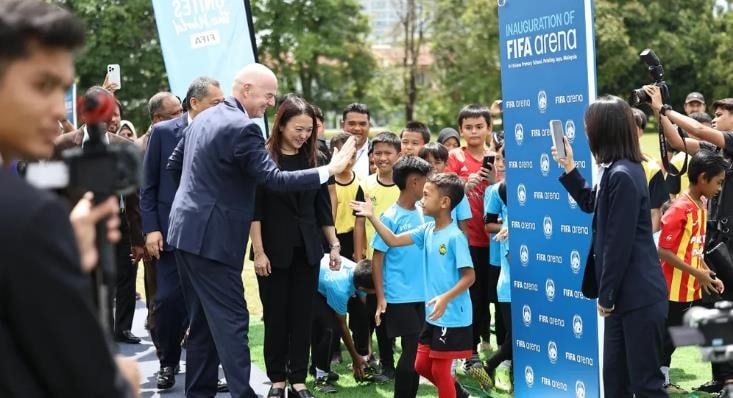
FIFA's strategy: from economics to sustainable development
Southeast Asia is a market of over 700 million people with a passionate love for football. FIFA's decision to organize a separate tournament for the region is not only significant in terms of sports, but also a strategic move in terms of commerce and governance. Standardizing operations, improving infrastructure, enhancing youth training, and creating a playing field with international standards are key objectives being pursued.
As the FIFA President said: "The number 11 is not just the number of players on the field – it represents 11 ASEAN nations sharing a common dream of developing football."
FIFA match schedules and their impact on the regional ecosystem.
Organizing the tournament during FIFA Days allows teams to field their strongest squads, improving the professional quality – something the AFF Cup often struggles to guarantee. If the plan is approved, the FIFA ASEAN Cup could become an upgraded version or replacement for the AFF Cup in the future. However, the risk of overlapping with the AFF Cup or SEA Games is a test of the ability to coordinate the schedule and will require a clear roadmap.
Opportunities for young players and top teams.
Teams like Vietnam, Thailand, Indonesia, and Malaysia have more space to experiment with tactics and build their squads in a top-level environment. For young players, regular international competition helps them accumulate experience and increase their competitiveness, thereby supporting their goal of improving their position in the FIFA rankings.
Unanswered questions
There is no official schedule yet, and the frequency of the tournament remains at "likely every 2 or 4 years." The disparity in skill levels between the top and bottom teams in the region poses a challenge to the tournament's appeal, requiring a well-designed format to maintain balance and competitiveness.
Conclusion: An ASEAN-style World Cup is taking shape.
If properly organized and adhering to the FIFA calendar, the FIFA ASEAN Cup could become a new symbol of regional cooperation and solidarity. Building on a five-year MoU and a vision for sustainable development, this tournament promises to revitalize Southeast Asian football, expand opportunities for young players, and elevate the level of national teams – fulfilling the goal of "nurturing the big dreams of 700 million football fans in Southeast Asia."


