
G20: The world continues to turn even without the US.
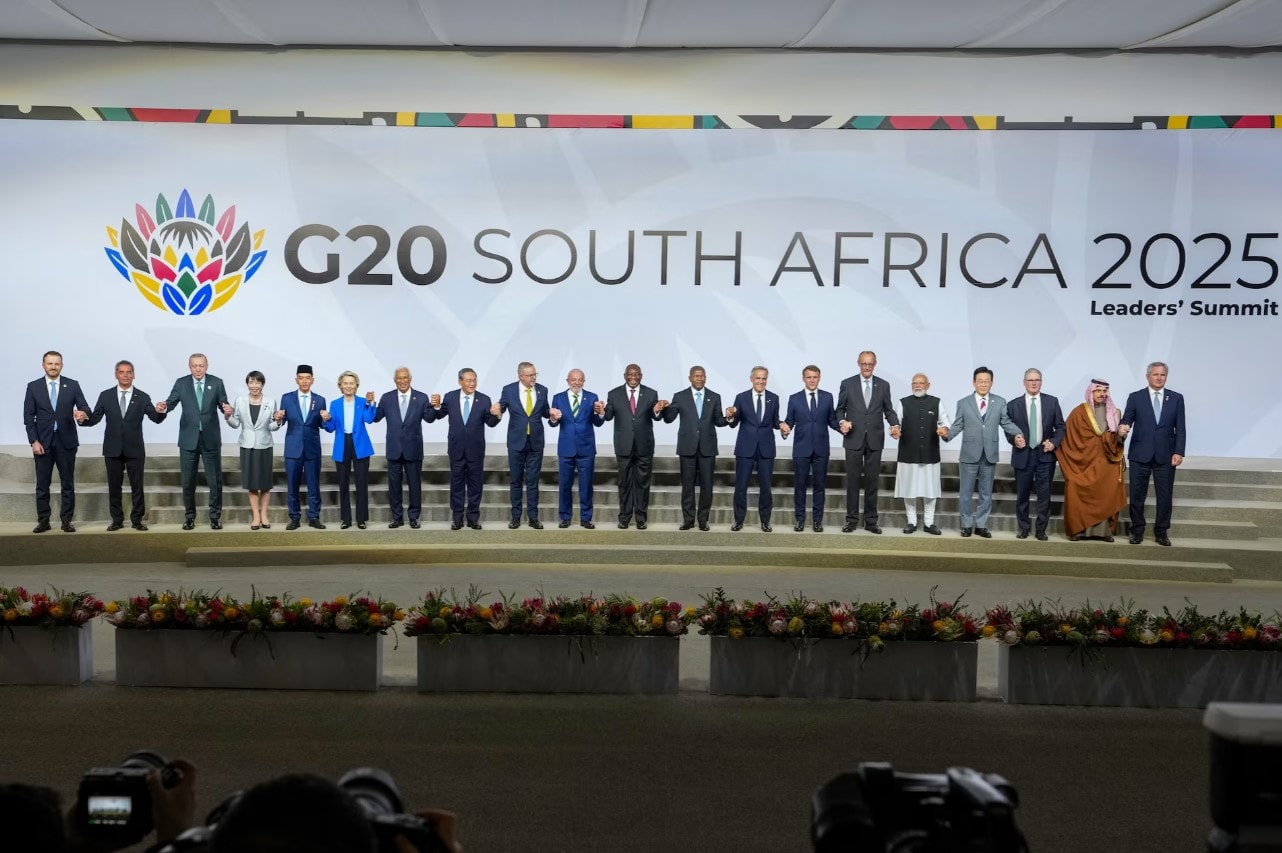
The absence of US President Donald Trump from the G20 Summit was expected to be a "fatal blow" to the prestige of the world's largest economic forum. However, the opposite happened in Johannesburg. A joint statement was issued, handshakes were still exchanged, and 19 economies (excluding Argentina) along with the African Union (AU) sent a strong message: the world continues to move forward, even when the world's leading superpower chooses to stand on the sidelines.
Pretoria's Steadfastness
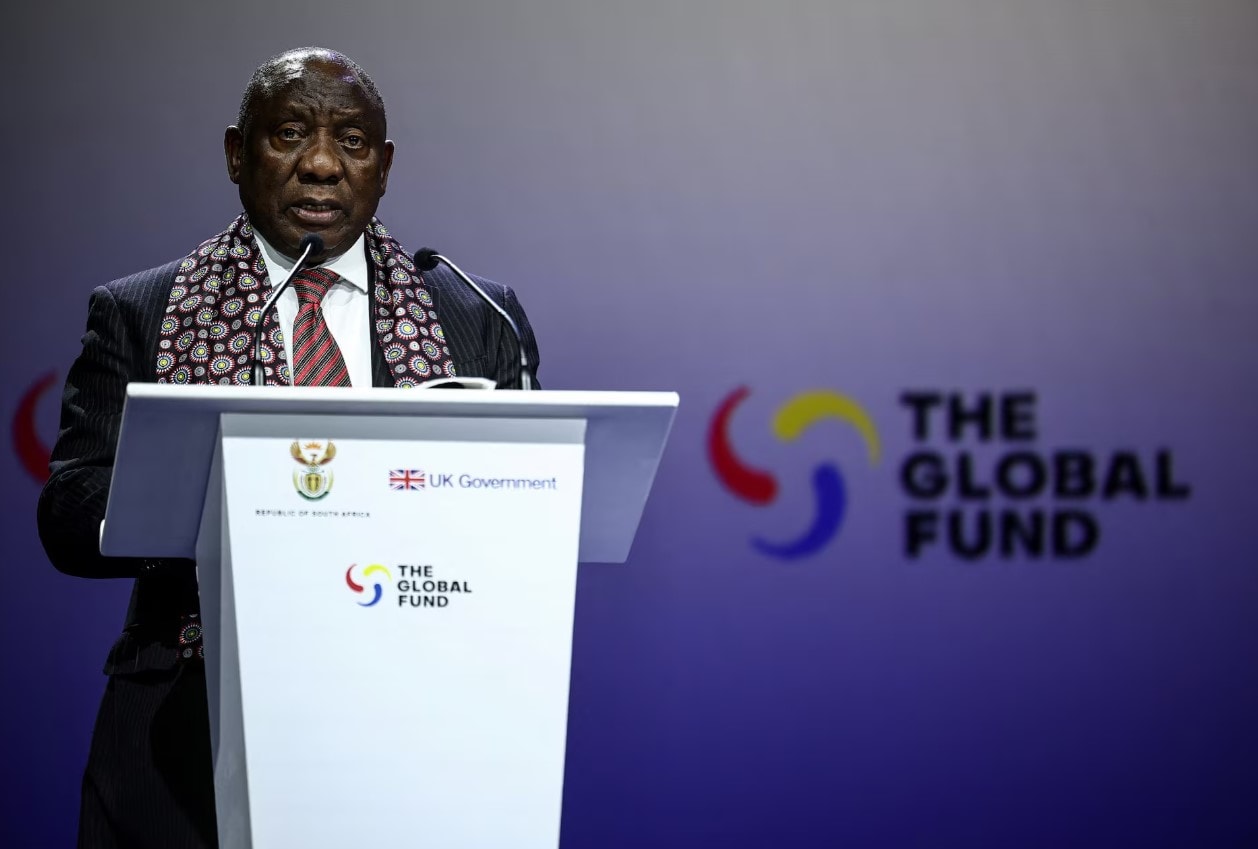
When South African President Cyril Ramaphosa struck the gavel to declare the G20 Summit closed on November 23, the sound echoed with relief and pride from the Southern nations. For the first time, the G20 was held on the African continent, and it was a rare occasion where a groundbreaking joint statement on inequality and climate change was adopted, despite public boycotts from Washington.
The 2025 G20 Summit in Johannesburg is taking place against a complex geopolitical backdrop. US President Donald Trump decided to boycott the event based on allegations of mistreatment of the white minority by the predominantly black government in South Africa, which South Africa denies. This decision, along with the absence of Argentinian President Javier Milei, a close ally of Trump, has put host nation South Africa in a precarious position.
Typically, at multilateral forums like the G20, the principle of consensus is paramount. Opposition from one member, especially a superpower like the United States, is often enough to cripple any agreement. The White House even accused South Africa of "weaponizing" its presidency to undermine the bloc's fundamental principles. However, President Ramaphosa and South African diplomats chose a different path: not making concessions to please Washington, but focusing on finding common ground with the rest of the world.
The result was a rare precedent: a 122-point joint declaration was issued on the very first day of the conference. This document not only addressed thorny issues such as climate change and renewable energy, but also, for the first time, proposed the establishment of a global commission to address inequality. This was a spectacular diplomatic leverage. Instead of letting the conference collapse due to the absence of the United States, the remaining member countries (including traditional US allies such as the UK, France, Germany, and Japan) chose to move forward.
Europe chooses the reality and voice of the South.
One of the most notable developments in Johannesburg was the attitude of the European powers. Faced with the choice between supporting their transatlantic allies or maintaining the effectiveness of the G20, Europe chose the latter. German Chancellor Friedrich Merz made a frank and realistic assessment, stating that the US played only a "minor role" at this conference and that the world was reorganizing itself. Merz emphasized: "The US government's absence is not a good decision. But it is something the US government must decide for itself." This statement reflects a subtle but powerful shift in soft power. Middle powers and Western countries are increasingly weary of the unpredictability of the "America First" policy. The fact that France, Germany, and the UK signed a joint declaration, which focused on the priorities of developing countries such as climate finance and poverty eradication, shows that they clearly understand that: To maintain global influence, they cannot ignore the voice of the South, even if it means temporarily "out of sync" with Washington.
The success of the G20 Johannesburg summit also lay in bringing the vital issues of developing countries to the forefront. As the first African representative to hold the presidency, South Africa took full advantage of this opportunity to advance the development agenda. The world is facing an unprecedented public debt crisis. Figures show that the debt of emerging economies has reached a record high of over $100 trillion. In Africa alone, the International Monetary Fund (IMF) warns that around 20 countries are facing financial distress or are at high risk of default, stifling budgets for health, education, and development. The G20 initiated a "Common Framework" in 2020 to address debt, but actual progress has been very slow. In Johannesburg, the joint statement emphasized the need to reform the international financial architecture, making it easier for poor countries to breathe with debt and access green capital. Although the G20 is not a financial institution capable of direct funding, its political weight is undeniable. Reaching a consensus on debt and climate finance in South Africa will lay the groundwork for further negotiations at the IMF and the World Bank.

Is multilateralism dying or evolving?
Despite achieving certain symbolic victories, the G20 summit ended on an awkward note, particularly during the handover of the presidency to the United States. The ceremony of handing over the gavel, a symbol of continuity and cooperation, became a clumsy diplomatic charade. President Ramaphosa refused to hand the gavel to a low-ranking official from the US Embassy, deeming it disrespectful. The US also failed to send any high-level delegation. The result was a void on the closing stage...
The events in Johannesburg raise a major question about the future of multilateralism. Can the G20 survive and function effectively when the world's largest economy chooses to go against the tide? The answer may be "Yes." This conference demonstrated that the G20 is not just a stage for the US and its G7 allies. The rise of emerging economies (BRICS), the participation of the African Union, and the pragmatic thinking of European countries are reshaping the organization's structure. The reality is that the world has changed. Nations are no longer passively waiting for leadership from a single superpower. As the US leaves a power vacuum, other poles are ready to step in to fill it. The Johannesburg Declaration, even without the US signature, still holds significant reference value for global policies in the coming year. However, the challenges in 2026 are considerable. The US holding the presidency could reverse or freeze many of the achievements made in South Africa. Experts predict a "wait-and-see" scenario, where nations will wait for the US presidency to end before restarting their agendas the following year. But there is also a glimmer of hope: the US agenda, despite ideological differences, still has points of intersection with common interests such as economic growth and financial stability.
The G20 summit in South Africa will go down in diplomatic history not only because it was the first time it was held in Africa, but because it marked a turning point in the mindset of the international community. The victory of multilateralism in Johannesburg was not a resounding triumph with fireworks and cheers, but rather a testament to the perseverance and steadfastness in overcoming divisions to keep the flame of cooperation alive. In a turbulent world, the fact that nations could still sit down and find common ground even without the "conductor" of the United States is a welcome sign. It affirms that the need for global cooperation is greater than the ego of any single nation. The G20 may be wounded by geopolitical rifts, but Johannesburg has proven that this "body" remains vibrant and adaptable enough to survive in the new era.


