
GAC thử nghiệm pin thể rắn hoàn toàn, gần gấp đôi mật độ
GAC is testing the production of fully solid-state batteries with currents exceeding 60 amperes and nearly double the energy density; trial installations are planned for next year, with production scheduled for 2027–2030.
GAC Group has become the first Chinese company to test mass production of a fully solid-state battery for automobiles with a current exceeding 60 amperes, according to Chairman Feng Xingya at the Guangzhou Auto Show. According to Qi Hongzhong, head of the new energy research and development department at GAC's Advanced Platform Technology Institute, the battery achieves nearly double the energy density of current batteries.
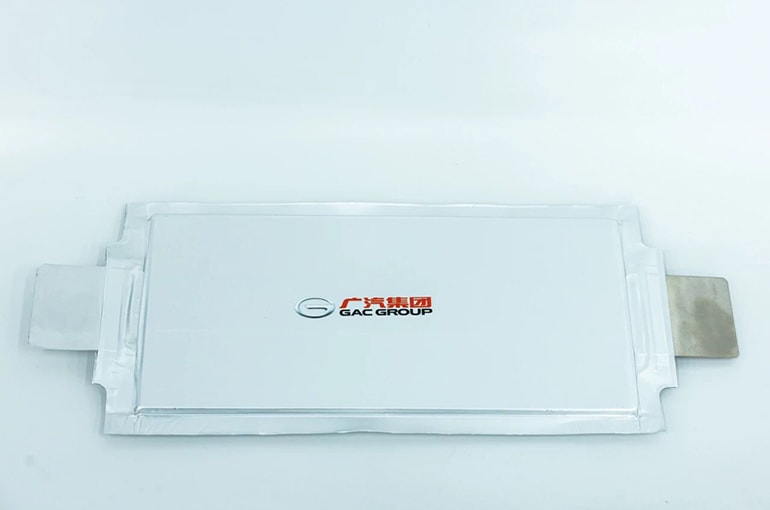
Technological breakthrough: completely solid-state batteries
Solid-state batteries, which utilize a solid electrolyte, are considered a breakthrough for electric vehicles due to their higher energy density, improved safety, and longer lifespan compared to conventional lithium-ion batteries that use liquid electrolytes. GAC reports that the battery prototype currently undergoing mass production testing has achieved current levels exceeding 60 amperes, while also boasting nearly double the energy density of existing solutions.
According to GAC, these parameters open up the possibility of significantly improving the packing efficiency and energy capacity per unit volume of battery packs, thereby supporting driving range and optimizing the design of storage systems in electric vehicles.
Planned implementation roadmap
GAC, based in Guangzhou, plans to begin small-scale trial installations next year, gradually moving to mass production between 2027 and 2030, according to Qi Hongzhong. This is a step-by-step roadmap to transform research results into commercial products.
Reorganizing to accelerate product development.
Feng Xingya said GAC has undergone a major transformation over the past year, largely learning from its partner Huawei Technologies. These changes include restructuring its internal structure, adopting an integrated product development approach, and improving its marketing system.
According to newly appointed General Manager Xia Xianqing, GAC is shifting from a "departmental division of labor" model to a "product-based team" model, focusing on removing barriers, increasing interdepartmental cooperation, and improving operational efficiency.
Qijing: A new brand co-developed with Huawei.
In September, GAC strengthened its cooperation with Huawei's Smart Car Solutions division and launched the Qijing car brand. Xia Xianqing said Qijing targets young, trendy consumers who demand top-tier vehicle performance. The brand's first electric vehicle model is expected to launch next year with a price tag of around 300,000 yuan (US$41,800).
GAC positions Qijing as a top strategic priority. Mr. Feng Xingya emphasized that the producer "puts Qijing first" and "is wholeheartedly committed to Qijing."
Expand your sales network and customer experience.
During the transition, GAC restructured its sales network, planning to add 600 new brand experience stores to cover more than 90% of district-level markets nationwide. To date, the company has begun planning and recruiting for the first phase in 100 cities.
Compared to other leading manufacturers, GAC's existing sales, spare parts, service, and store survey experience still have significant room for improvement, according to Deputy General Manager Huang Yongqiang. To support its new energy strategy, GAC plans to expand its network down to the county and town levels.
Aion UT and online channel strategy
GAC Aion, the company's new energy vehicle division, recently launched the Aion UT model in collaboration with JD.com, positioning it for the lower-end market with a starting price of 49,900 yuan (US$9,950). Huang Yongqiang stated that the new energy vehicle market in China is rapidly penetrating tier four and tier five cities. GAC aims to leverage JD.com's online channel to expand into the lower-end market, with the Aion UT as its flagship product.
Summary of key milestones and information
| Category | Information |
|---|---|
| Battery technology | Solid-state battery, solid electrolyte. |
| Test current | Exceeding 60 amperes |
| Energy density | Nearly double the capacity of current batteries. |
| Trial installation | Expected to start next year (small quantity) |
| Mass production | Roadmap 2027–2030 |
| Organizational orientation | Shift to product-based teams, integrating across departments. |
| New brand | Qinghai (in cooperation with Huawei) is a top strategic priority. |
| The first Qijing model | Launching next year, priced at around 300,000 yuan (US$41,800). |
| Store network | An additional 600 experiential stores will cover over 90% of the district-level market; the first phase will include 100 cities. |
| Affordable car model | Aion UT (với JD.com), giá từ 49.900 Nhân dân tệ (9.950 USD) |
Kết luận
Cột mốc thử nghiệm sản xuất pin thể rắn hoàn toàn với dòng điện vượt 60 ampe và mật độ năng lượng gần gấp đôi cho thấy định hướng công nghệ rõ ràng của GAC. Song song, chiến lược tổ chức, hợp tác cùng Huawei để phát triển Qijing, mở rộng mạng lưới bán hàng và thử nghiệm mô hình kênh trực tuyến với Aion UT cho thấy GAC đang chuẩn bị hạ tầng cần thiết để thương mại hóa các sản phẩm năng lượng mới trong giai đoạn 2027–2030 theo kế hoạch.


