
Galaxy S26 Ultra vs. iPhone 17 Pro Max: Samsung achieves breakthrough multi-core performance thanks to overclocked chip.
Geekbench 6 data shows that the Galaxy S26 Ultra surpasses the iPhone 17 Pro Max by 17% in multi-core performance thanks to its overclocked 4.74GHz Snapdragon 8 Elite Gen 5 chip, while closely trailing in single-core performance.
The latest Geekbench 6 benchmark results have revealed a surprising shift in the high-end smartphone segment. The Samsung Galaxy S26 Ultra, powered by a special edition Snapdragon 8 Elite Gen 5 processor, has officially surpassed the iPhone 17 Pro Max in multi-core performance tests, while narrowing the gap in single-core performance to a record low.
Powered by a 4.74 GHz clock speed on the Snapdragon 8 Elite Gen 5.
At the heart of the Galaxy S26 Ultra is the Snapdragon 8 Elite Gen 5 "for Galaxy" processor. The most notable feature is that Samsung has pushed the clock speed up to 4.74 GHz, significantly higher than the standard 4.61 GHz of the regular version. This overclocking isn't just a theoretical figure; it directly translates into an advantage in complex processing tasks.
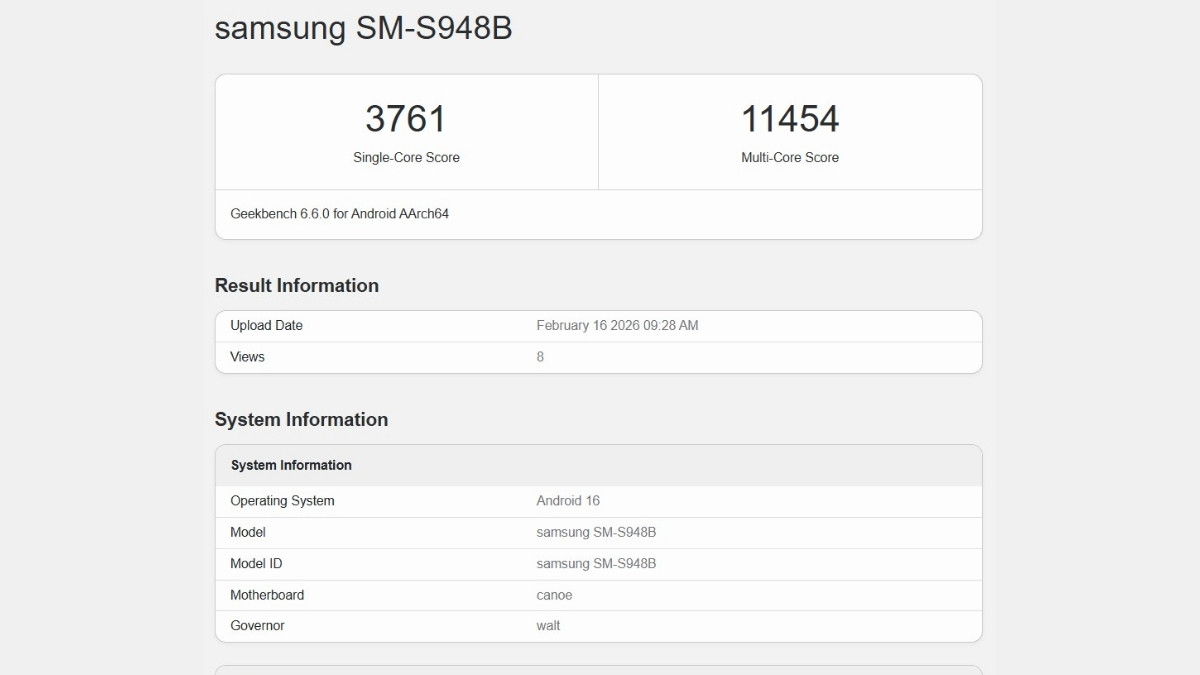
Single-core and multi-core performance analysis
For many years, Apple has held a dominant position in single-core performance. However, the A19 Pro chip in the iPhone 17 Pro Max now scores 3,894 points, only about 3.5% ahead of the Galaxy S26 Ultra (3,761 points). This is the smallest gap ever between two top-tier flagships, making the difference in real-world experience almost imperceptible.
Conversely, in the multi-core test, the advantage in the number of cores and higher clock speed gave the Samsung representative an absolute advantage. With 11,454 points, the Galaxy S26 Ultra far surpassed the iPhone 17 Pro Max (9,741 points) by 17.6%.
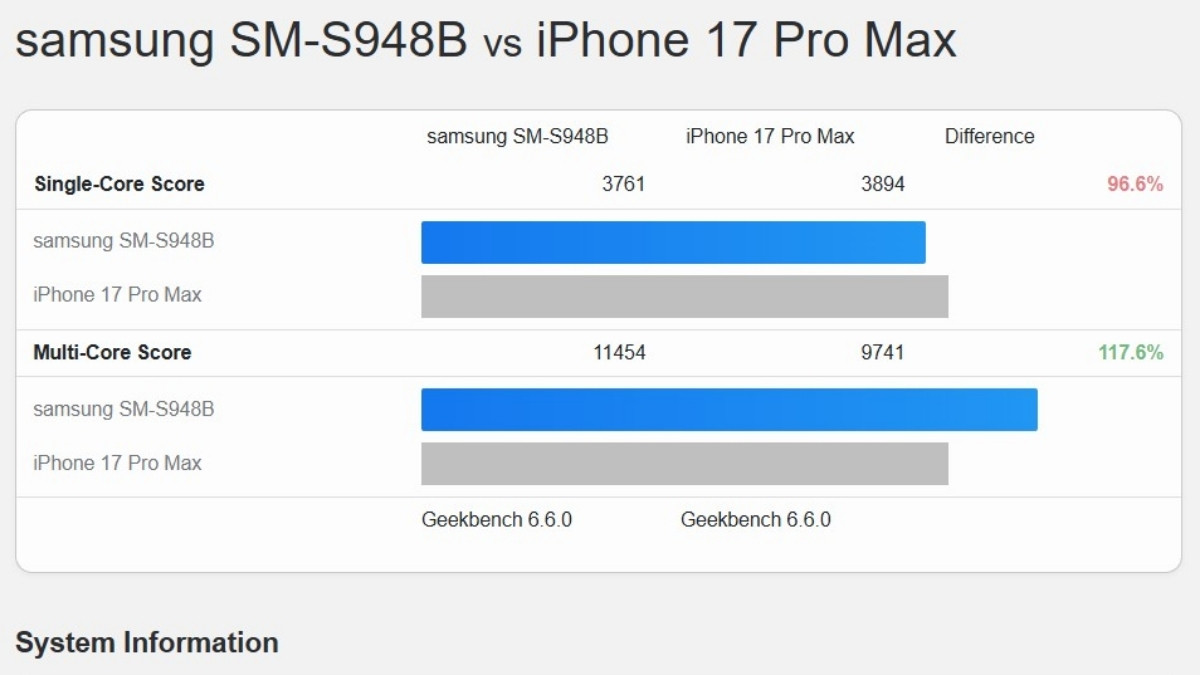
Geekbench 6 benchmark comparison table
| Comparison criteria | Samsung Galaxy S26 Ultra | iPhone 17 Pro Max |
|---|---|---|
| Microprocessors | Snapdragon 8 Elite Gen 5 (for Galaxy) | Apple A19 Pro |
| Maximum clock speed | 4.74 GHz | Undetermined |
| Individual points | 3,761 | 3,894 |
| Multi-core score | 11,454 | 9,741 |
Software optimization and practical prospects
This new data shows a significant improvement over previous leaked results. This demonstrates that Samsung has made major strides in optimizing software for its upcoming commercial devices. Closely matching Apple in single-core performance and significantly surpassing them in multi-core performance promises smooth processing capabilities for everything from everyday tasks to demanding graphics applications and AI-intensive applications.

While benchmark scores are an important metric, experts are still waiting for real-world tests on temperature stability when maintaining a clock speed of 4.74 GHz for extended periods. If Samsung successfully solves the heat dissipation problem, the Galaxy S26 Ultra will undoubtedly be a formidable competitor, redefining performance rankings in the smartphone world.


