
Silver prices hit a record high, rising 97% since the beginning of the year.
The surge in silver prices is reshaping the precious metals market. Silver just set a new record with a 97% increase year-to-date, driven by industrial demand and scarce supply. The phenomenon of gold leading the way has now been broken.
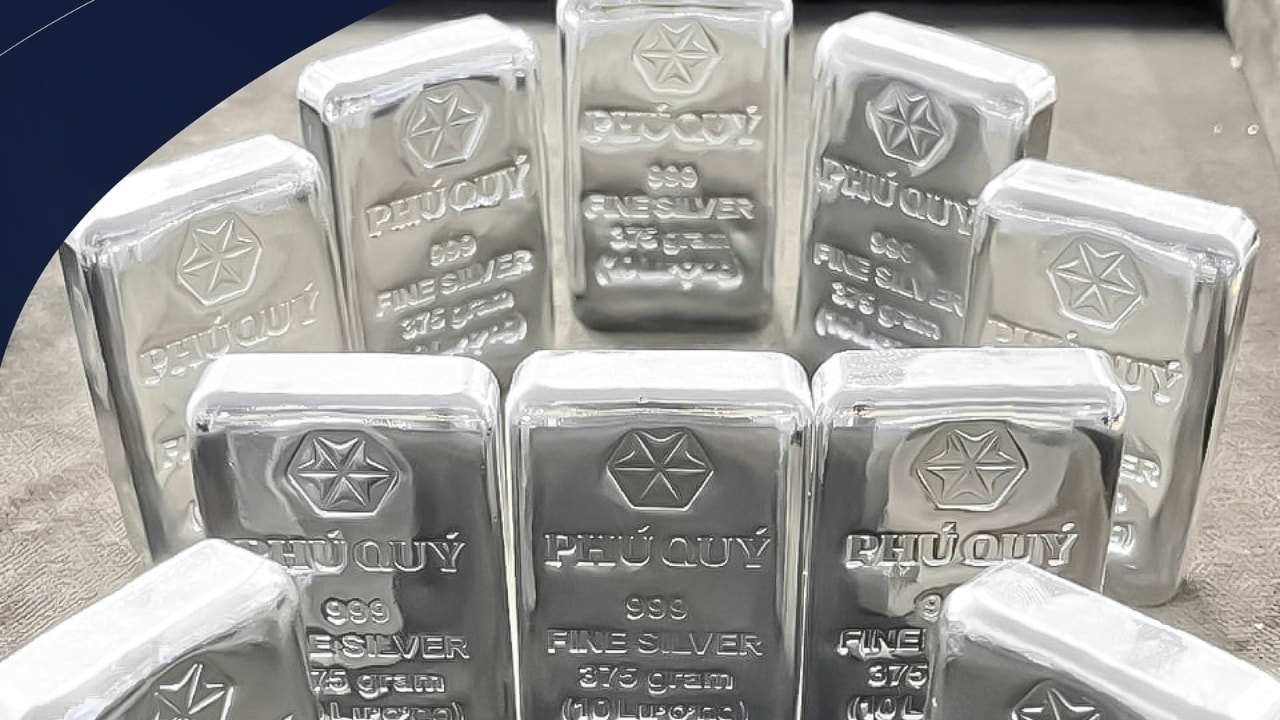
On November 29th, the price of silver bars in the Vietnamese market recorded a very sharp increase. Phu Quy Group listed the buying price at 2.132 million VND/ounce and the selling price at 2.198 million VND/ounce, an increase of over 100,000 VND in just one day, equivalent to a 5.8% increase.
Not only Phu Quy, but many other brands have also pushed silver prices to new highs, fluctuating around 2.2 million VND per tael.
At current prices, the silver market has surpassed its all-time high of 2.14 million VND set in October. Those who bought about a week ago are now making profits of over 11%, demonstrating the booming market for this precious metal.
The rise in domestic silver prices coincided with a strong surge in the international market. World silver prices surpassed $56 per ounce and ended the week at $56.33 per ounce, up 5.8% from the previous session.
Not only did silver surge, it also surpassed its all-time high of $54.5 per ounce recorded in October, reinforcing the clear upward trend of this precious metal.
With its rapid and significant increase, the price of silver is attracting considerable attention from both domestic and international investors. These sharp fluctuations in a short period of time indicate that silver is becoming one of the most prominent assets in the precious commodities market.
Over the past three years, the market has focused heavily on the upward trend in gold prices. However, one key factor has been largely absent during that time: silver.
Gold has broken away from other precious metals thanks to its role as a true monetary metal. Central banks are the main driver of this unprecedented demand, as they seek to diversify away from paper money and into more stable, tangible assets. Silver, with its high volatility, is not suitable for holding purposes in the official sector.
The demand focused on gold has pushed the gold/silver ratio to record highs. In April, the ratio surged above 100, its highest level in five years and well above the long-term average of 50 to 60.
Some analysts argue that silver's failure to appreciate during the previous bull run has dampened overall investor interest in gold. Typically, in a traditional bull market, silver tends to outperform due to its volatility. Silver's lagging performance over several years has cast doubt on the entire precious metals market.
However, doubts are quickly fading. Silver is ending the week at a new record high, above $56 per ounce, registering an incredible 97% increase since January. Gold, meanwhile, is challenging major resistance at $4,200 per ounce, achieving nearly a 61% increase year-to-date.
The gold/silver ratio, after reaching 100 in April, has fallen sharply to 74, breaking a long-term support line. Some experts believe this momentum could pull the ratio back to 50. If the prediction that gold will reach $5,000 per ounce by 2026 is accurate, it would imply that the price of silver could reach around $100 per ounce.
What was the turning point? Investors finally realized the scarcity of silver.
Industrial demand, coupled with accelerating global electrification, has created significant supply deficits for five consecutive years. Available metal reserves have been depleted. The metals that are available are often not in the right form or location. This imbalance has triggered a series of supply shocks in 2025.
A major surge occurred at the beginning of the year when a large amount of silver poured into the US, as traders prepared for the possibility of tariffs under President Donald Trump's global trade policies. Silver was ultimately not subject to tariffs, but fears did not completely disappear, especially after Washington officially declared silver an essential metal.
Increased metal inventories in the US have tightened physical stockpiles in other markets, particularly the decentralized London market. Strong buying from India has added further strain, pushing global rental rates and insurance premiums to record highs.
Although some silver has left the US and China as traders seek higher premiums, increased demand in Asia has only deepened the supply crisis. Reports indicate that inventories at the Shanghai Gold Exchange have now fallen to their lowest level in a decade.
Silver may be being drawn from US storage, but that would simply shift the next supply crisis point westward. With demand surging and no easy supply solutions in sight, analysts suggest that silver's newfound strength may be more than just a short-term rally. The metal appears to finally be taking the central position it has long desired.


