
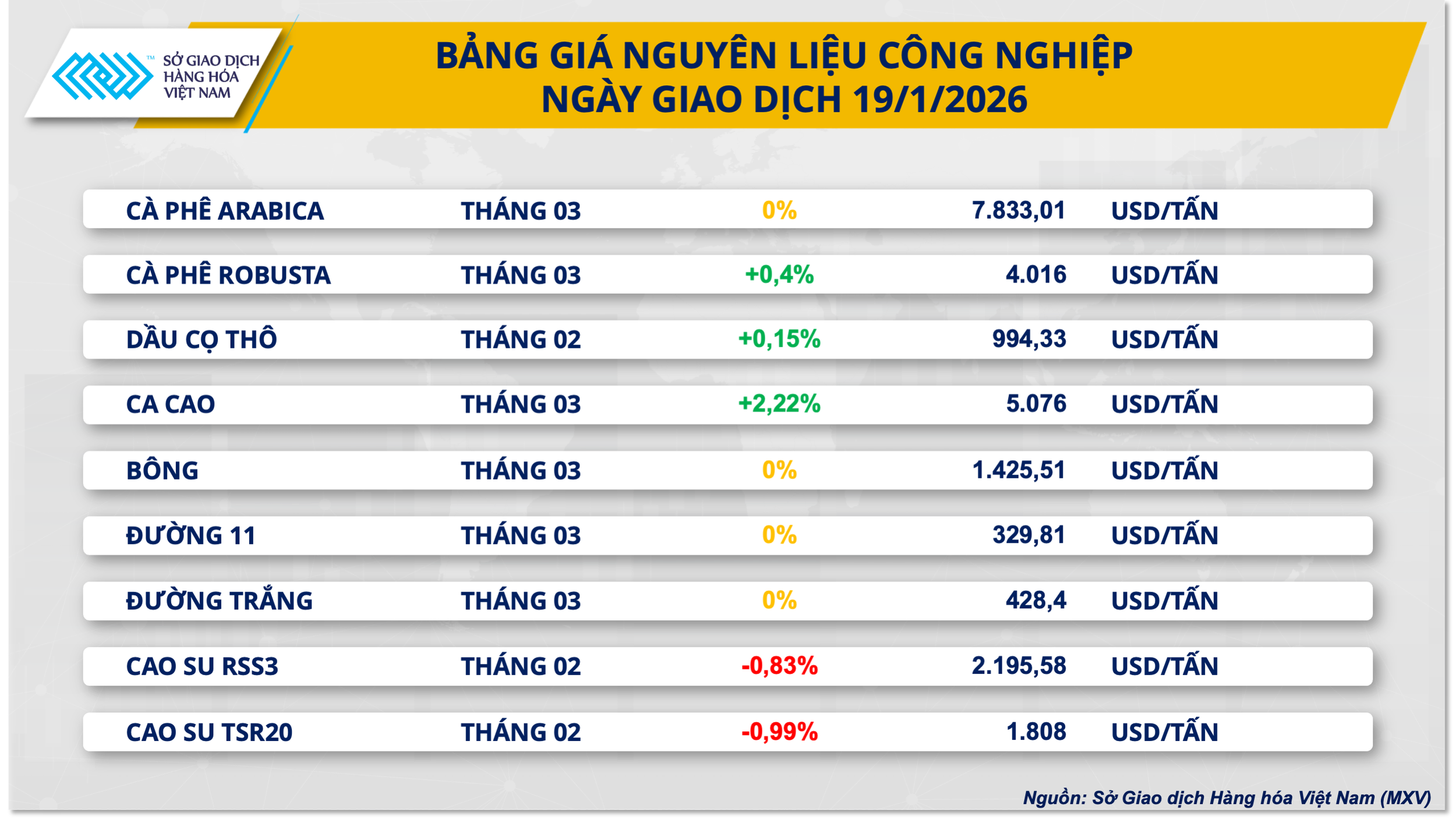
Cocoa prices recovered by more than 2.2%, while iron ore prices fell sharply due to pressure from China.
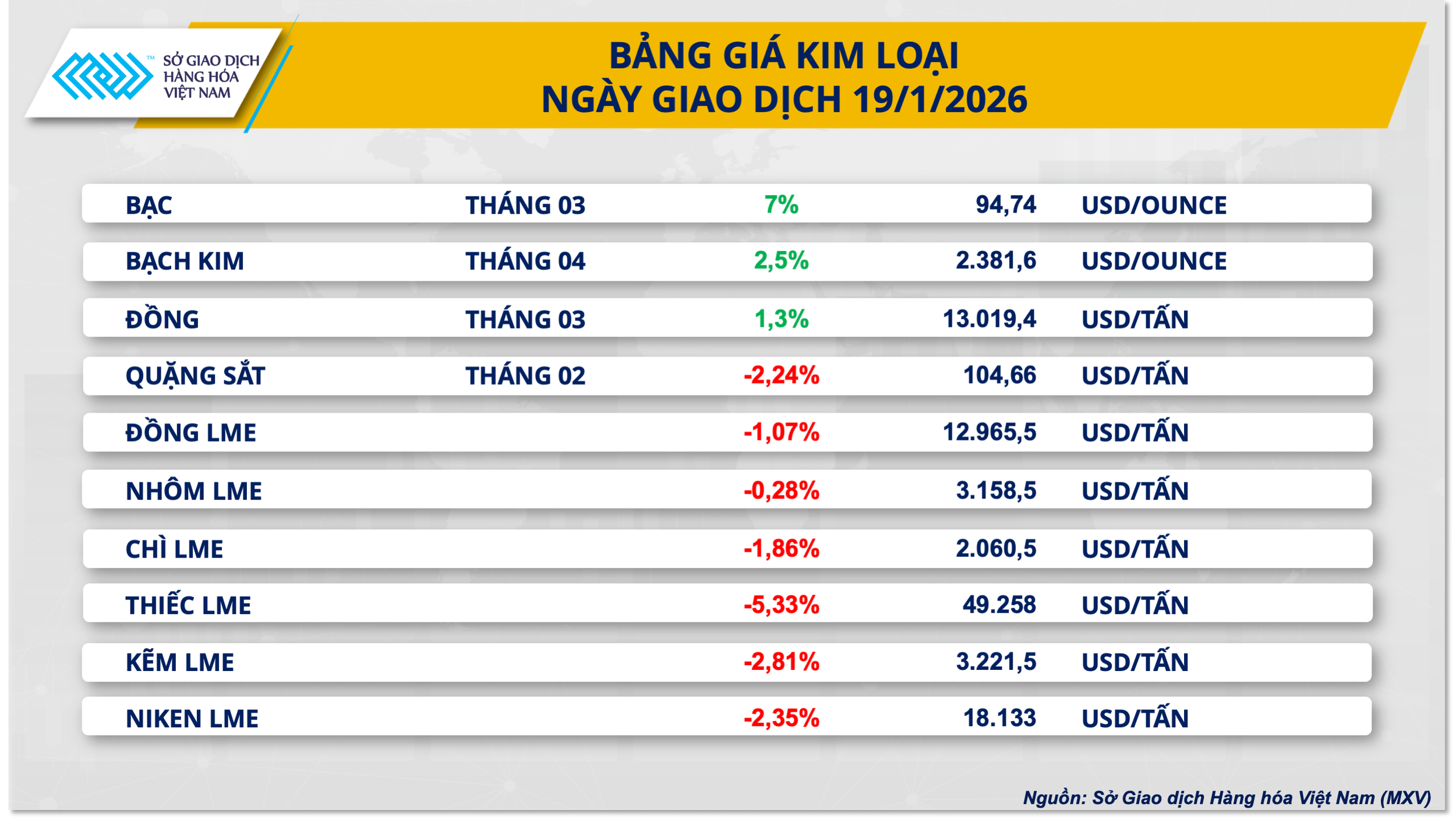
On January 20th, cocoa prices rose to $5,076 per ton due to supply concerns, while iron ore prices fell to $104.7 per ton due to weak steel demand.
According to the Vietnam Commodity Exchange (MXV), the global commodity market on January 20th recorded relatively quiet trading activity. The main reason was the Martin Luther King Day holiday in the US, which significantly reduced liquidity across the board.
Cocoa prices recover thanks to support from supply.
Among industrial raw materials, cocoa prices recorded a strong recovery after hitting their lowest level since October 2024. Specifically, the price of this commodity increased by more than 2.2%, reaching $5,076 per ton. The main driving force behind this growth was concerns about supply shortages in Nigeria, the world's fifth-largest cocoa producer.
Statistics show that Nigeria's cocoa exports in November fell 7% year-on-year to 35,200 tonnes. The Nigerian Cocoa Association also forecasts a 11% drop in production for the 2025-2026 crop year, reaching only about 305,000 tonnes, significantly lower than the 344,000 tonnes of the previous year.
Besides supply factors, demand in Asia and North America is also more favorable than expected. Cocoa grinding volume in Asia in the fourth quarter decreased by only 4.8%, lower than the expected 12% decline. In North America, this figure increased slightly by 0.3%, completely contrary to market forecasts of a flat trend. However, the medium-term outlook remains under pressure as grinding volume in Europe decreased by as much as 8.3% in the fourth quarter of 2025, reflecting a trend of tightening consumer spending.
Iron ore is under pressure from oversupply and the Chinese economy is slowing down.
In contrast to the upward trend in cocoa, the base metals group was in the red. Notably, iron ore prices recorded their fifth consecutive day of decline, losing another 2.24% to $104.7 per ton. This pressure stemmed from record oversupply at Chinese ports and weakening steel demand from the real estate sector.
Data from China's National Bureau of Statistics (NBS) shows that the new home price index in December 2025 fell by 2.7% year-on-year, the fastest decline in five months. At the same time, the country's GDP growth in the fourth quarter of 2025 is projected to reach only 4.5% – the lowest in three years – due to slowing domestic consumption and investment.
Prospects for China's steel industry in 2026
The weakening macroeconomic environment has directly impacted industrial production. In 2025, China's crude steel output fell to its lowest level in seven years, reaching only 960.8 million tons (a 4.4% decrease). Pig iron production also decreased by 3%, to 836 million tons. Experts predict this downward trend will continue in 2026 with a decrease of approximately 3%.
On the supply side, iron ore inventories at major Chinese ports surged to 153.9 million tons as of January 9th, the highest level since April 2022. Pressure from oversupply is further intensified as China begins receiving the first shipments of ore from the Simandou mega-project (Guinea) this January, posing a significant challenge to the short-term recovery in iron ore prices.


