
Coffee prices today, April 1, 2026: Strong increase in the Central Highlands.
Coffee prices today, April 1st, 2026: Central Highlands prices increased by 1,700–1,800 VND/kg, ranging from 88,700–89,500 VND/kg. Robusta in London increased by 2.16%, Arabica in New York increased by nearly 2%.
Domestic coffee prices today, April 1, 2026: Increased across the board by 1,700–1,800 VND/kg
Coffee prices in Dak Nong recorded the sharpest increase of 1,800 VND/kg, reaching 89,500 VND/kg — the highest in the Central Highlands region.
In Dak Lak and Gia Lai, coffee prices simultaneously increased by 1,700 VND/kg, trading at 89,200 VND/kg. Coffee purchase prices in Lam Dong also increased by 1,700 VND/kg, reaching 88,700 VND/kg.
Domestic coffee price list as of April 1, 2026
| Market | Average price (VND/kg) | Changes compared to yesterday |
|---|---|---|
| Dak Lak | 89,200 | +1,700 |
| Lam Dong | 88,700 | +1,700 |
| Gia Lai | 89,200 | +1,700 |
| Boeing Nong | 89,500 | +1,800 |
Unit: VND/kg. USD/VND exchange rate: 26,110 (according to Vietcombank).
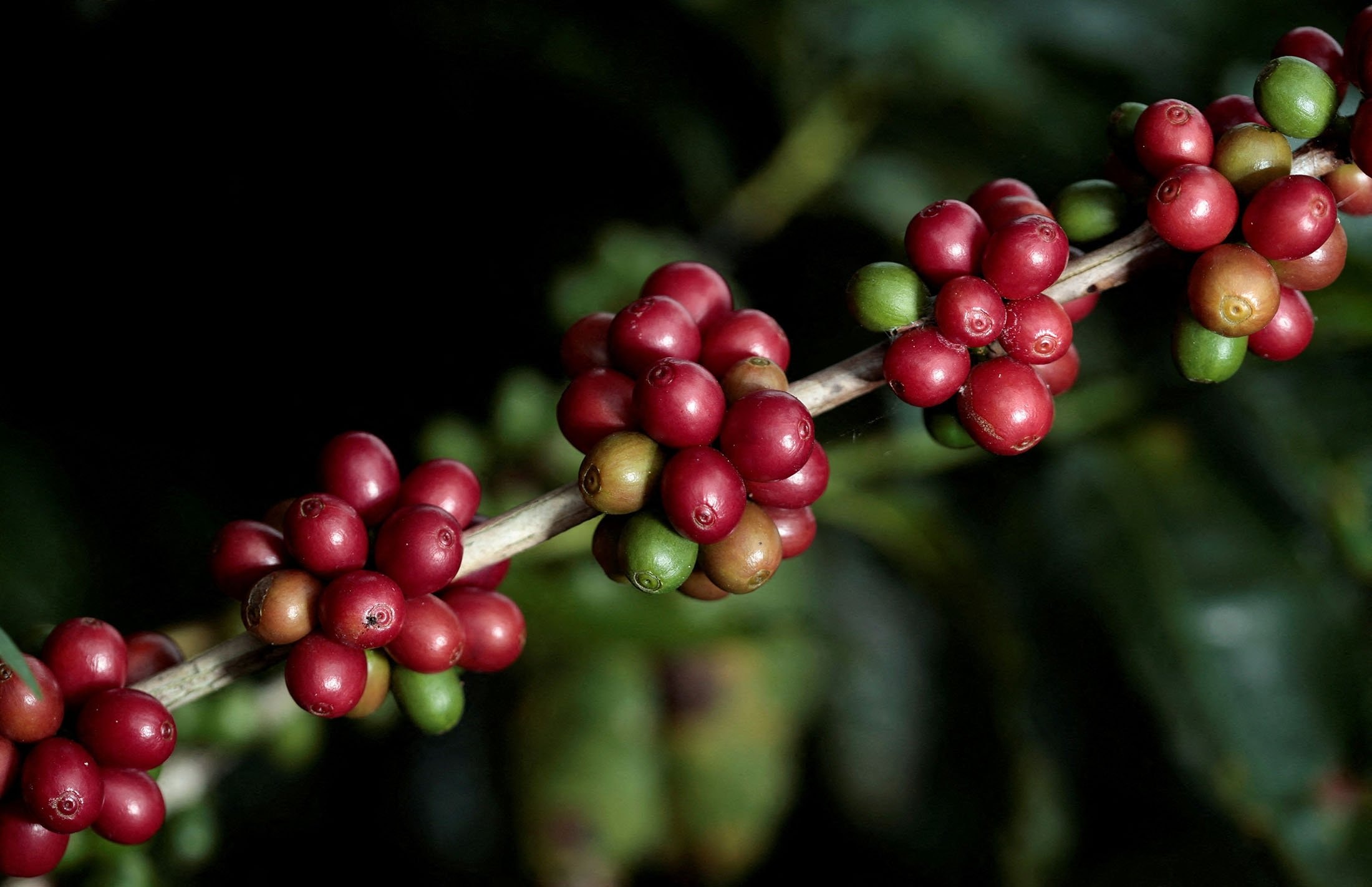
World coffee prices on April 1, 2026: Robusta increased by 2.16%, Arabica increased by nearly 2%.
In trading on April 1st, robusta coffee futures for May 2026 delivery on the London exchange rose sharply by 2.16% (equivalent to $74/ton), reaching $3,493/ton. The July 2026 contract increased by 1.7% ($57/ton), reaching $3,405/ton.
On the New York exchange, the price of Arabica coffee for May 2026 delivery rose 1.98% (5.8 US cents/pound), reaching 298.35 US cents/pound. The July 2026 contract increased 1.47% (4.2 US cents/pound), reaching 290.8 US cents/pound.
World coffee price chart as of April 1, 2026
| Exchange | Contract | Price | Change |
|---|---|---|---|
| London (Robusta) | May 2026 | 3,493 USD/ton | +74 USD (+2.16%) |
| London (Robusta) | July 2026 | 3,405 USD/ton | +57 USD (+1.7%) |
| New York (Arabica) | May 2026 | 298.35 cents/pound | +5.8 cents (+1.98%) |
| New York (Arabica) | July 2026 | 290.8 cents/pound | +4.2 cents (+1.47%) |
Reasons for the increase in coffee prices: The strengthening Brazilian Real and increased short-covering activity.
Coffee prices surged primarily due to the Brazilian Real (USDBRL) reaching a two-week high, fueling short-covering activity in the futures market. A stronger Real has reduced export sales from Brazilian coffee producers.
However, according to Reuters, despite recovering in the last trading session, robusta prices still fell 6% and arabica prices lost 4.8% in March as a whole. Traders believe that the fundamental factors remain negative, limiting the possibility of a sustainable price recovery. Brazil is expecting a bumper crop this year, while the conflict in Iran has dampened demand in the Middle East.
Global coffee inventories remain at historically low levels.
According to data from the Coffee Trading Academy (CTA), green coffee bean inventories in Japan and Europe — the world's two largest consuming regions — remained near historical lows in February, despite recent weakening coffee prices.
Inventories in Japan stood at 2.21 million bags (60 kg/bag), virtually unchanged from January and the same period last year, but still significantly lower than the five-year average of 2.75 million bags.
According to the European Coffee Federation, green coffee inventories in Europe in February reached 6.8 million bags, down 7.5% from January and down 8% from the same period last year. This inventory level is a far cry from the peak of 14 million bags recorded in mid-2022.
Ryan Delany, founder and head of analysis at CTA, said high storage costs amid an inverted market (spot prices higher than forward prices) are hindering stockpiling. European inventories are currently about 4.5 million bags lower than the 10-year average and 3.5 million bags lower than the 5-year average.
Coffee price outlook: Market divided between large harvest and tight supply.
Analysts believe that low inventory levels in key consumption areas make the coffee market vulnerable to price fluctuations if there are logistical disruptions or adverse weather conditions in Brazil or Vietnam — two of the world's leading coffee-producing countries.
Gustavo Matias of Matias Coffee Trading, a brokerage and export company, said the market is closely watching the situation in the Middle East, particularly the Strait of Hormuz and the Suez Canal, as coffee flows rely heavily on sea transport. Shipping costs have increased significantly recently.
According to Matias, the market is currently divided on price trends: one side expects Brazil's upcoming bumper crop to bring prices down, while the other fears that tight short-term supply could push prices further up.


