
Coffee prices today, December 21, 2025: Slight increase at the end of the week.
Domestic coffee prices today, December 21, 2025, saw a slight increase of 1000 VND/kg compared to yesterday, marking the end of the week. Coffee farmers remain optimistic despite six consecutive days of price declines.
Domestic coffee prices today
Domestic coffee prices in the Central Highlands region today, December 21, 2025, saw a slight increase of 1000 VND/kg at the end of the week.
Specifically, in Lam Dong province, the prices in Di Linh, Bao Loc, and Lam Ha increased slightly by 1000 VND/kg compared to yesterday, trading at the same level of 89,500 VND/kg.
In Dak Lak province, the Cu M'gar area is currently buying coffee at 90,300 VND/kg, an increase of 1,000 VND/kg compared to yesterday. Meanwhile, the Ea H'leo and Buon Ho areas are trading at 90,200 VND/kg.
In Dak Nong (Lam Dong province), traders in Gia Nghia and Dak R'lap increased prices by 1000 VND/kg compared to yesterday, trading at 90,500 and 90,400 VND/kg respectively.
In Gia Lai province, the Chu Prong area is trading at 90,000 VND/kg, while Pleiku and La Grai are at 89,900 VND/kg, an increase of 1,000 VND/kg compared to yesterday.
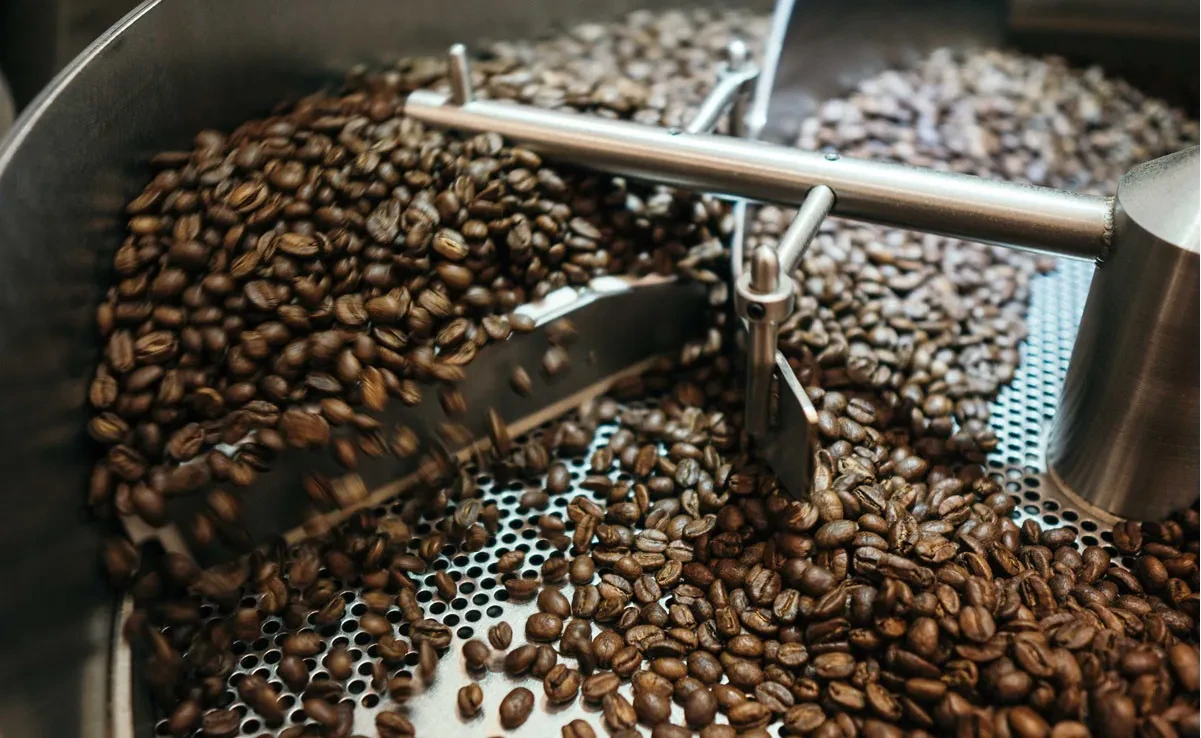
During the peak harvest season, coffee-growing regions in the Central Highlands become bustling as farmers concentrate on harvesting to ensure bean quality. Although domestic coffee prices continue to fall in line with global market trends, the rate of decline has slowed, helping coffee growers maintain a stable outlook for this year's harvest.
In the communes of Ia Grai and Ia Hrung in Gia Lai province, which have large coffee growing areas, many plantations are entering their peak ripening stage. Farmers are taking advantage of the right time to harvest to ensure the best quality. The price of fresh coffee currently fluctuates around 23,500–26,000 VND/kg, lower than the same period last year but still enough to help farmers maintain their income and prepare for the next production season.
On the international market, coffee prices continue to trend downward, but the correction range has narrowed. The current price level is acceptable to growers, creating favorable conditions for stable production and reducing anxiety during the harvest season.
Many long-time coffee farmers believe that the important thing is not short-term price increases, but a stable and sustainable price level. Compared to previous periods of significant volatility, the current price level still offers positive prospects, helping farmers feel secure in their long-term commitment to coffee cultivation.
World coffee prices today
Coffee prices in the most recent trading session showed mixed movements:
Robusta coffee (London):
January 2026 delivery: Increased by $4/ton to $3,778/ton
March 2026 delivery: Down $8/ton to $3,669/ton
Arabica coffee (New York):
December 2025 delivery: Down 4.45 cents/lb to 340.65 cents/lb
March 2026 delivery: Down 3 cents/lb to 325.9 cents/lb
A newly released report from the U.S. Department of Agriculture (USDA) indicates that global coffee consumption continues to rise and is projected to reach a record 173.9 million bags, each weighing 60 kg, an increase of approximately 1.3%. Against this backdrop, ending stocks are forecast to decrease for the fifth consecutive year, to around 20.1 million bags.
The increase in consumption is mainly driven by Europe, where demand for coffee in major markets such as Germany, France, and Italy has recovered after a period of high prices. In the US and Canada, the trend of drinking coffee at home and using ready-to-drink coffee products has returned. The Asian region also saw increased consumption thanks to the growing popularity of roasted and ground coffee and instant coffee.
Among major coffee-consuming countries, Vietnam currently ranks 8th in the world, close to Canada and Indonesia. This ranking demonstrates the increasingly prominent role of the domestic market in the global coffee consumption landscape.
Although global coffee production is projected to increase to around 178.7–178.8 million bags, consumption demand remains high. This supply-demand balance creates a favorable environment for coffee prices in the near future.


