
Coffee prices today, March 7th: Robusta and Arabica both increased, reaching 96,000 VND/kg domestically.
World coffee prices rose on both the London and New York exchanges due to concerns about shipping risks in the Middle East and a sharp drop in supply from Brazil and Colombia in February.
Coffee prices on March 7th recorded gains on both international exchanges amid geopolitical risks in the Middle East putting pressure on global supply chains, combined with a decline in export production in South American countries.
Global markets remain in positive territory.
On the London exchange, robusta coffee prices recorded their second consecutive day of gains. Specifically, the May 2026 futures contract rose 0.46% (equivalent to $17/ton), to $3,751/ton. The July 2026 contract also increased 0.3% (equivalent to $11/ton), reaching $3,663/ton.
Meanwhile, the New York market saw stronger gains for arabica coffee. The May 2026 contract rose 0.89% (equivalent to 2.55 US cents/pound) to 288.8 US cents/pound. The July 2026 contract increased 0.98% (equivalent to 2.75 US cents/pound) to 283.95 US cents/pound. Data from Reuters showed that arabica futures on the ICE exchange reached their highest level in about two weeks.
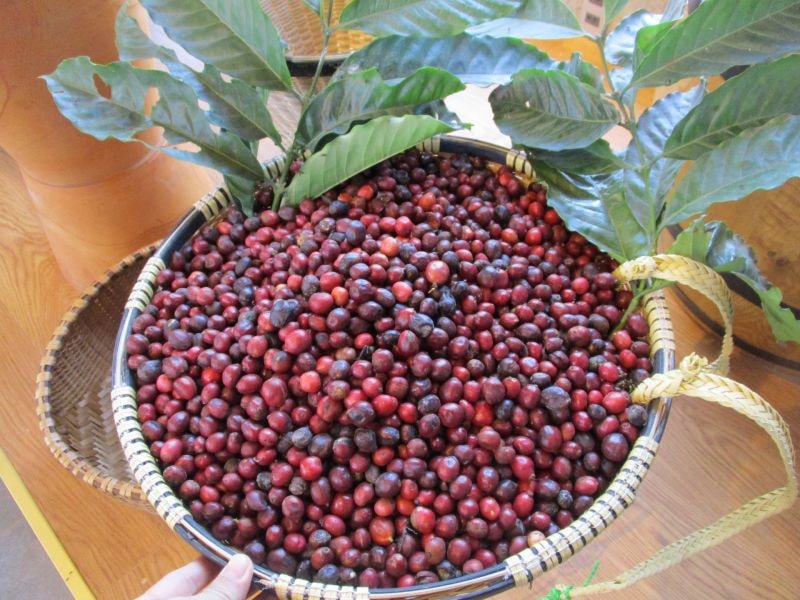
Domestic coffee prices are approaching 96,000 VND/kg.
In the domestic market, coffee prices today recorded a sharp increase of 1,200 - 1,300 VND/kg in key growing areas of the Central Highlands. Currently, the common trading price is in the range of 95,500 – 96,000 VND/kg.
| Local | Current price (VND/kg) | Price fluctuation (VND/kg) |
|---|---|---|
| Dak Lak | 96,000 | +1,200 |
| Gia Lai | 96,000 | +1,200 |
| Lam Dong | 95,500 | +1,300 |
Pressure from transportation costs and South American supply sources.
The main factor supporting coffee prices stems from concerns about logistics disruptions in the Middle East. Geopolitical tensions are increasing transportation costs from Asia to Europe and the Gulf region. In Vietnam – the world's largest robusta coffee producer – although transportation routes have not been completely disrupted, freight costs have at least doubled, putting significant pressure on importers.
Besides transportation issues, supplies from Brazil and Colombia are also declining significantly:
- In Brazil:Exports in February reached 2.36 million bags, down 17% from the same period last year, due to farmers' wait-and-see attitude towards higher prices.
- In Colombia:February's output reached only 869,000 bags (60 kg each), a 36% decrease compared to the same period in 2025 due to unfavorable weather conditions. The country's exports also decreased by 32%, to 807,000 bags.
Analysts believe that, in the short term, the coffee market will continue to be sensitive to supply and demand fluctuations from major producing countries and global geopolitical developments.


