
Reinforce sea dikes and proactively respond to natural disasters.
In recent years, many dikes and embankments have been invested in and repaired, contributing to improved resilience against natural disasters. However, limited resources have resulted in uneven upgrading, with some sections failing to meet flood protection standards. Given the increasingly extreme nature of natural disasters, urgently reinforcing and upgrading coastal dikes is a pressing requirement.
Sea dikes are being reinforced, but concerns about tidal surges remain.
.jpeg)
With thousands of households living along the coastal dike, Quynh Phu commune frequently faces the risk of flooding whenever the rainy season arrives. In Ngoc Lam hamlet, Mrs. Tran Thi Bung (78 years old) said that whenever a major storm hits, the water level often rises and floods the residential area. Her children and grandchildren have prepared more than 50 sandbags, which they fill with sand and place in front of their doors to prevent water from entering during floods.
According to local residents, although the sea dike in the area has been built and many sections upgraded, some places are still low. Whenever the tide rises, water can overflow these low-lying areas or seep through vulnerable points into residential areas, causing flooding.
According to Mr. Tran Van Phac, Head of the Economic Department of Quynh Phu commune, the entire commune has more than 14.5 km of sea dykes, with over 5,000 households living along the route. Every year during the rainy season, the locality is affected by flooding due to high tides. During typhoon No. 5 last year alone, the commune had to evacuate 1,705 people to safe areas.
Recognizing the sea dike as a crucial defense line to protect residential areas and agricultural land, since the beginning of July 2026, Quynh Phu commune has mobilized forces, equipment, and machinery to reinforce vulnerable areas. Thousands of sandbags have been used to reinforce sections of the dike at risk of being directly impacted by seawater and large waves. Notably, a section of the sea dike passing through Ngoc Lam hamlet has been concreted over a length of more than 300 meters, at a total cost of over 5 billion VND.
.jpeg)
Alongside reinforcing the dike, Quynh Phu commune is developing an evacuation plan for nearly 1,200 households in areas at risk of being affected. The local authorities have prepared essential equipment and supplies such as a generator, 400 lifebuoys, 20 gabions, and 10 rolls of B40 mesh. The commune has also contracted with local households to prepare 4,000 sandbags, 1,000 bamboo stakes, 10 excavators, along with sand and boulders, ready for deployment in case of an emergency.
Local authorities are also proactively ensuring the supply of food and essential goods for residents in case of evacuation. Shelters are set up in sturdy houses in the villages, cultural centers, schools, and the commune's People's Committee headquarters. Regarding maritime activities, the commune is managing 847 boats and is developing a plan to resolutely urge all operating vessels to leave dangerous areas and return to safe anchorages. When storms and tropical depressions appear, control of boats in coastal and river mouth areas is also strengthened to minimize damage.
The commune's Civil Defense Command Board has been restructured with 25 members; five sub-committees of the Civil Defense Command Board with over 120 people have been established to closely monitor the area. In 32 villages and hamlets, defense teams with 10 members each have been formed, ready to inspect vulnerable points, erect warning signs, and set up checkpoints when there is heavy rain and high tides. The goal is to detect risks early and proactively protect people even before storms and floods occur.
However, in addition to the sections that are being proactively reinforced, Nghe An still has some sections of sea dykes and seawalls that have been damaged and eroded since 2025 but have not been thoroughly repaired.
.jpeg)
For example, the sea dike passing through Thanh Vinh hamlet, Trung Loc commune, is one of the most concerning areas. Currently, many sections along the dike are severely eroded and peeling, creating deep holes.
Mr. Tran Thanh Binh, head of Thanh Vinh hamlet, said that the hamlet has 353 households. After the 2025 flood, the dike section suffered serious erosion, while this is a crucial line for protecting people's lives and production. Residents hope that the project will be upgraded soon to ensure safety before the rainy season.
According to Mr. Le Thanh Hai, Vice Chairman of the People's Committee of Trung Loc commune, the sea dike section passing through the commune is nearly 1 km long, with many damaged and eroded sections extending for 300 meters. Recently, the State has provided 2.3 billion VND in funding for repairs, with construction expected to begin in early September 2026.
In Cua Lo ward, during Typhoon No. 10 (Bualoi) in 2025, large waves combined with high tides destroyed the embankment and beach promenade. The Cua Lo sea embankment project, with a total length of 4.3 km, was designed as a level IV structure, capable of withstanding level 10 typhoons and rising sea levels. However, the natural disaster caused the collapse of 5 sections of the embankment, totaling over 50 meters in length. To date, these damaged sections have not been repaired. It is known that a repair project for the damaged sections has been planned but construction has not yet begun. While awaiting repairs, the local authorities advise residents to avoid the eroded areas, especially during storms and high tides.
The coastal dike system needs to be upgraded comprehensively.
.jpeg)
According to a report by the Nghe An Irrigation Department, the province currently has 53.43 km of sea dikes and embankments. This system stretches across many coastal areas including Quynh Mai ward, Tan Mai ward, Quynh Phu commune, Quynh Anh commune, Hai Chau commune, Dien Chau commune, An Chau commune, Hai Loc commune, Trung Loc commune, and Cua Lo ward.
Over the years, many sections of the dike system have received investment and repair. However, the investment has not been synchronized. Some sections have weak dike foundations, posing a risk of landslides during heavy rains, strong waves, or high sea levels. Notably, the coastal dikes that have been invested in and repaired are currently only designed to withstand storms of level 10 and high tides with a frequency of P=5%. Meanwhile, storms of level 11 or 12 combined with high tides can easily cause water to overflow the dike crest, causing erosion, destroying the dike slope, and even creating a risk of dike breach.
Mr. Ngo Tung Lam, Head of the Dike Management Department of the Nghe An Irrigation Sub-Department, said that given the increasingly complex developments of rain and floods, the authorities have requested localities to proactively review and identify vulnerable and damaged dike sections in order to have plans for handling and coordinating timely responses when heavy rains occur.
In addition, disaster prevention plans based on the "four on-the-spot" principle, especially plans for relocating residents to safe areas, need to be prepared early. Inspection and monitoring forces must be strengthened to detect and handle dike incidents early, especially in vulnerable sections.
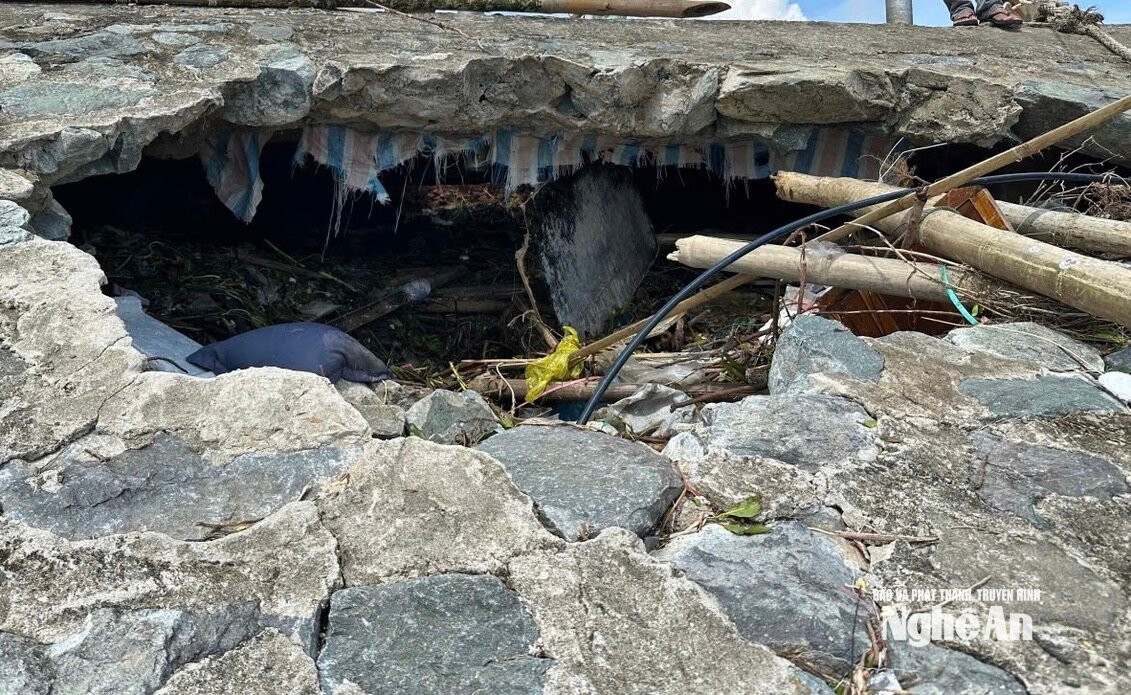
In the context of climate change leading to increasingly extreme weather, Nghe An needs a long-term investment plan, prioritizing vulnerable areas, gradually upgrading dike systems in a synchronized and comprehensive manner, and enhancing their resilience against higher levels of natural disasters.
Besides state resources, localities need to continue proactively reviewing the current state of infrastructure, clearly identifying priorities, preparing materials and on-site personnel, and strengthening inspections before, during, and after the rainy season. Warning and evacuation efforts should also be implemented effectively, avoiding a reactive approach in emergency situations.


