
Electricity prices: The need for sharing and fairness.
During the years of fighting the COVID-19 pandemic, when global coal and gas prices soared due to geopolitical instability, the State decided to maintain electricity prices to support businesses and people through that particularly difficult period. The Vietnam Electricity Group (EVN) then had to bear a huge cost of nearly 45 trillion VND on behalf of society, not because of poor management, but because of a larger policy: stabilizing the socio-economic situation and ensuring social security.
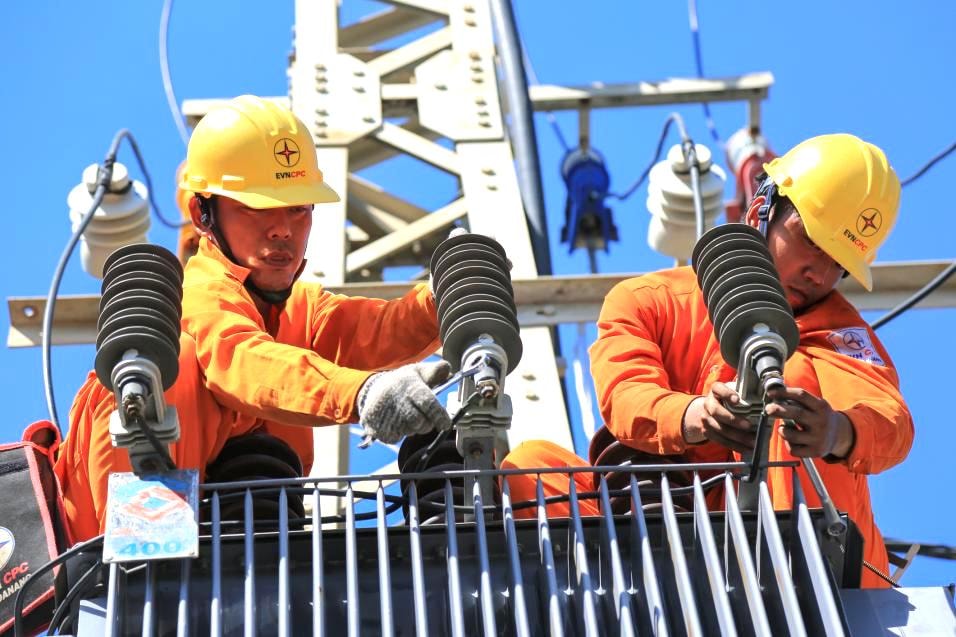
This is a necessary sharing of burdens during an unprecedentedly difficult and challenging time. Now, incorporating the legally mandated portion of costs that were "postponed" into retail electricity prices is not about forcing people to bear losses, but simply about accurately and fully accounting for the amount of electricity consumed during COVID-19. This is the fair treatment that allows the electricity sector to continue investing and ensuring energy security for national development.
The figure that the public refers to as a "loss" of nearly 45 trillion VND is not actually a loss in the sense of corporate governance, but rather a legitimate expense not yet allocated to the price. This expense has been officially confirmed by the State Audit Office. In other words, this is the "temporary revenue shortfall" that EVN had to bear during the pandemic to prevent electricity prices from rising in line with world market coal and gas prices. The current government's consideration of amending Decree 72/2025/ND-CP to allow this expense to be included in retail electricity prices is not about "shifting the loss to society," but simply about accurately and fully accounting for past expenses.
In a market economy, selling prices must reflect reasonable costs. If actual costs increase but selling prices remain unchanged for too long, electricity suppliers will face financial imbalances and be unable to raise capital for new investments. The risk of electricity shortages and energy insecurity will be a direct consequence that the entire economy will have to bear. Therefore, adjusting electricity prices to compensate for these unaccounted costs is not about "rescuing EVN," but about protecting the stability of the national power system.
The concerns of society, of course, remain very relevant. People fear rising electricity bills, and businesses worry about increased production costs. Another concern is whether some of these costs are due to poor management. Therefore, the key principle must be upheld: Only reasonable, legitimate, and independently audited expenses should be included in electricity prices; any management errors or opaque spending must be excluded.
International experience also shows that this is normal. Thailand applies a Fuel Adjustment Tariff mechanism every four months, adding or subtracting fuel costs from electricity prices. South Korea adjusts prices quarterly, sometimes increasing them sharply when the price of imported oil and gas escalates.
In Europe, when the energy crisis erupted in 2022, governments did not force electricity companies to bear losses but instead used budget funds to directly support vulnerable households and businesses.
The common thread is: Prices must reflect costs, while welfare is addressed through transparent and targeted social policies.
In Vietnam, the allocation of costs not included in prices during the pandemic is as follows: That makes sense, because these are real costs, only temporarily "postponed" to share the burden with society as a whole. Now, accurately and fully calculating costs again is necessary to ensure market signals, attract investment, especially in renewable energy and power grid infrastructure. But for this policy to be effective, three conditions are needed:
The first,Implement a gradual, phased approach, distributing the costs over several periods to avoid price "shocks".
Monday, has targeted social security policies, keeps tiered pricing low for poor households, and provides direct support to vulnerable groups.
Tuesday,This ensures absolute transparency, clearly disclosing cost components, audit reports, allocation roadmaps, and includes a commitment from EVN to improve governance and reduce costs.
Electricity cannot remain cheap forever if costs have increased, but it is crucial to make society understand that this is not about sharing losses with EVN, but rather about reimbursing the reasonable costs that were "postponed" during the exceptional period of the pandemic. When the policy is implemented transparently, fairly, and responsibly, people will see this as a difficult but necessary choice to help the electricity sector operate stably and ensure long-term energy security.
We have gone through the most difficult days of the pandemic together through sharing. Electricity prices were kept unchanged to ease the burden on millions of households and businesses, and in doing so, EVN borne the cost that would have otherwise been added to the price.
Today, as the country has entered a period of normalcy, the principle of fairness must be upheld: reasonable costs incurred must be fully accounted for so that the power system can continue to operate healthily.
Sharing in times of crisis is valuable, while fairness in times of stability is essential. Only with a robust power system can Vietnam ensure energy security, attract investment, and steadily advance in serving the cause of industrialization and modernization, aiming for prosperity and happiness for all.


