Content: Xuan Hoang - Van Truong - Phu Huong; Design: Huu Quan•May 21, 2026 16:03
The countryside is changing every day, but behind the modern houses and remittances from afar, young laborers are increasingly absent from rural areas. Fields, traditional crafts, construction projects… are being carried out by trembling hands and slow steps.
The countryside is changing every day, but behind the modern houses and remittances from afar, young laborers are increasingly absent from rural areas. Fields, traditional crafts, construction projects… are being carried out by trembling hands and slow steps.
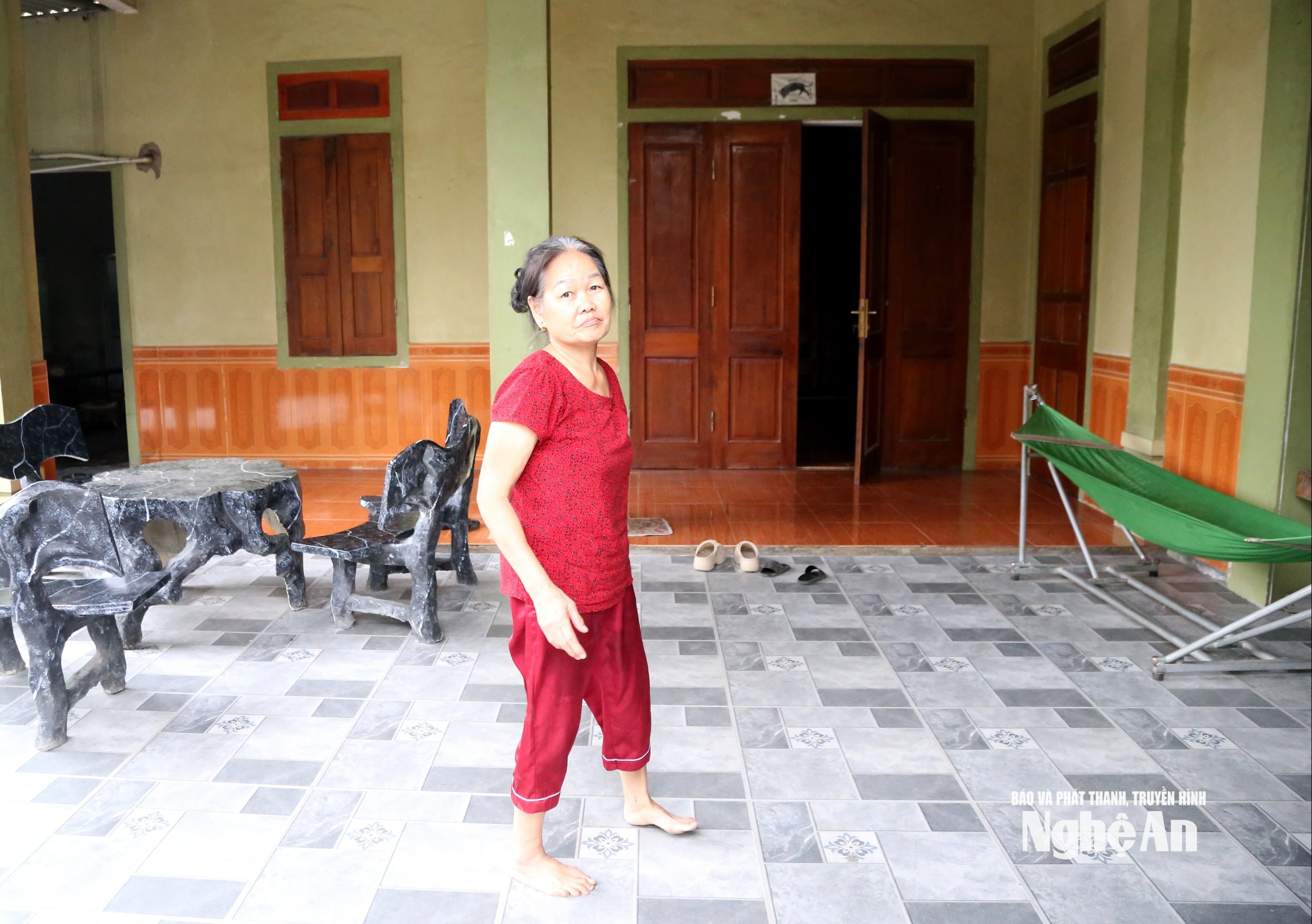
At 5 a.m., in her small house in Phuong Son village, Dai Dong commune, 76-year-old Tran Thi Dung was already up preparing meals for her grandchildren. At an age when she should be enjoying leisure time with her children and grandchildren, she still starts her day with familiar tasks: cooking rice, preparing food, and waking her three young grandchildren up for school.
Ms. Dung said that her son and daughter-in-law have been working as laborers in Taiwan for over a year. Earning a living abroad, they left behind three young children and the constant worry of their elderly mother. Each day for Ms. Dung is a never-ending cycle: preparing meals in the morning, picking up her grandchildren at noon, tutoring them in the afternoon, and then rushing around with household chores in the evening. Therefore, she has no days off.
Mrs. Tran Thi Dung, residing in Phuong Son village, Dai Dong commune, has to take care of family matters despite being over 75 years old. Photo: Xuan Hoang
Her children send money regularly, but for Mrs. Dung, smartphones and banking apps are still unfamiliar. With failing eyesight and shaky hands, she cannot receive the money herself via bank transfer. Every month, she has to ask a neighbor to receive the money on her behalf and then give her the cash to spend gradually.
In many rural villages, the elderly not only act as caregivers for their grandchildren but also shoulder the role of the family's breadwinner, a role that should ideally have been passed on to the next generation.
Mrs. Nguyen Thi Thu, from Tay Ho hamlet, Quan Thanh commune, slowly recounted her story of making a living: She and her husband have five children, but due to life's circumstances, all of them left their hometown to work far away. Despite being over 75 years old and frail, the couple still have to cling to their fields, cultivating 3 sao (approximately 0.3 hectares) of rice to have rice to eat every day.
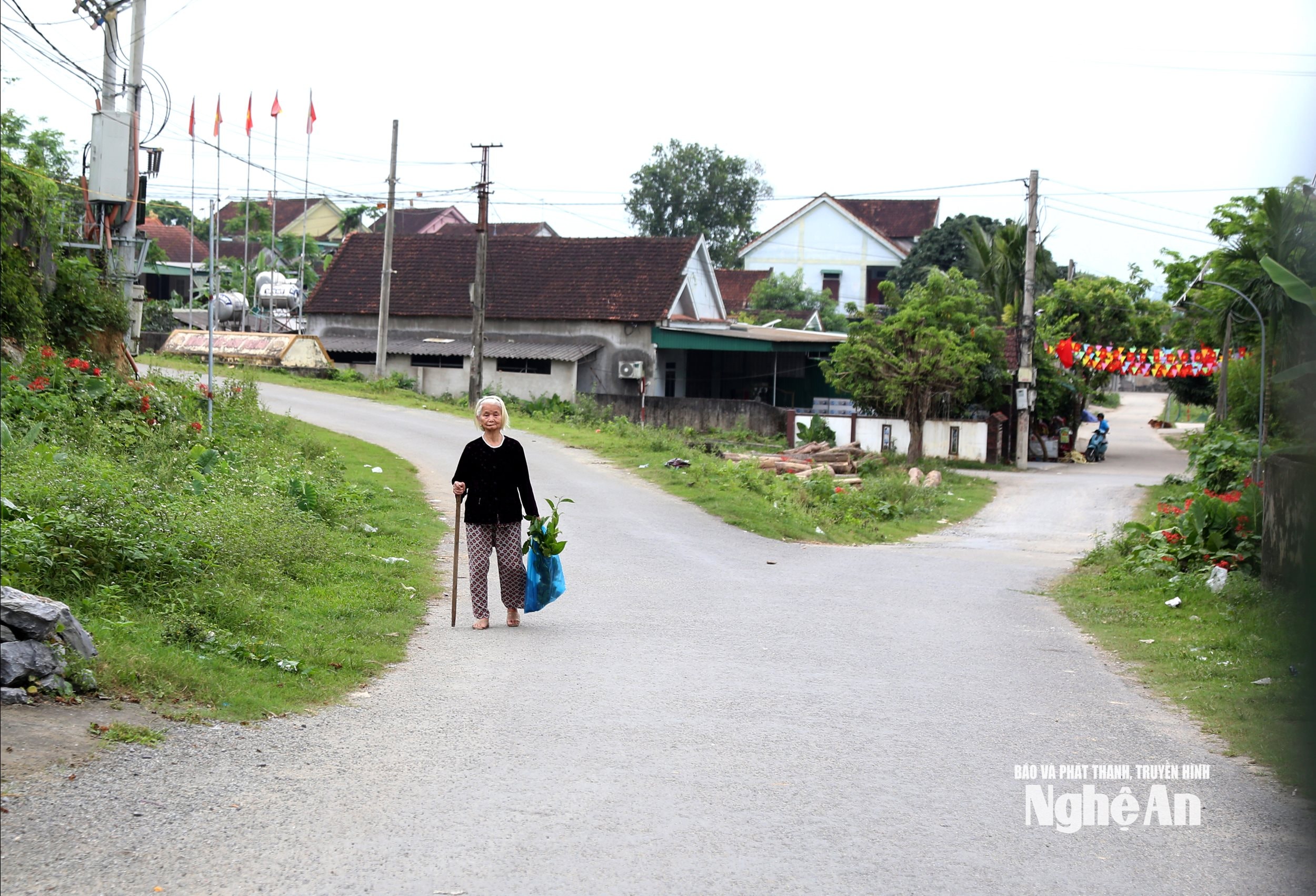
The village road is deserted of young people. Photo: XH
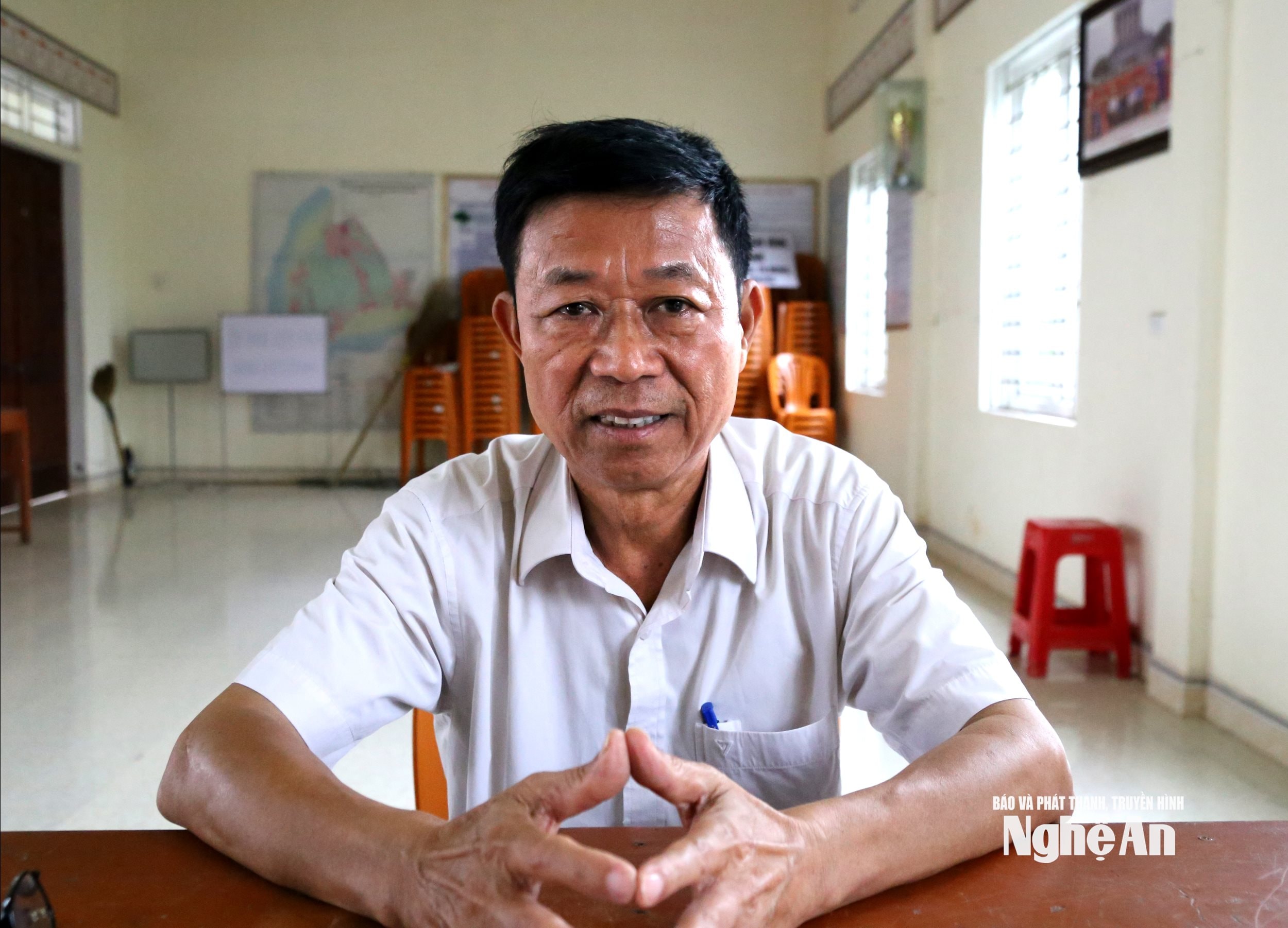
According to statistics from Mr. Nguyen Cong Mau, Head of Phuong Son village, Dai Dong commune, the village has 453 households with a total of 1,779 inhabitants. Of these, 954 are of working age, while the remaining 825 are children and the elderly. Over the past 10 years, the number of young people leaving their hometowns for big cities or for overseas employment has been increasing. Currently, 64 people are working abroad, over 100 young people under 30 are working in the South, and over 150 people aged 30 to 55 are working as factory workers in companies and factories within the province. The remaining approximately 600 people remain in their hometowns working in occupations such as carpentry, construction, welding, plumbing, and women are engaged in agriculture.
According to Mr. Mau's statistics, the village currently has 7 construction teams, employing approximately 60 builders and laborers; 3 carpentry teams, employing about 20 workers; and 3 welding teams, employing about 7 workers. The problem is that most of these trades are run by people over 40, with very few young people pursuing them, thus posing a risk of decline.
Mr. Nguyen Cong Mau - Head of Phuong Son village, Dai Dong commune.
"
The fields are increasingly devoid of young people, facing a serious shortage of healthy laborers capable of accessing new scientific and technological advancements.
Mr. Nguyen Cong Mau - Head of Phuong Son village, Dai Dong commune
Mr. Mau argued that the advantage for young people leaving their hometowns for work is that they have jobs and a monthly income. However, behind this is a situation where the fields are increasingly devoid of young people, and there is a serious shortage of healthy laborers capable of accessing new science and technology. In this context, older people are forced to extend their working lives by 10-15 years compared to before, even though their health has declined.
In Tay Ho hamlet, Quan Thanh commune, the situation is similar. The hamlet has 371 households with 1,647 residents, of which more than 360 young people are working far away or abroad. Over 60 households consist of young couples who leave their children with their grandparents. According to statistics from Mr. Nguyen Tho Hanh, head of Tay Ho hamlet, there are currently 368 healthy young people working abroad or in large cities. Notably, over 60 households in the hamlet are young couples who have left their hometown, leaving their young children with their grandparents. Thanks to regular remittances, many families have been able to renovate their houses, invest in production, and improve their material lives. However, behind these well-built houses lies a void in the fields, the image of elderly people burdened with household chores and childcare, and rice paddies increasingly devoid of young people.
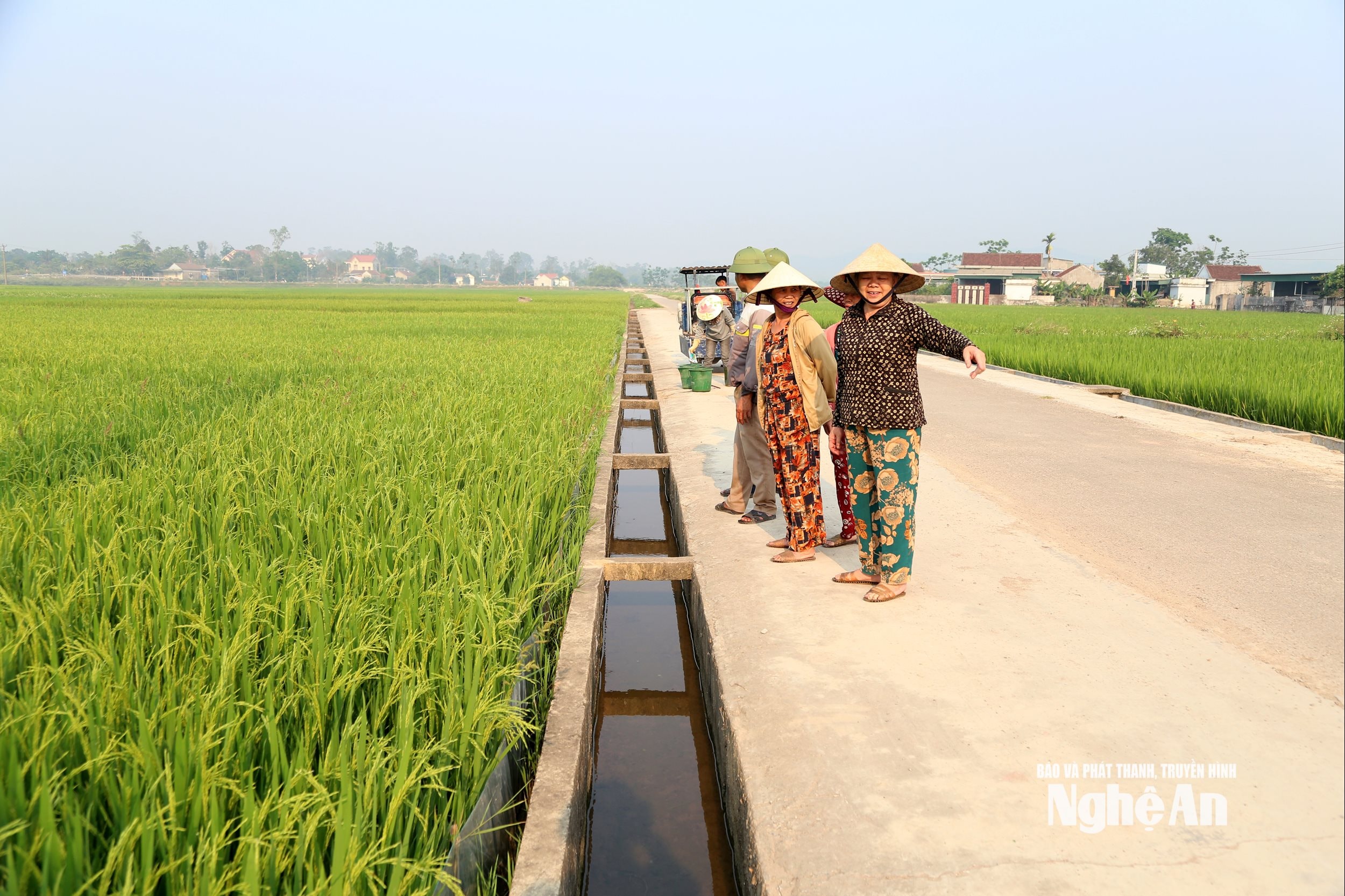
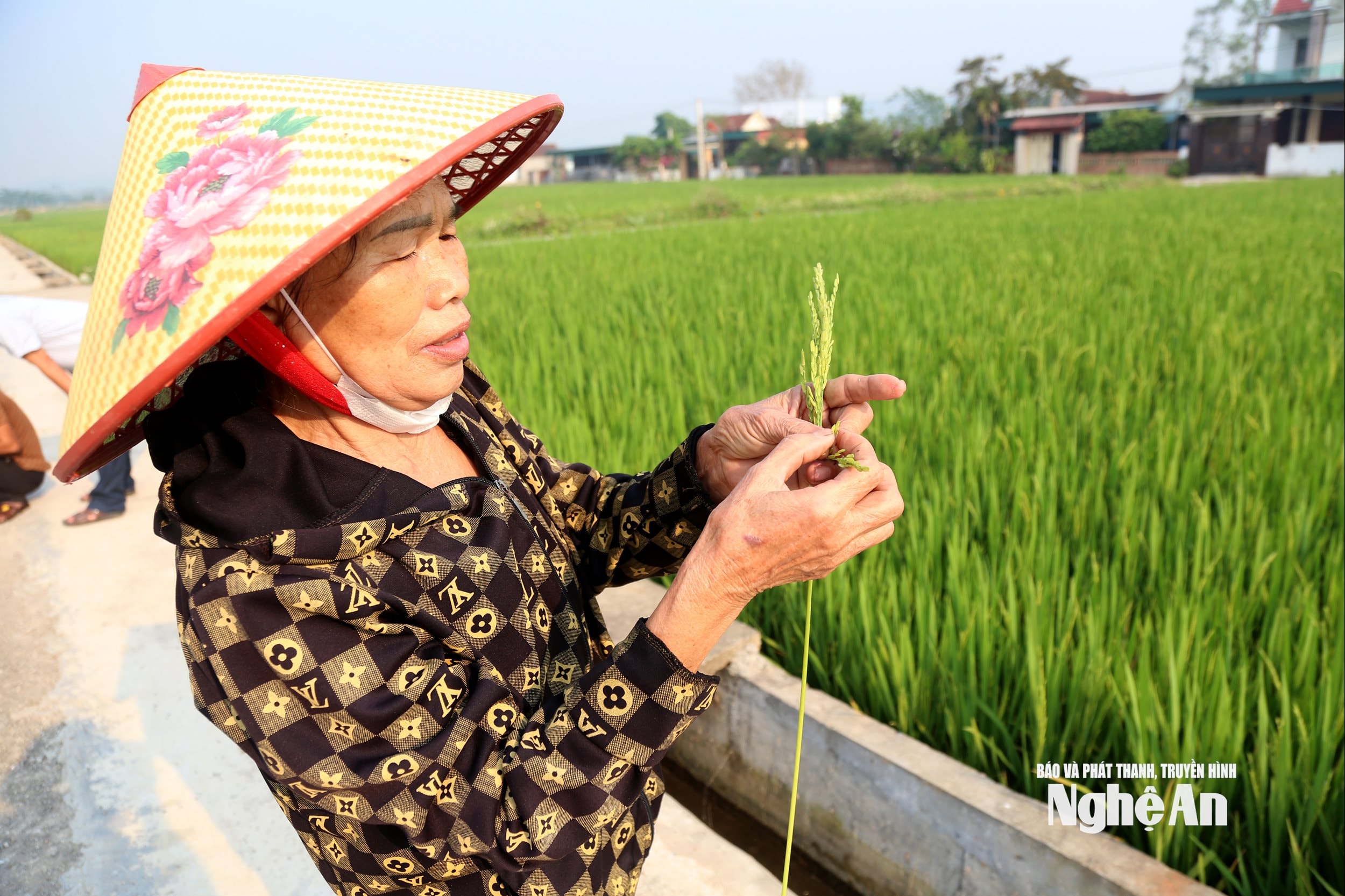
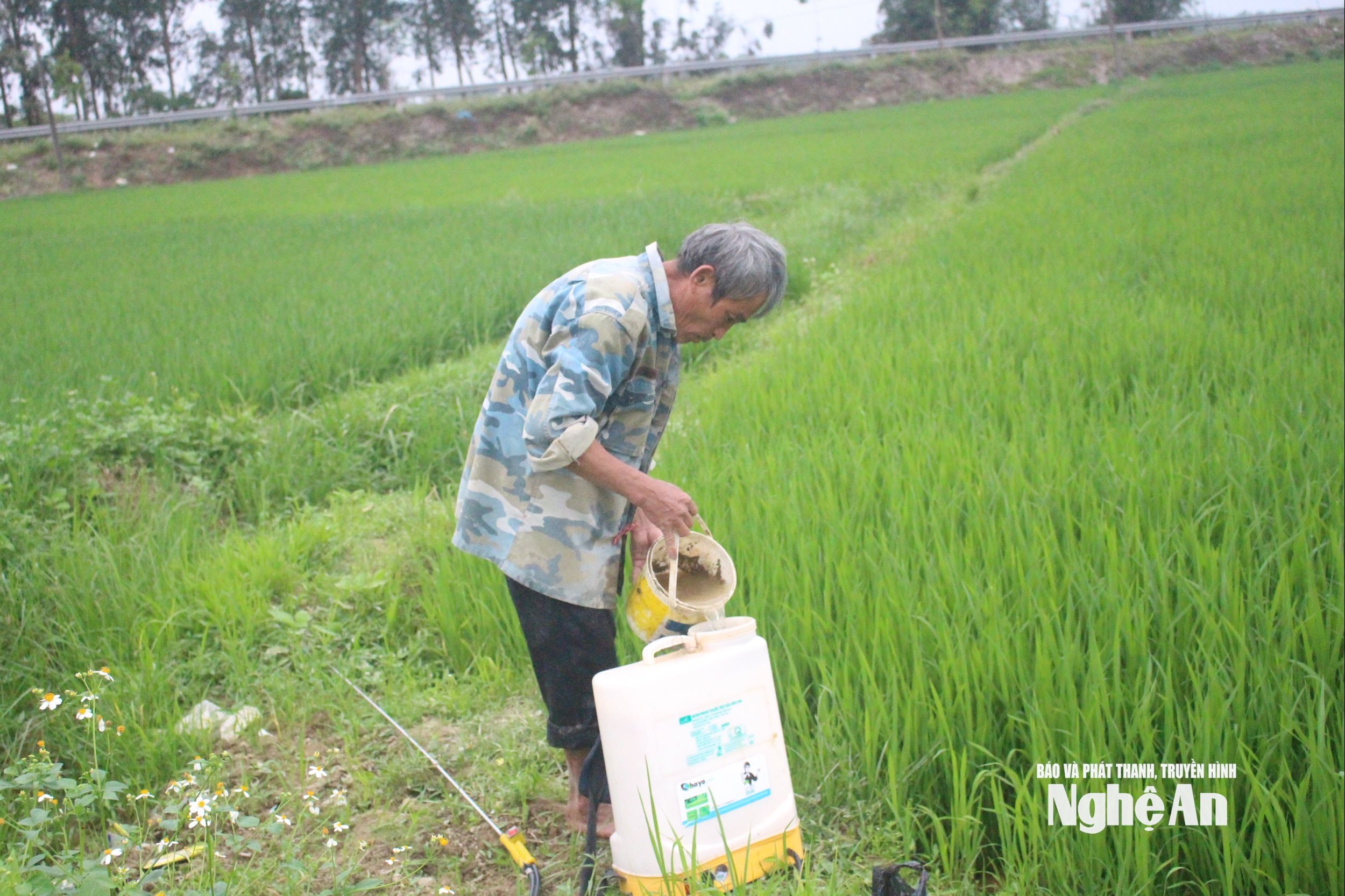
The fields are devoid of young people. Photo: XHAn elderly person in Minh Chau hamlet, Quan Thanh commune, goes to the field to check on the rice crop. Photo: XHElderly laborers still go to the fields to spray pesticides in Hung Nguyen Nam commune. Photo: PHWhen elderly people use technology to control drones for pest control, they often encounter difficulties in operating them. (Photo: XH)
The shortage of young labor is causing many difficulties for agricultural production. Although machinery assists in many stages, a significant number of tasks still require manual labor. During the planting season, transporting seedlings is a major obstacle for the elderly. Care and harvesting also depend heavily on manual labor. After harvesting, transporting and drying the rice continues to create pressure. When the weather is unfavorable, the elderly struggle to cope, affecting the quality of agricultural products. This situation not only impacts productivity but also disrupts the lives of rural communities.
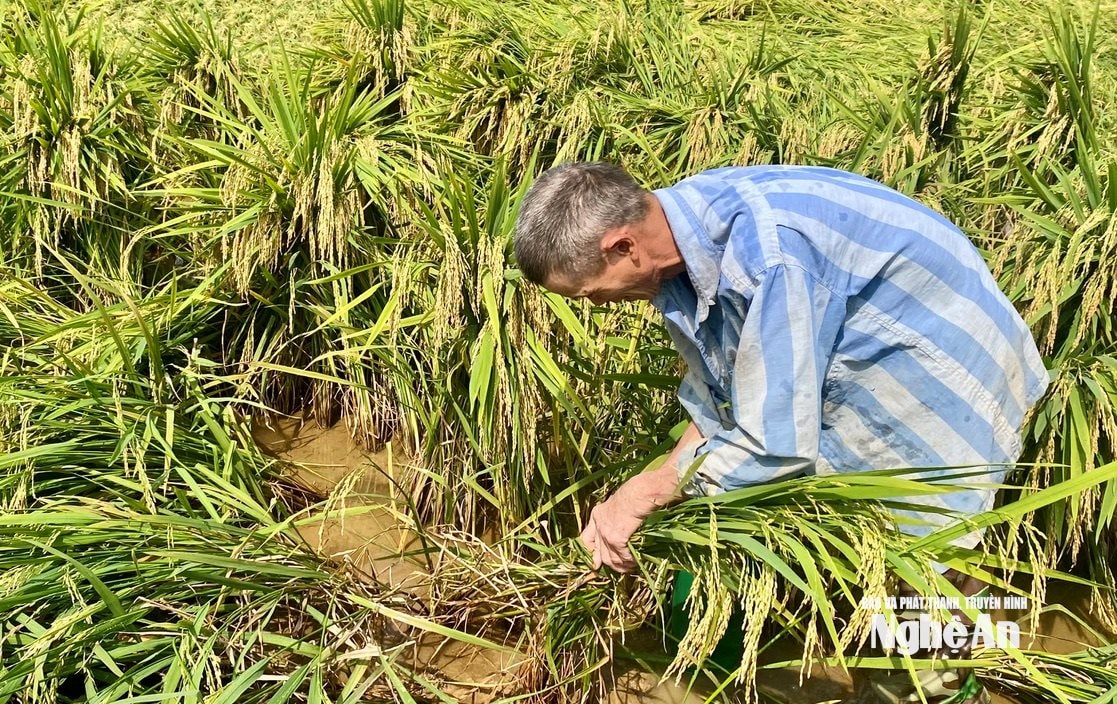
A farmer, nearly 70 years old, stands overturned rice stalks in the field. Photo: VT
In the mountainous commune of Quỳ Châu, the wave of young people leaving their hometowns for work elsewhere is becoming increasingly evident. Vi Văn Minh, 23, currently working in Japan, shared: “I’ve been in Japan for two years. The salary isn’t very high, but it gives me the opportunity to learn new skills and accumulate capital for the future.” Minh’s choice reflects the common sentiment of many young people in Quỳ Châu, as income from agriculture and forestry in their hometown remains unstable and risky.
However, behind these stories of "escape" lies a reality with many concerns. The vast acacia forests and expansive fields still require human labor, but the current workforce mainly consists of middle-aged and elderly people.
According to Mr. Tran Bao Linh, Vice Chairman of the People's Committee of Quy Chau commune, the commune has over 23,000 inhabitants, of which more than 5,600 are working abroad and overseas. The remaining workforce is mainly middle-aged and elderly, posing a risk of a shortage of young labor in production. Despite this, Quy Chau commune still has significant potential for development with over 12,000 hectares of acacia forest, potential for livestock farming, farm economics, ecotourism, and traditional craft villages.
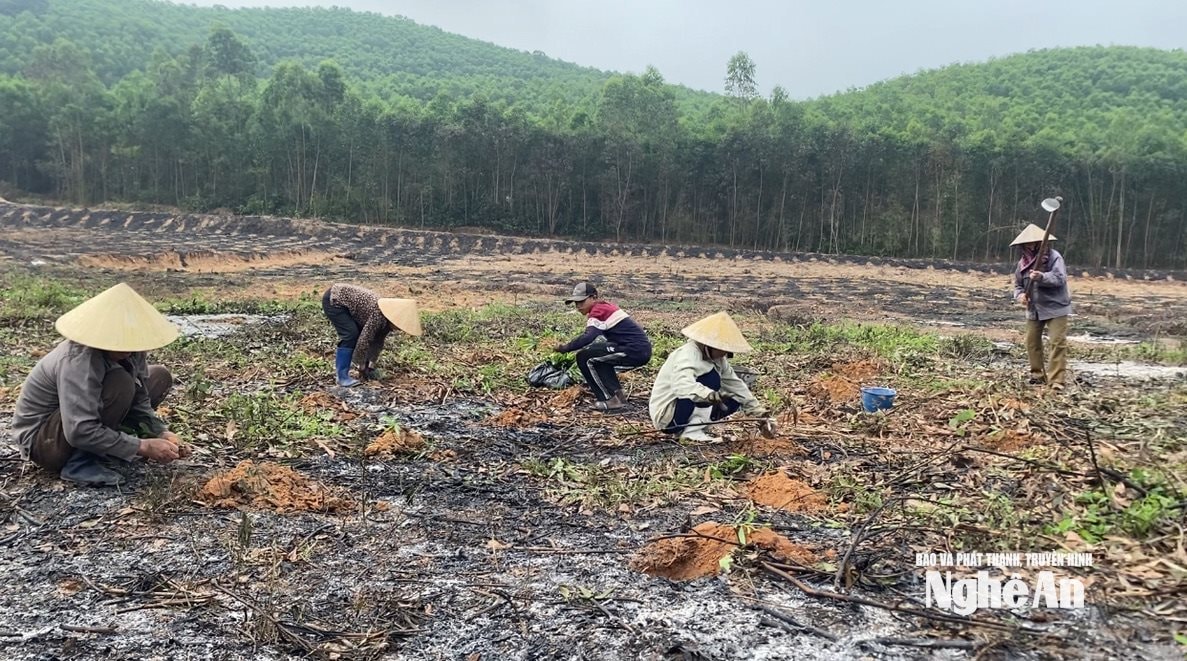
Farmers in Quy Chau commune plant timber forests. Photo: Van Truong
"
As of April 2026, Nghe An province had 190 craft villages with 12,877 participating households, creating jobs for 23,829 workers. However, these craft villages are facing a shortage of young workers. In many villages, the workforce mainly consists of middle-aged and elderly people, while young people are less interested in joining. Instead, most young workers choose to work in industrial zones, the service sector, or participate in overseas labor export to seek better opportunities.
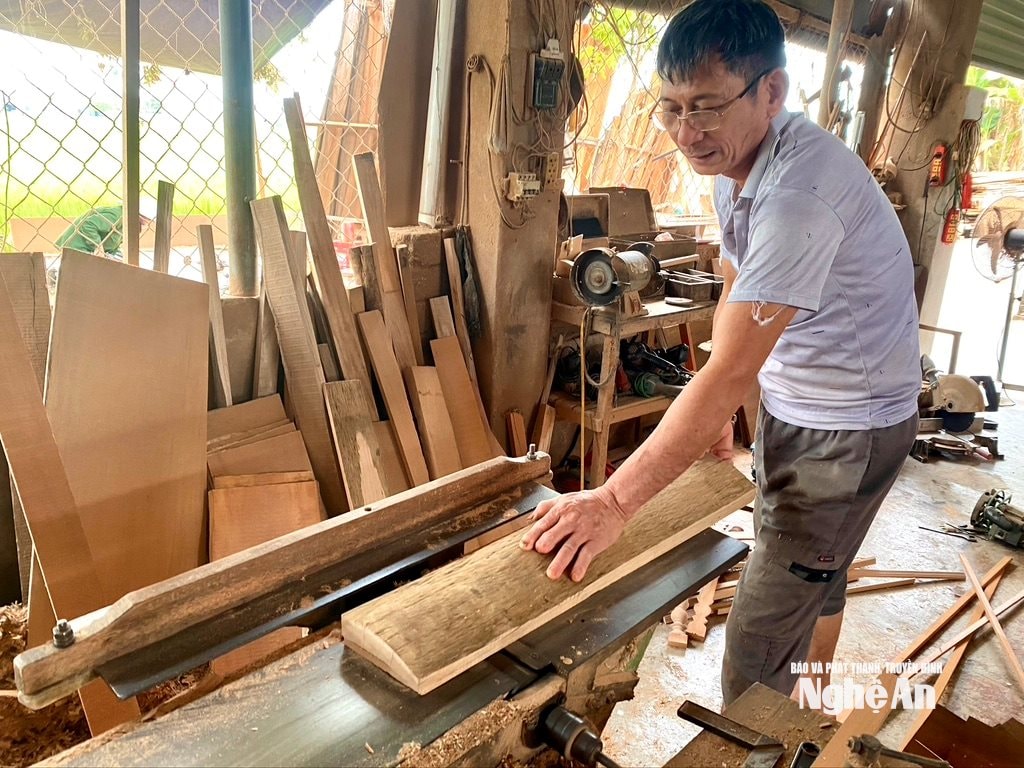
In the Quỳnh Hưng carpentry village, the sounds of saws and planes still echo daily, but the majority of the workforce is over 50 years old. Mr. Phạm Ngọc Hòa, 65, still works 8-10 hours a day in his small carpentry workshop.
His hands tremble from arthritis, his eyesight is failing, but he can't retire yet. "I'm committed to this profession not only to make a living, but also to preserve a traditional craft, while the younger generation is increasingly uninterested," Mr. Hoa said.
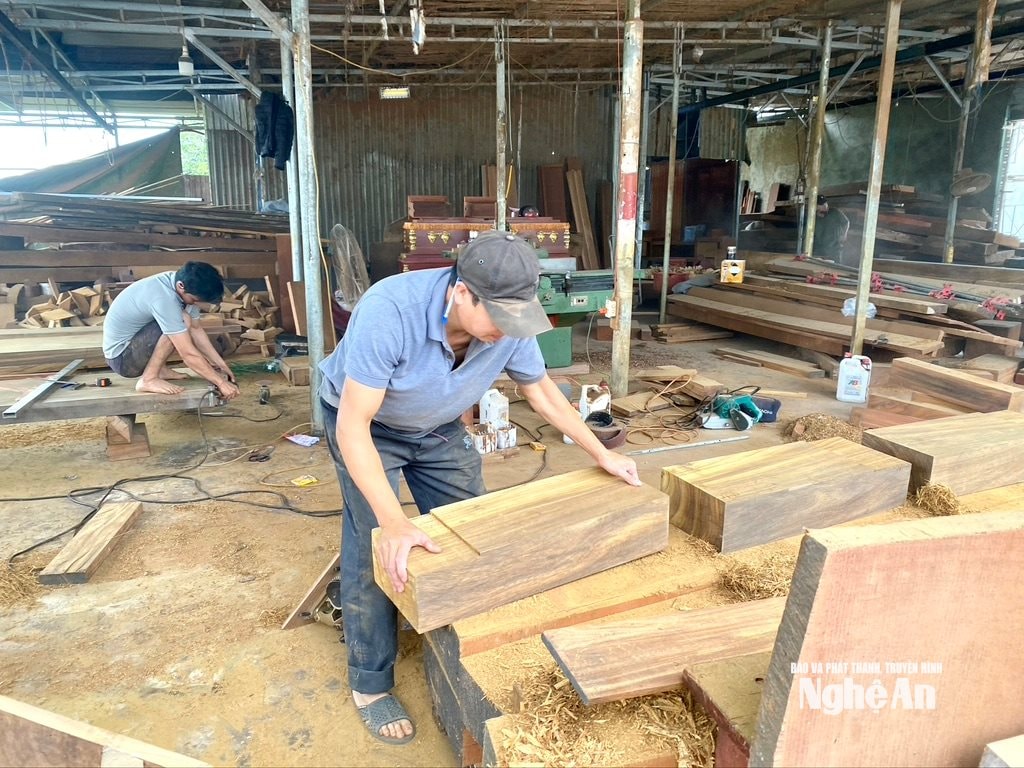
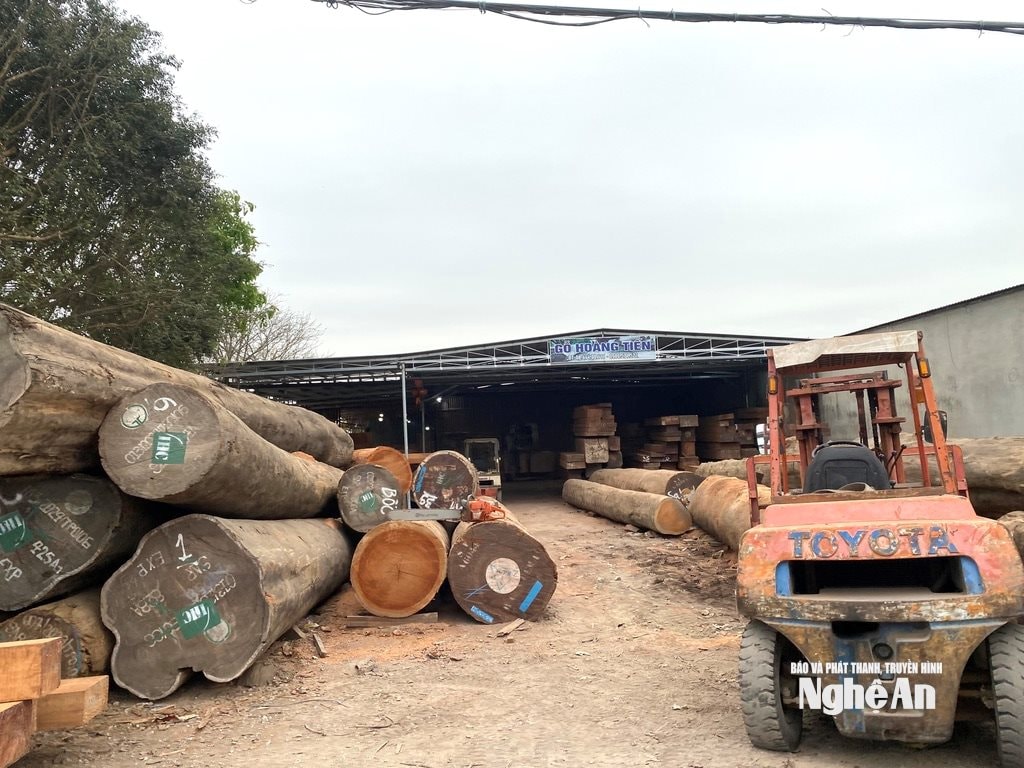
Mr. Pham Ngoc Hoa, 65 years old, from Nam Thang hamlet, Quynh Luu commune, is a carpenter. Photo: Van TruongYoung workers in carpentry are now very rare in Quynh Luu commune. Photo: Van TruongA wood processing facility in Quynh Luu commune is facing a labor shortage. Photo: Van Truong
According to statistics, over 70% of the workers in this carpentry village are aged 50-65. Younger people rarely pursue the trade because the work is arduous and the income is unstable. The risk of workplace accidents is high, but the older craftsmen are still forced to stay in their workshops.
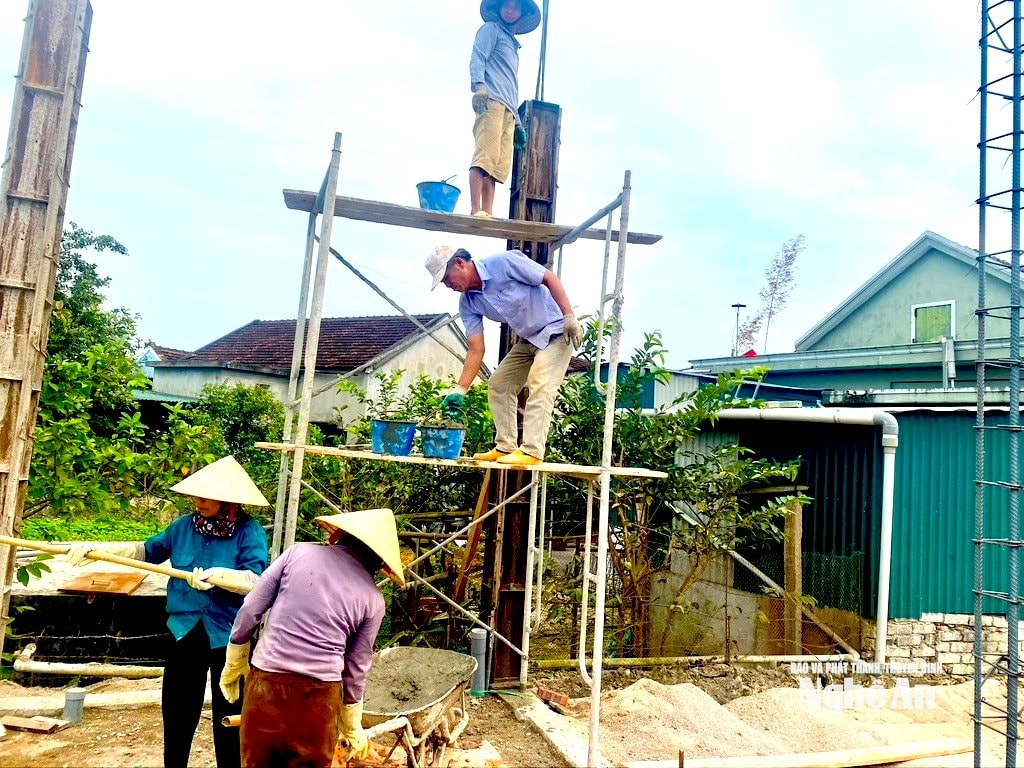
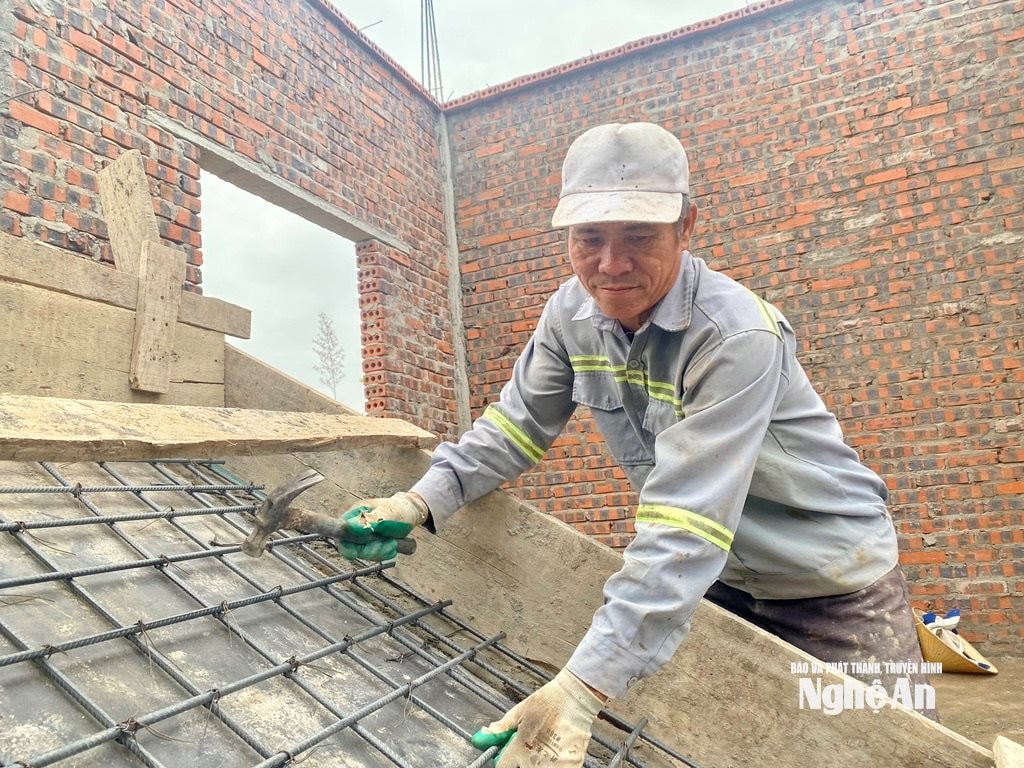
In the scorching midday sun of Quan Thanh commune, 64-year-old Nguyen Van Luong is still mixing mortar and building walls. The work is arduous, the scaffolding is high, and it's quite dangerous for an elderly worker. "My strength is failing, climbing high makes me dizzy, but if I don't do this, the construction crew won't find anyone else," he says. The image of elderly workers on construction sites has become familiar in many rural areas. They work not only for a living, but also because they have no other choice.
Many middle-aged workers in Quan Thanh commune are working as construction laborers. Photo: Van TruongWorkers over 60 years old in Quan Thanh commune are working as construction workers. Photo: Van Truong
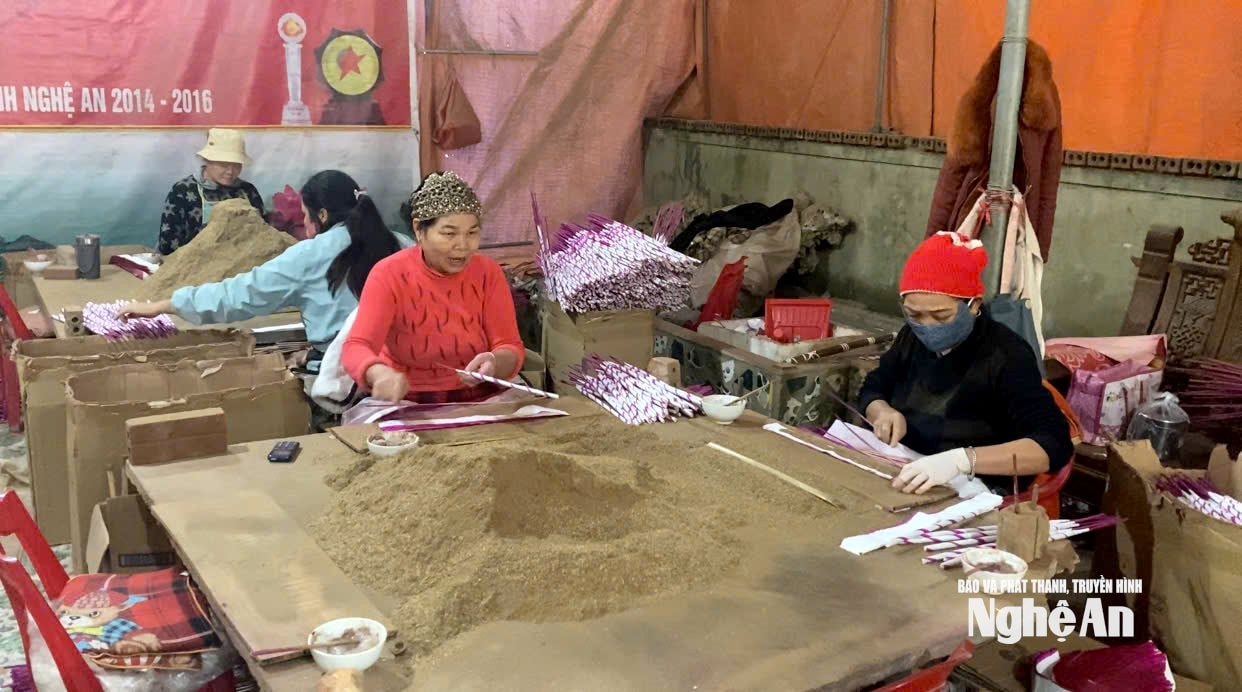
Quỳ Châu commune is known for its incense production during the year-end season. This craft has been intertwined with the local culture for over four decades, quietly sustaining hundreds of households. However, behind this diligent work lies a growing concern: a shortage of young laborers.
Having been involved in the craft for many years, Ms. Tran Thi Loan, a large-scale incense producer in the commune, said that incense making takes place year-round, but the peak season is still the last months of the year. "There are many orders, but fewer and fewer workers," Ms. Loan lamented. Most of the current workers are over 50 years old, some even 70, with declining health, poor eyesight, and aching joints, making the work, which already requires meticulousness, even more arduous.
Incense production at Quy Chau Incense Village. Photo: VT
According to statistics from the People's Committee of Quy Chau commune, the locality currently has 5 incense-making villages, providing employment for more than 150 households with an annual consumption of over 75 million incense sticks. Although providing relatively stable income, the craft villages are facing the risk of "aging" as most young workers choose to leave their hometowns to work elsewhere. The shortage of manpower not only makes it difficult for businesses to expand but also poses a long-term challenge in preserving a traditional craft that is struggling to stay alive.
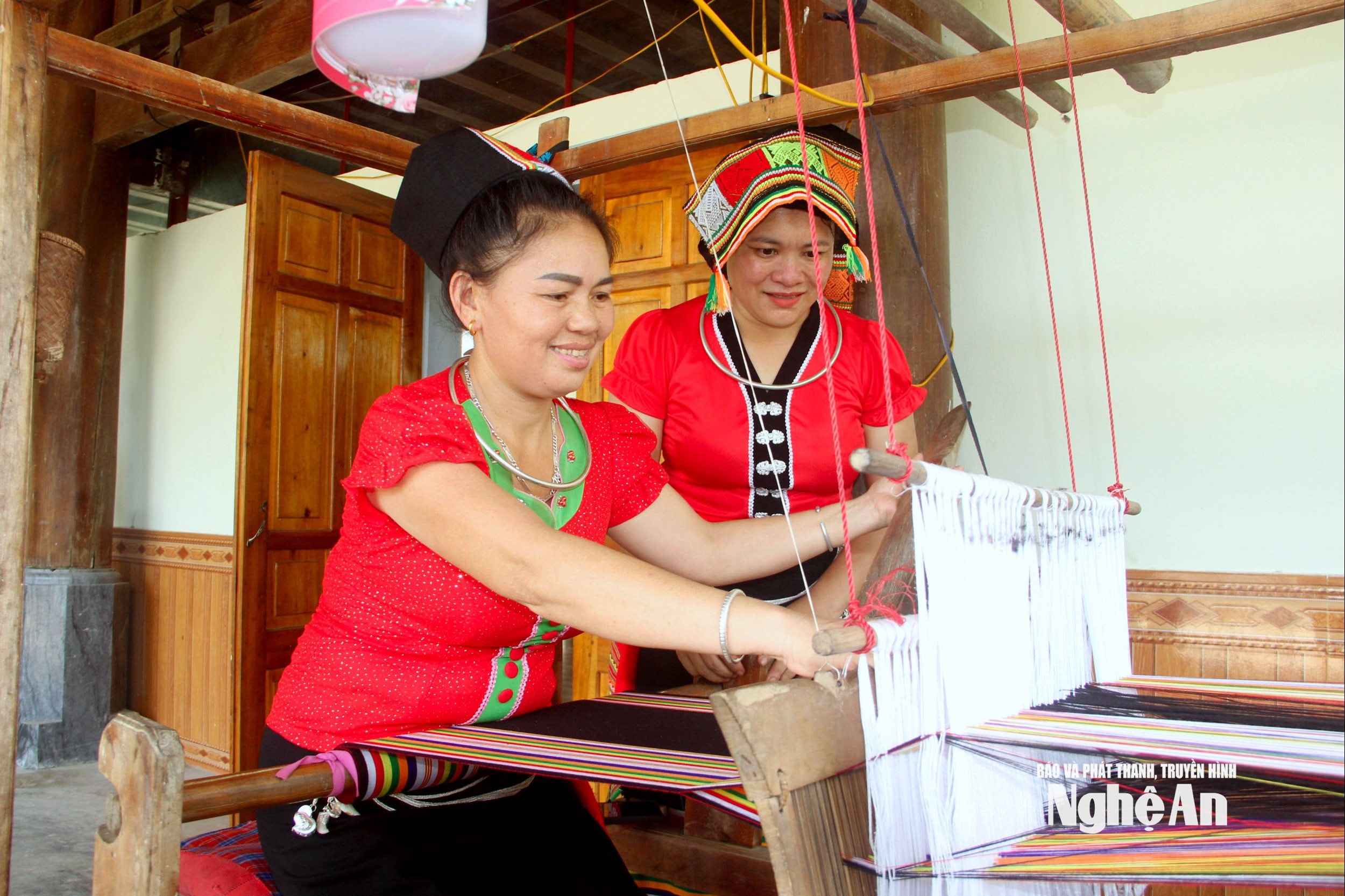
In the villages of western Nghe An province, the rhythmic sound of looms still resonates, yet a stark reality is that beside these old looms, only elderly people silently move the shuttles. At the Hoa Tien Brocade Cooperative (Chau Tien commune), Ms. Sam Thi Xanh, Deputy Director of the cooperative, stated that for many years, the cooperative has maintained its operations by purchasing products from its members, constantly innovating designs, and improving the quality of products such as bags, wallets, scarves, and belts. However, the reality is that most cooperative members are elderly, with limited labor capacity, making it difficult to increase production.
The brocade weaving craft of Thai Minh Brocade Weaving Village, Tien Dong commune. Photo: XH
Faced with the challenge of "preserving the craft," the cooperative proactively sought new directions. Every year, vocational training classes are held locally, targeting students. In 2025 alone, with the support of the Provincial Cooperative Union, 200 students were trained, gradually becoming familiar with and breathing new life into traditional brocade products.
These stories vividly reflect the reality of rural life today. Why young people leave their hometowns to earn a living and build careers, and how to get them back and reconnect with their homeland, is a problem that needs solutions from all levels and sectors.
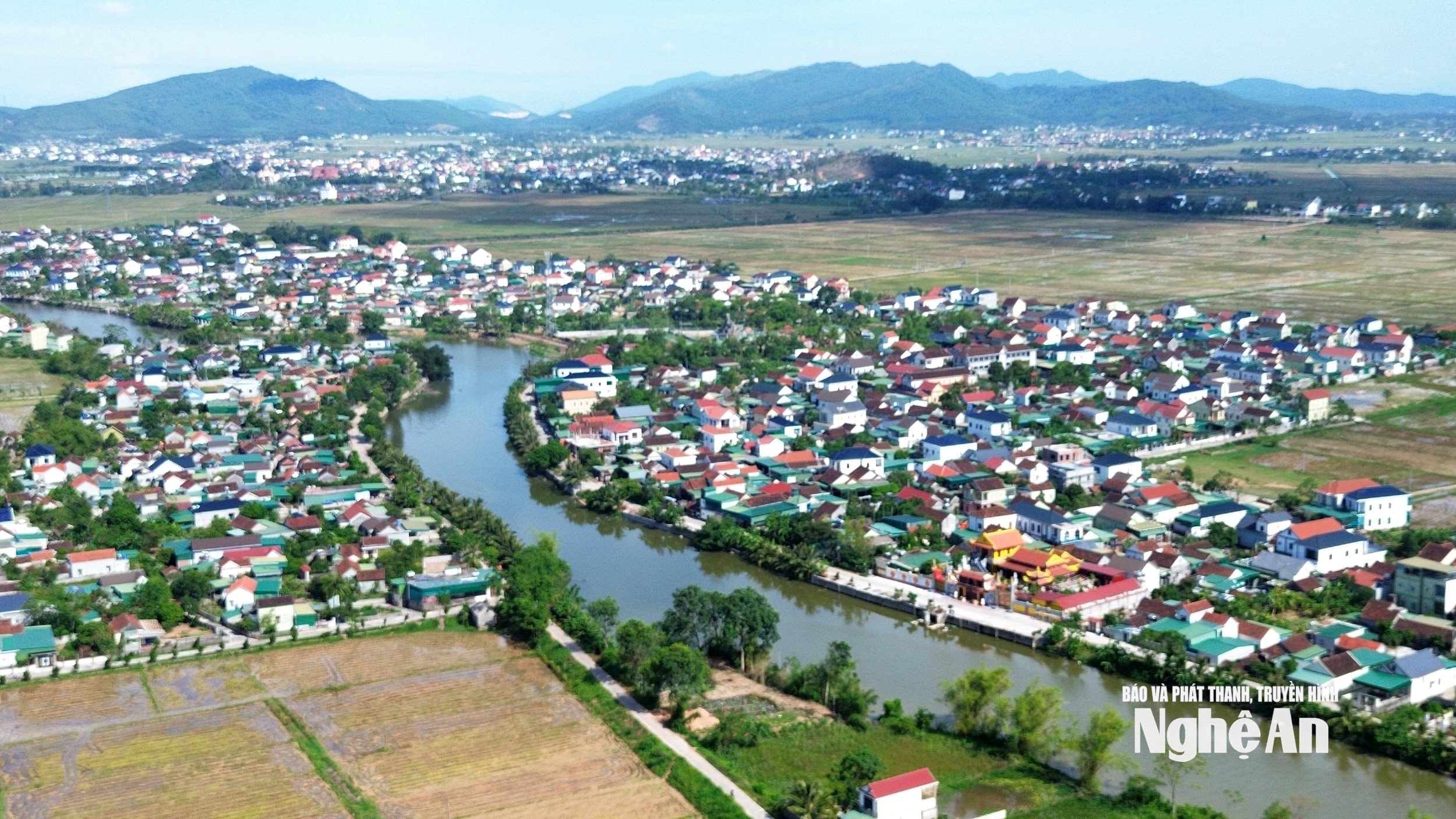
A view of Van Tu commune. Photo: XH
"
Nghe An province currently has nearly 3.7 million inhabitants, with approximately 1.6 million people of working age. Each year, around 50,000 people join the labor market. However, young people tend to leave the province to seek higher-paying jobs. A large proportion of the workforce, over 50 years old, is employed in agriculture and traditional industries. Older workers face many limitations in accessing science and technology, while modern agriculture demands high levels of skill and expertise.
Your comment has been submitted and will be displayed after being reviewed by the editorial team. The editorial board reserves the right to edit comments to comply with the newspaper's content guidelines.