
Iron ore prices fell for the fourth consecutive session, retreating to $111.83 per ton.
Global iron ore prices continue to weaken due to persistently high inventory pressure in China and significantly reduced profit margins for steel mills.
Iron ore prices on the international market recorded their fourth consecutive day of decline on June 8th. This downward trend was driven by a combination of abundant supply, high inventory levels at major ports in China, and harsh weather conditions affecting downstream production.
Price movements on major exchanges
At the Dalian Commodity Exchange (DCE), the September iron ore contract fell 0.78%, closing at 759 CNY/tonne (equivalent to 111.83 USD/tonne). At the same time, on the Singapore Exchange, the benchmark July iron ore contract also recorded a 1.26% decrease, falling to 100.45 USD/tonne.
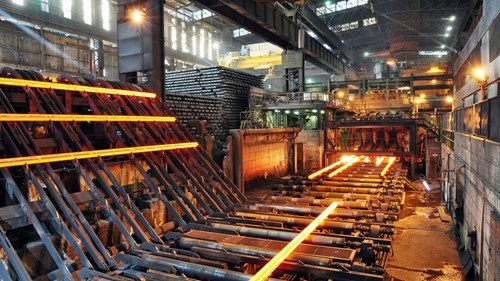
According to data from SteelHome, although iron ore inventories at major Chinese ports saw a slight decrease of 0.91% compared to the previous week, the overall figure remains alarming. Current inventories are approximately 25 million tons higher than the same period in 2025, creating persistent oversupply pressure on the overall price level.
Record supply and cost pressures
Analysis from DBX Commodities indicates that iron ore supply remains abundant. Shipments to China continue to set new record highs, while crude steel production in the country tends to shrink. This mismatch between supply and demand is causing the market to become saturated.
Furthermore, low profit margins are forcing steel producers to change their operating strategies. Instead of using high-quality ore, many mills have shifted to prioritizing ores with lower iron content in order to minimize production costs amidst a challenging market.
Weather factors and geopolitical context
Steel production in China is also facing challenges from natural disasters. The country's meteorological agency has issued flash flood warnings in Hunan, Guangxi, and Guizhou provinces. These extreme weather events are predicted to disrupt supply chains and slow down construction projects, thereby indirectly reducing steel demand.
Data from Mysteel shows that the blast furnace operating rate at 247 key steel mills in China reached only 83.94% last week, down 0.2 percentage points from the previous reporting period. This reflects the cautious sentiment of manufacturers in the face of unpredictable fluctuations in the domestic market.
On the international stage, trade relations between Australia and China regarding this commodity are undergoing new developments. Major Australian mining companies have officially requested government support to counter China's potential implementation of a centralized sales mechanism – a move aimed at gaining a greater advantage in negotiating export iron ore prices.
Related raw material and finished steel markets
The decline wasn't limited to iron ore. Coking coal prices recorded a 1% drop, while coke fell 1.46%. For the steel market on the Shanghai Futures Exchange, the performance was slightly mixed:
- Rebar and wire rod:The market is trading sideways, with no major fluctuations.
- Hot-rolled steel coils:Decreased by 0.15%.
- Stainless steel:A slight increase of 0.14%.
Overall, the iron ore market remains in a correction phase as fundamental supply-demand factors and weather risks show no clear signs of improvement in the short term.


